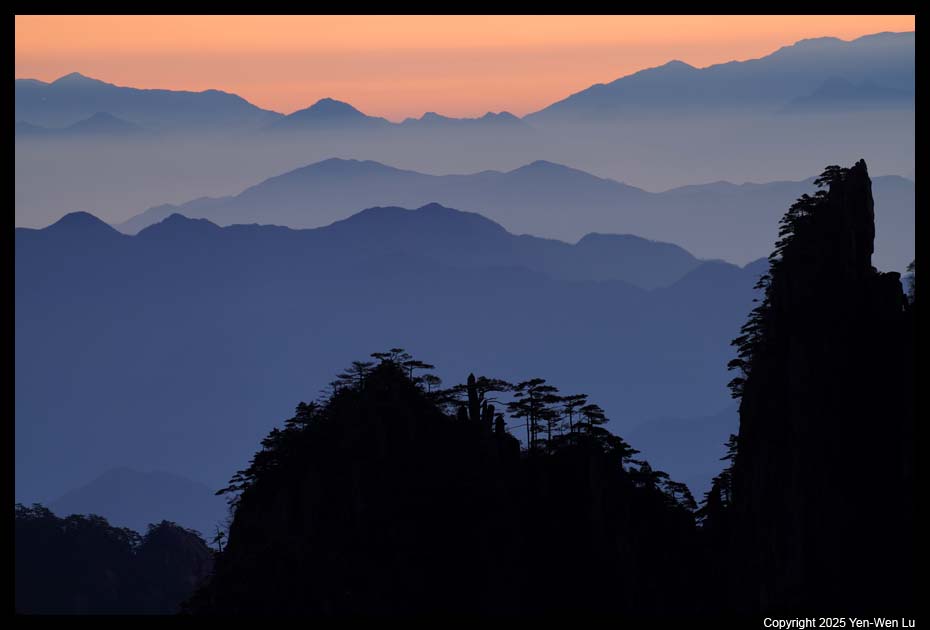
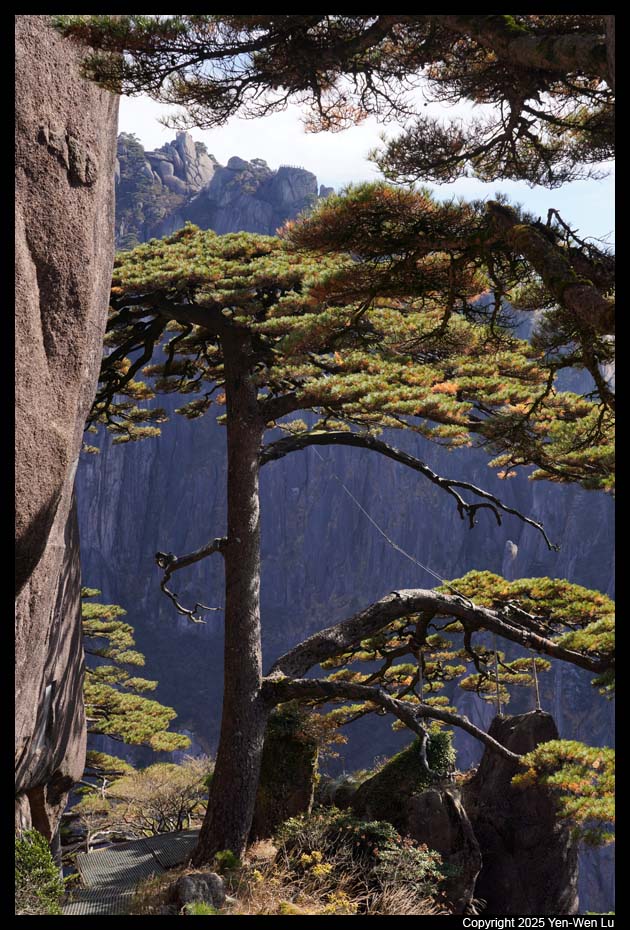
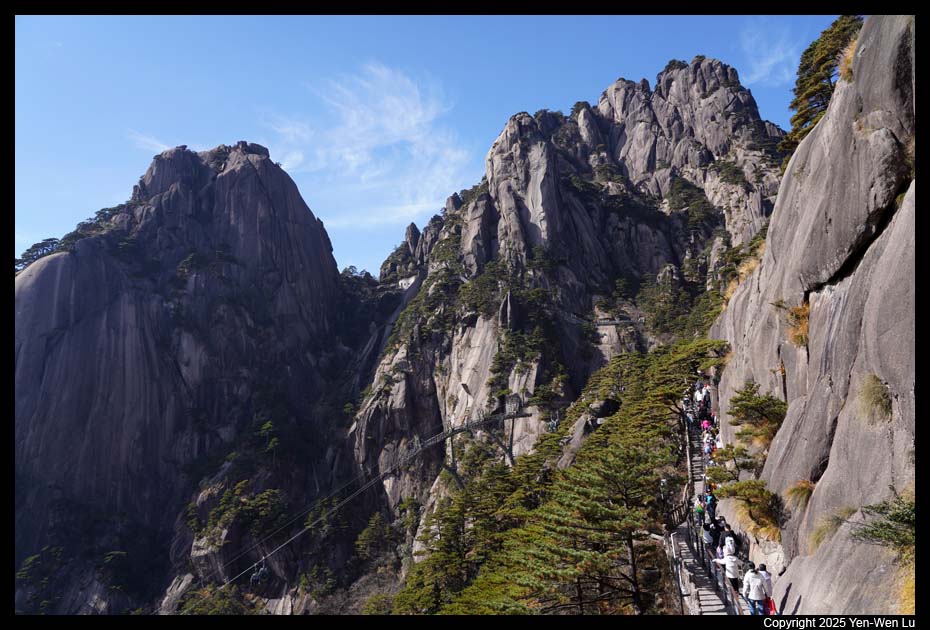
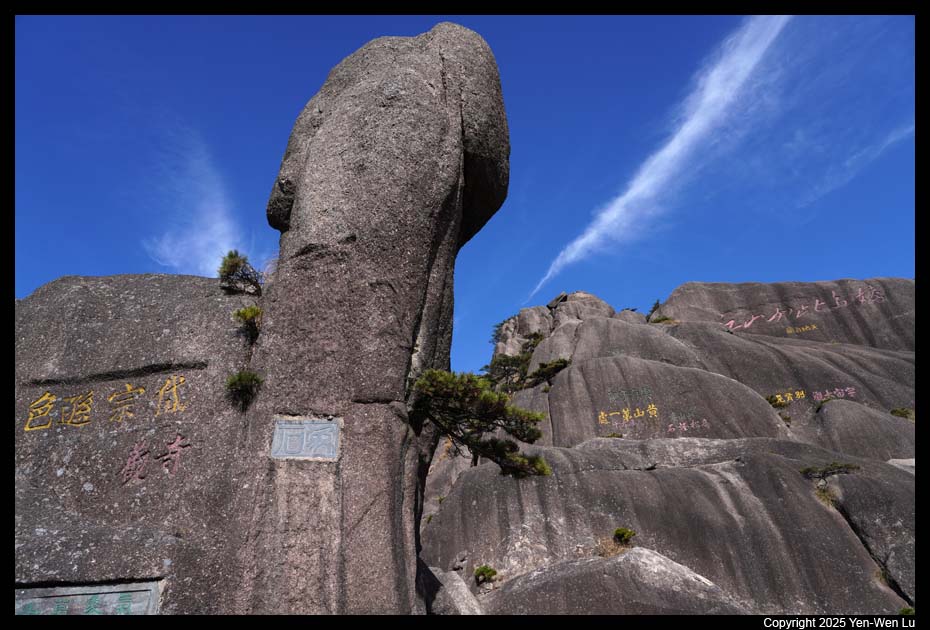
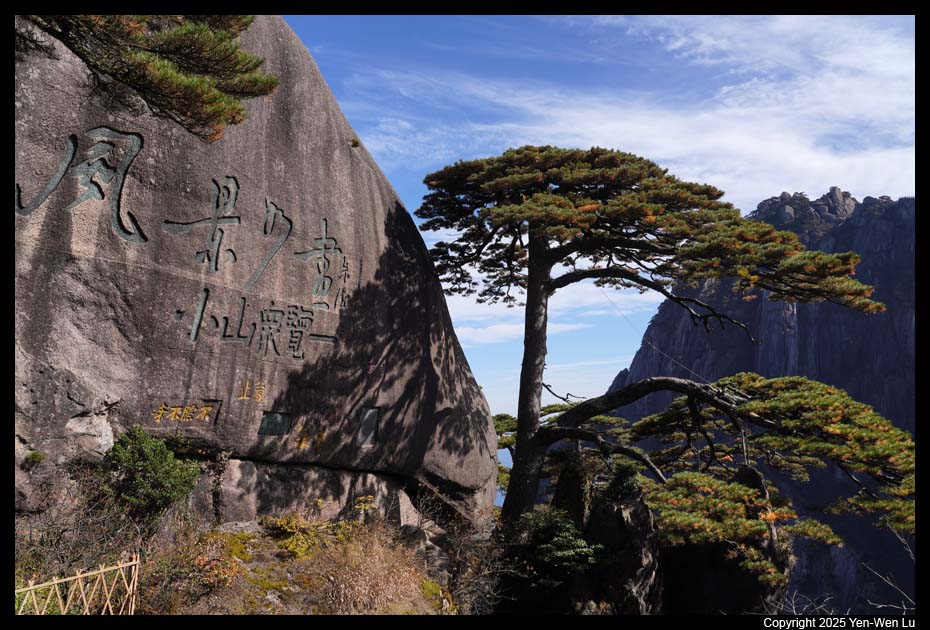
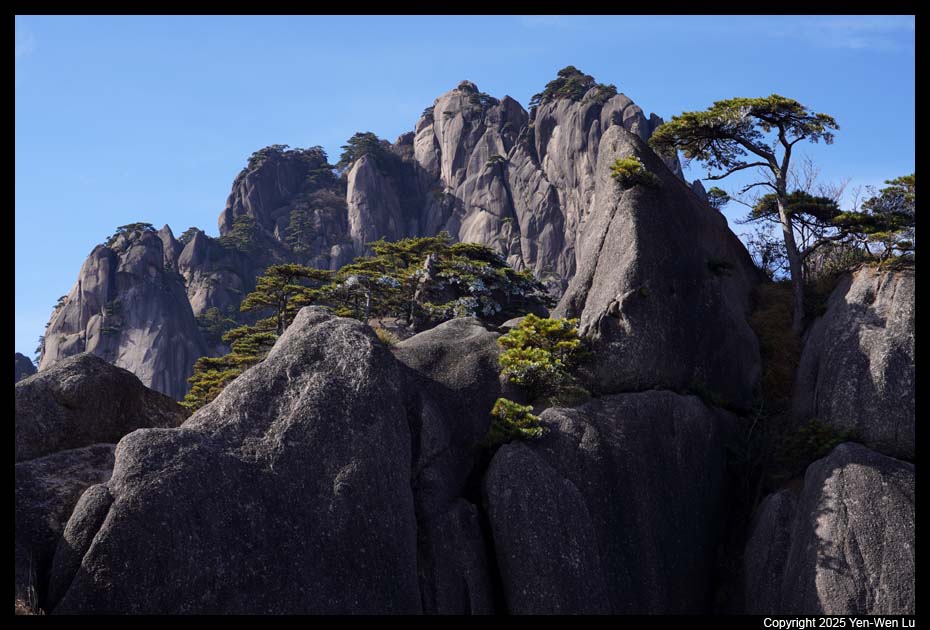
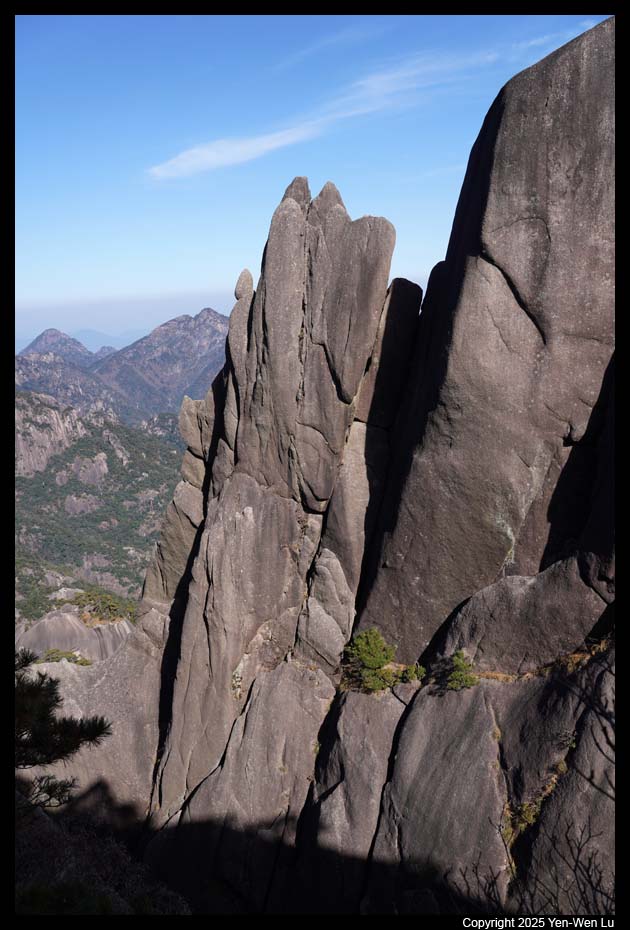
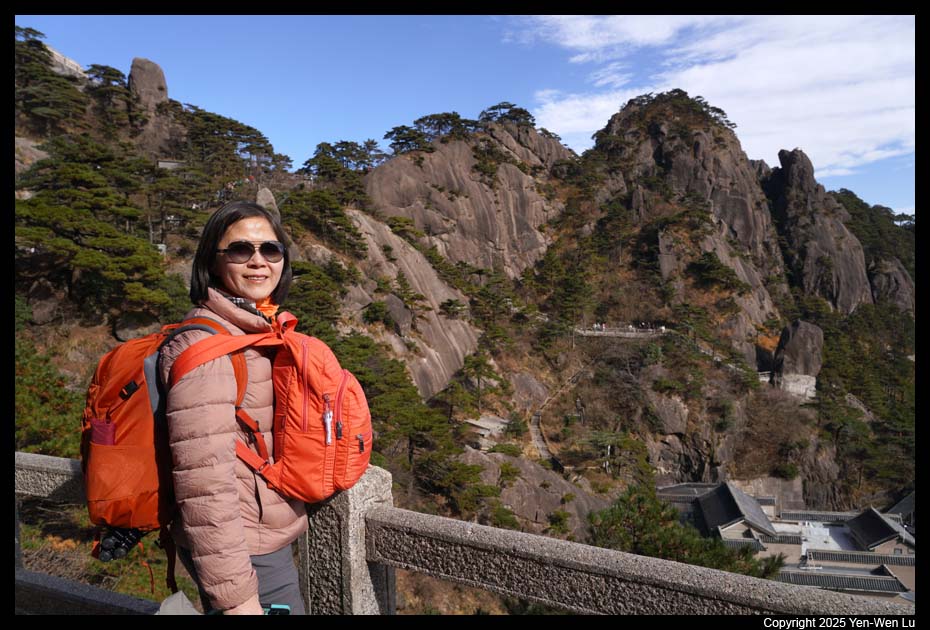
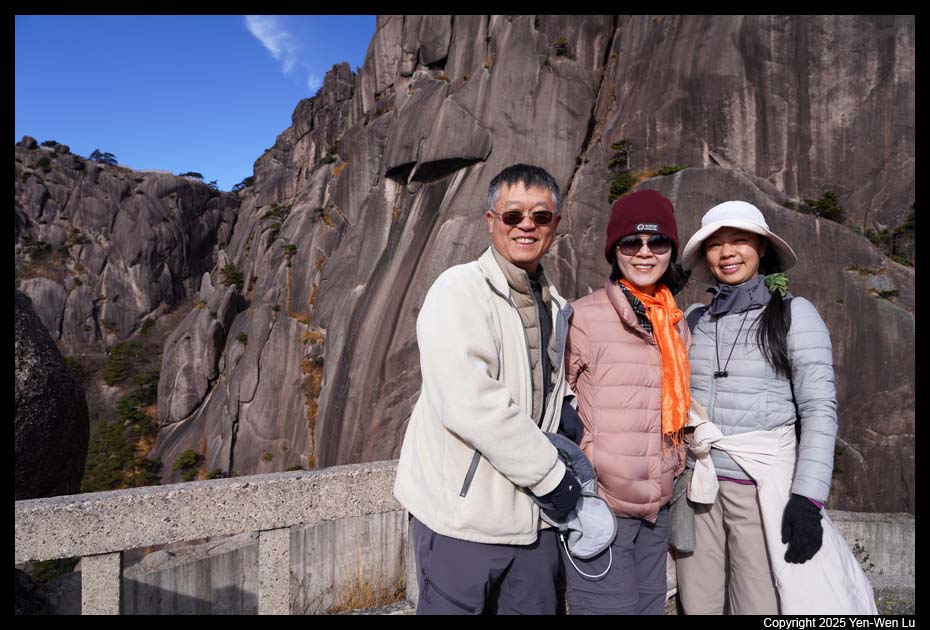
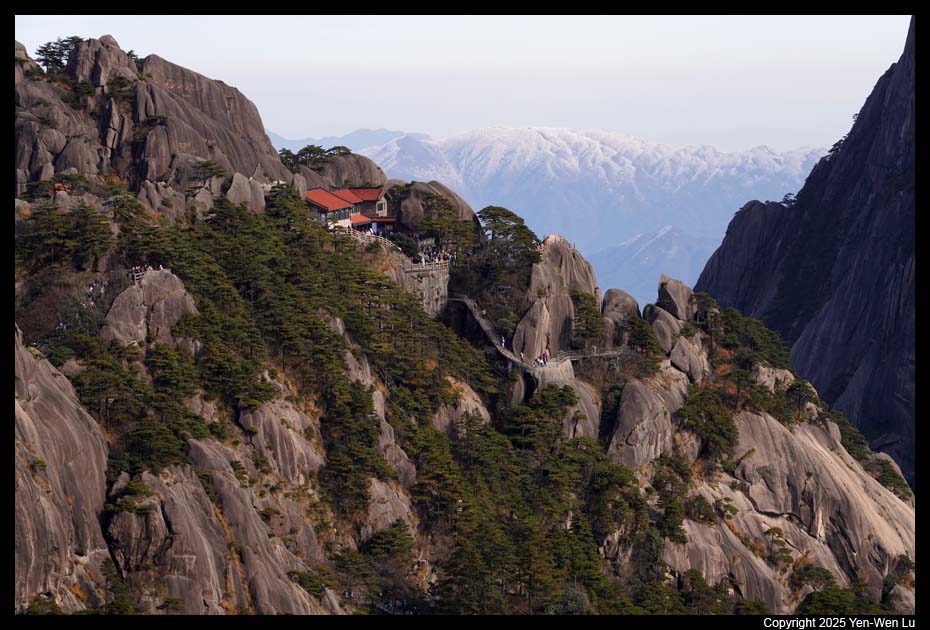
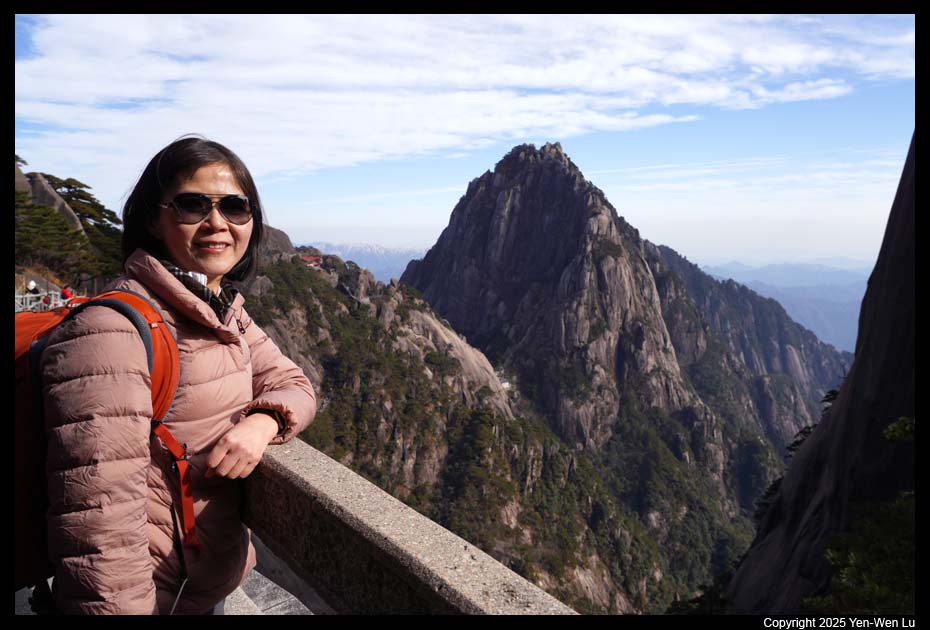
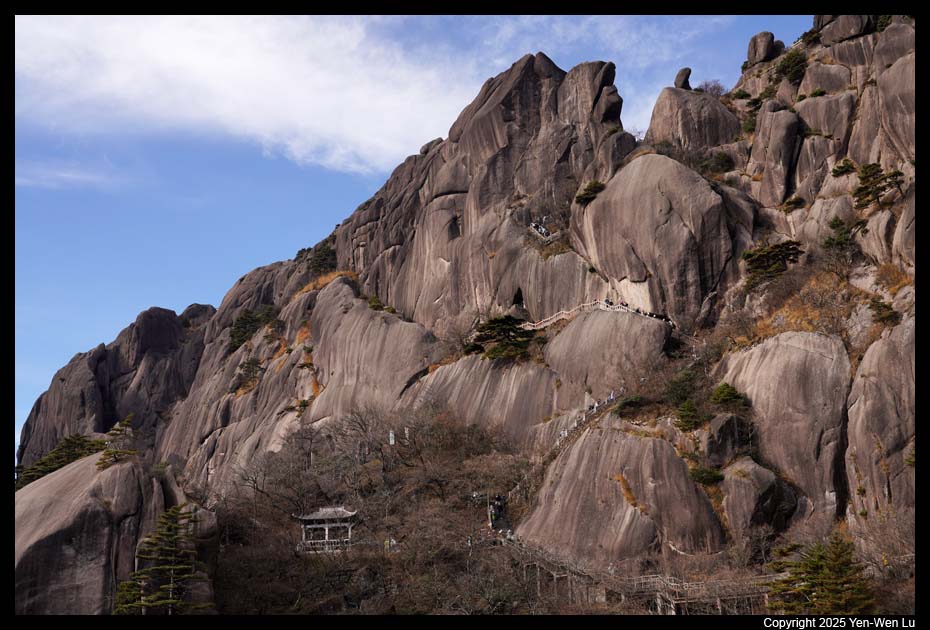
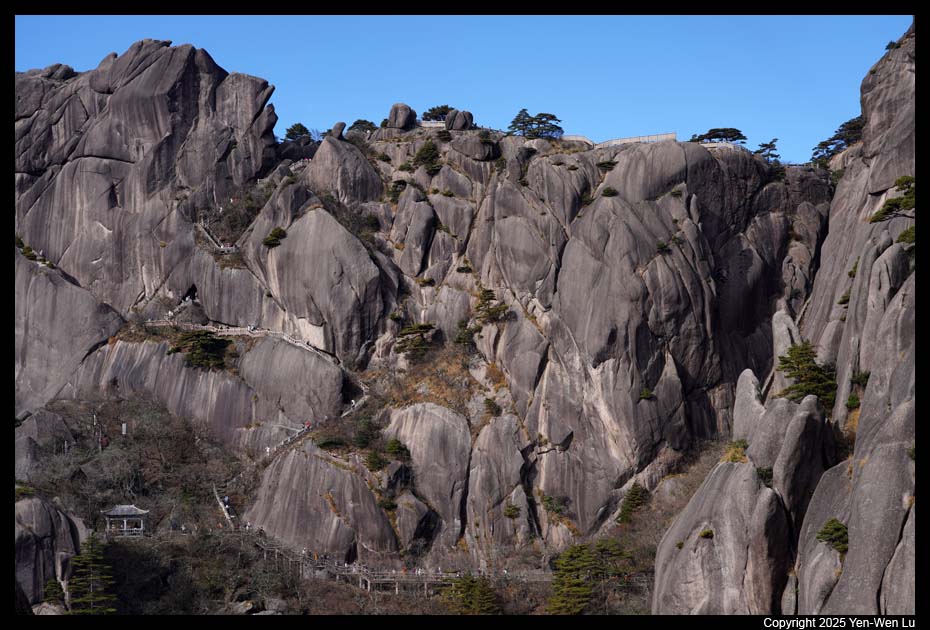
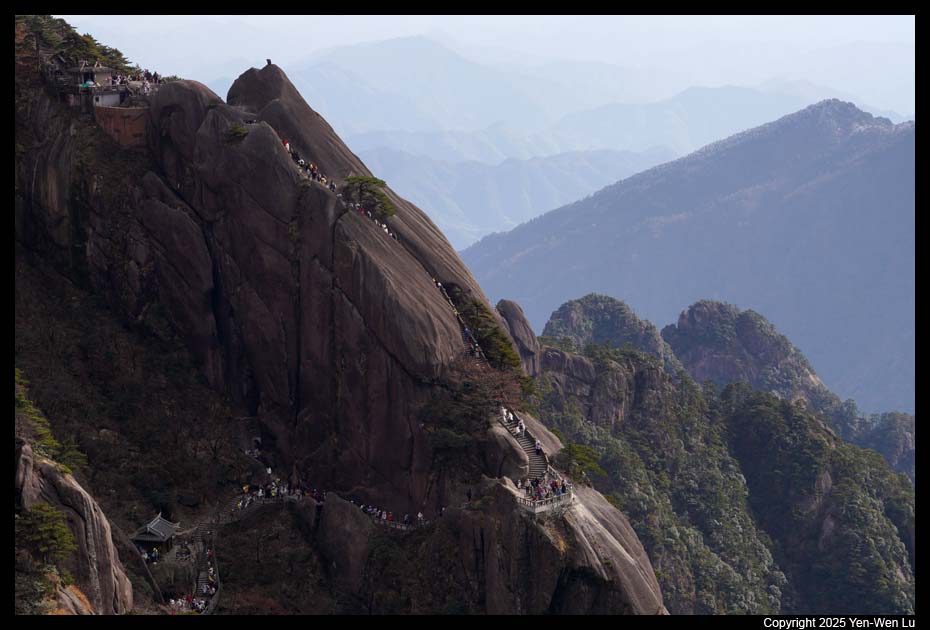
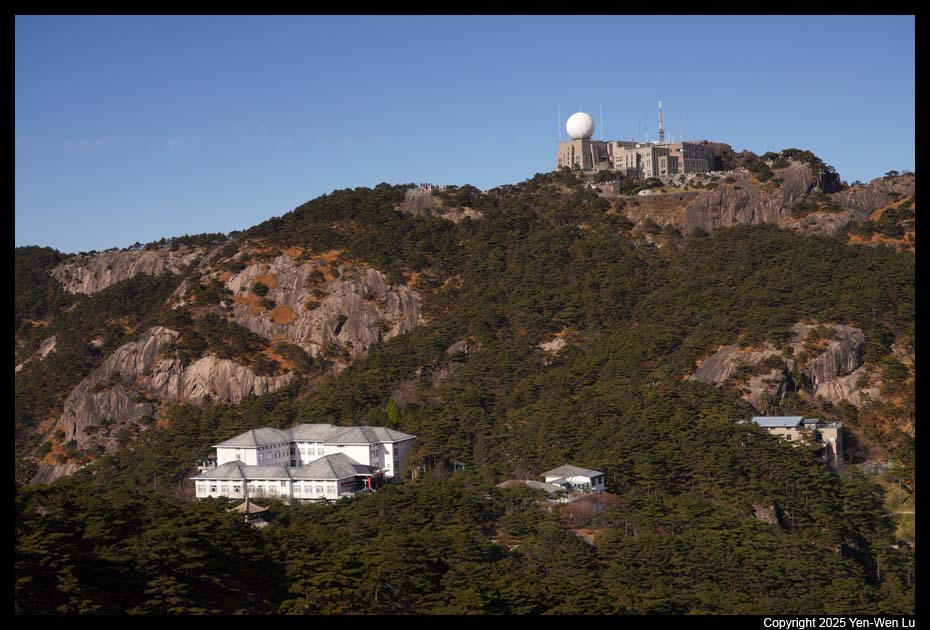
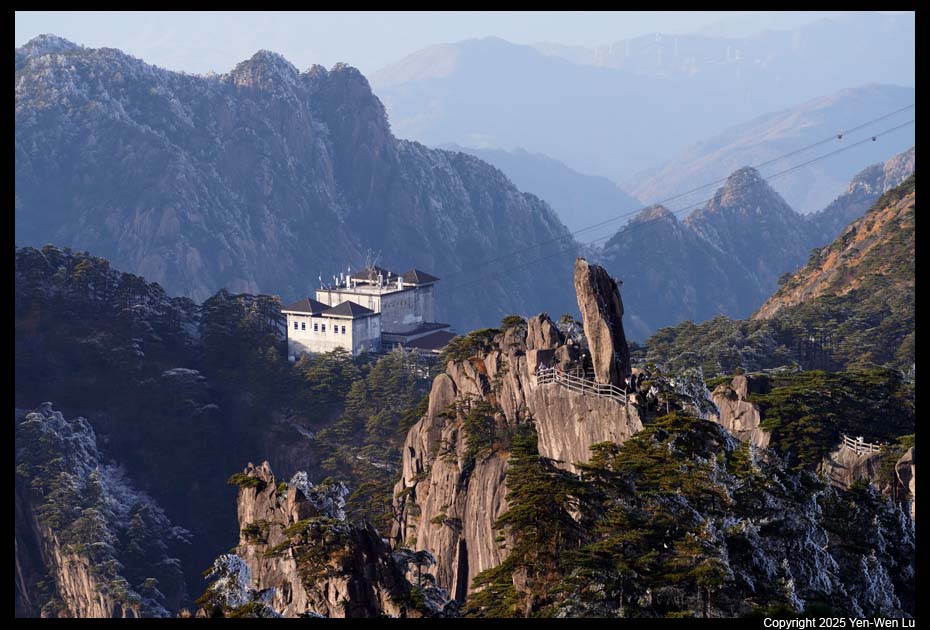
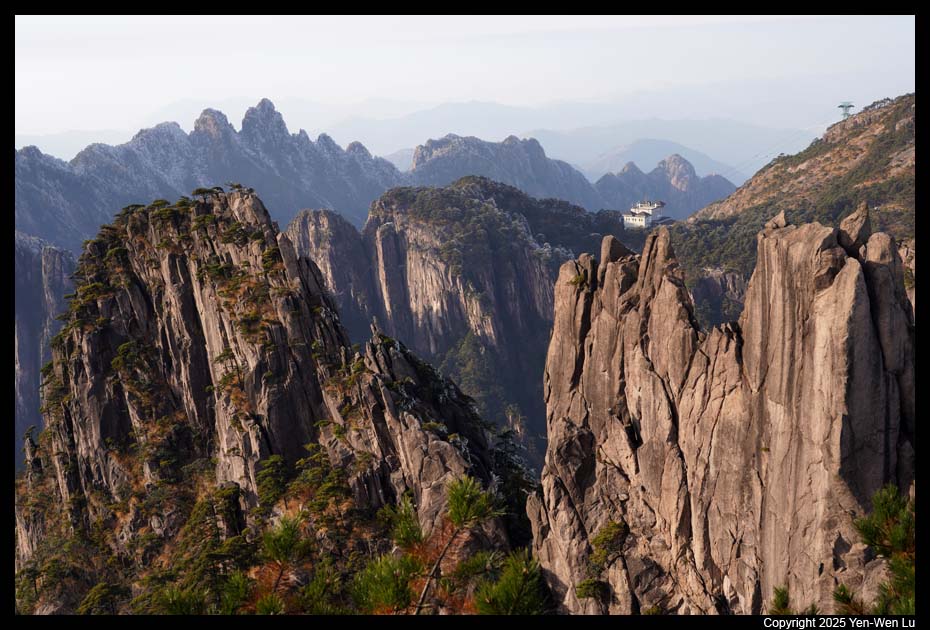
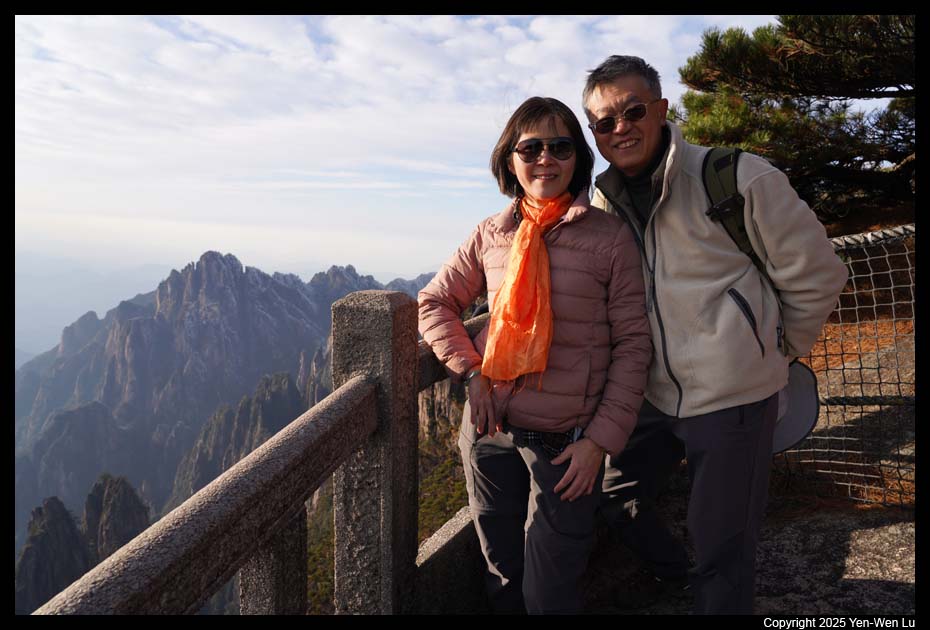
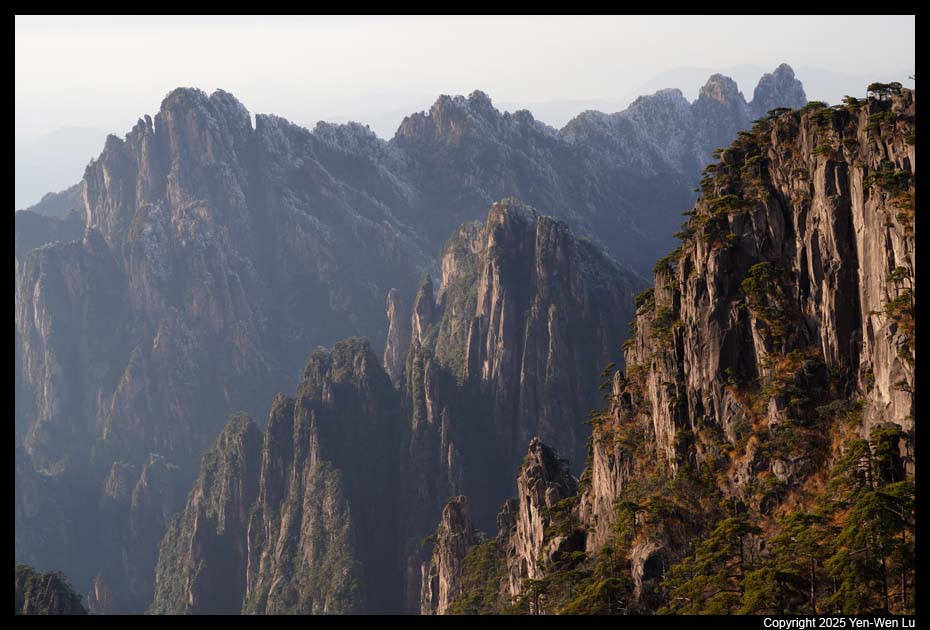
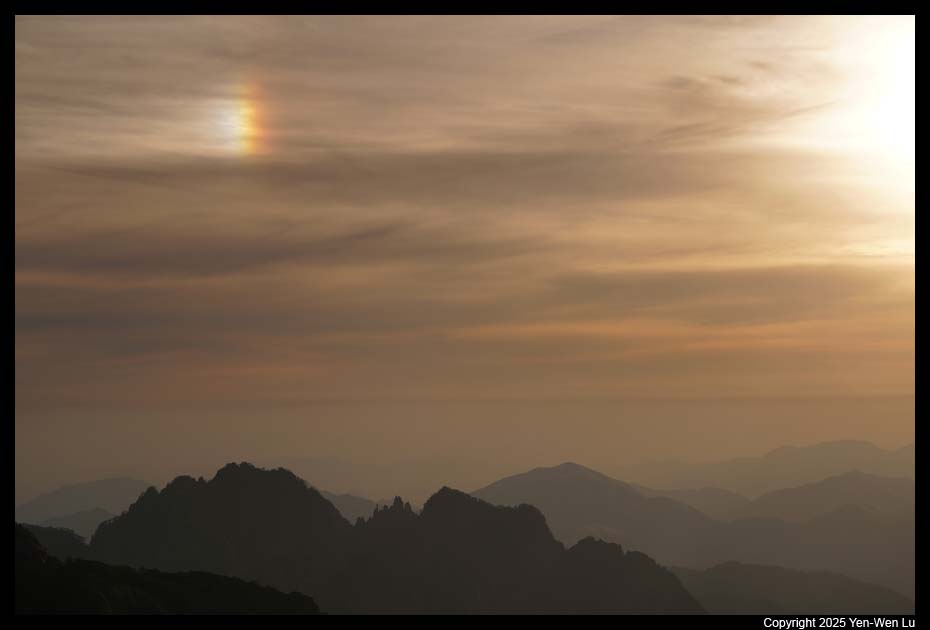
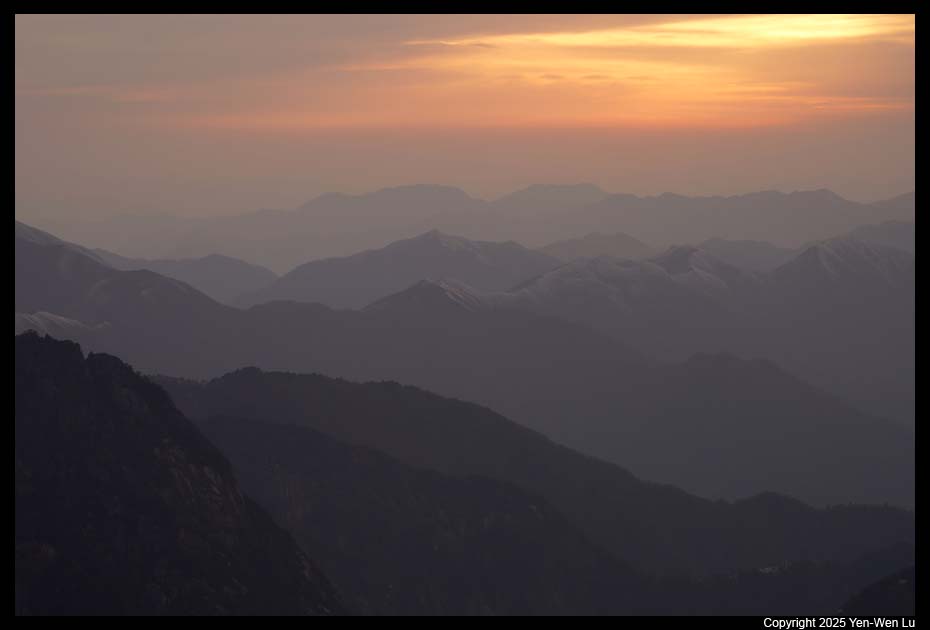
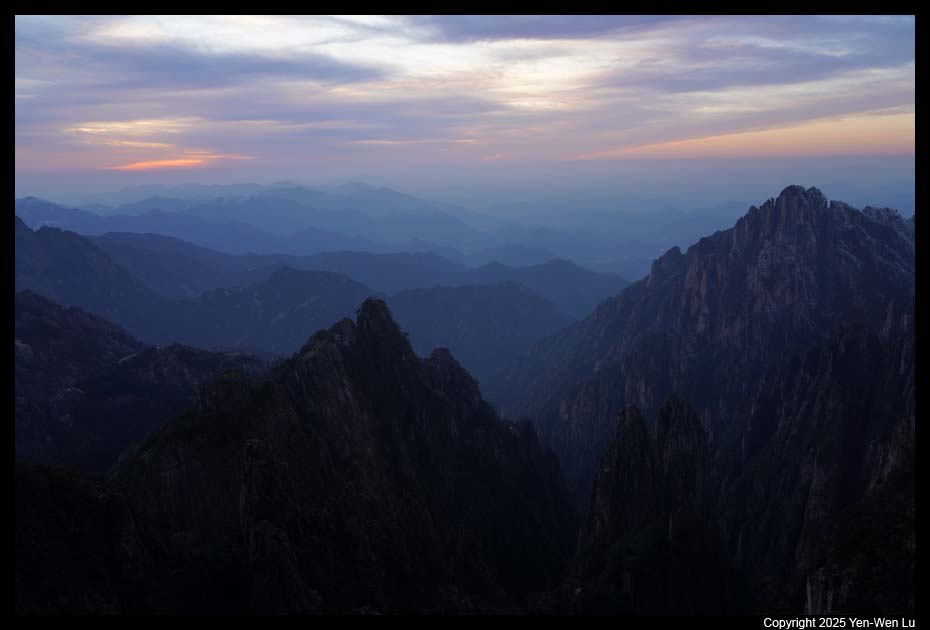
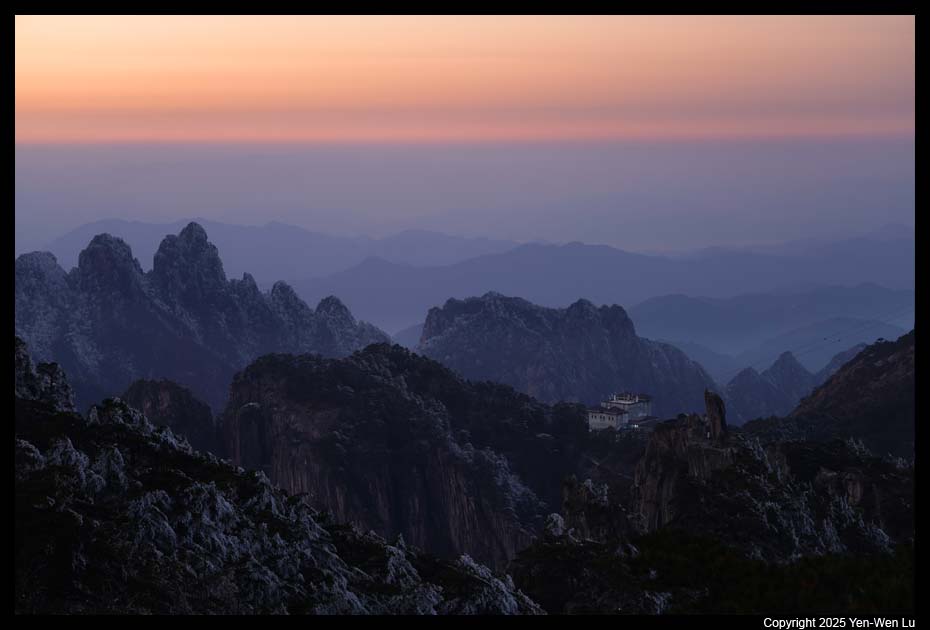
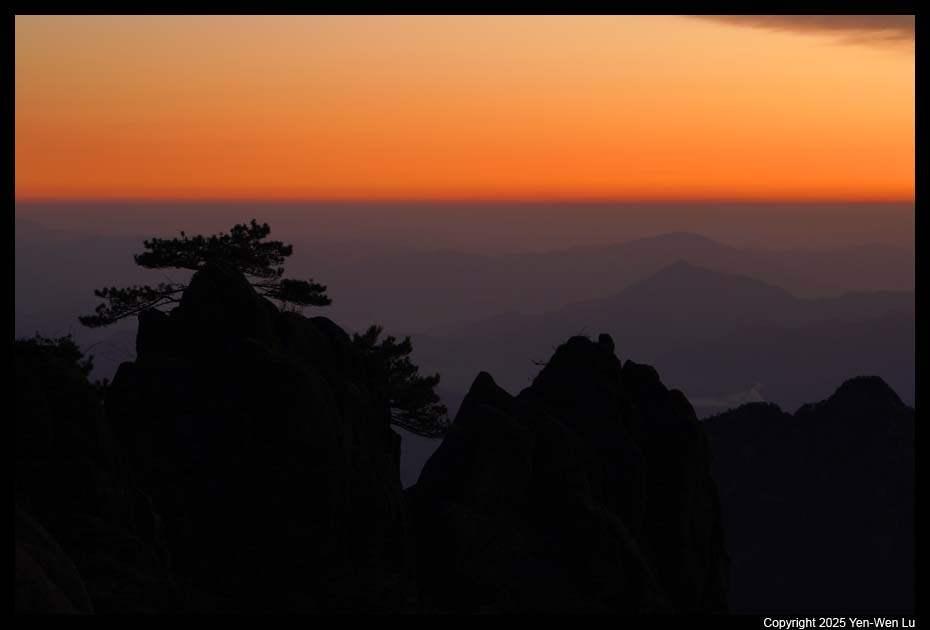
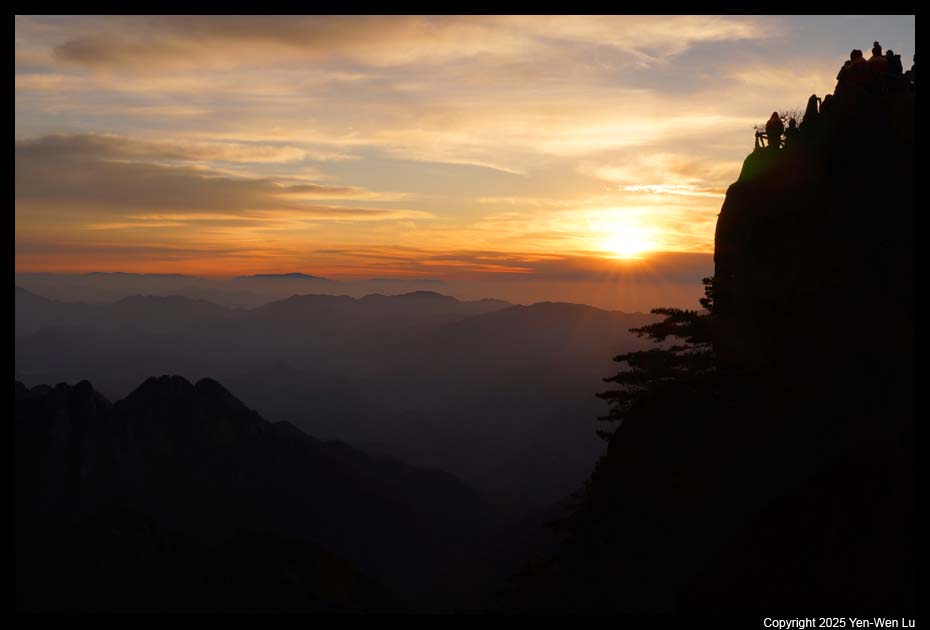
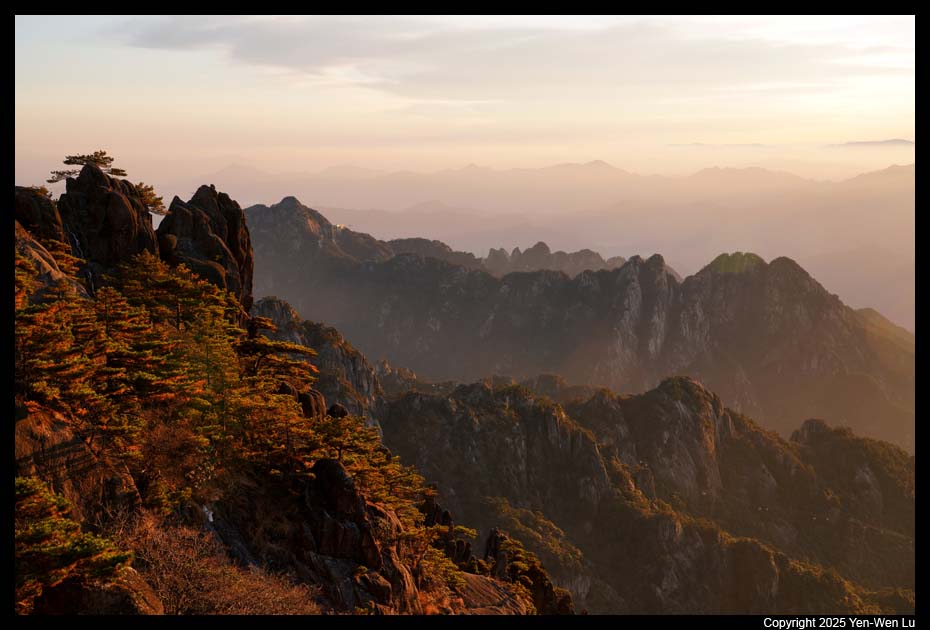
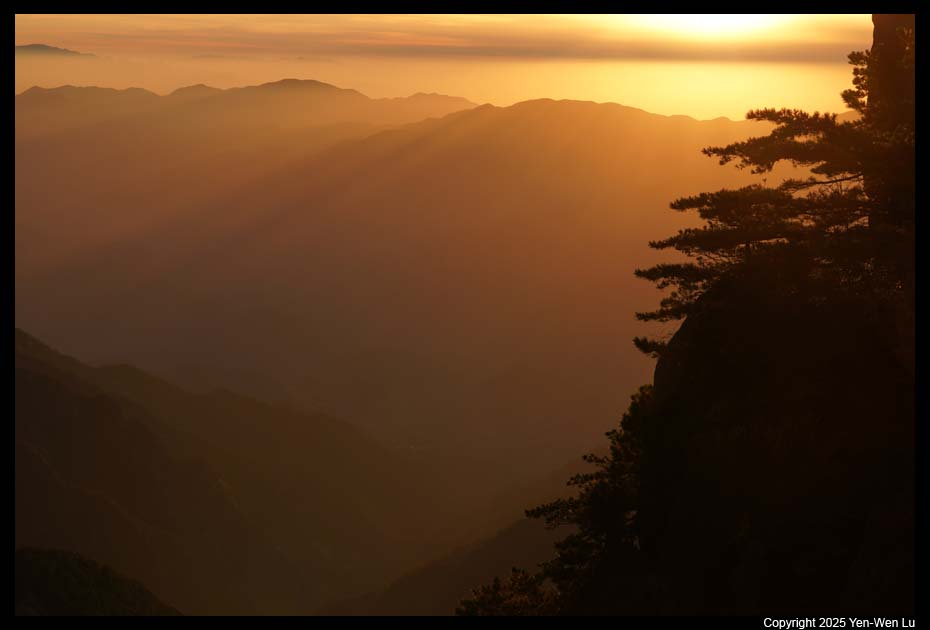
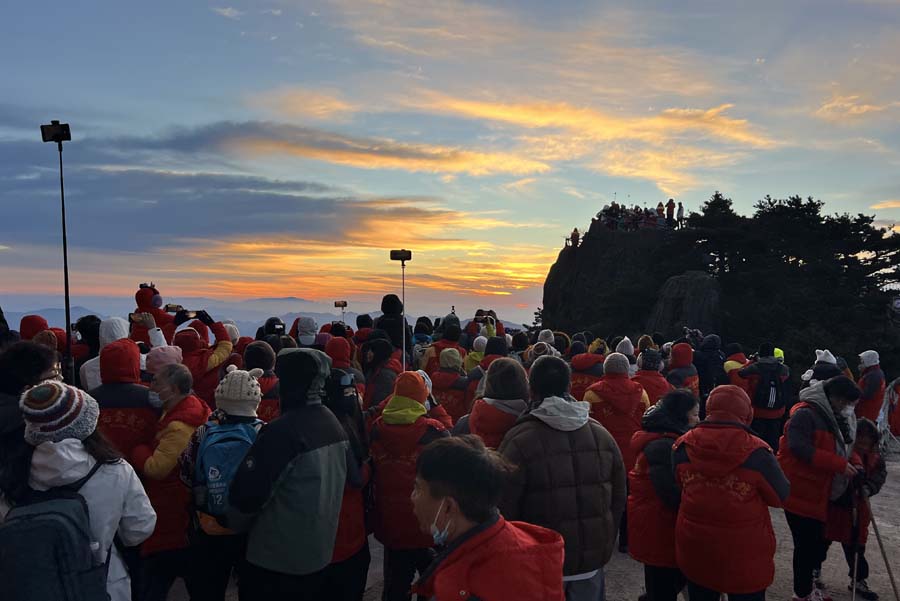
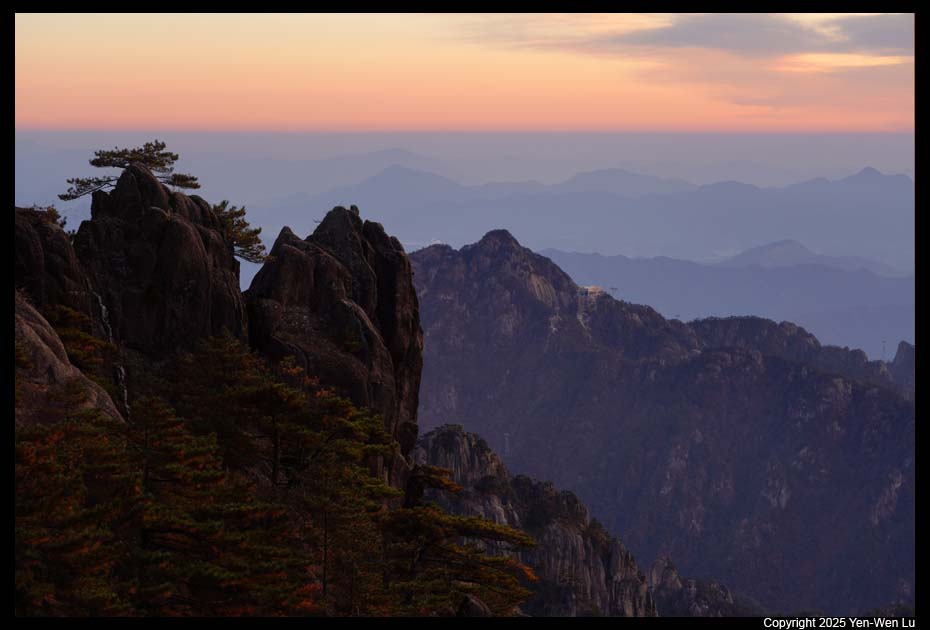
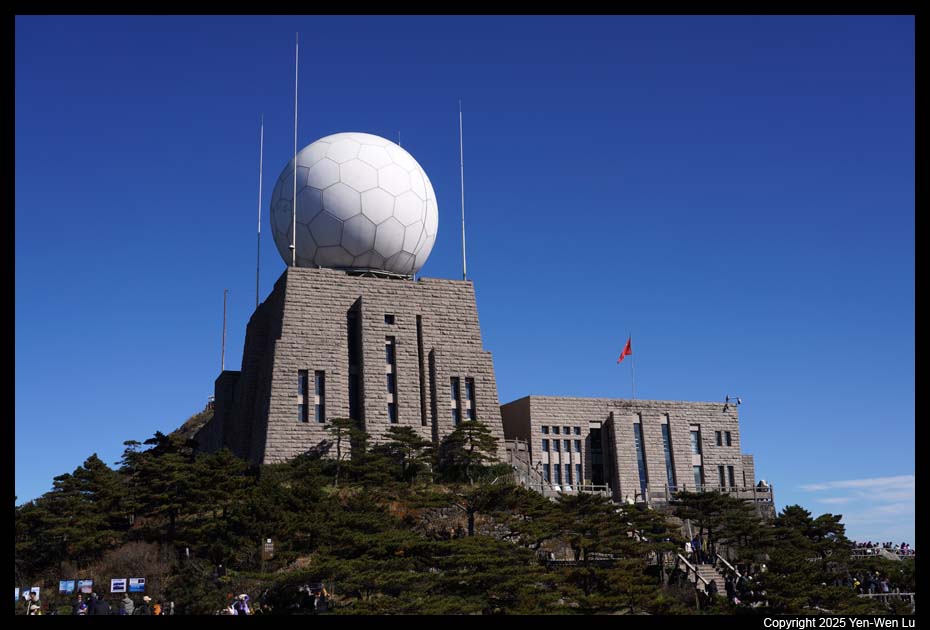
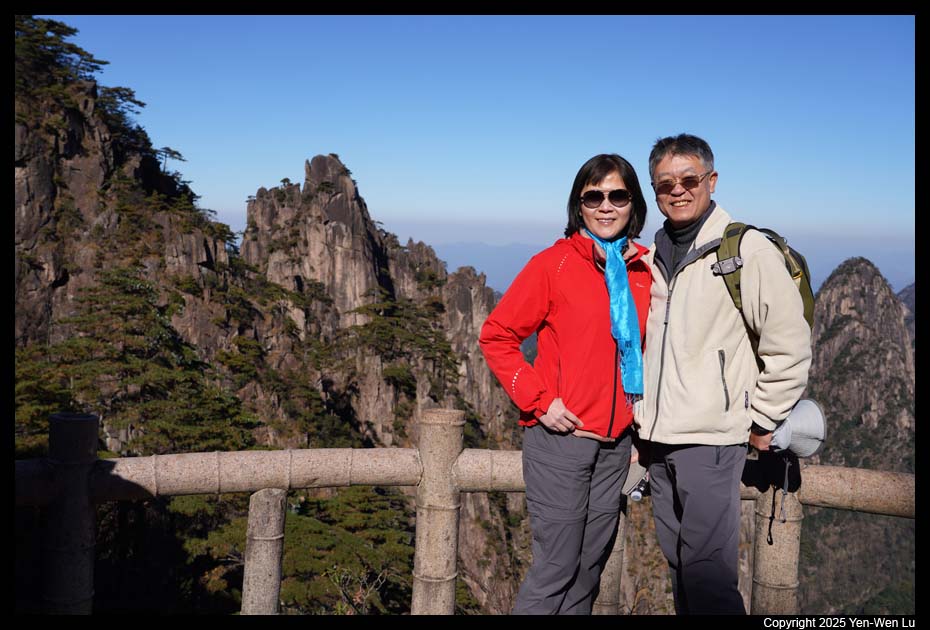
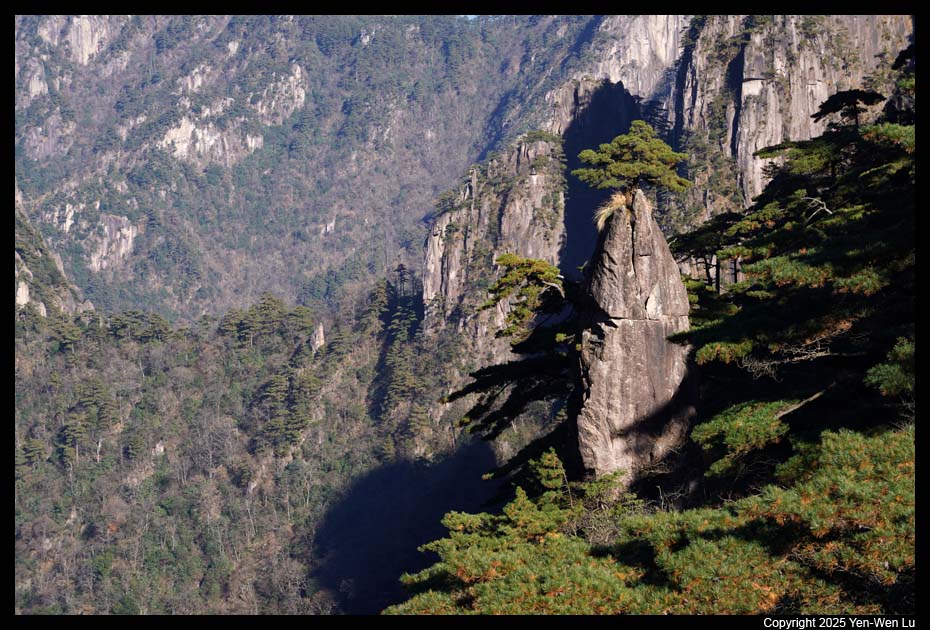
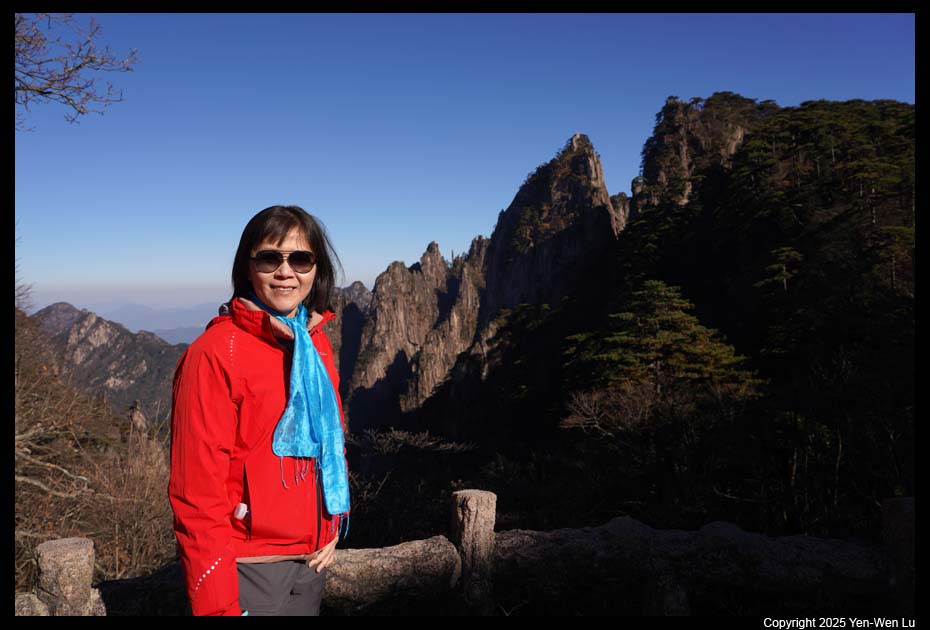
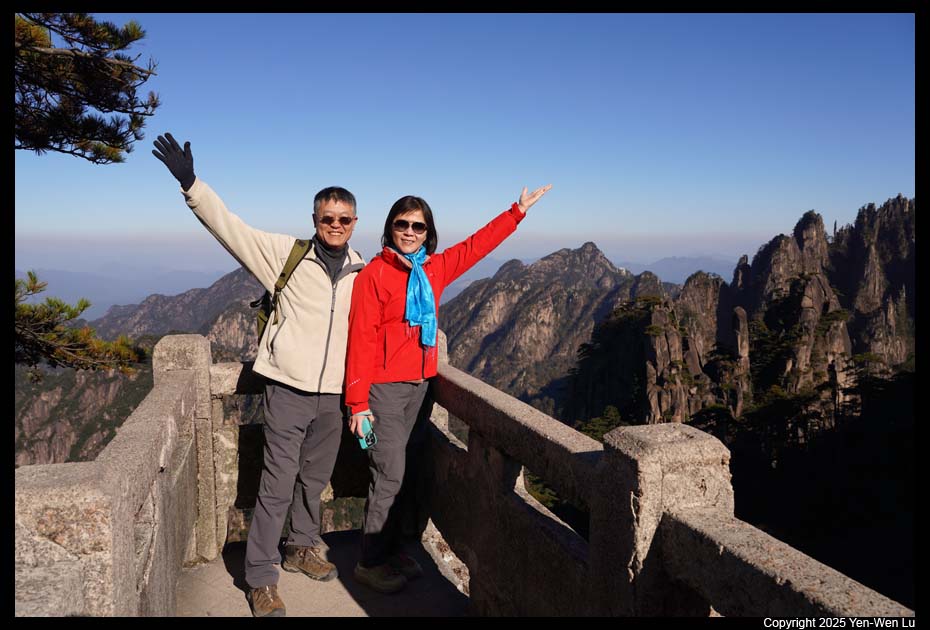
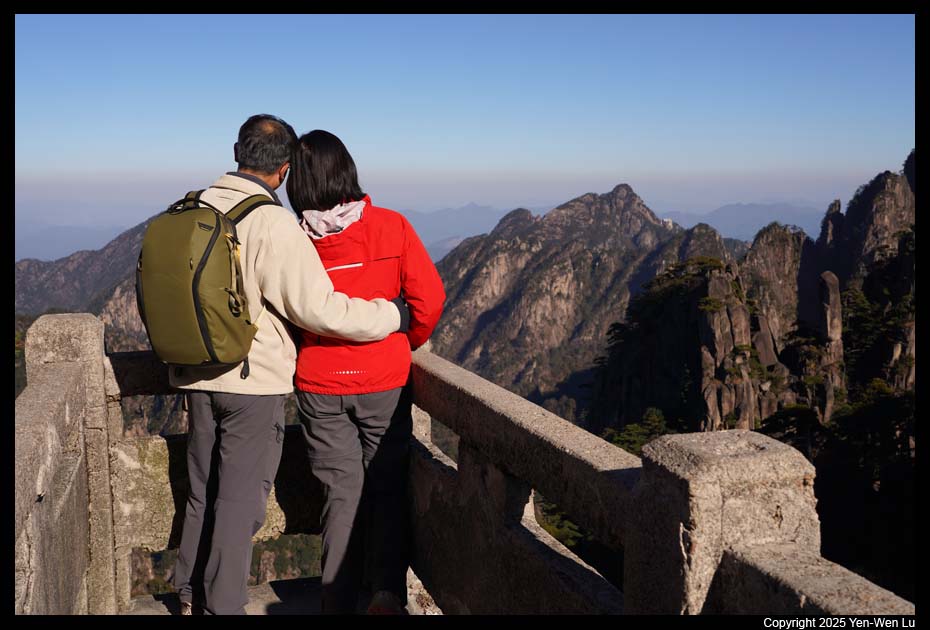
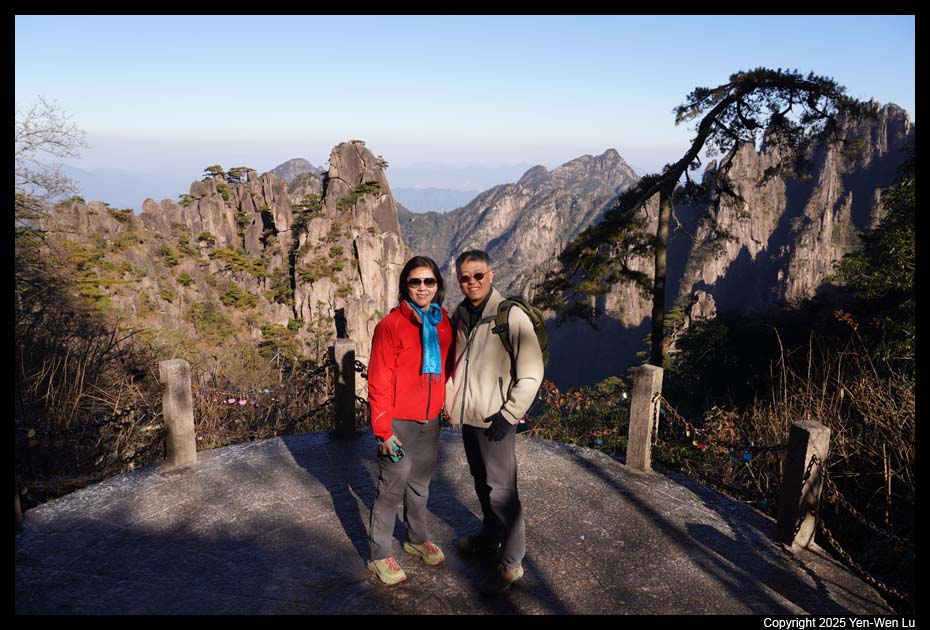
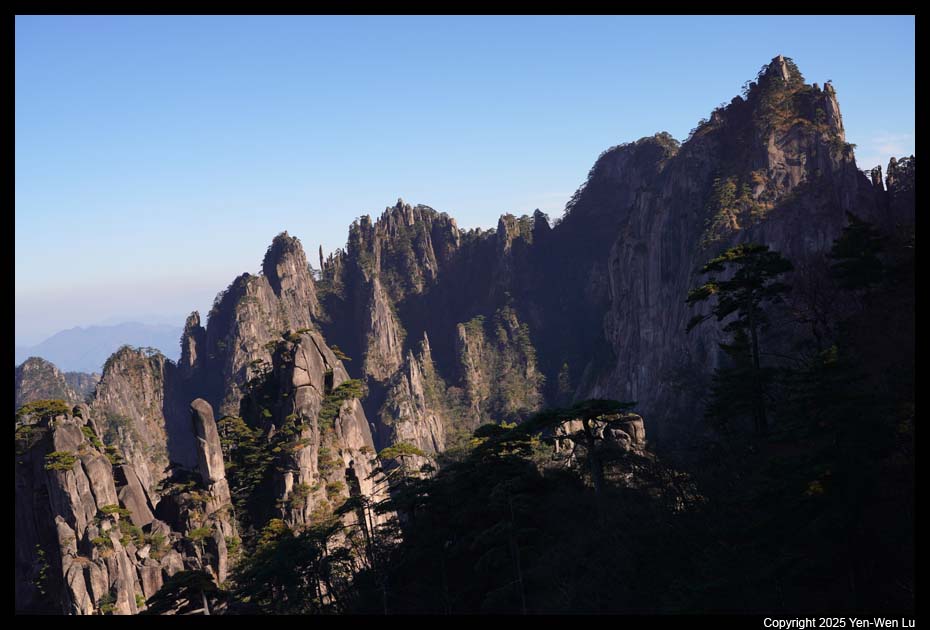
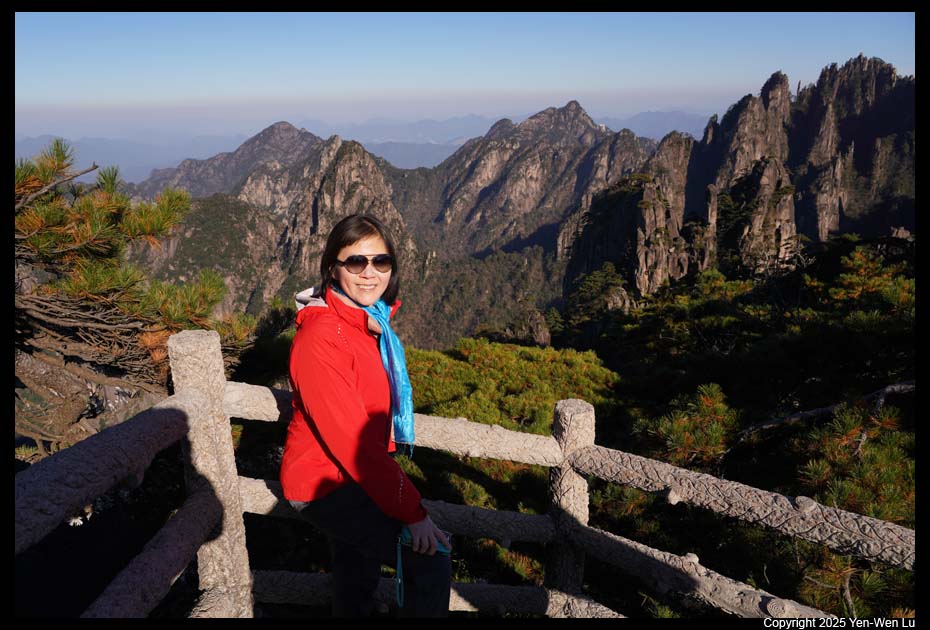
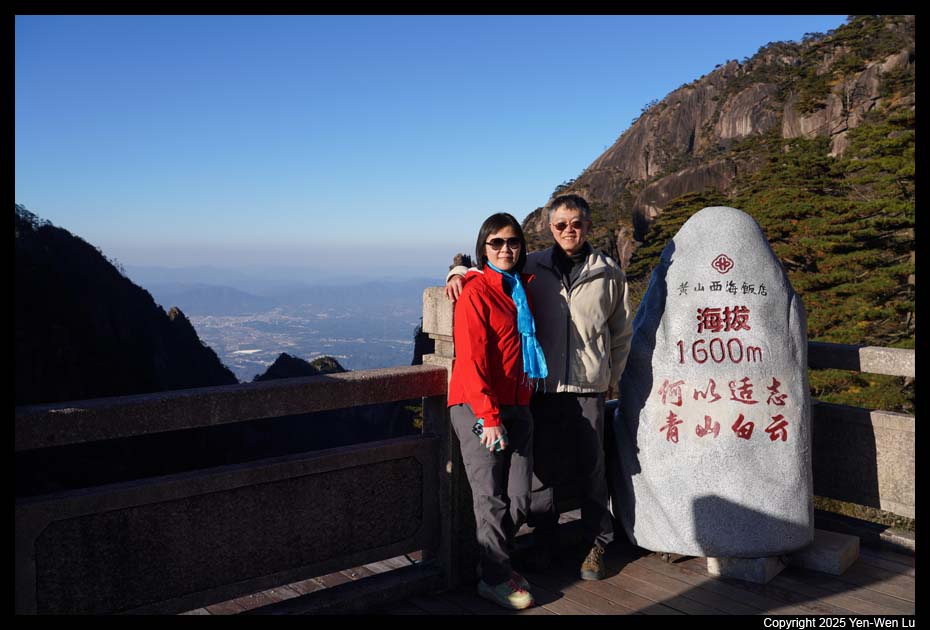
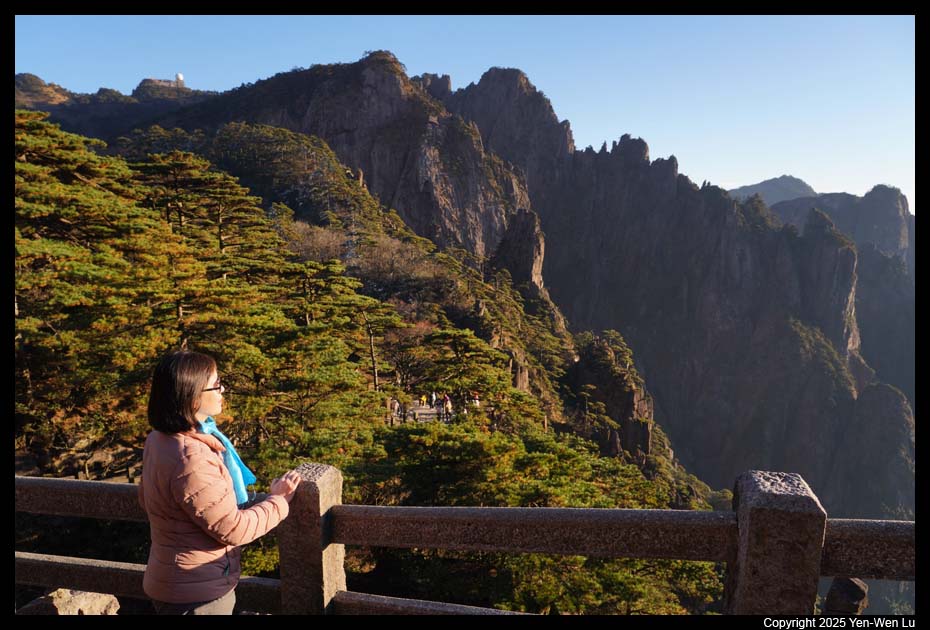
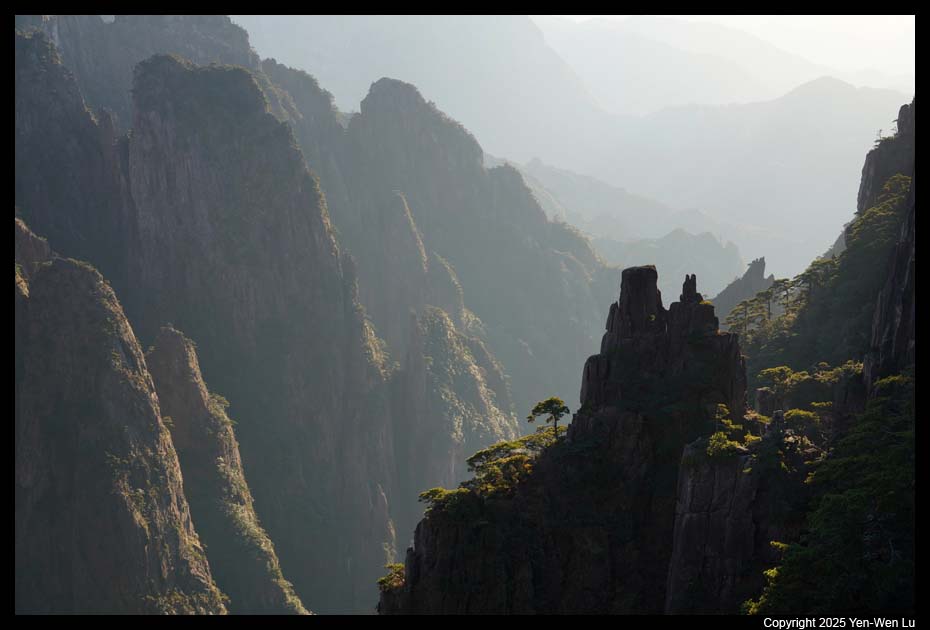
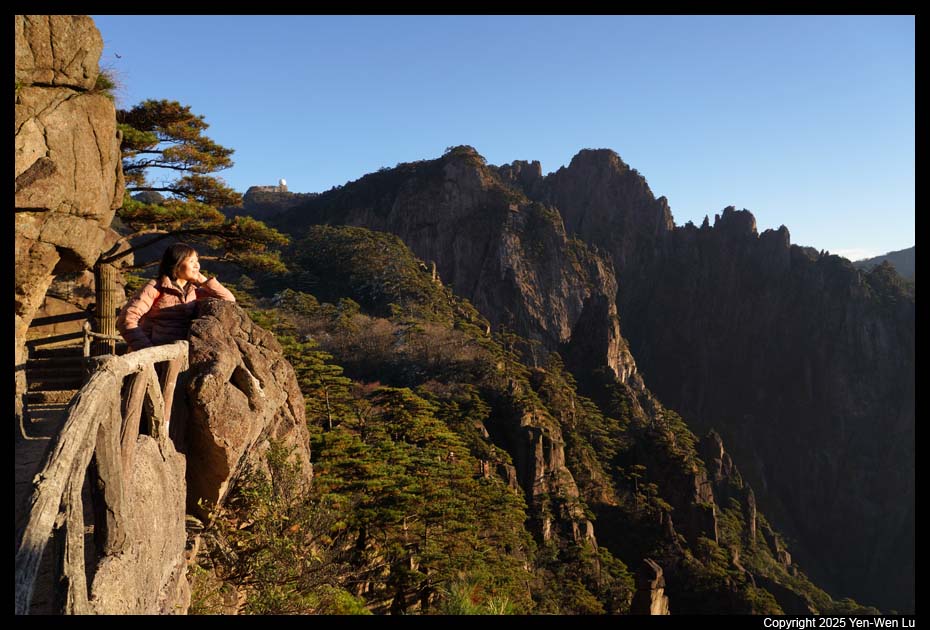
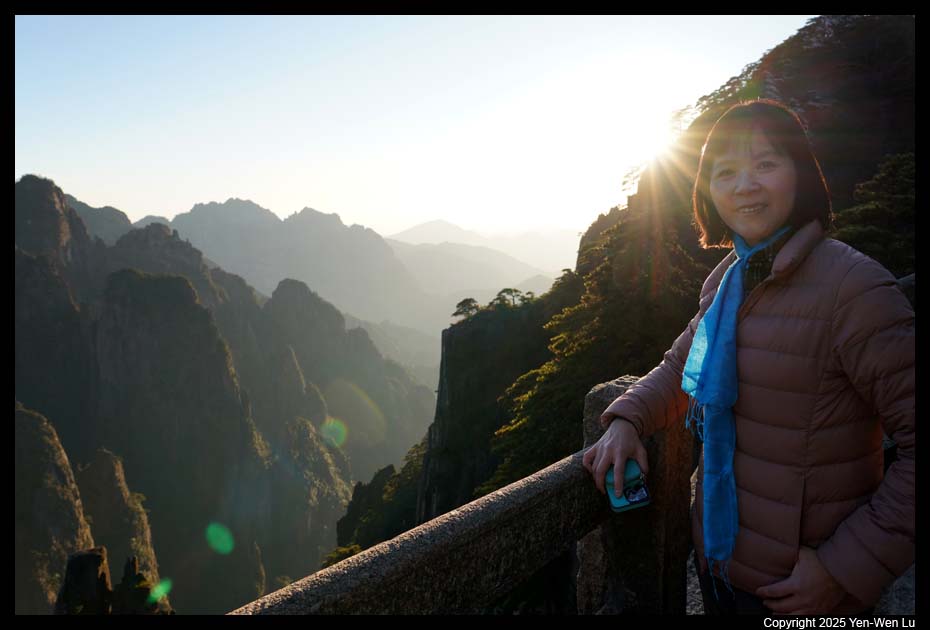
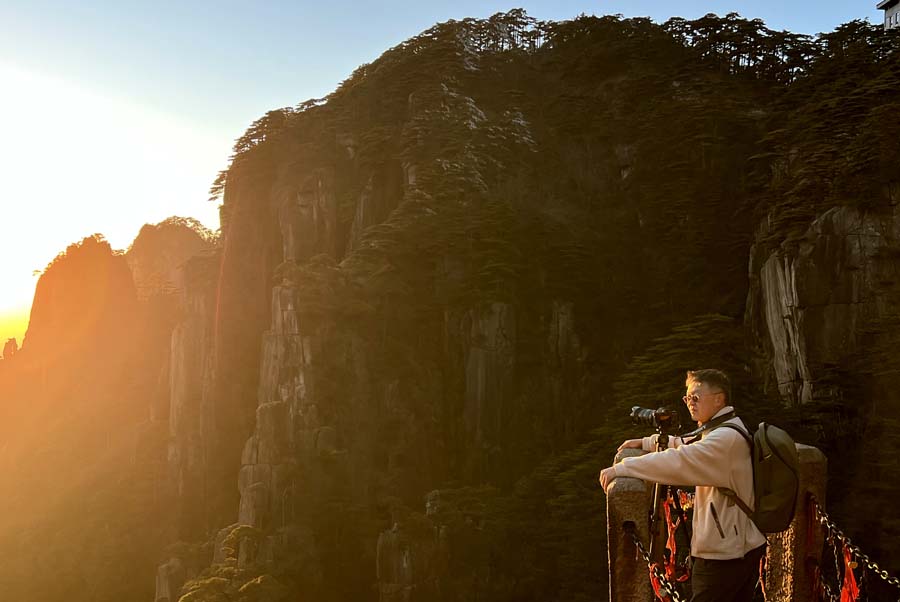
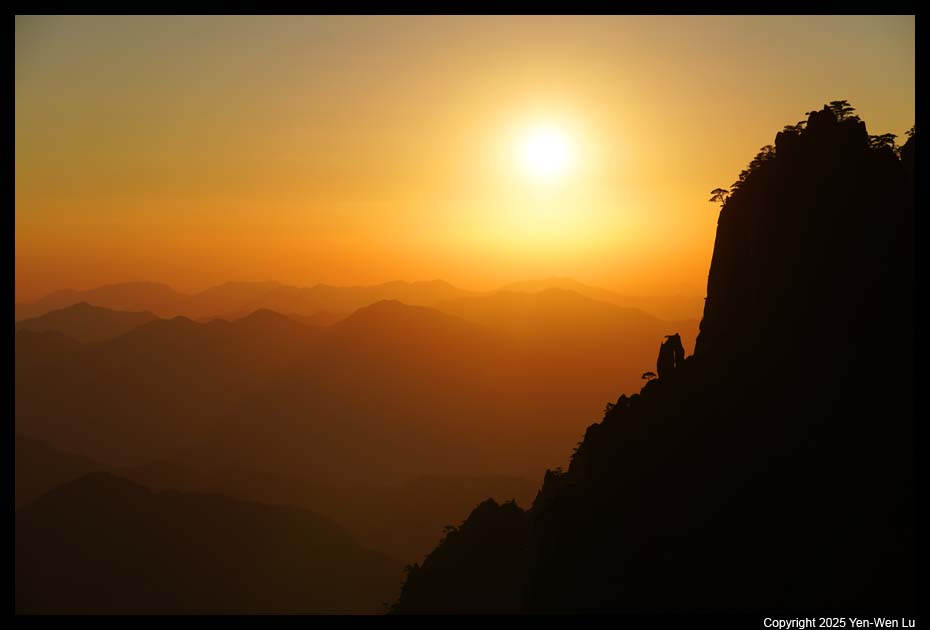
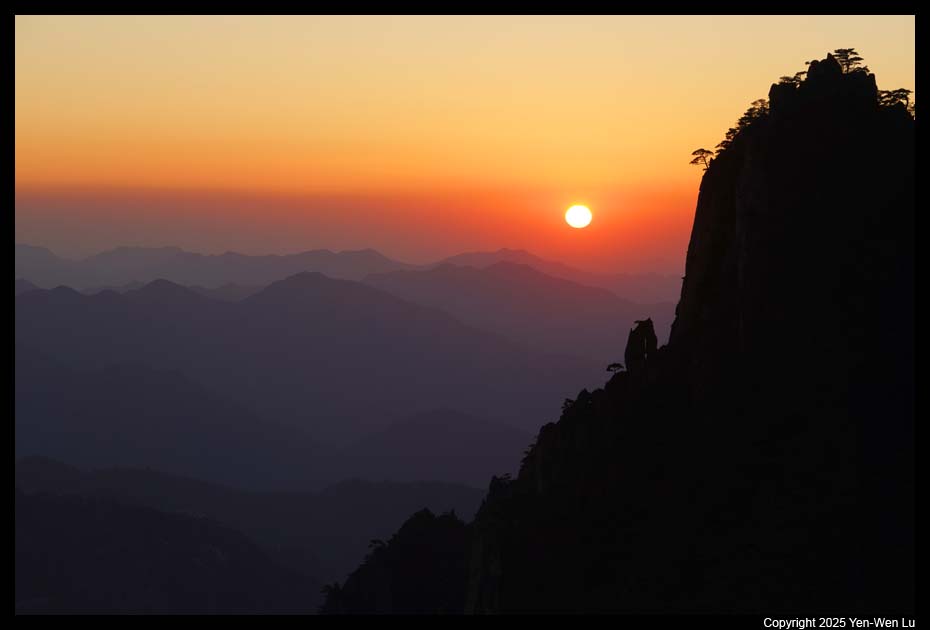
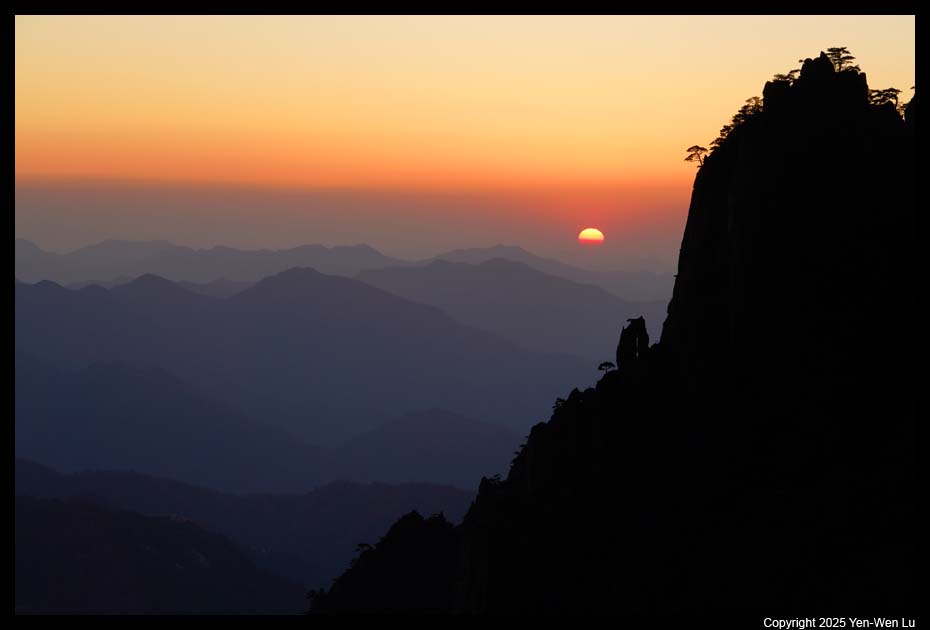
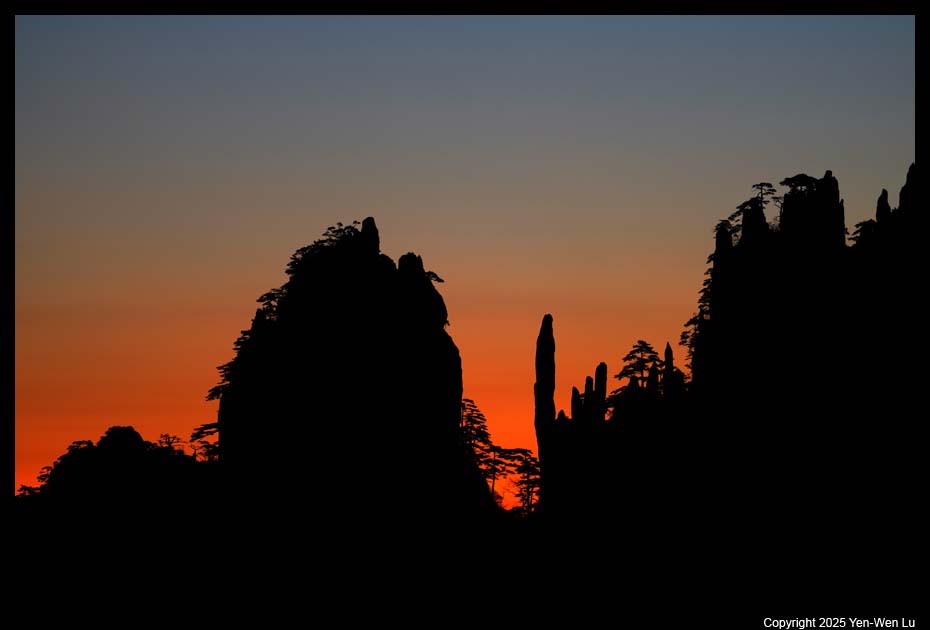
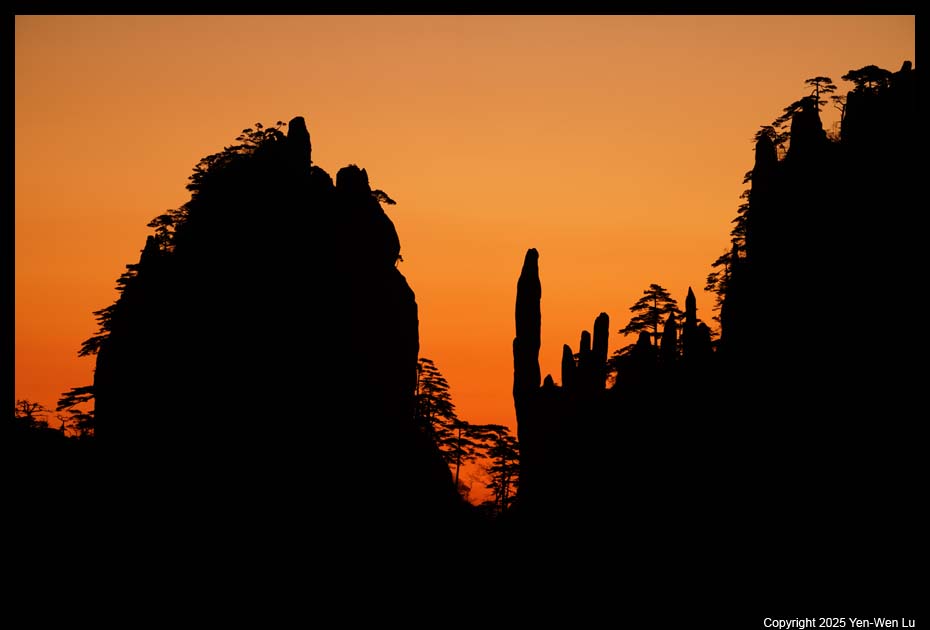
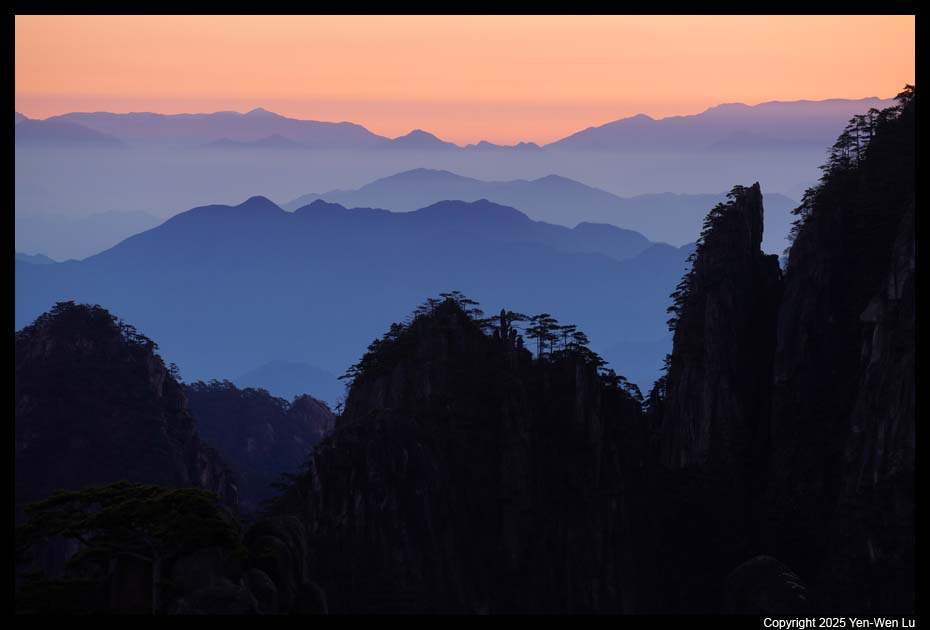
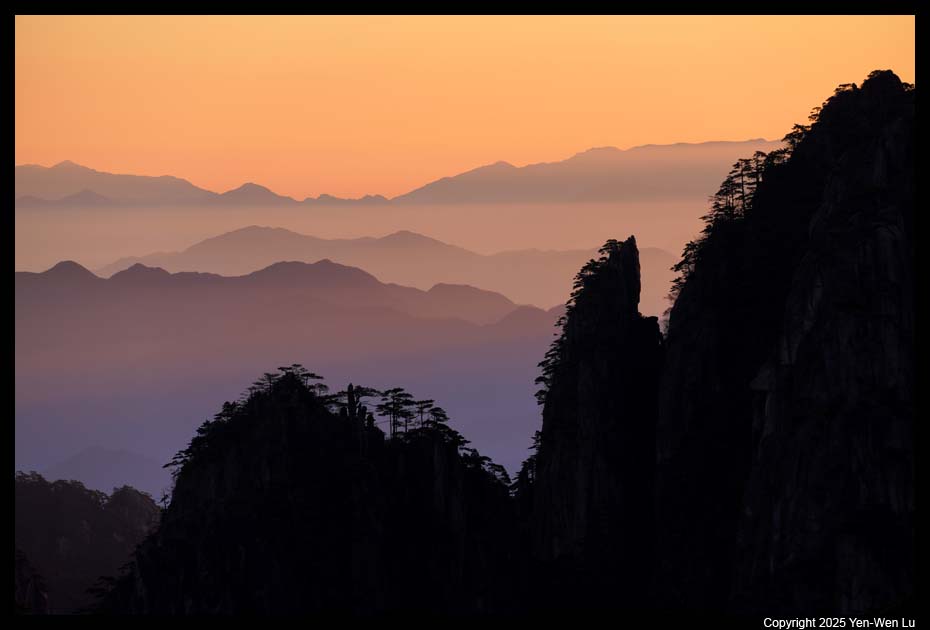
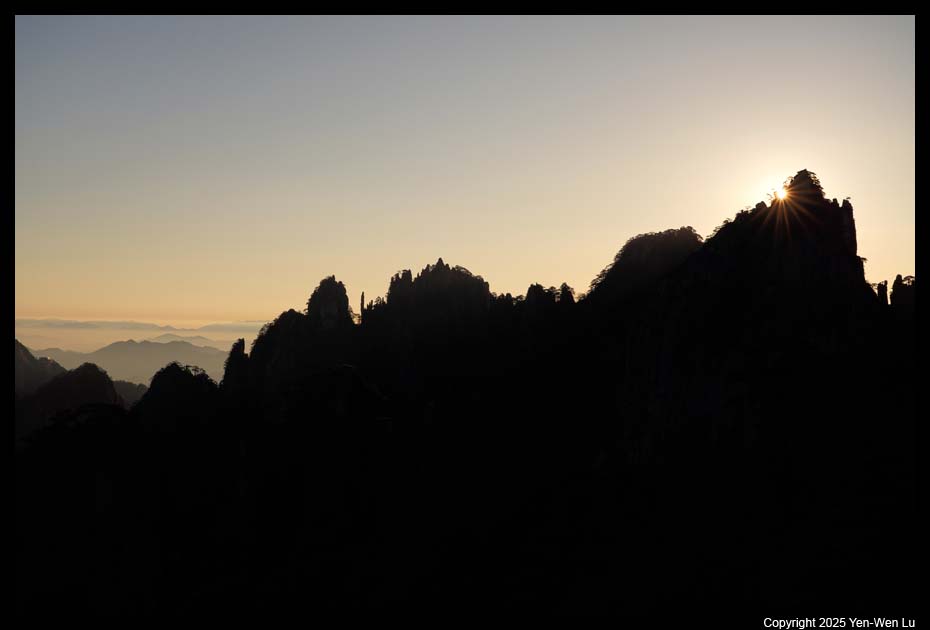
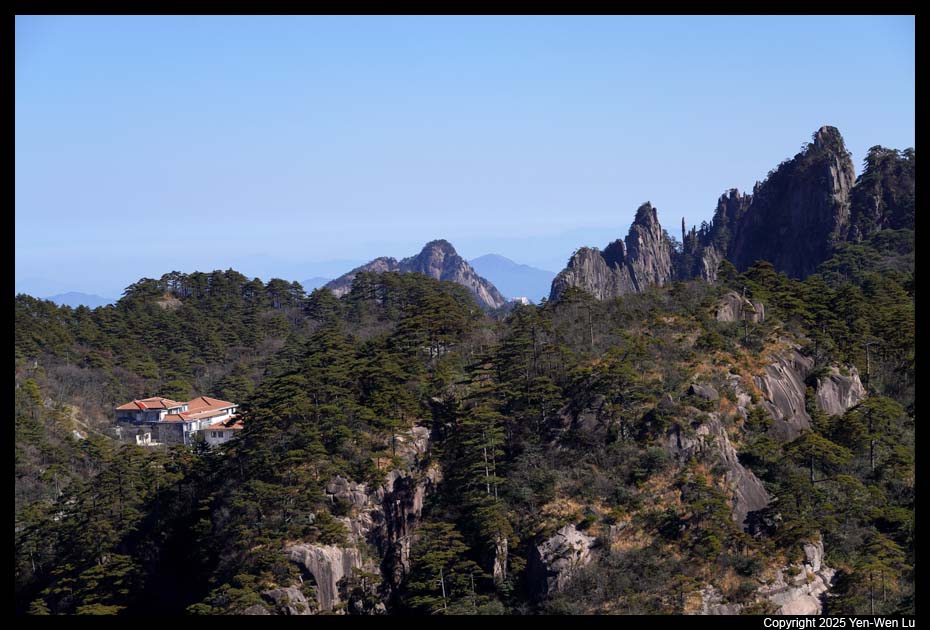
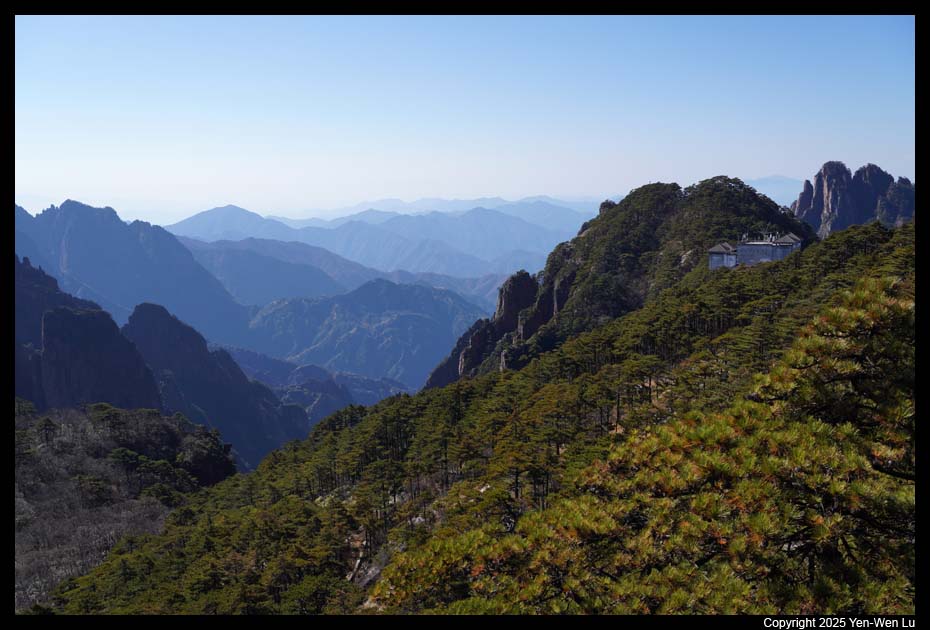
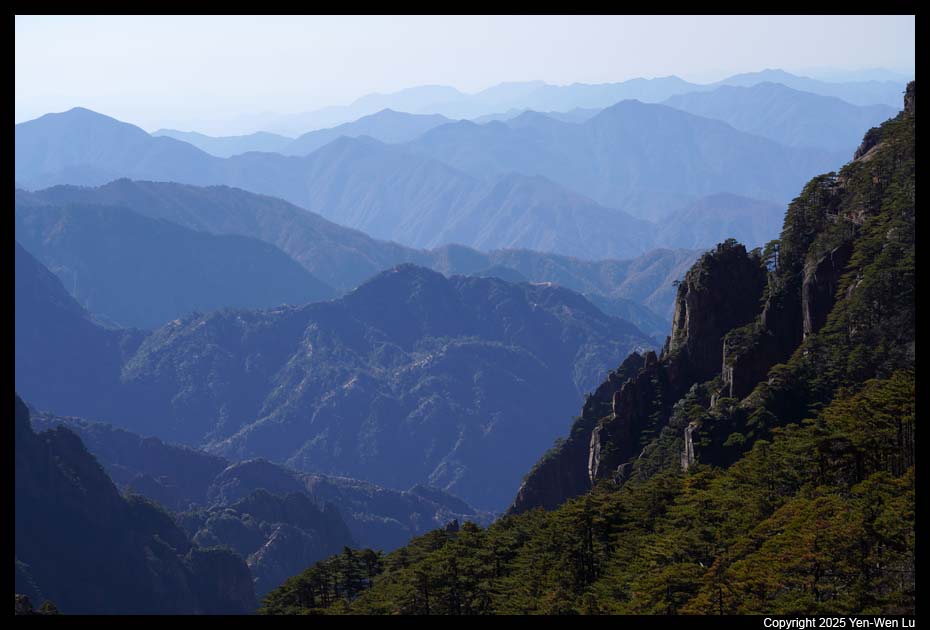
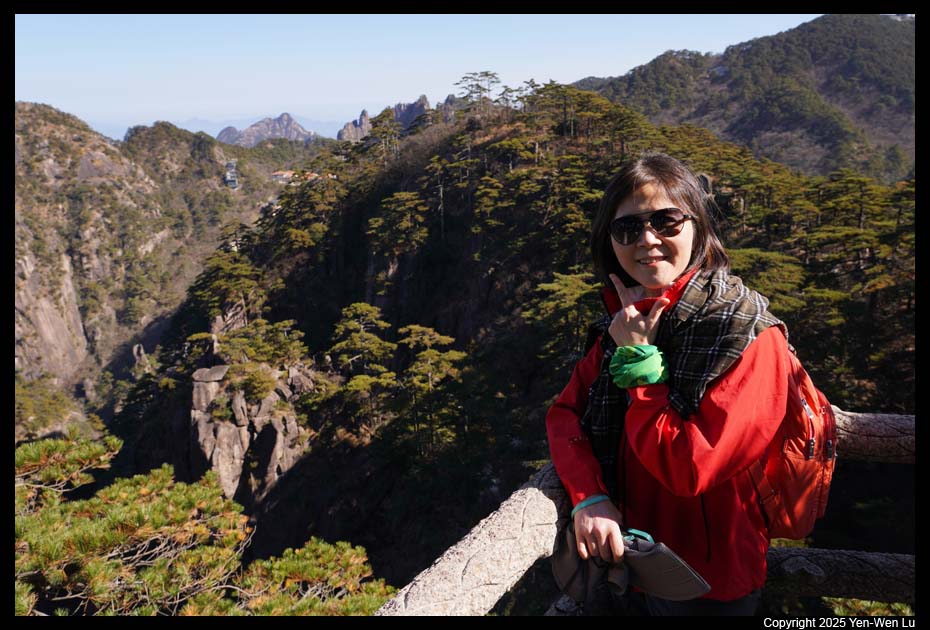
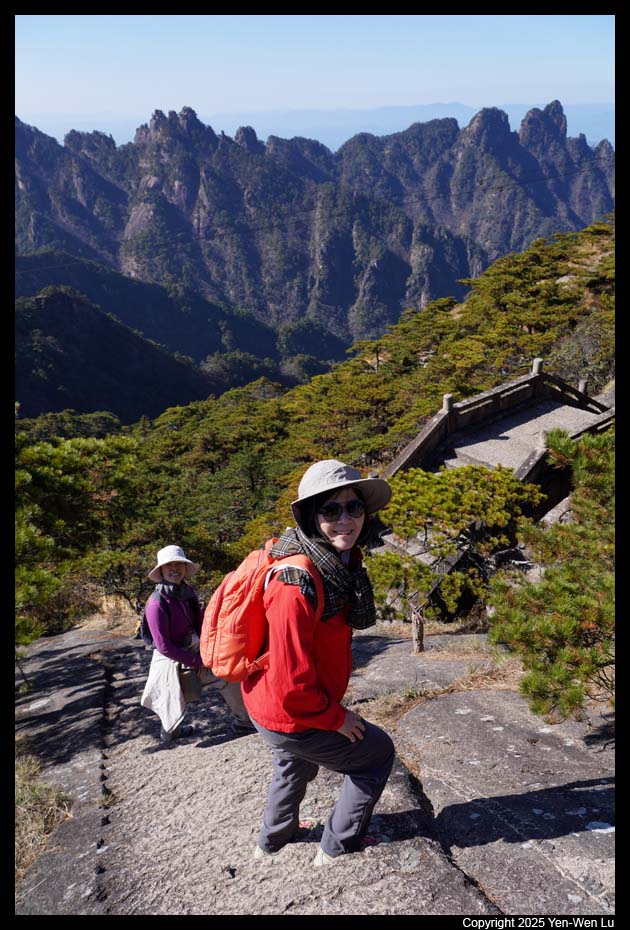
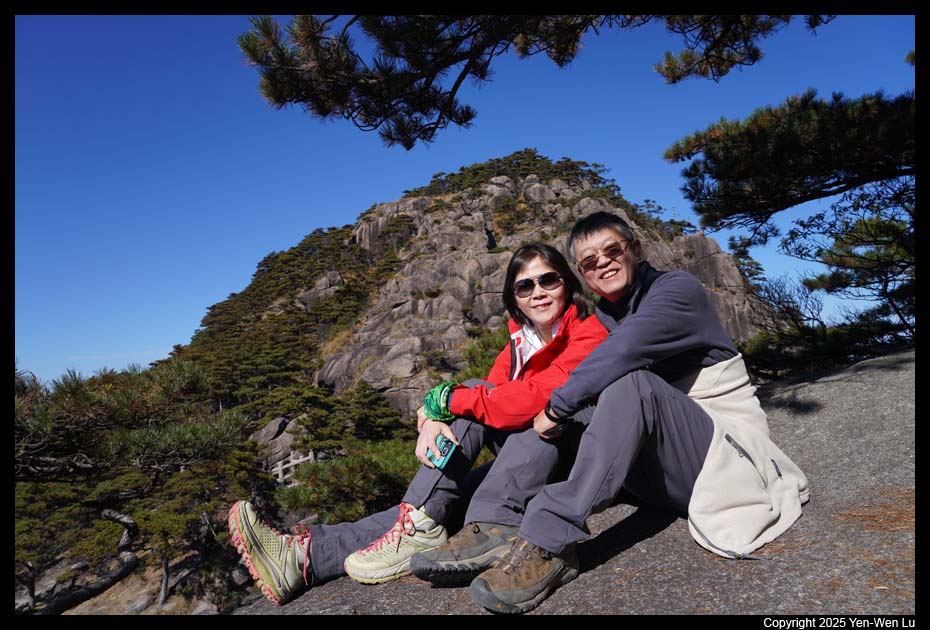
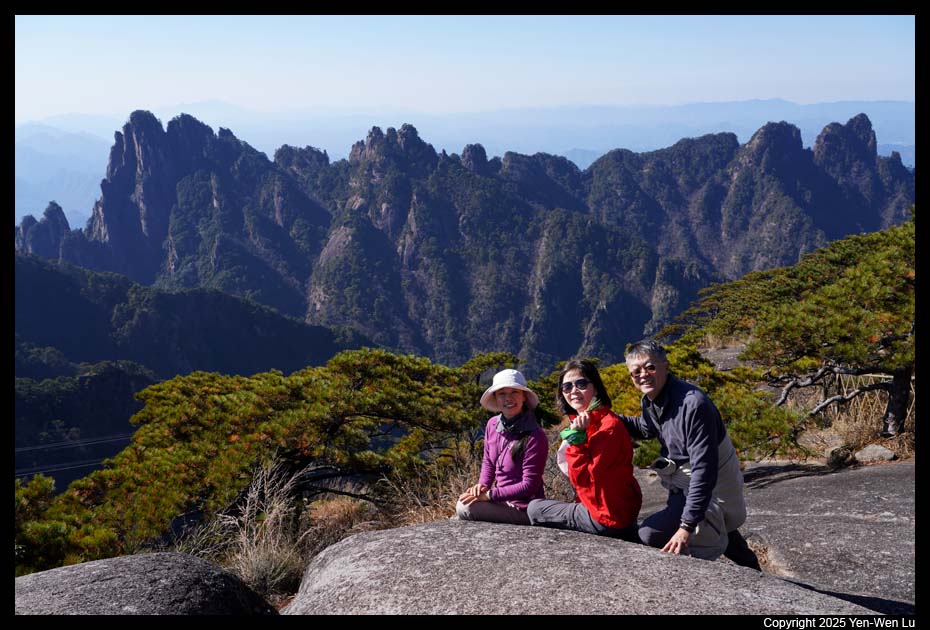
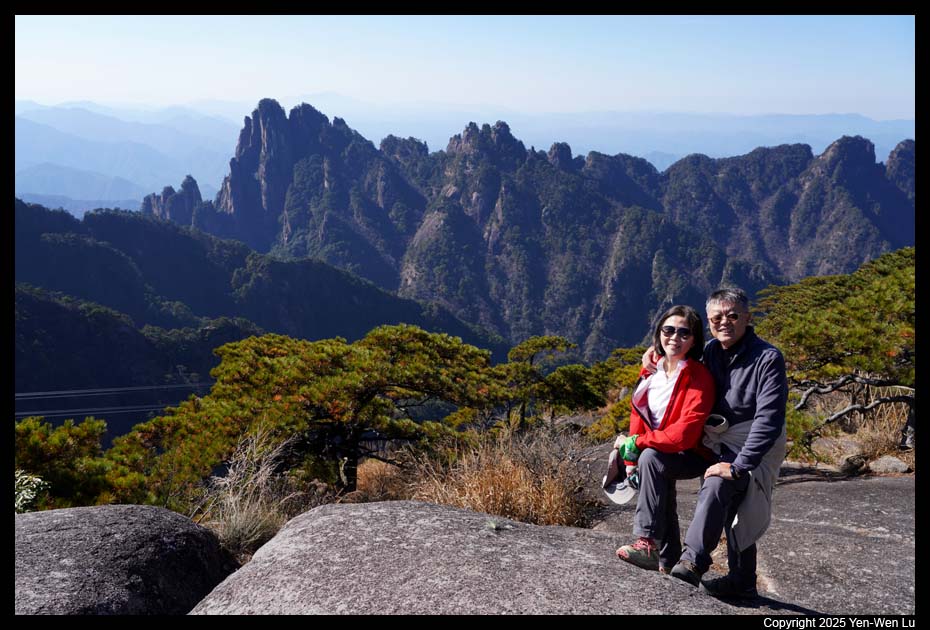
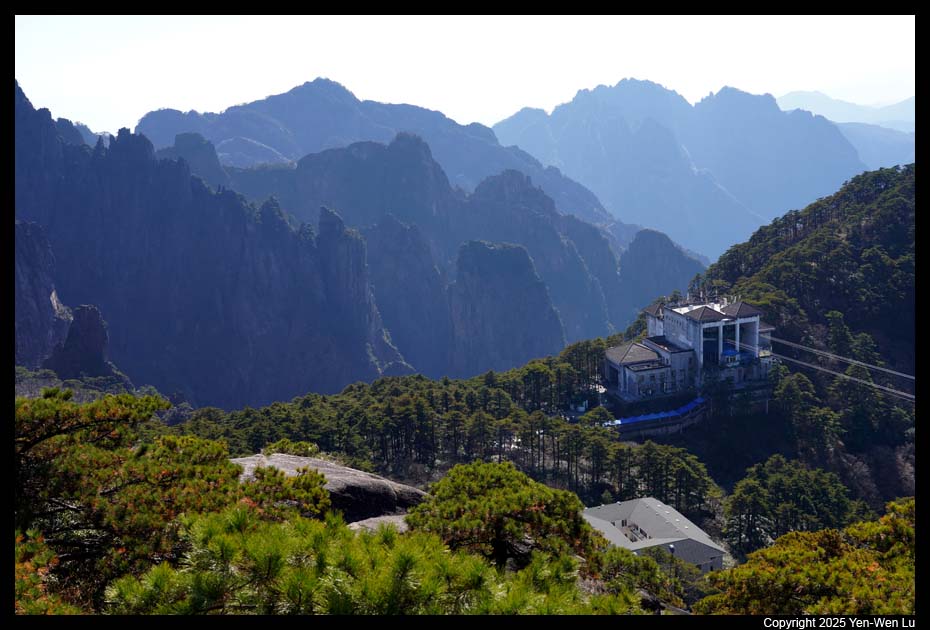
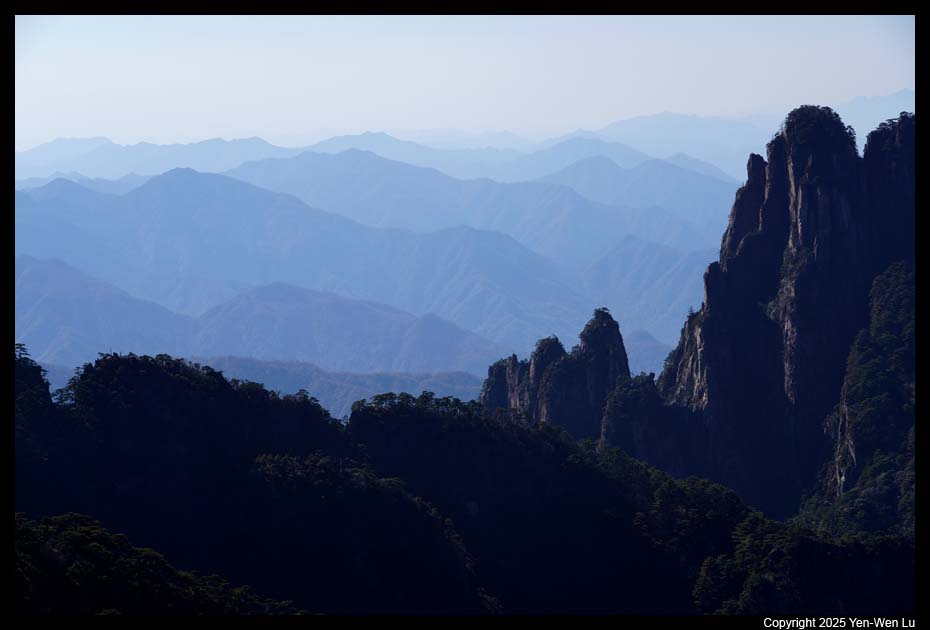
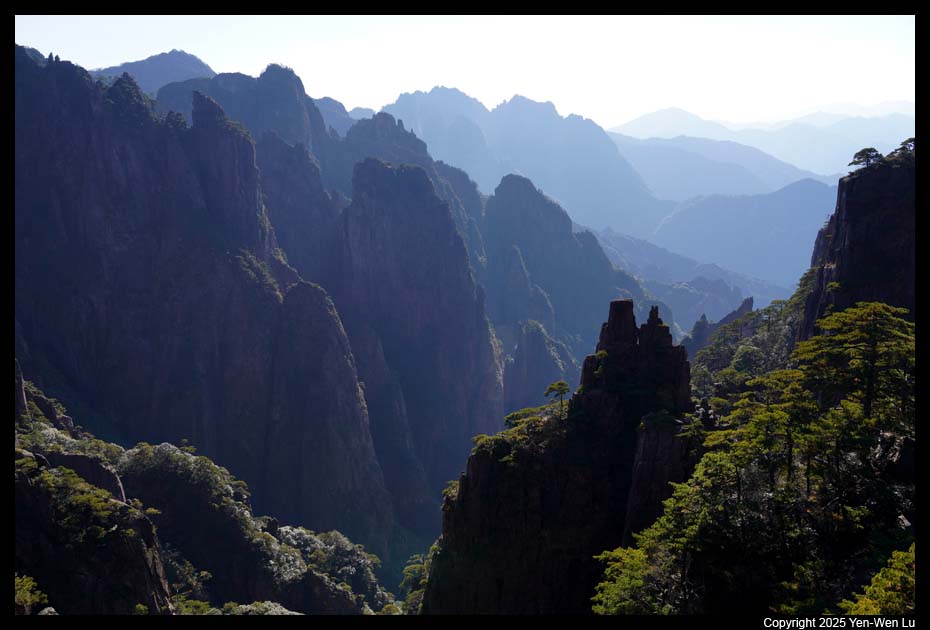
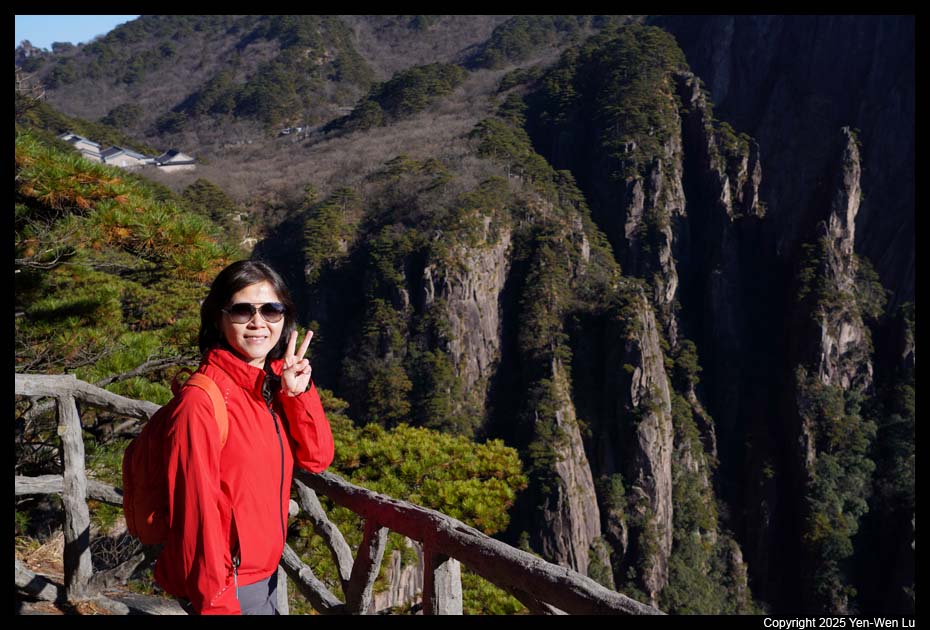
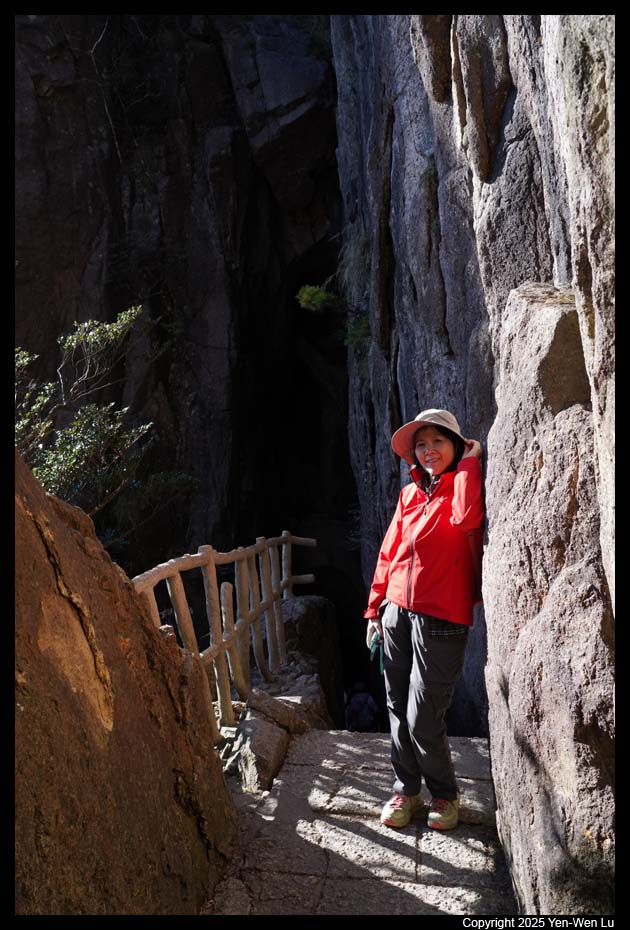
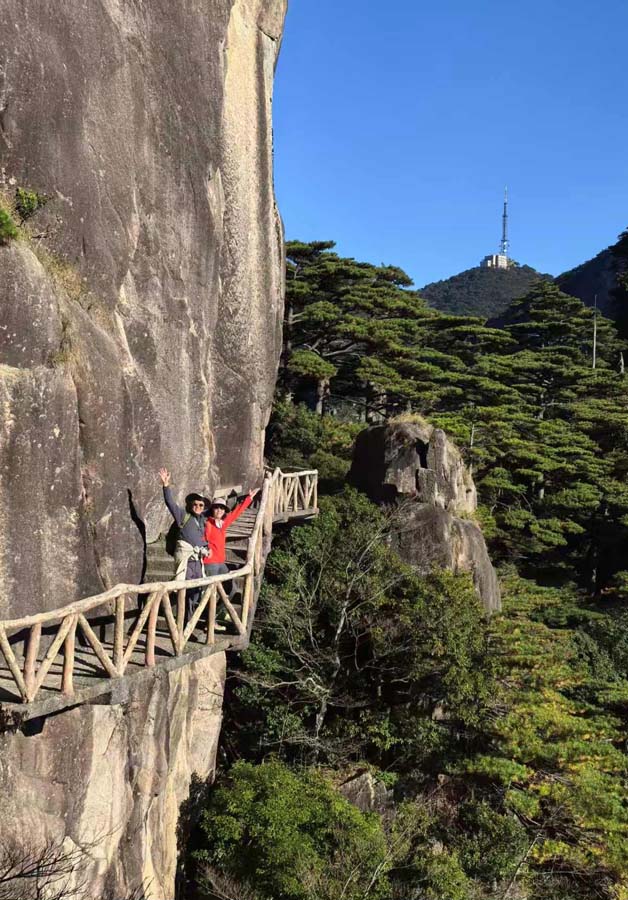
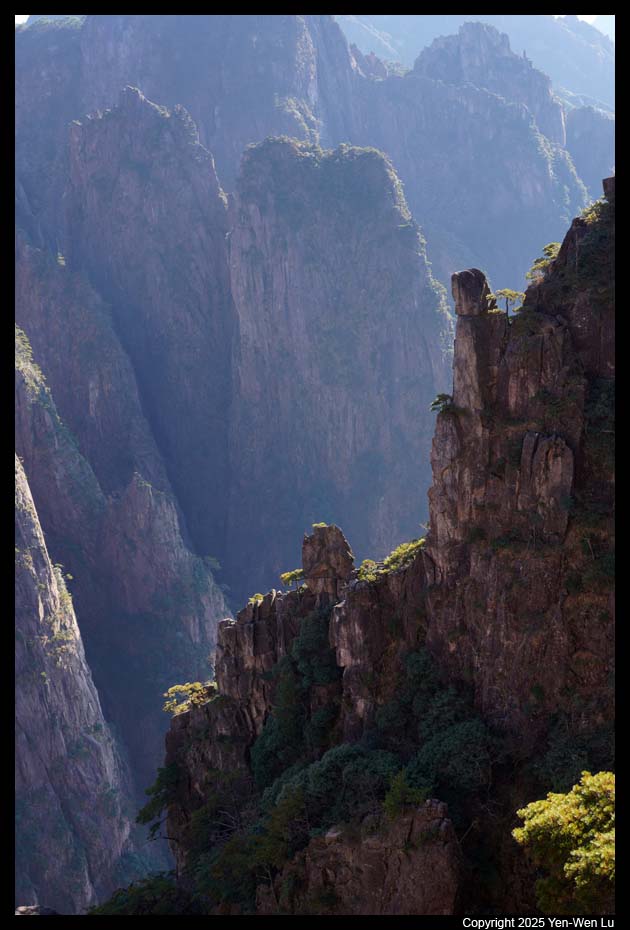
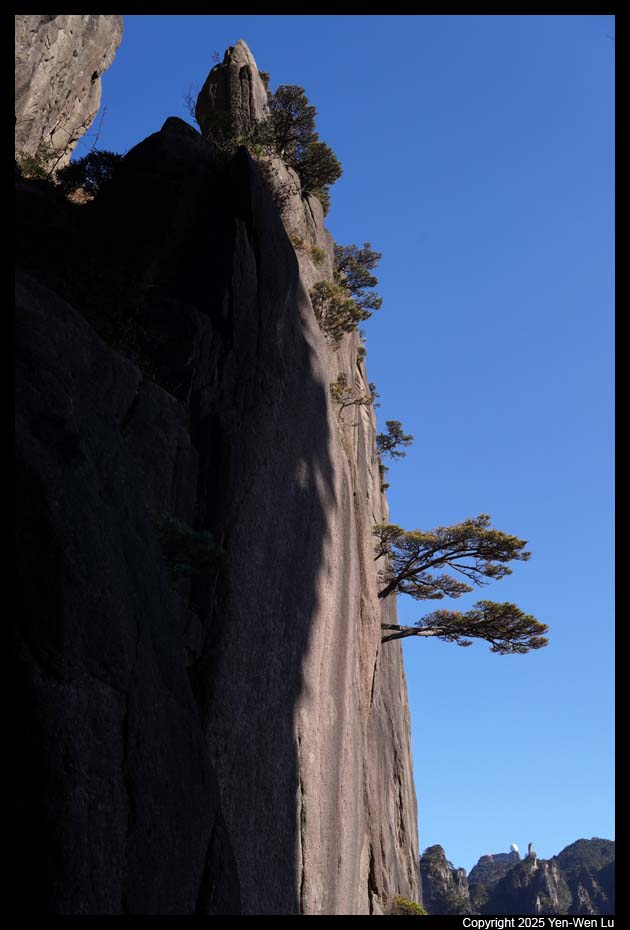
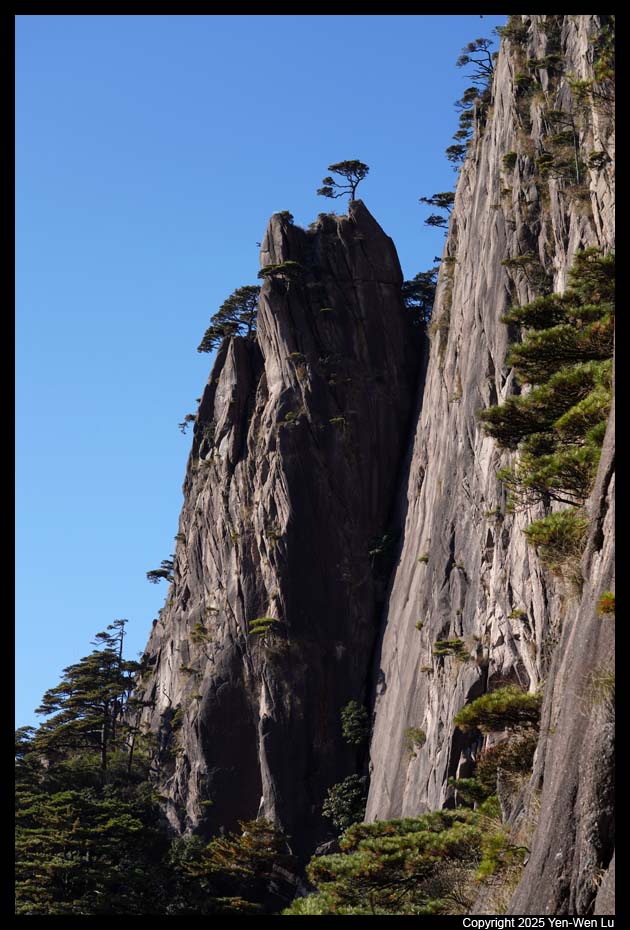
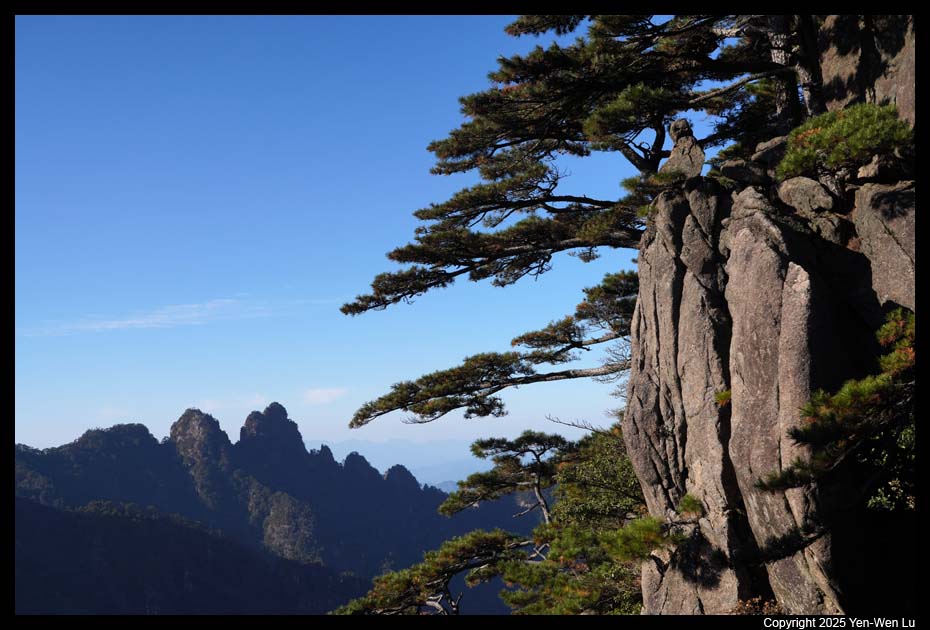
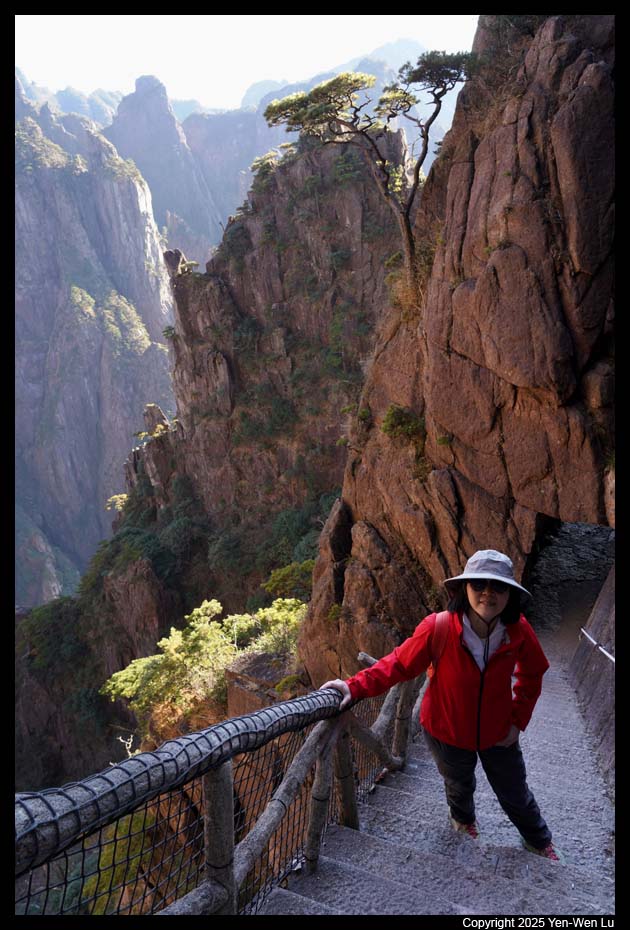
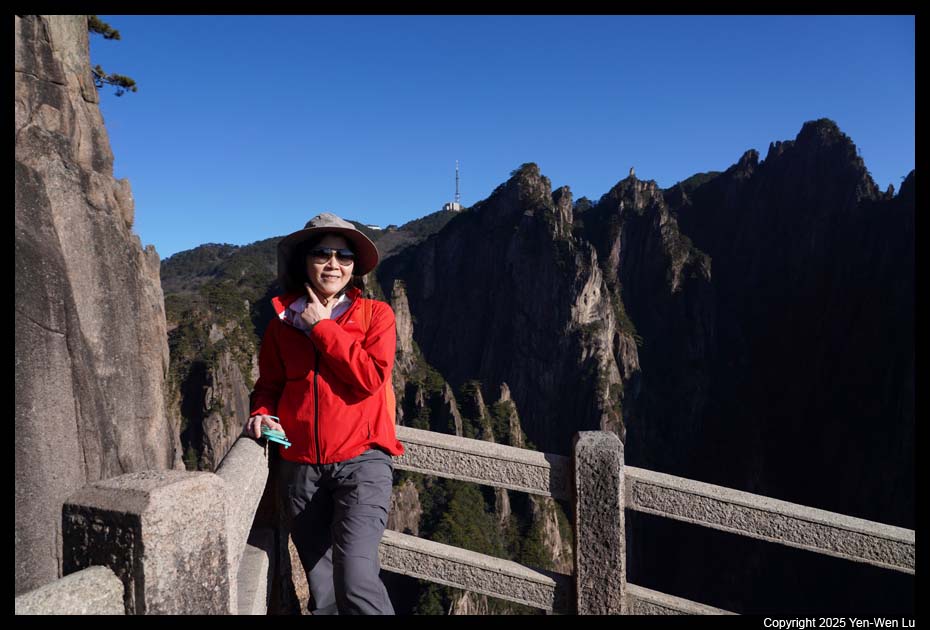
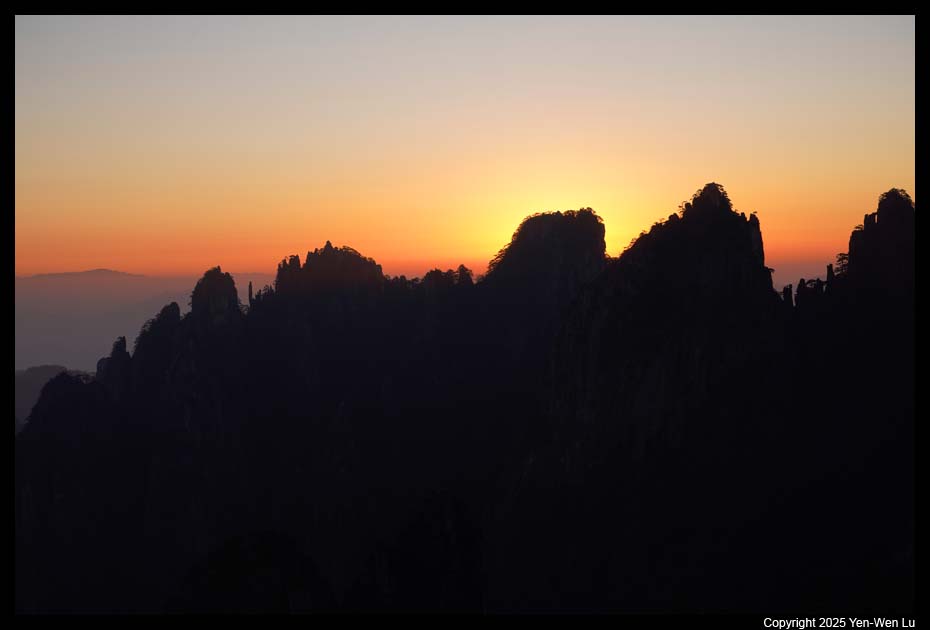
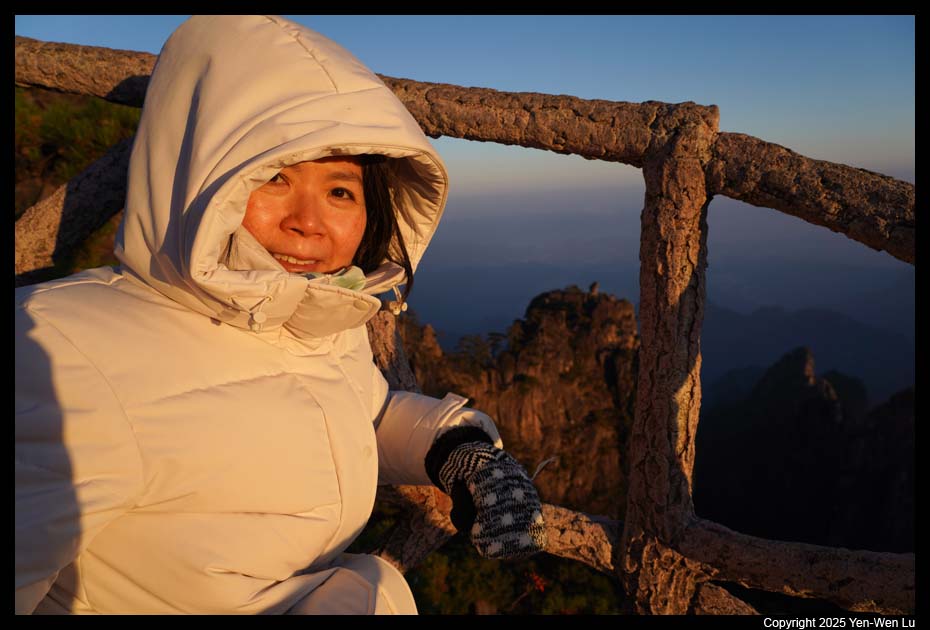
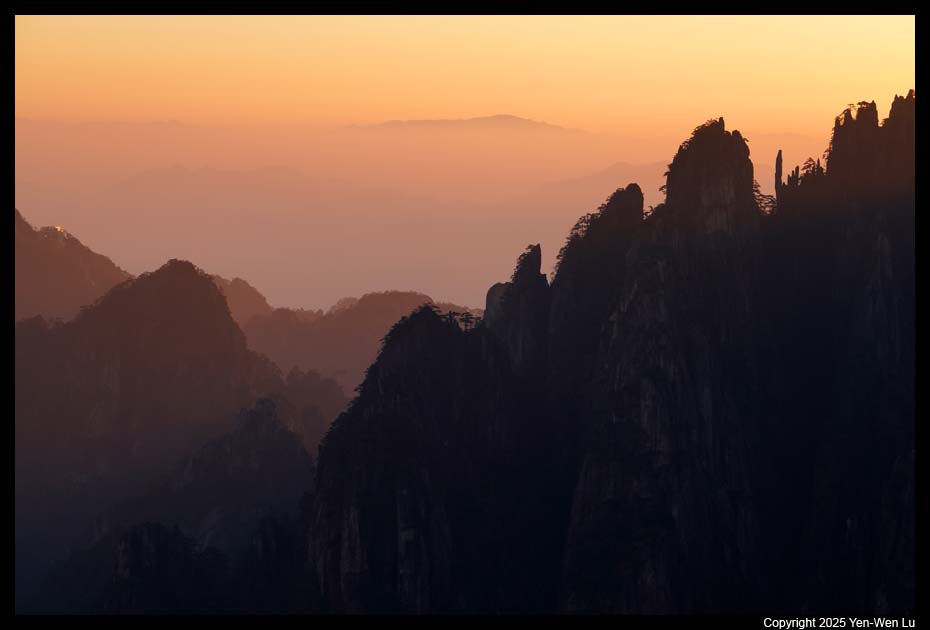
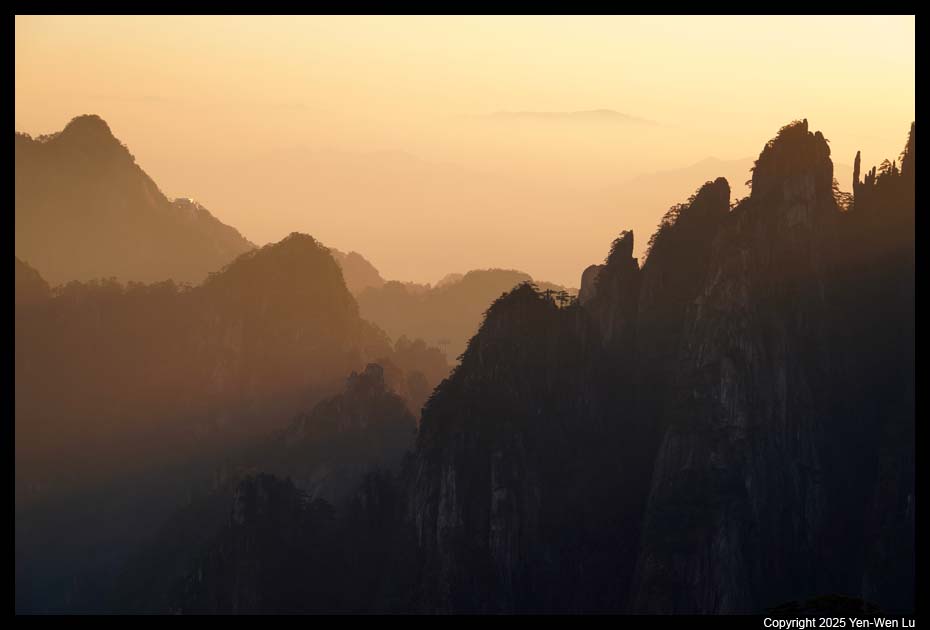
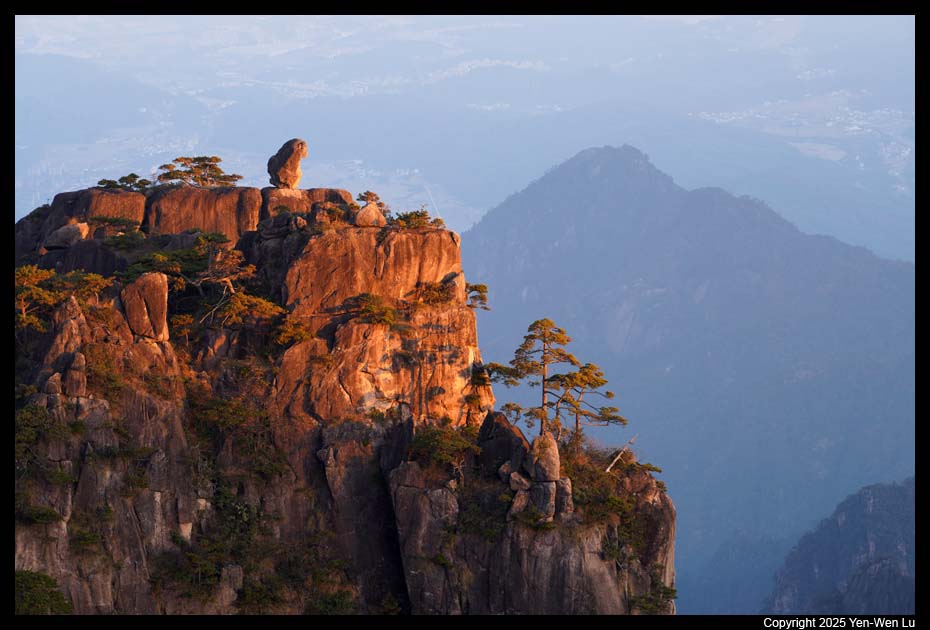
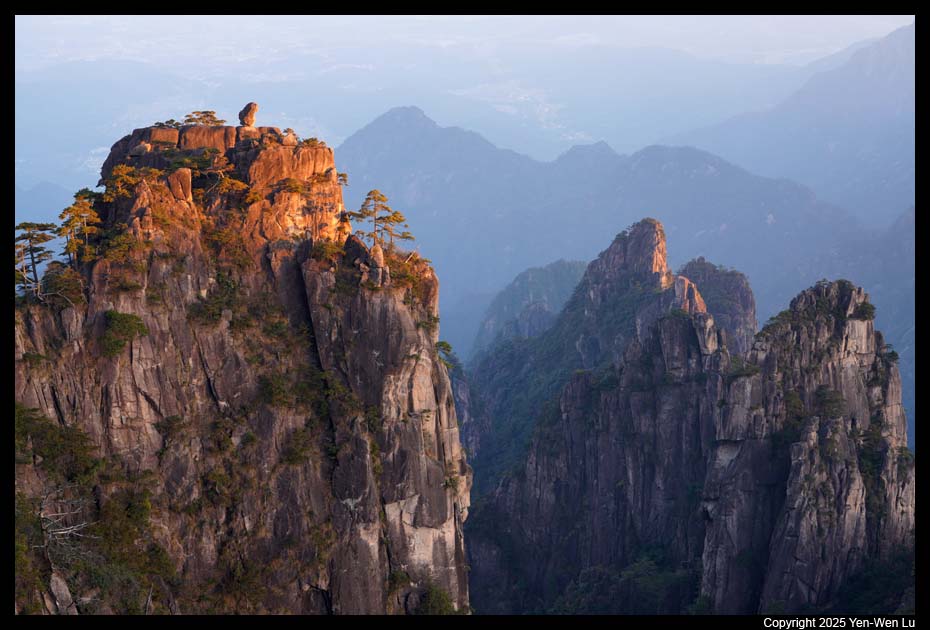
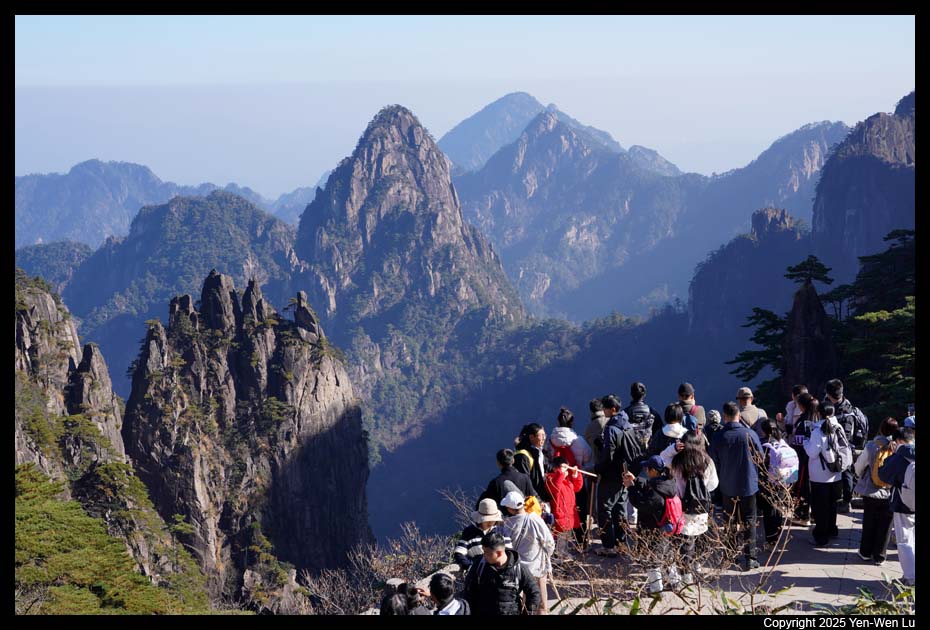
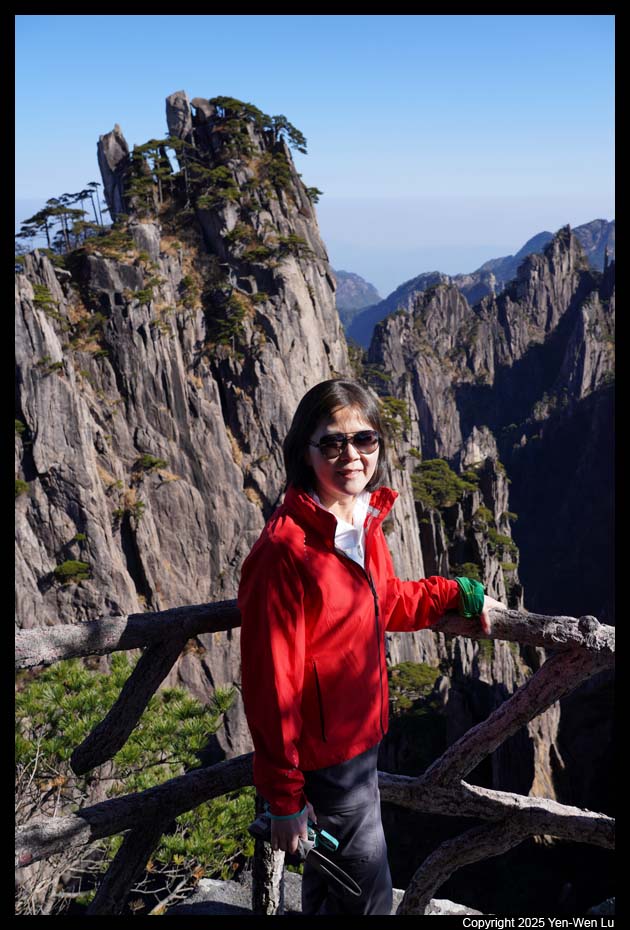
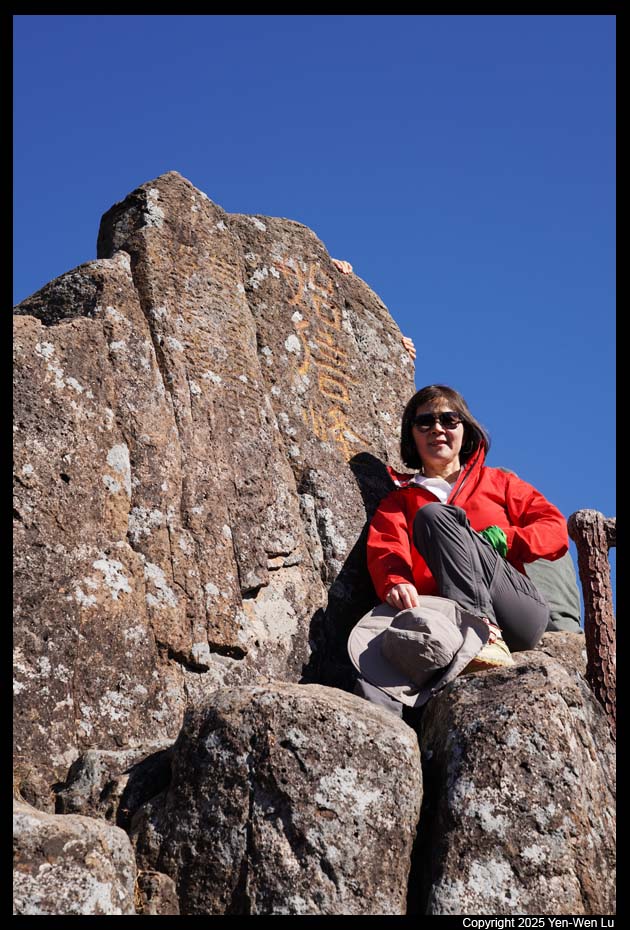
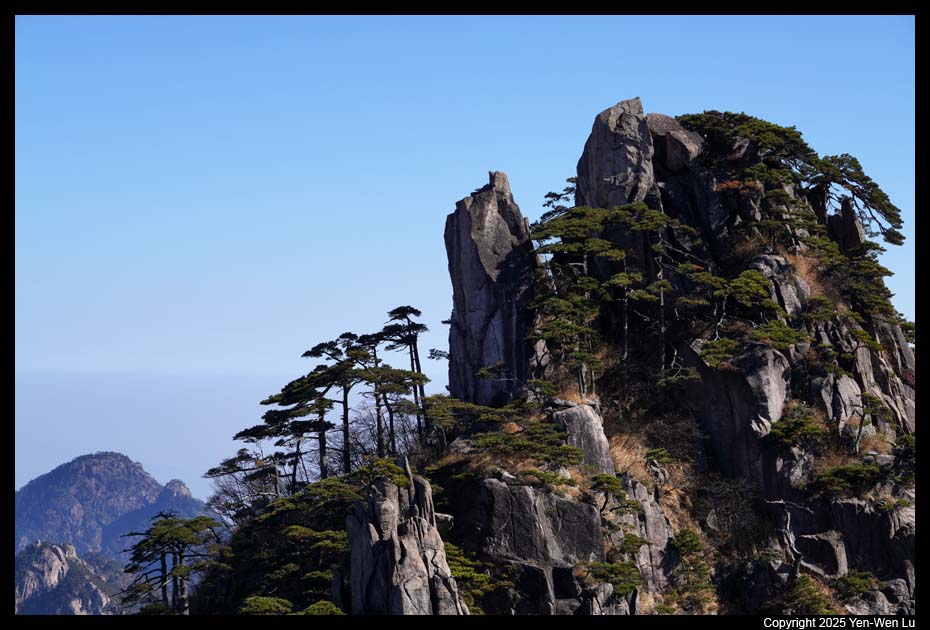
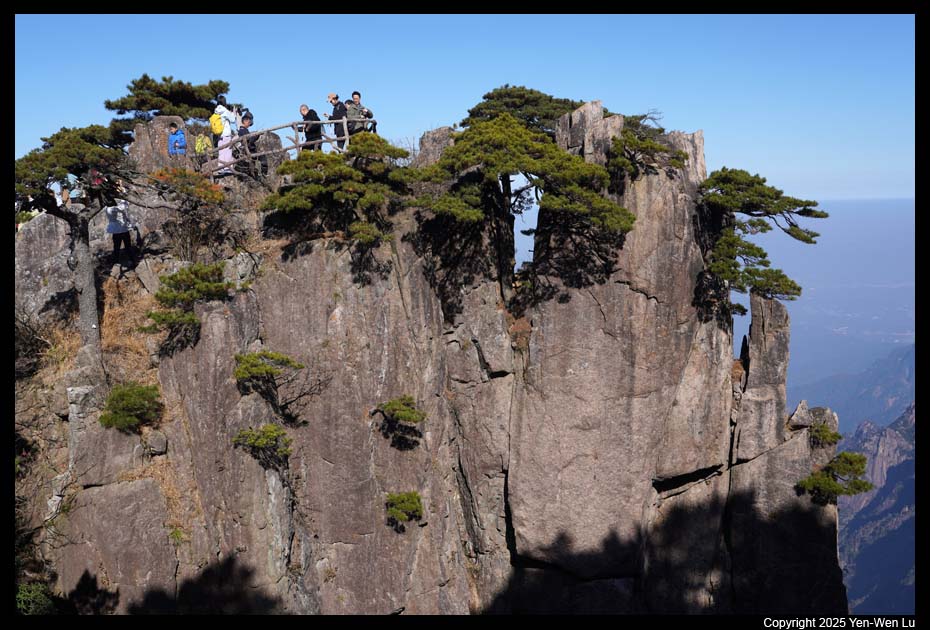
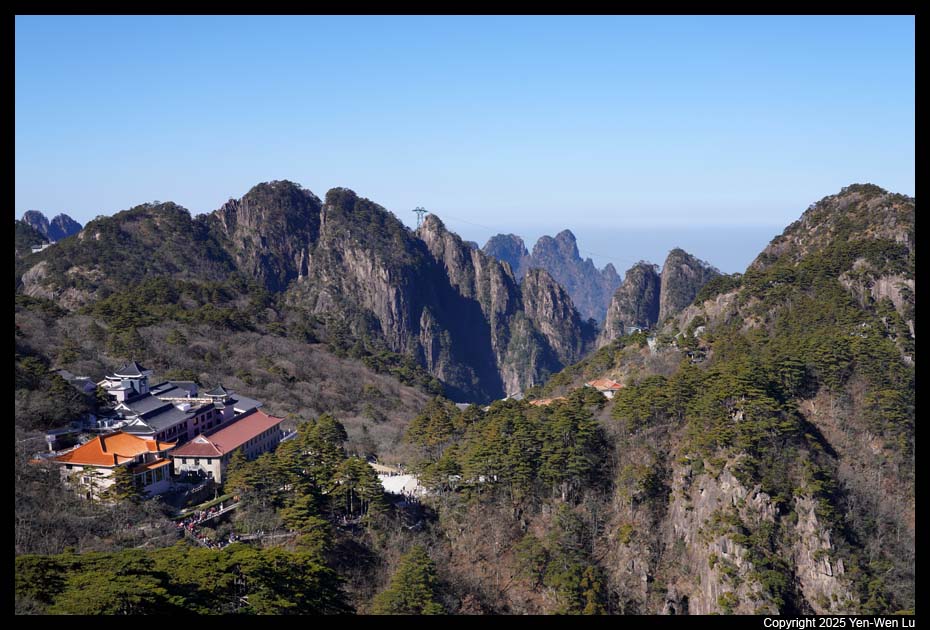
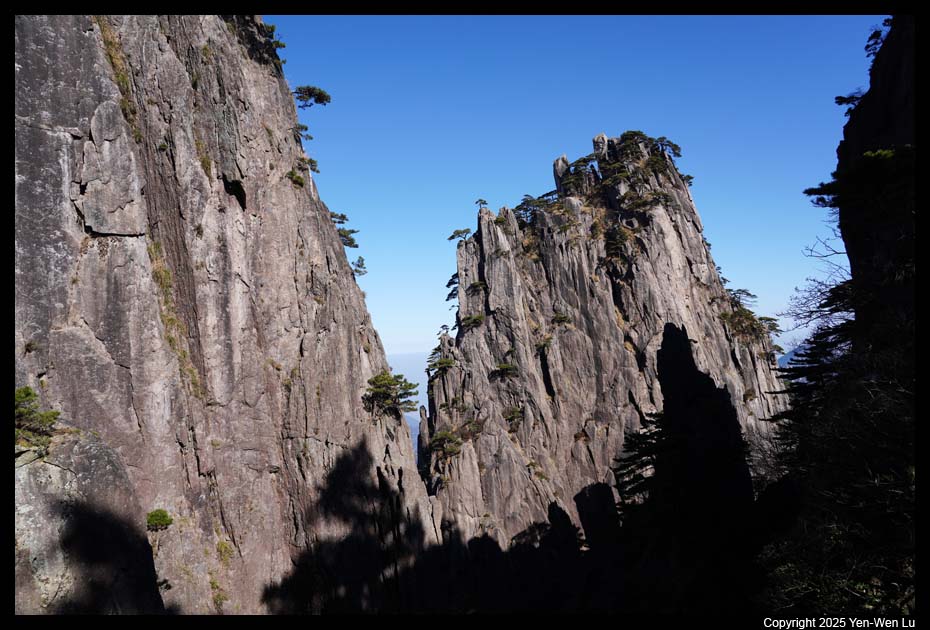
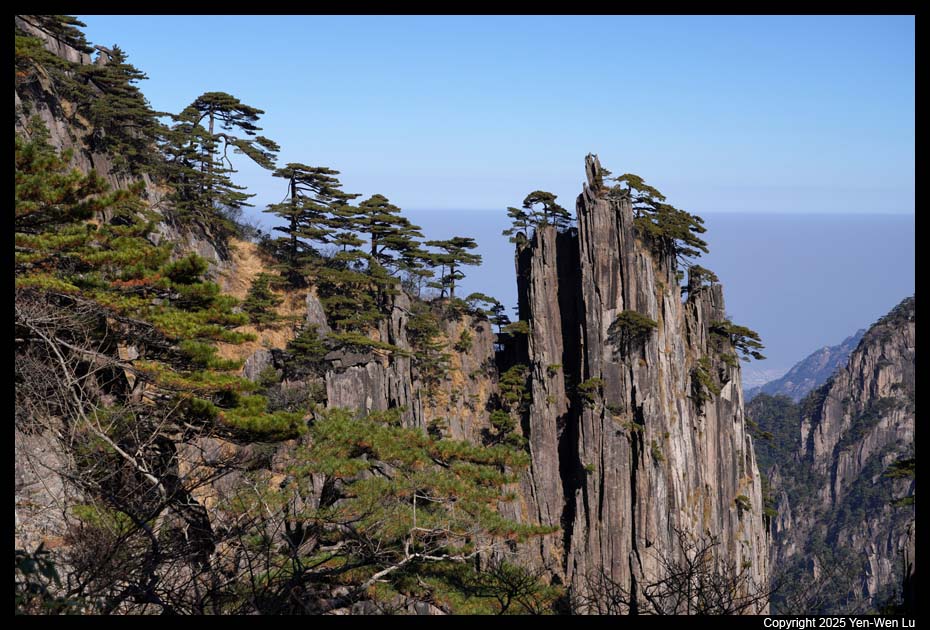
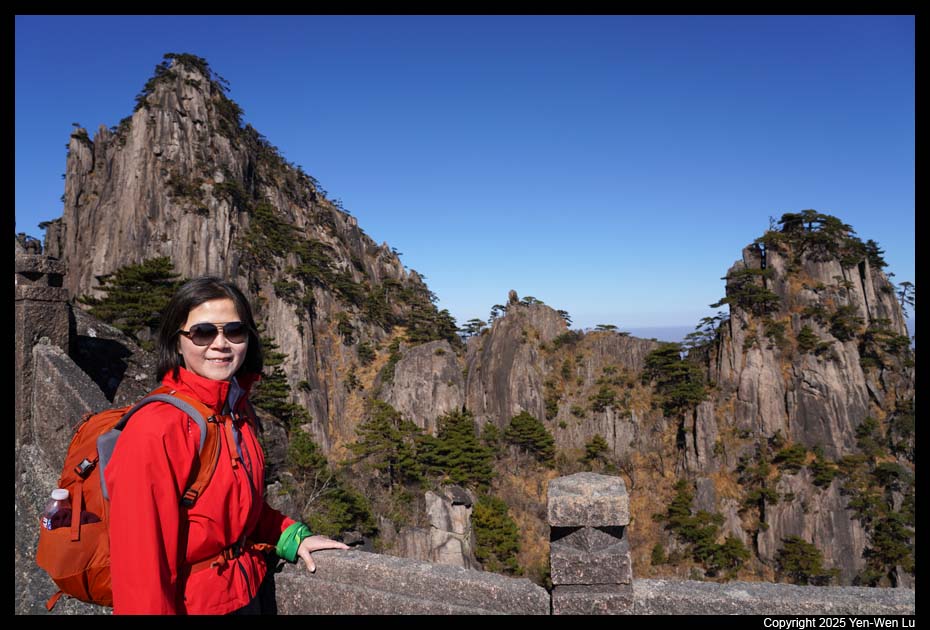
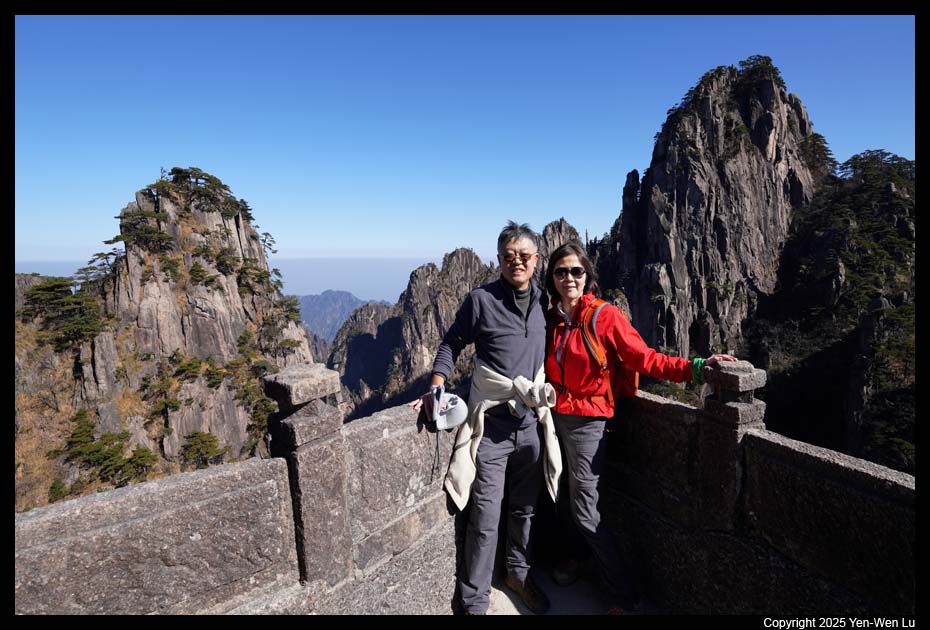
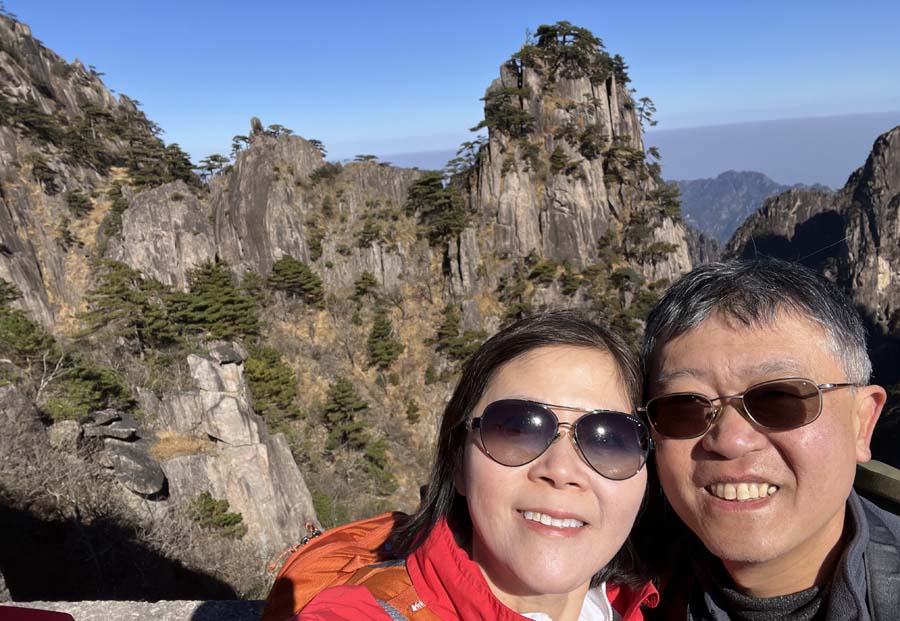
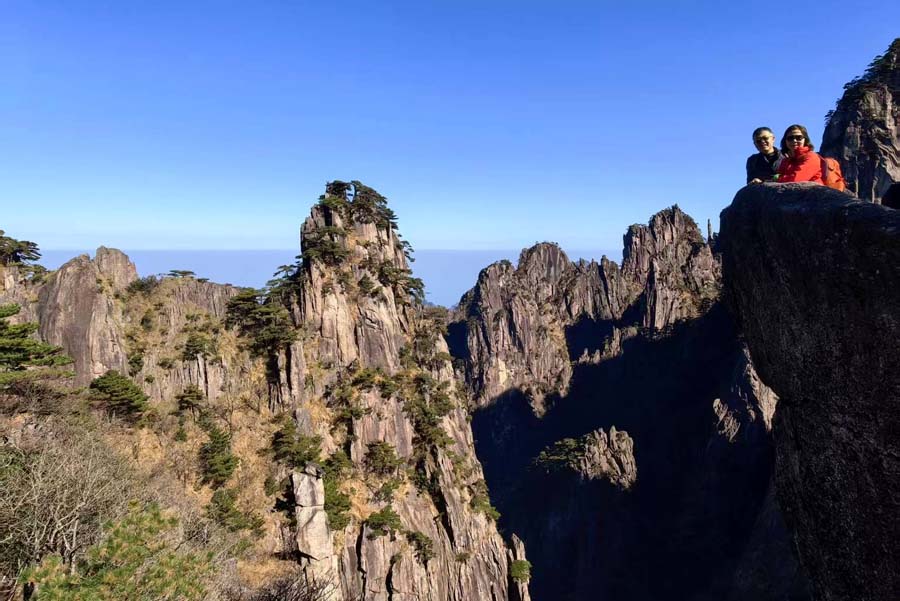
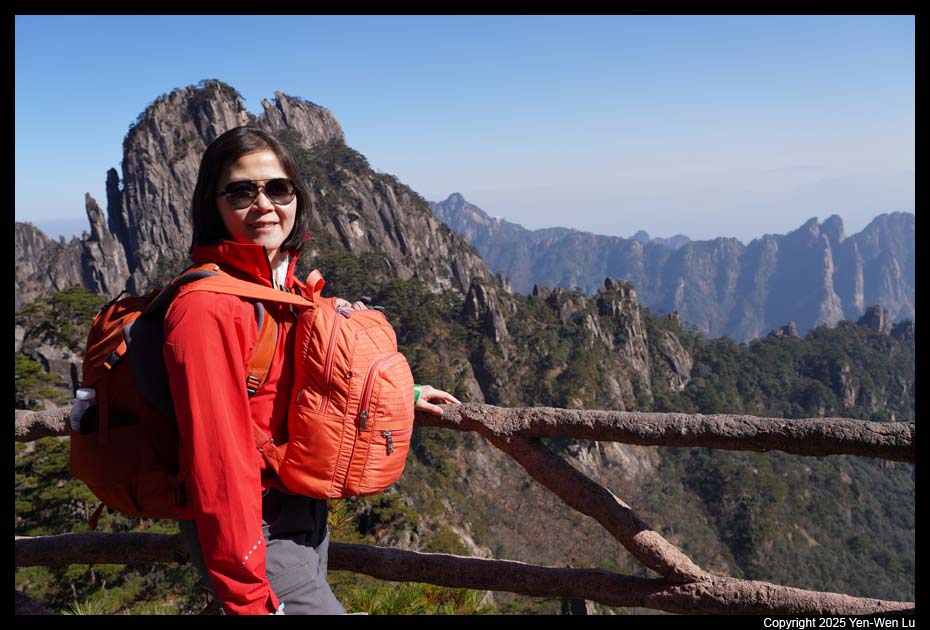
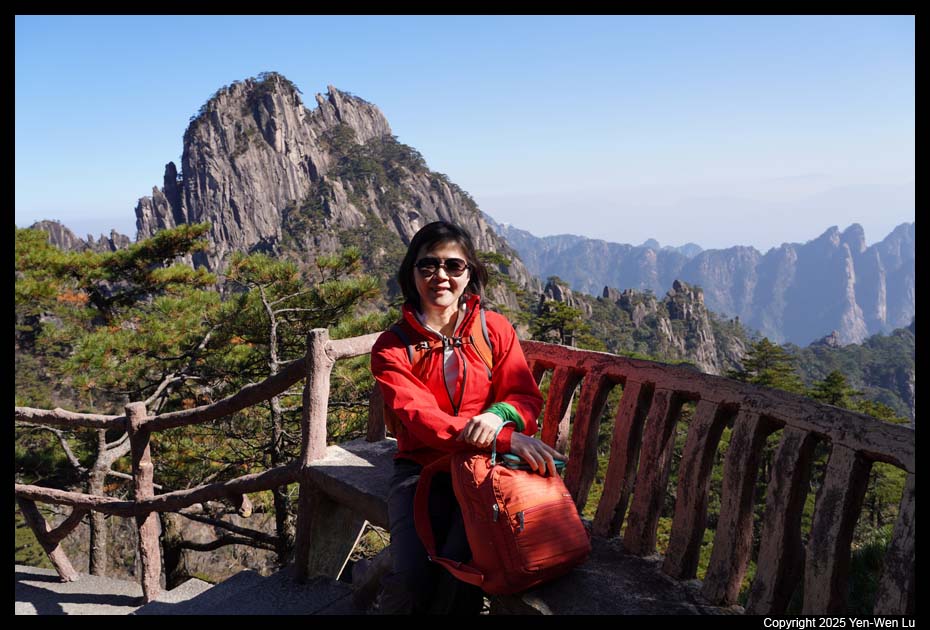
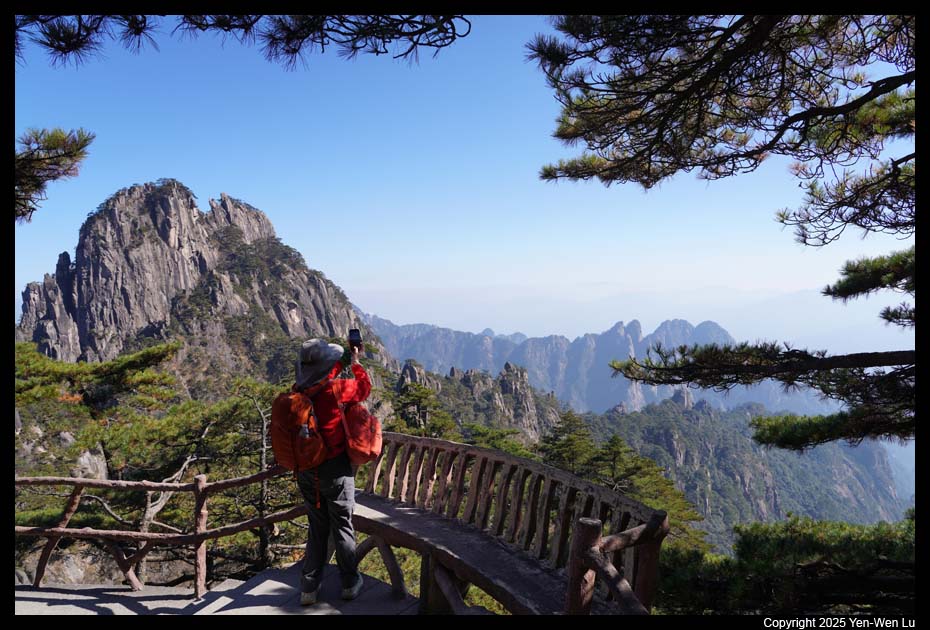
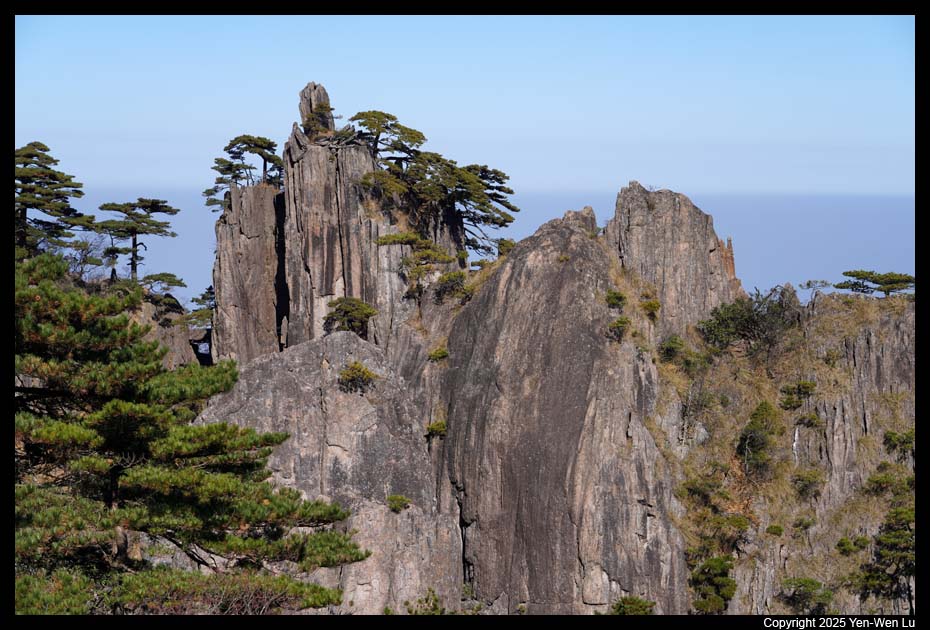
Huangshan (黄山, Yellow Mountain), a mountain range in southern Anhui province
(安徽) in eastern China, is famous for its granite peaks, pine trees, sea of
clouds, and cultural significance in art and literature. Huangshan was
originally called "Yishan" (黟山), and it was renamed in 747AD (唐玄宗天宝六年) because
of a legend that the Yellow Emperor (黄帝) once made alchemy here (another legend
states that Huangshan was the location from which the Yellow Emperor ascended to
Heaven). Huangshan and the scenery therein has been the frequent
subject of poetry and artwork, especially Chinese ink painting ('mountain and
water' style, 山水畫). It is often known as 'the loveliest mountain of
China'. Xu Xiake (徐霞客) , a Ming Dynasty traveler and geographer, visited
Huangshan twice and exclaimed, "五嶽歸來不看山,黃山歸來不看嶽".
Getting there ...
We flew from Taiwan to Shanghai (Hongqiao 虹橋) on 11/17 afternoon and stayed one
night in a hotel close to both Hongqiao Airport and Hongqiao Train Station.
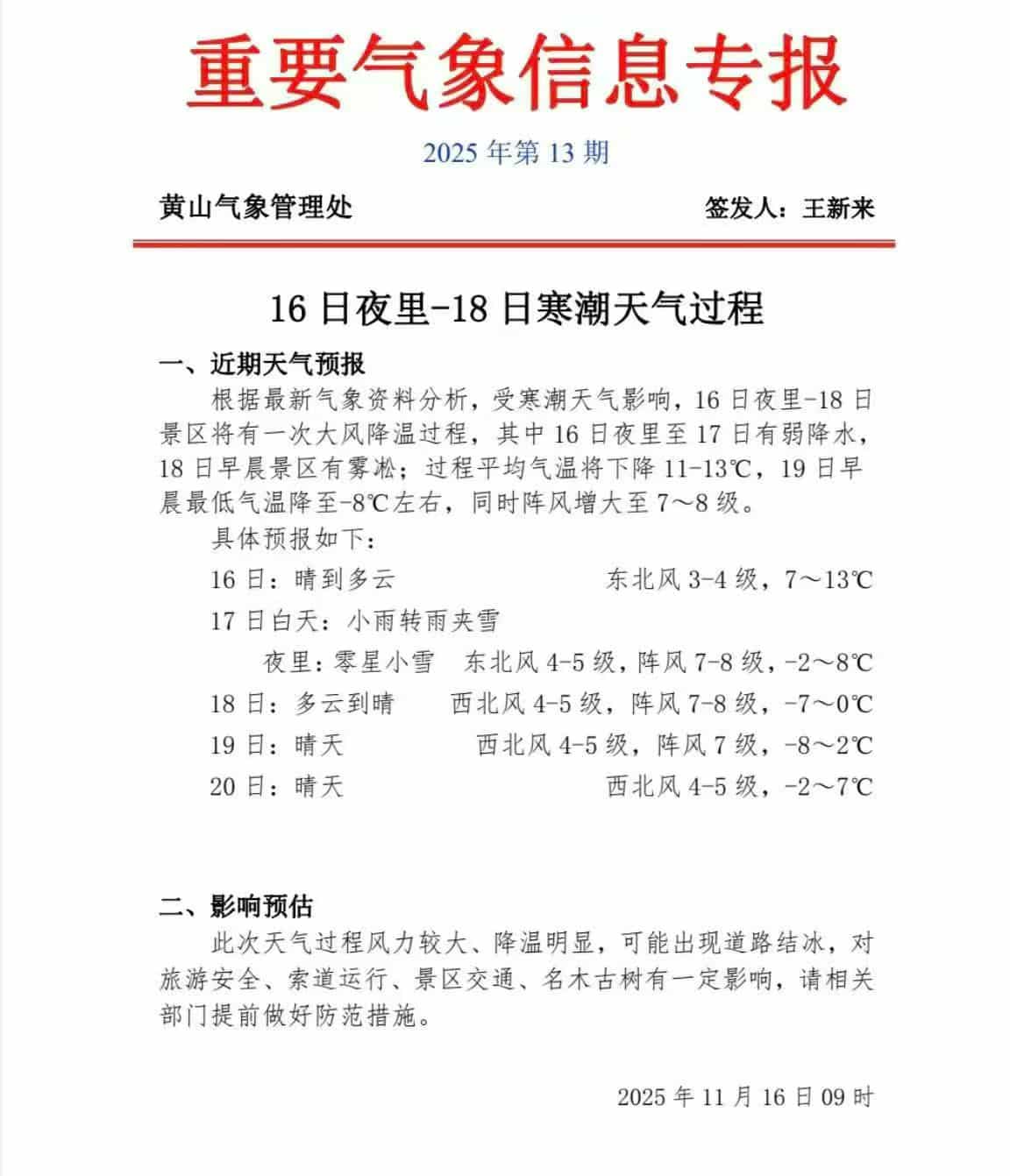
Before we arrived in Shanghai, I got an extreme
weather forecast from our guide (the lowest temperature would be -8C on the
mountain), so we went to a shopping mall next to our hotel to buy some more
winter clothes. I planned this China trip (Huangshan and
Guilin) through
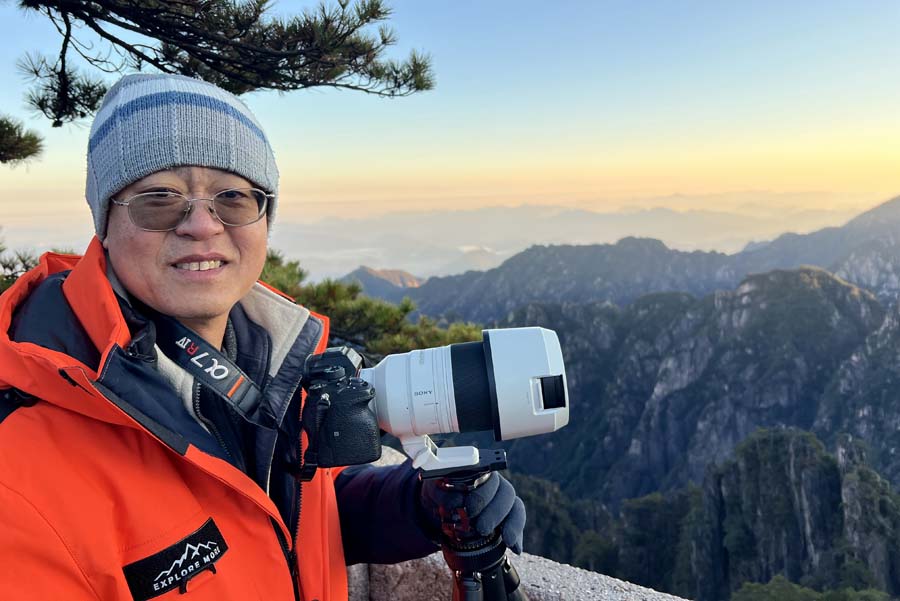
Mercier Zeng Photo Tours as my first
real "photo centric" trip (a private photo tour just for two of us).
Since their customers are mainly westerners, when the guides (both in Huangshan
and Guilin) picked us up and found out we could speak Chinese, they were happily
surprised :-)
Day 1 (11/18) ...
We had an early morning high-speed train from Shanghai Hongqiao (虹橋, 7:17AM)
to Huangshanbei (黄山北, 10:23AM). Our Huangshan guide April was waiting for
us at the Huangshanbei train station and took us to Tangko (湯口鎮), a gateway town
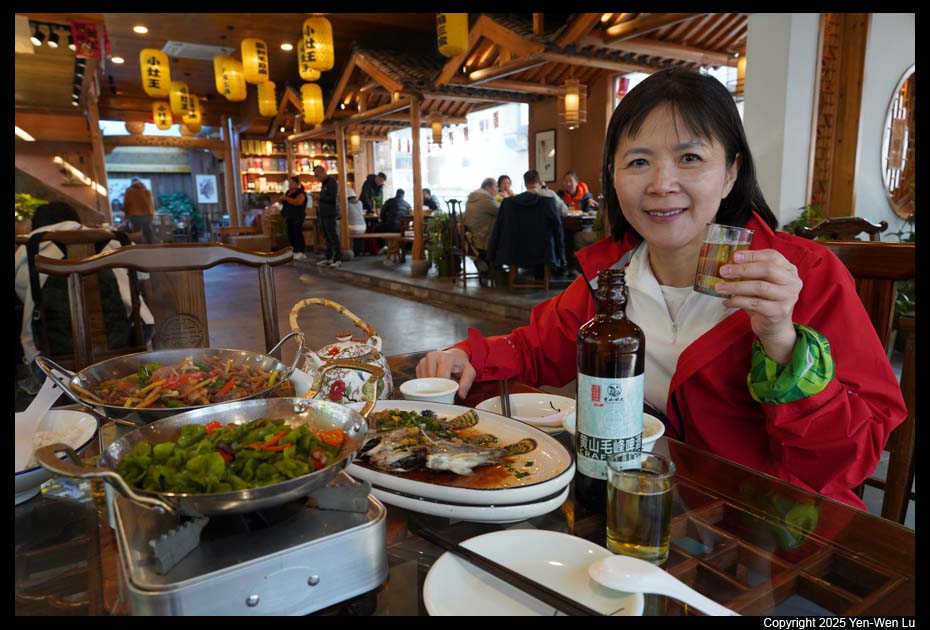
at the foothill of the Huangshan mountain, to have a delicious lunch before we
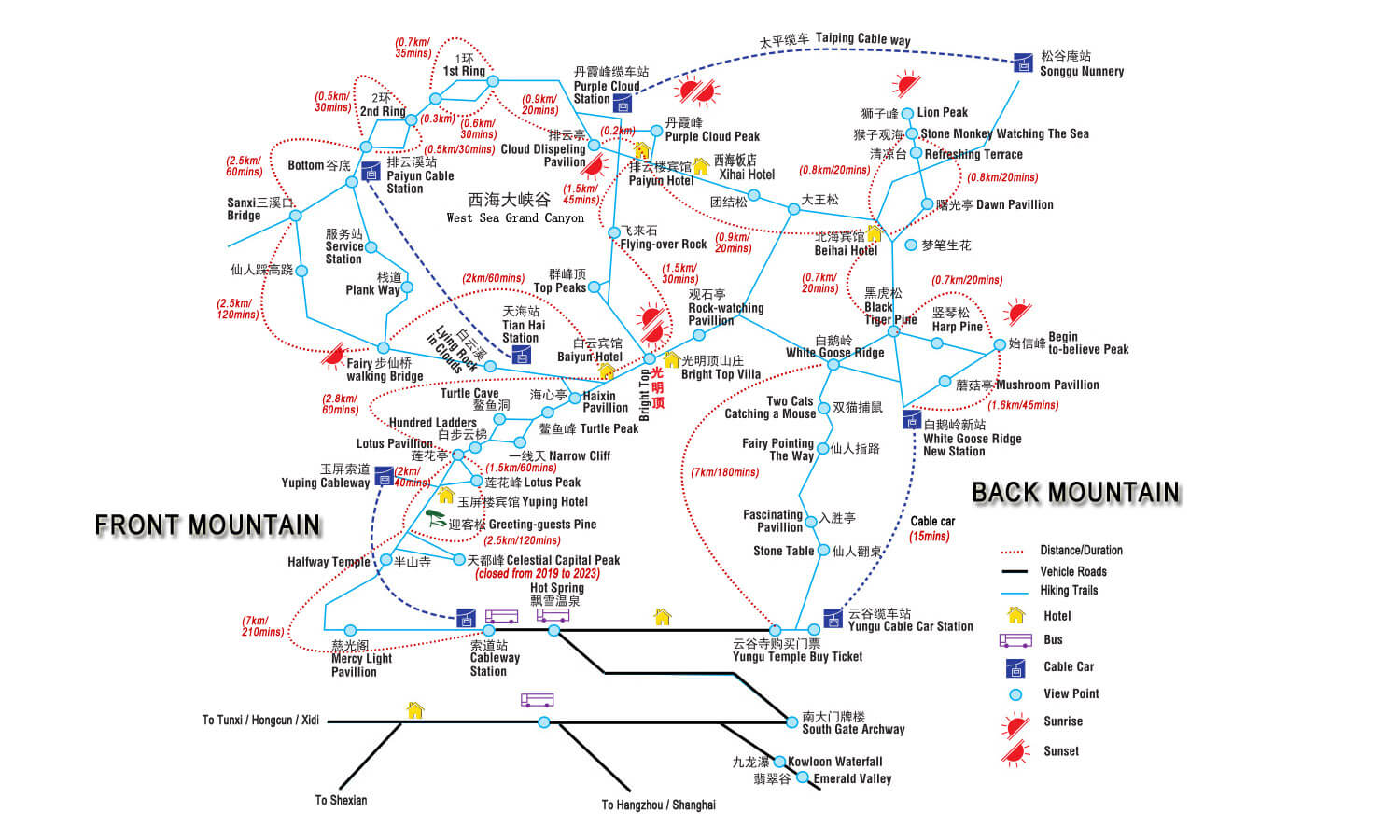
headed to the mountain. Here is a good
map for the Huangshan mountain.
- Ciguang Pavilion (慈光閣) -- Yuping Cableway (玉屏索道)
After the lunch, we
gathered what we needed for the mountain (we would stay on the Huangshan
mountain for 3 nights) and took a shuttle bus toward the Ciguang Pavilion
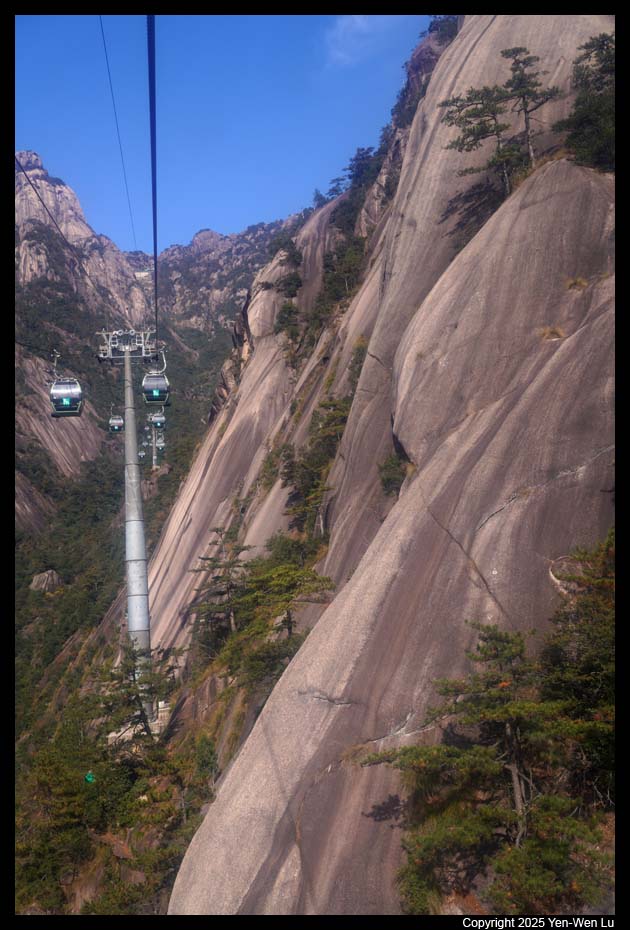
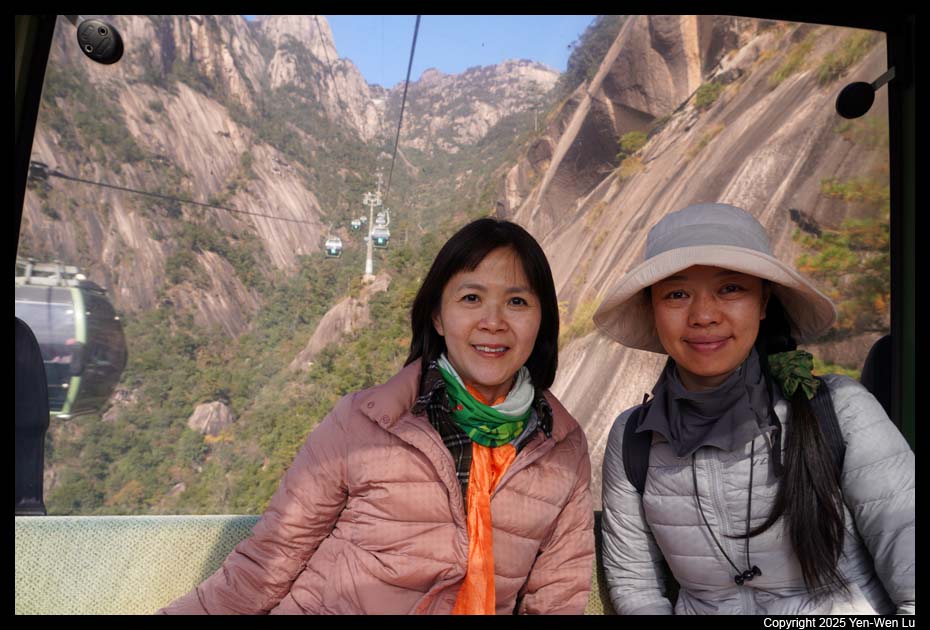
(慈光閣) to take the Yuping Cableway (玉屏索道). This route is often referred
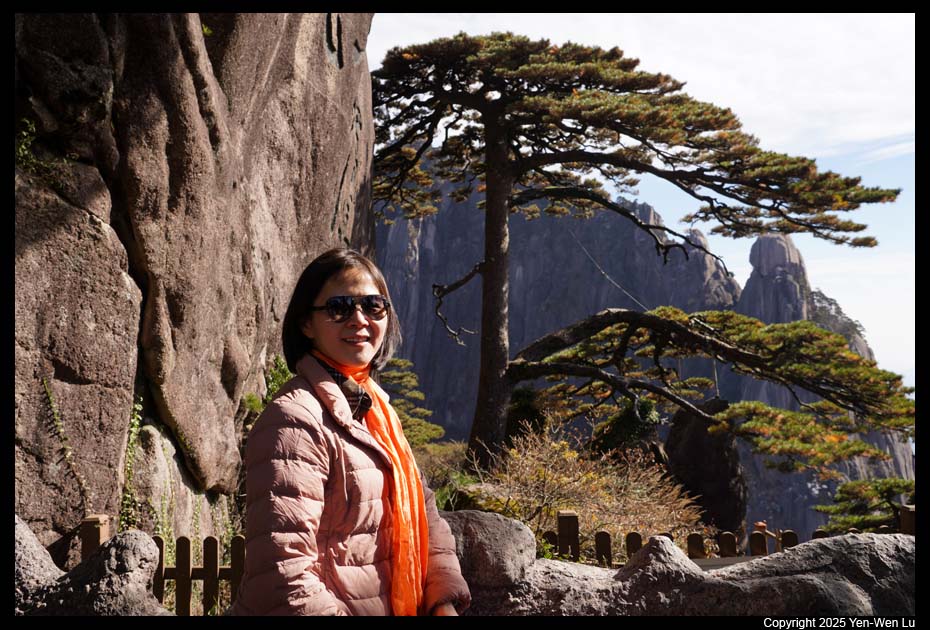
as "Front Mountain" (前山). After getting off the cable car, we first
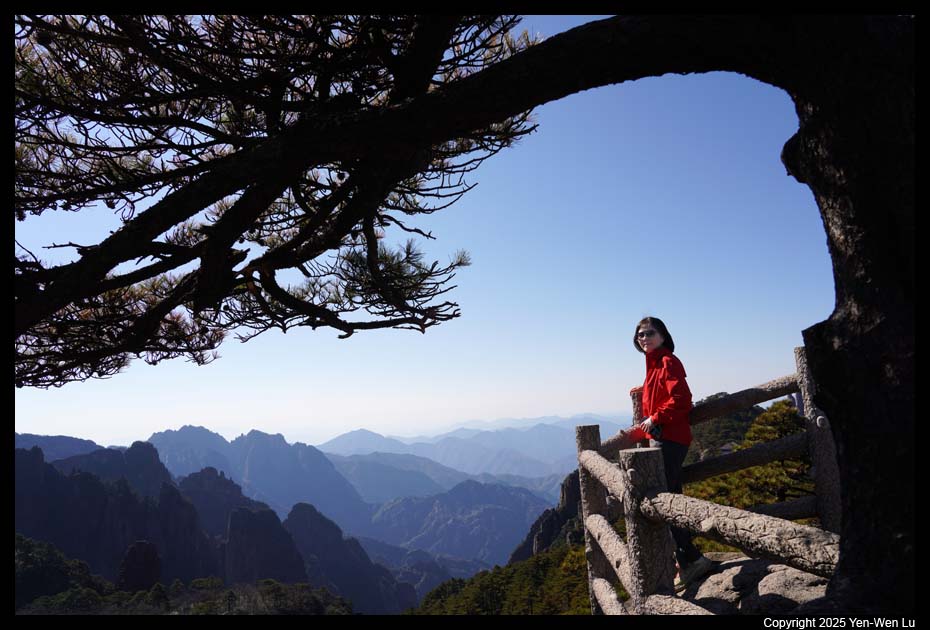
took a detour to Yuping to see one of the most famous pine trees in
Huangshan, 迎客松 (Greeting Guests Pine). Compared to the nice weather
today (although it was cold), the guide told us it was very foggy and snowy
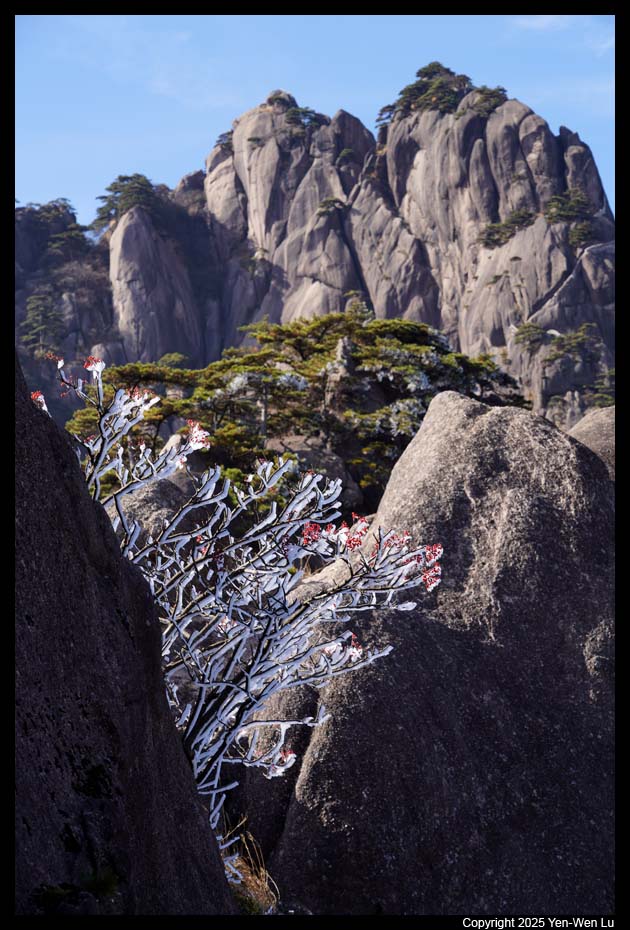
(could not see anything) yesterday. We could still see some
snow/ice in the shady areas.
- Hiking to Baiyun
Hotel (白雲賓館)
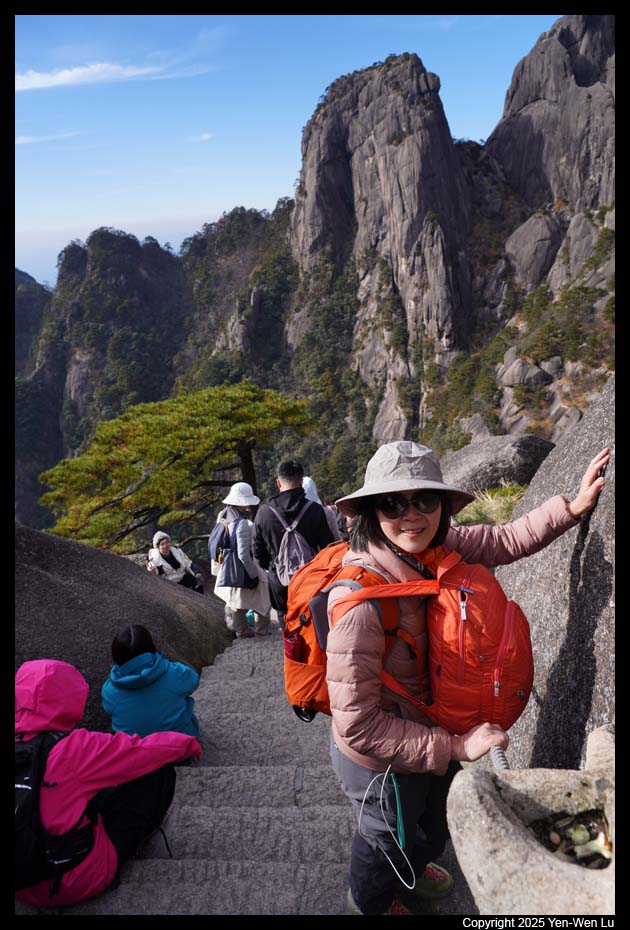
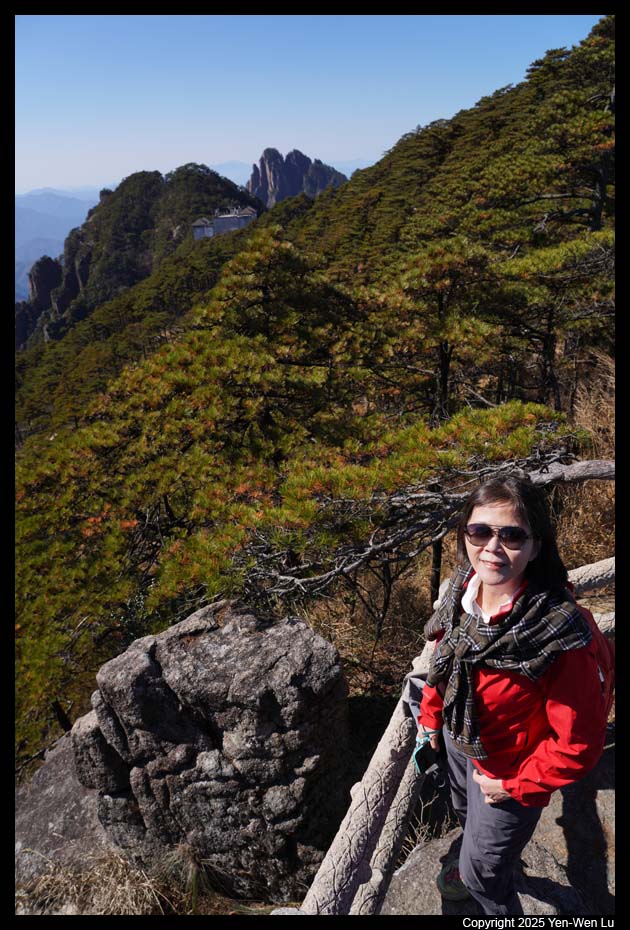
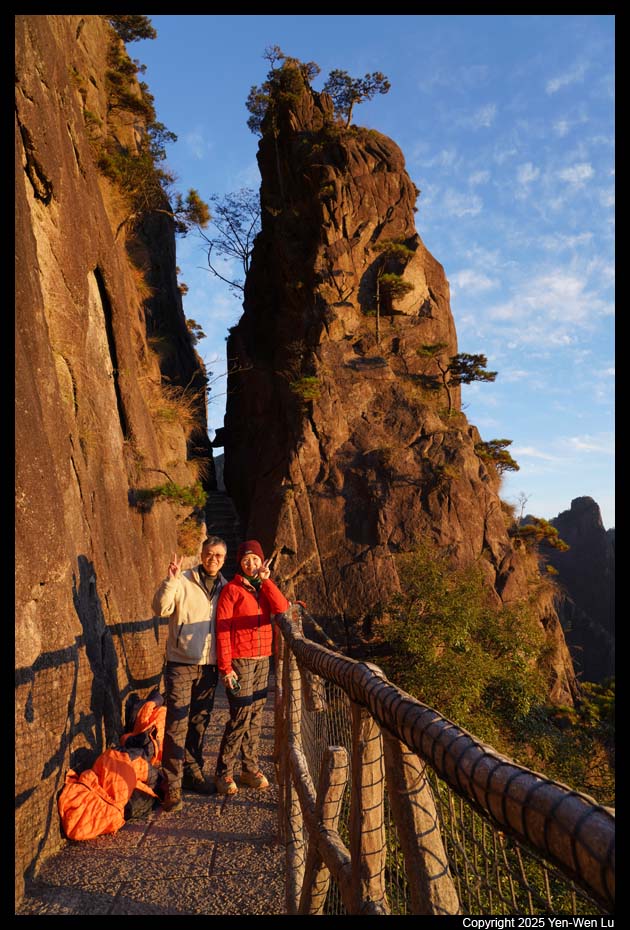
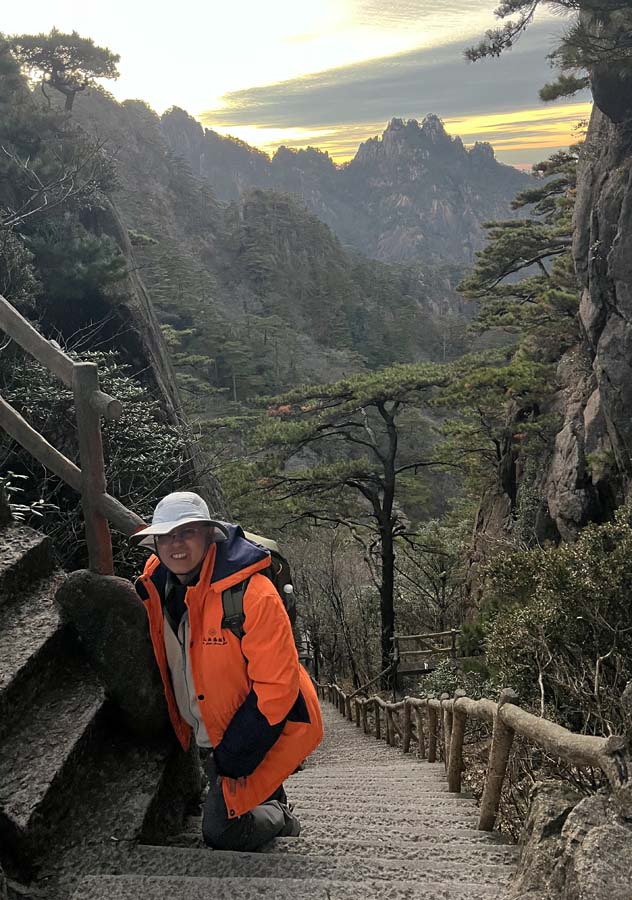
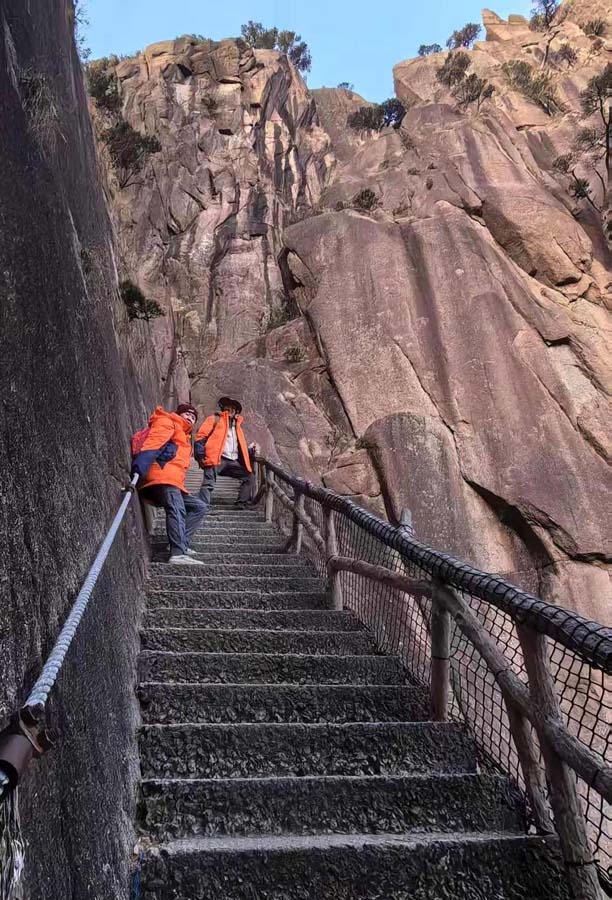
Huangshan is known for its stone steps, carved into the
side of the mountain, of which there may be more than 60,000 throughout the
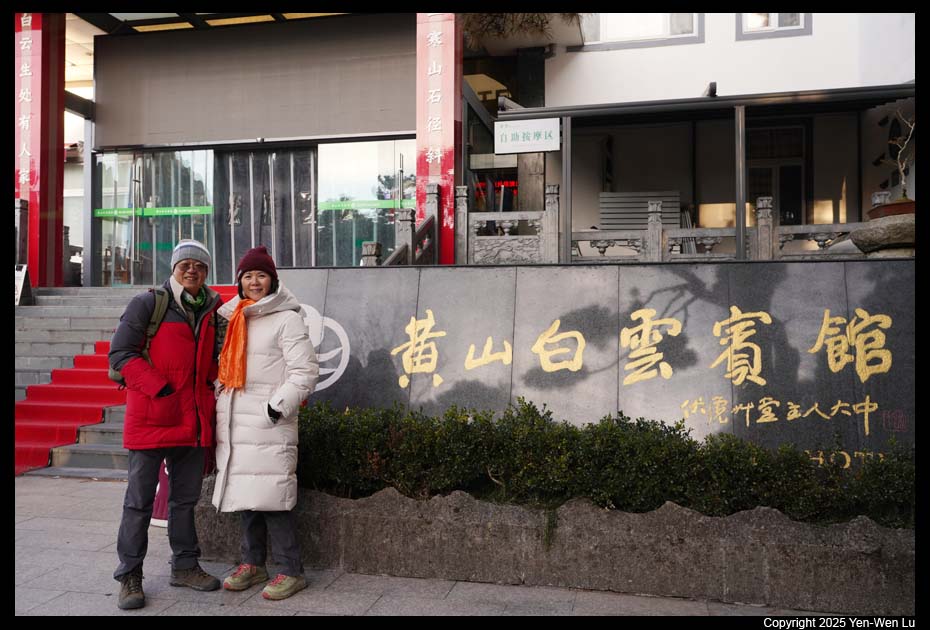
area. We started hiking toward our hotel for the first night,
Baiyun Hotel (白雲賓館), via these endless staircases (ups and downs) with
majestic mountain views. We passed by many incredible vista
points including Lotus Pavilion (蓮花亭) with views of Lotus Peak (蓮花峰, the
highest peak in Huangshan at 1864m), Hundred-Step Ladder (百步雲梯),
Turtle Cave (鰲魚洞), Haixin Pavilion (海心亭), etc. Since we had to
carry all luggage by
ourselves, it was a tiring 4.8-km hike (~2 hours) with countless up-and-down
stairs.
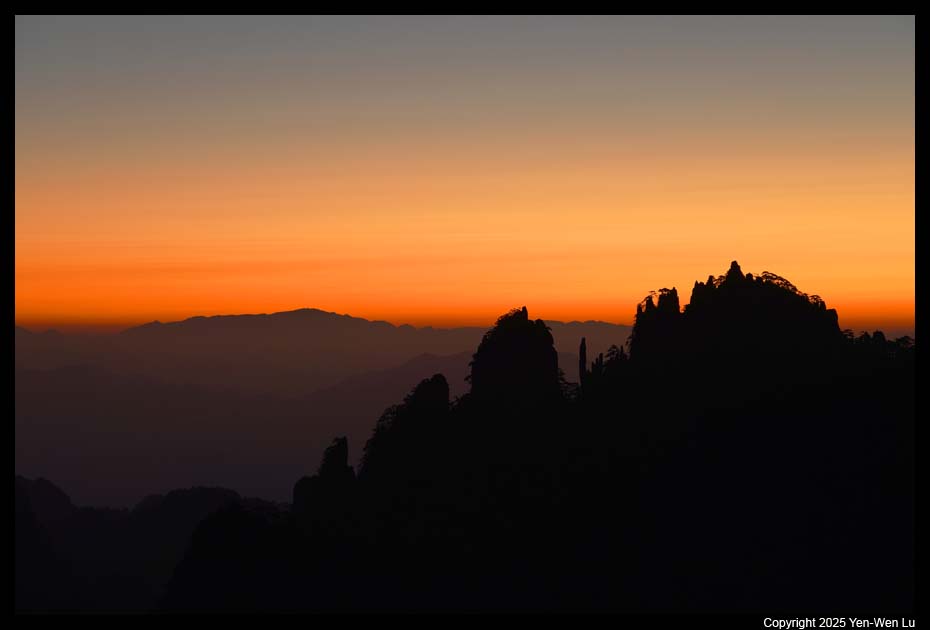
- Top Peaks (群峰頂)
After checked in the Baiyun Hotel and a short 15-min
break, we went to Top Peaks (群峰頂) to wait for sunset.
Day 2 (11/19) ...
- Bright Top (光明頂)
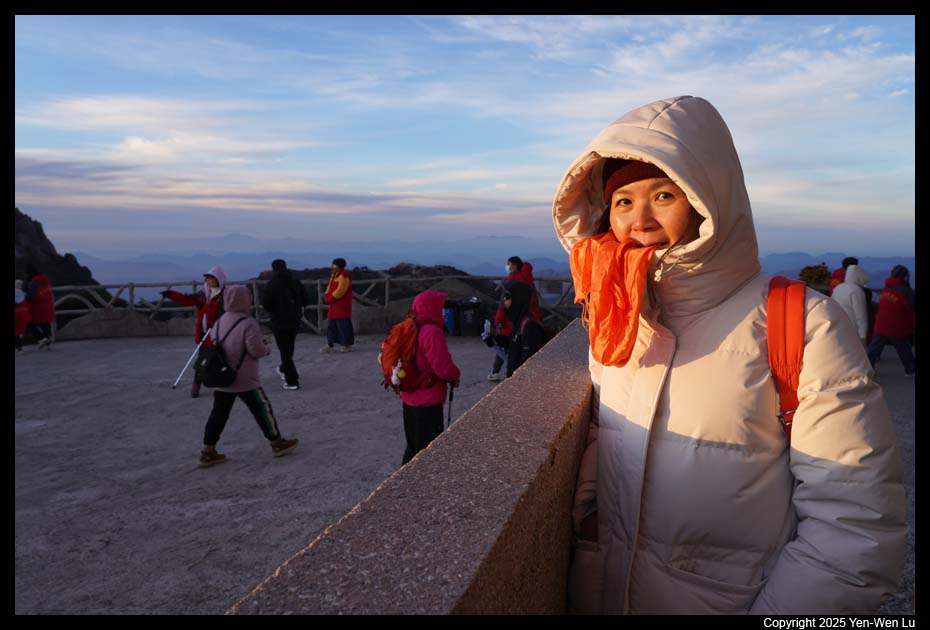
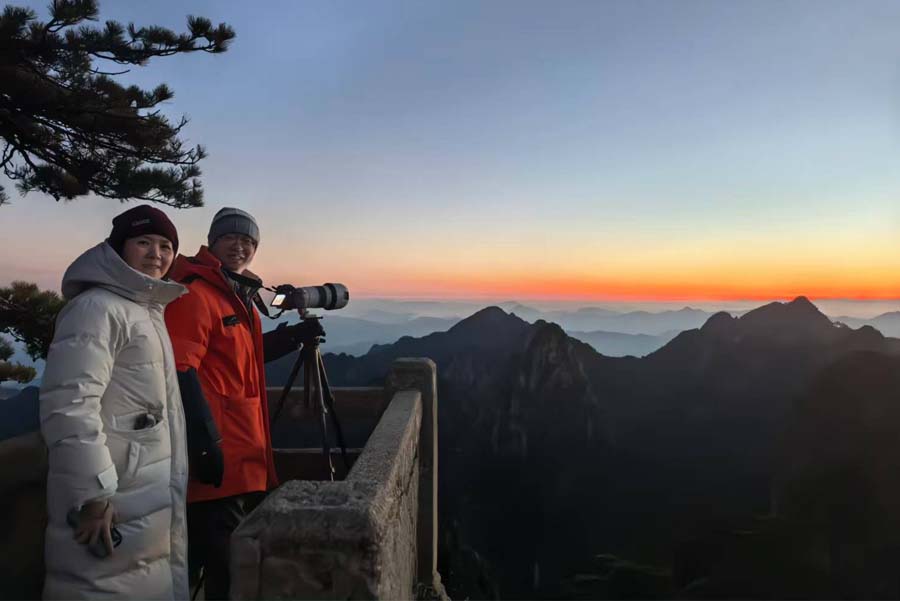
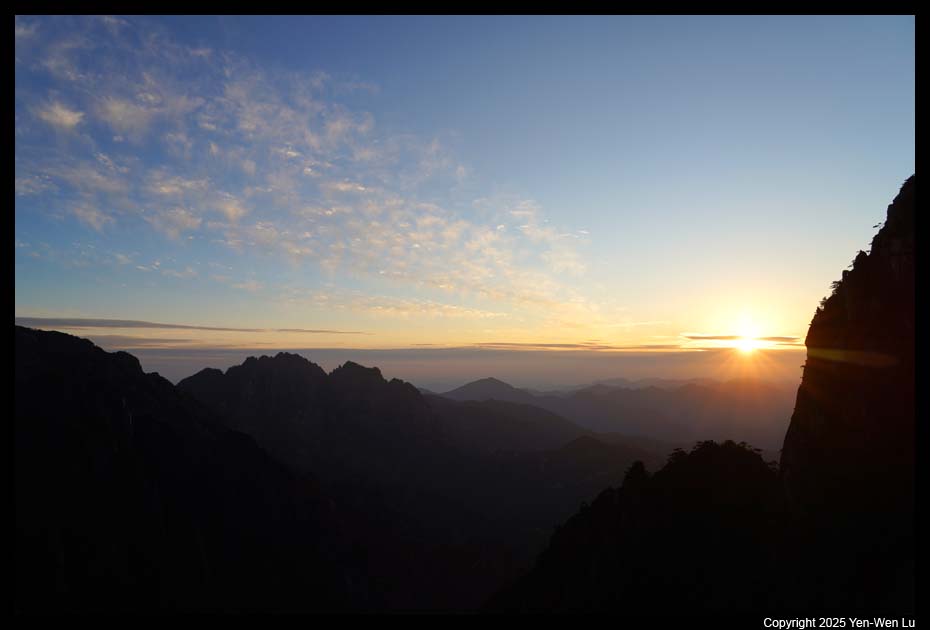
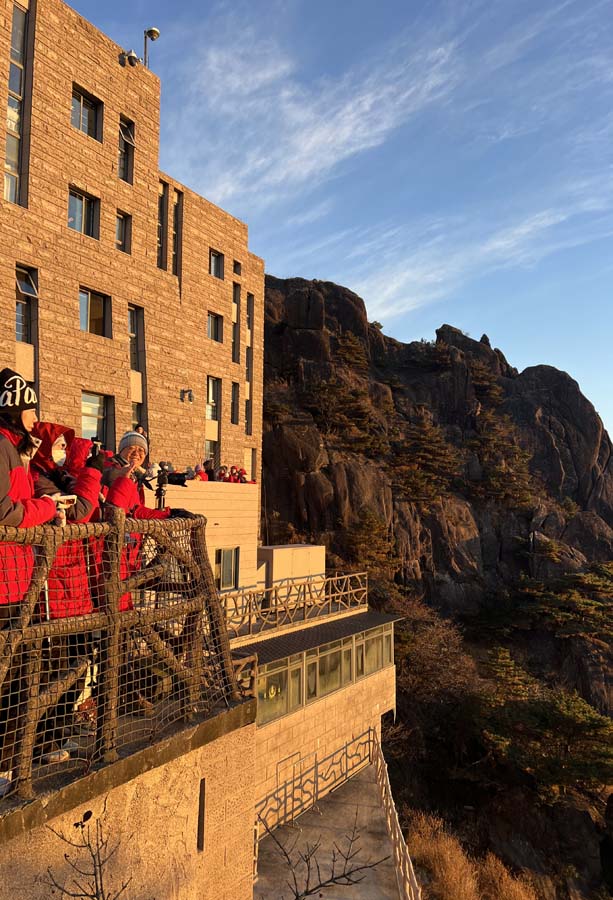
We got up early and headed to Bright Top (光明頂) at
5AM for sunrise. After
I secured a
nice spot for sunrise, the crowd gradually showed up and eventually
it was like a market
at sunrise time.
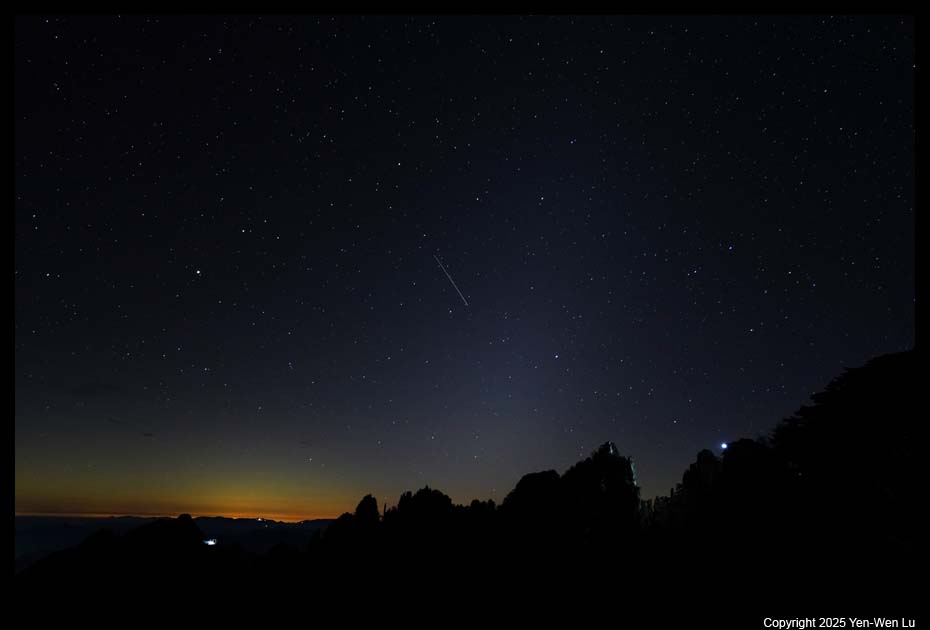
Since it was "photo-centric" tour, the routine for the
next few days was like this: got up before 5AM (sometimes 4:30AM),
hiking in the dark to the sunrise photo spots (early enough to see stars),
blue and golden hours for sunrise, going back to the hotel after sunrise for
breakfast and more sleep, going out for some daytime hike/tour at 12PM (late
lunch at ~ 1:30PM--2PM) for 2-3 hours, back to hotel for a short break,
going out again at ~3:30PM--4PM for sunset, going back to the hotel after
sunset for late dinner and calling it a day.
- Baiyun (白雲) to Beihai (北海) to Xihai (西海)
After some rest/sleep in the
morning, we checked out of the Baiyun Hotel and moved to our next
destination: Xihai Hotel (西海飯店). We walked to Beihai Hotel
(北海賓館) first to have a lunch and dropped off our luggage temporarily, and
visited a few viewpoints in the Beihai area: 夢筆生花 (don't know how to
translate this one...), Shuguang Pavilion (曙光亭, Dawn Pavilion),
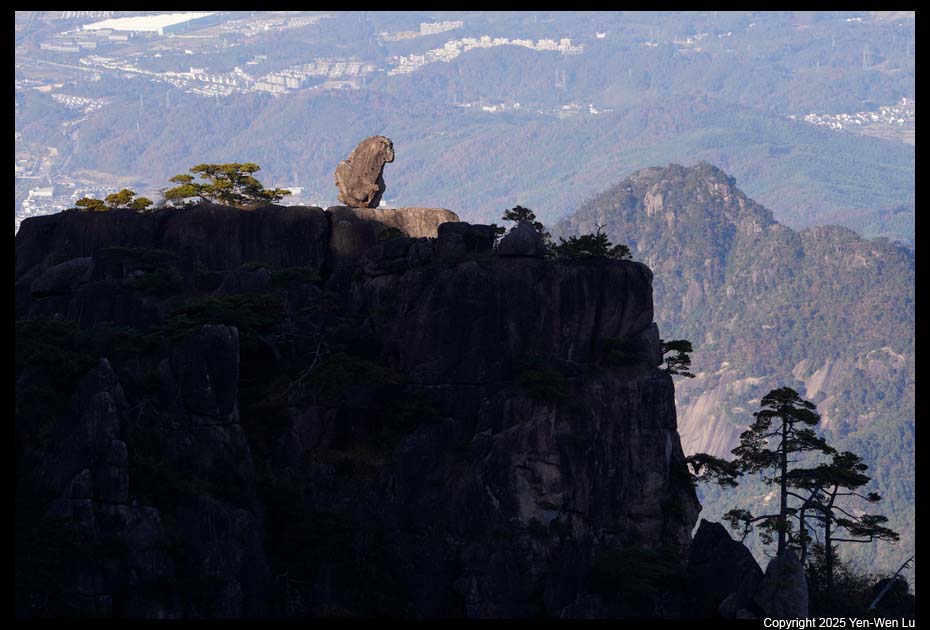
Qingliang Terrace (清涼台, Refreshing Terrace), 猴子觀海 (Stone Monkey Watching the
Sea), etc.
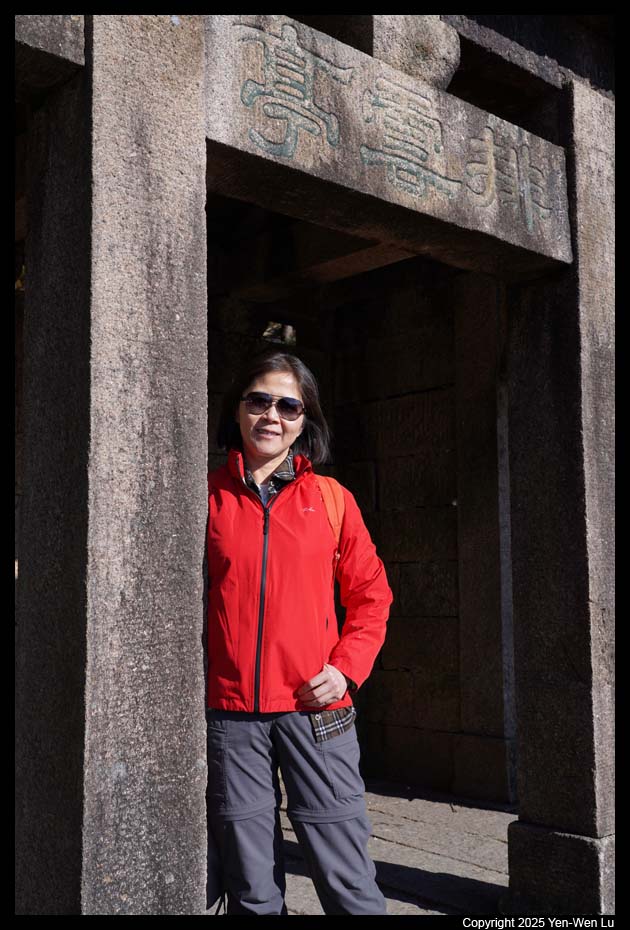
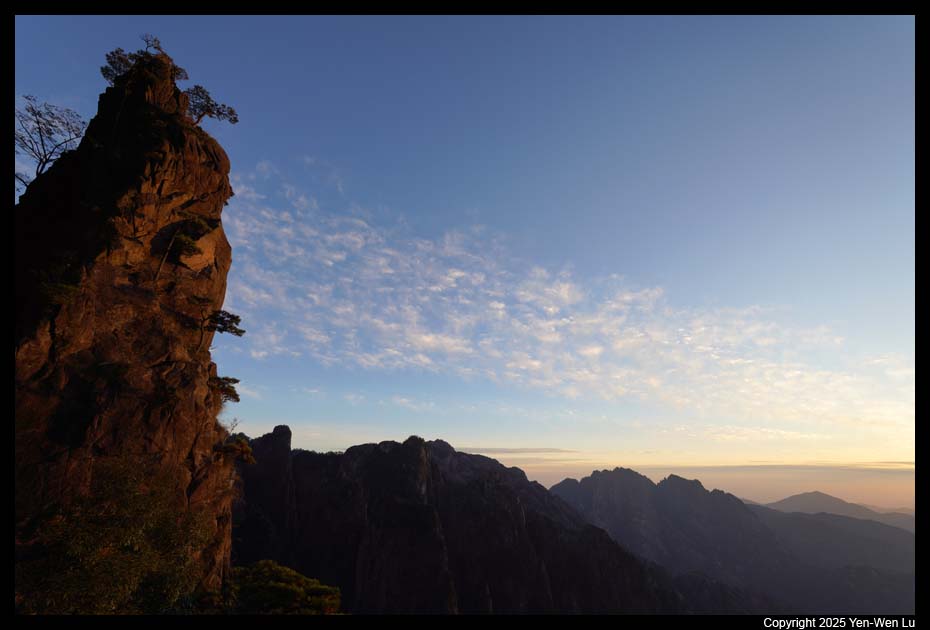
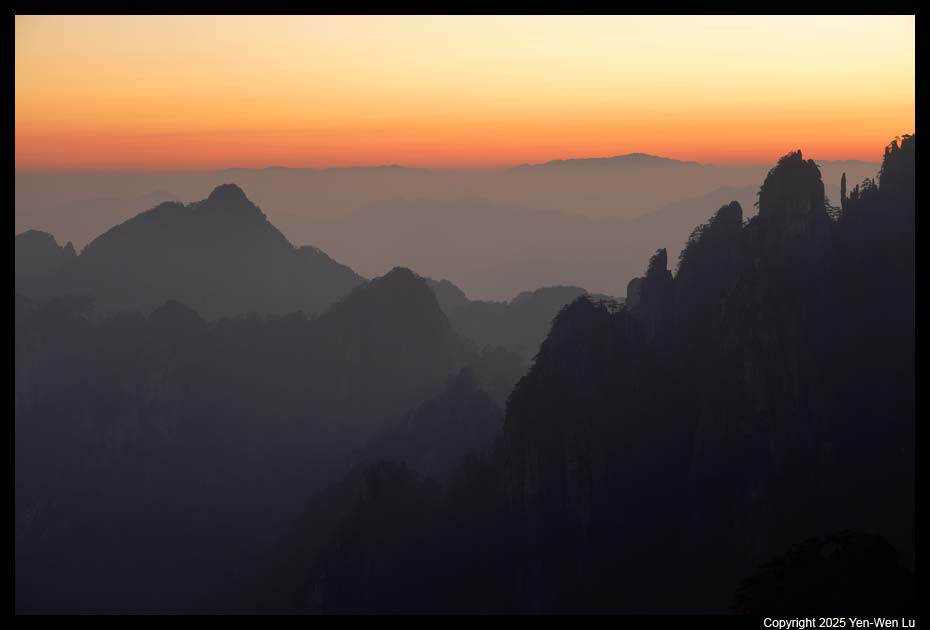
- Xihai Canyon (西海大峽谷) -- Peiyun Pavilion (排雲亭) Sunset
After checked in
the Xihai Hotel (西海飯店), we went out to Xihai Canyon (西海大峽谷) and found a
perfect spot at Peiyun Pavilion (排雲亭) for a perfect sunset.
- Xihai Hotel
(西海飯店)
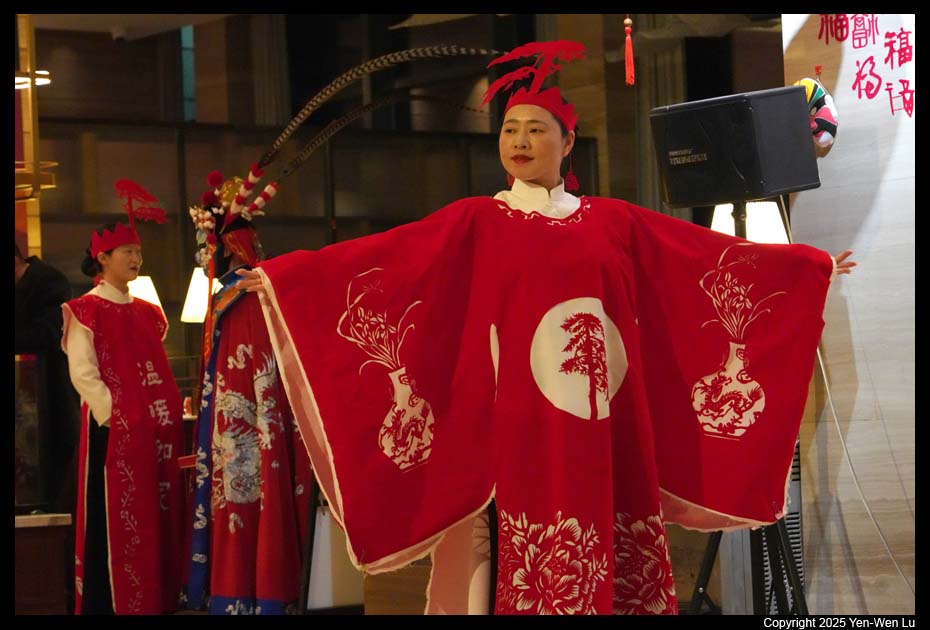
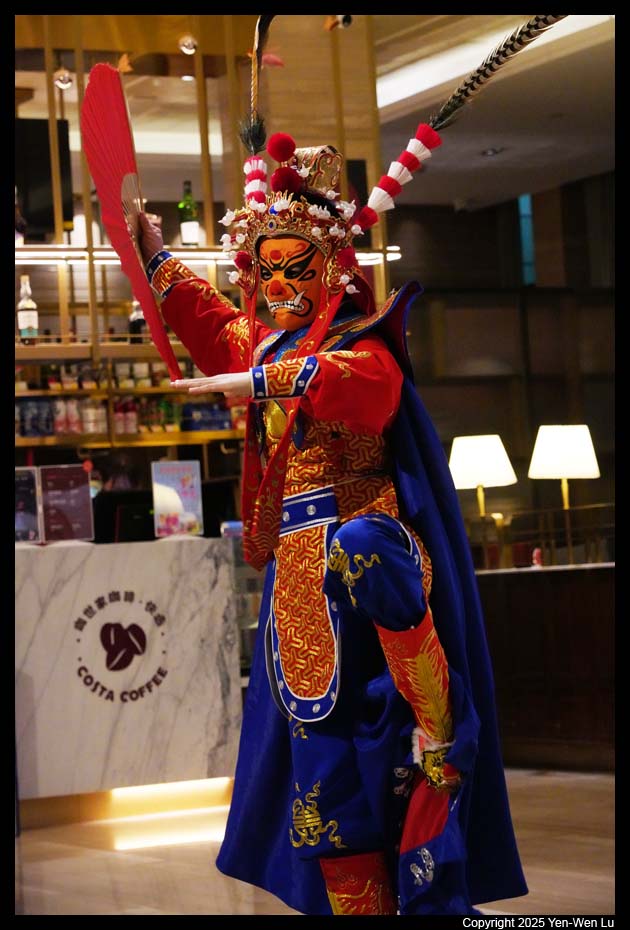
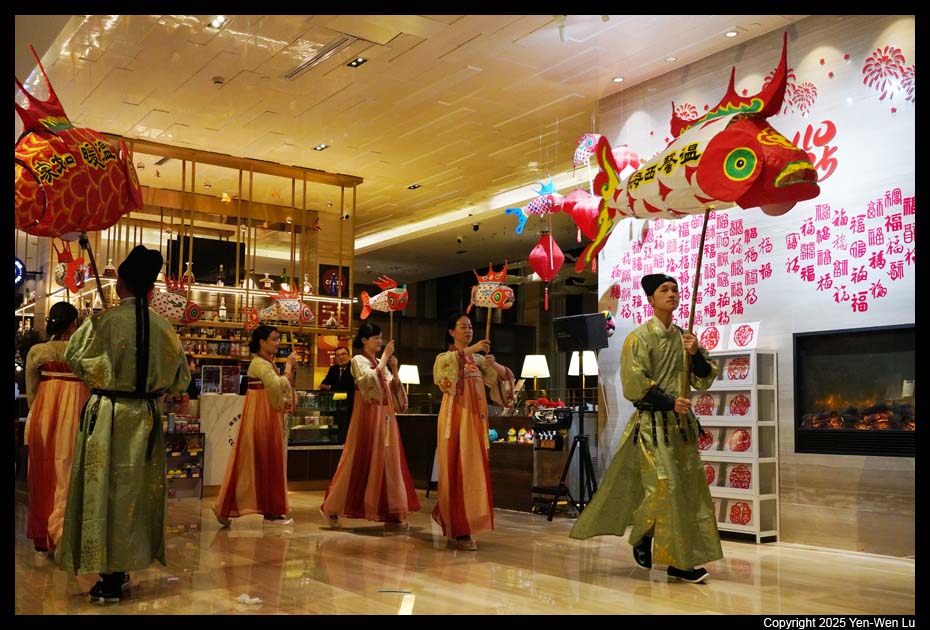
After dinner (we decided not to go to buffet, but went
downstairs for an la carte dinner), we went to the hotel lobby to
see some traditional folk shows.
Day 3 (11/20) ...
- Qingliang Terrace (清涼台) Sunrise
-
Danxia Peak (丹霞峰)
After the morning break, we went out at noon for Danxia
Peak (丹霞峰). It's about 1Km from Xihai Hotel with continuing uphill
stairs. There were not many people coming to the Danxia Peak because
of the steep stairs, but it gave us a rare moment of solitude in Huangshan:
we only met 3 other people during our 20-min at the peak platform, and
probably less than a dozen people on the trail to/from the Danxia Peak.
- Xihai Canyon (西海大峽谷)
We visited Xihai Canyon again this afternoon
and walked to the First Ring (一環). We actually only walked a quarter
of the ring because it's time to go back up to a spot on the First Ring for
sunset (and it was really steep if we continued going down to the Second Ring
(二環)). Since it was already past 4PM and it would be too late if we
went back to the hotel to get our parka jacket, our guide April volunteered
to go back to the hotel to fetch the jackets for us. It only took her
40 minutes round-trip from the upper First Ring in Xihai Canyon to the Xihai
Hotel !!
Day 4 (11/21) ...
- Stone Monkey (猴子觀海) Sunrise
- Shixin Peak (始信峰) -- Yungu Cableway (雲谷索道)
After amazing three days
on the Huangshan mountain, it's time to move. At 9:30AM (a shorter
break after sunrise today), we started to hike to Beihai and then to Shixin
Peak (始信峰, Start-to-Believe Peak). A legend said a man who did not
believe the tales of Huangshan's beauty until he visited the Shixin Peak
(始信黃山天下奇). There was a line to wait for coming up to Shixin Peak.
I could not imagine how long the line would be in summer busy season.
We took the route to the Back Mountain (后山) to take the Yungu Cableway
(雲谷索道) to go down the mountain. We were extremely lucky to have 3 days
of good weather in Huangshan. In fact, I think we were too lucky to
have the sea of clouds (雲海). It's a good reason to come back to
Huangshan (when we are still strong enough to climb thousands of stairs)
probably in spring next time.
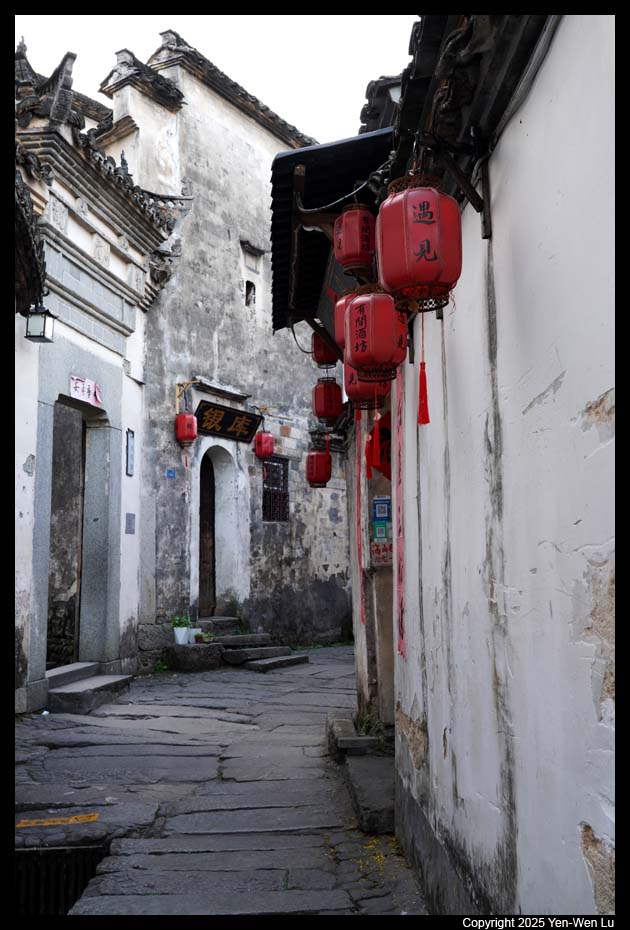
- Xidi (西递)
After lunch
at the same place in Tangko (and some tea tasting by our guide April),
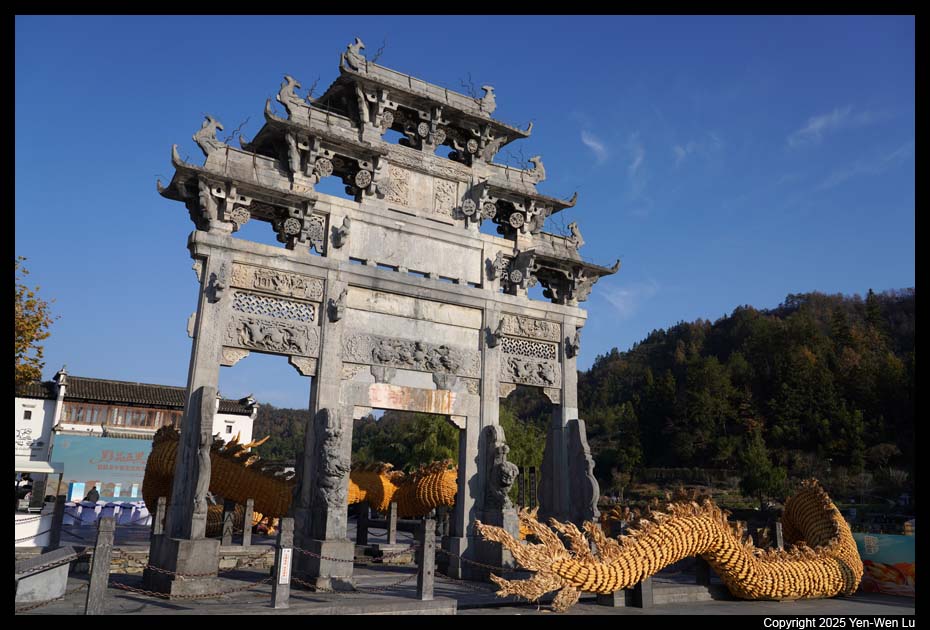
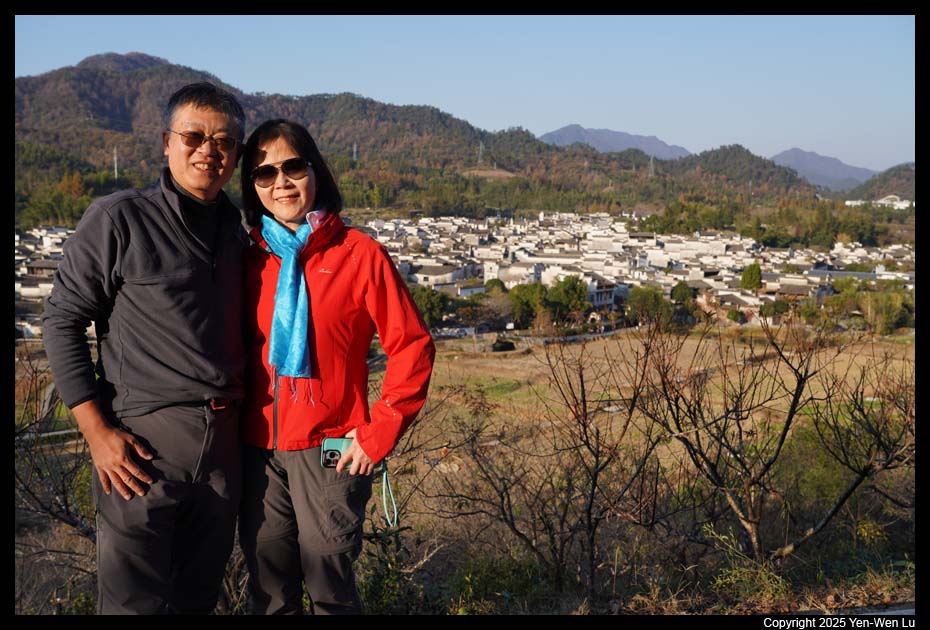
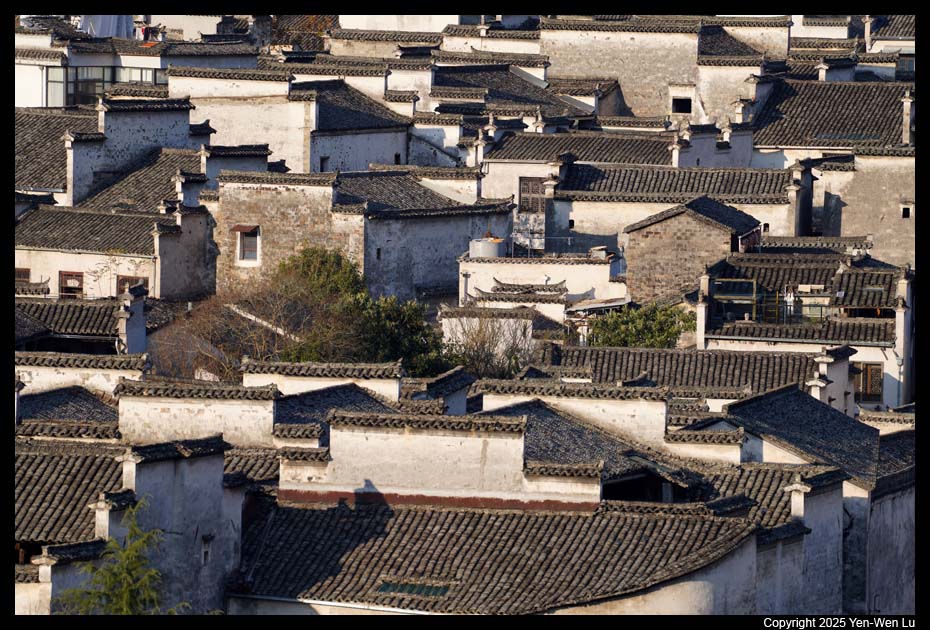
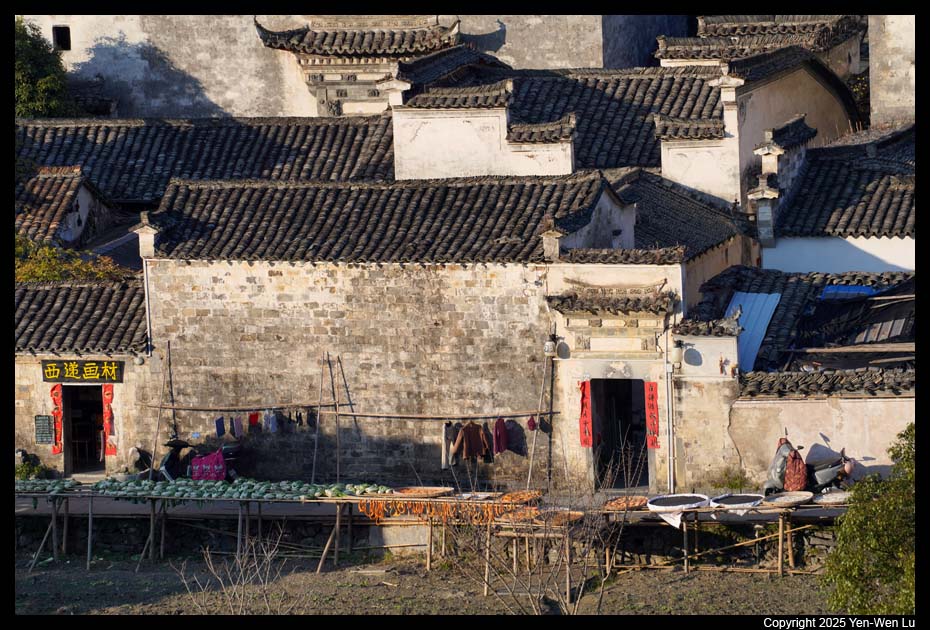
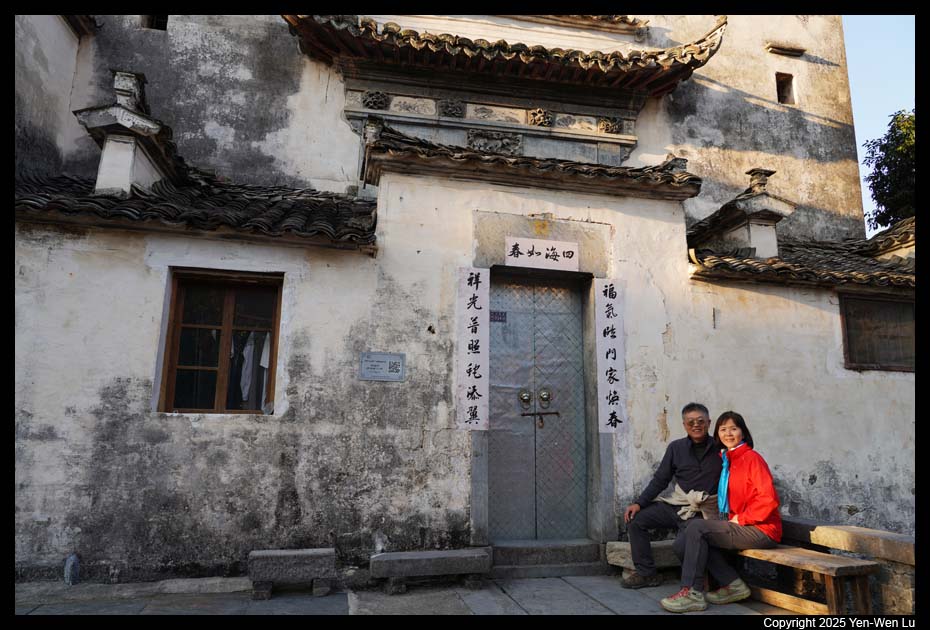
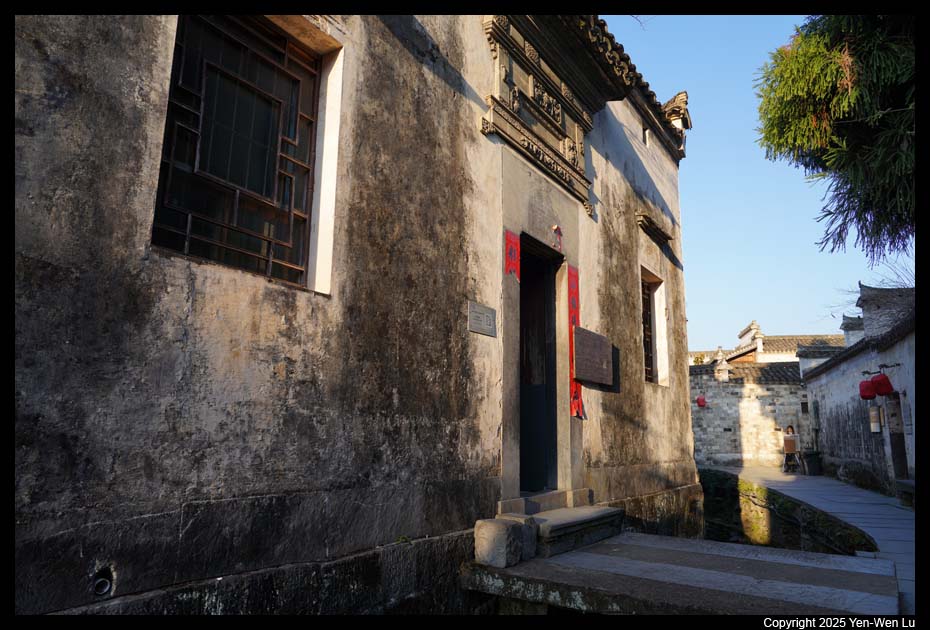
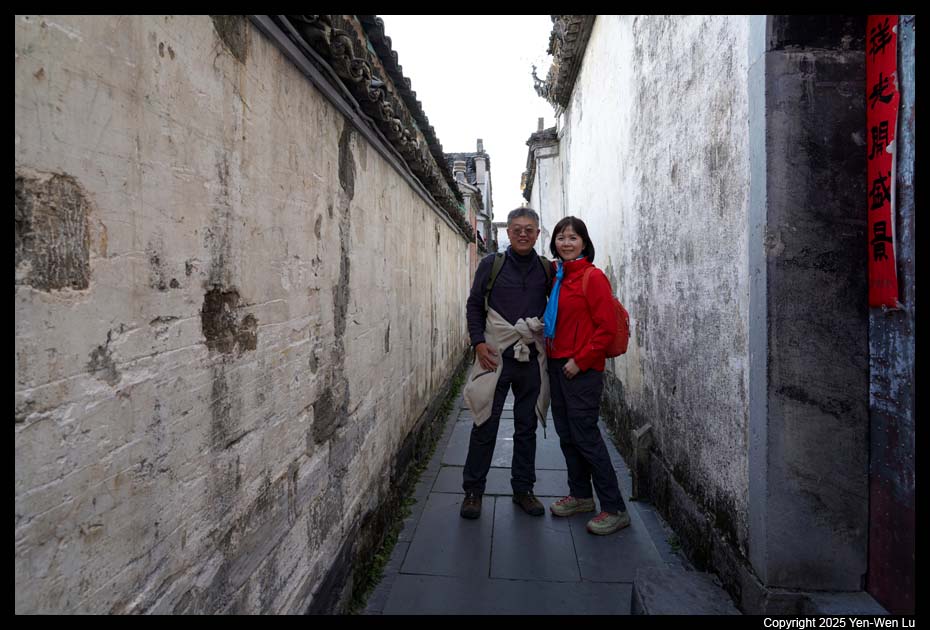
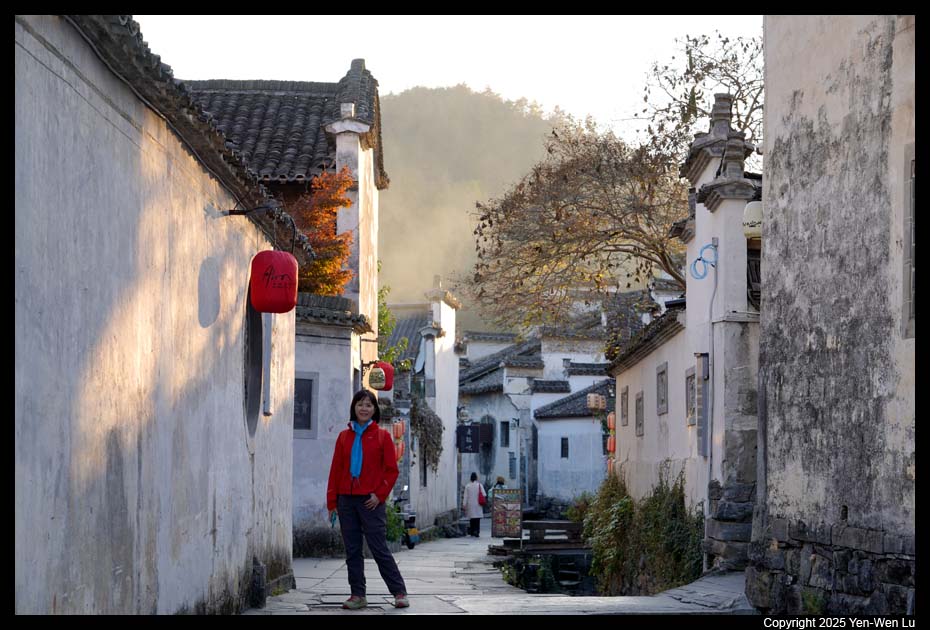
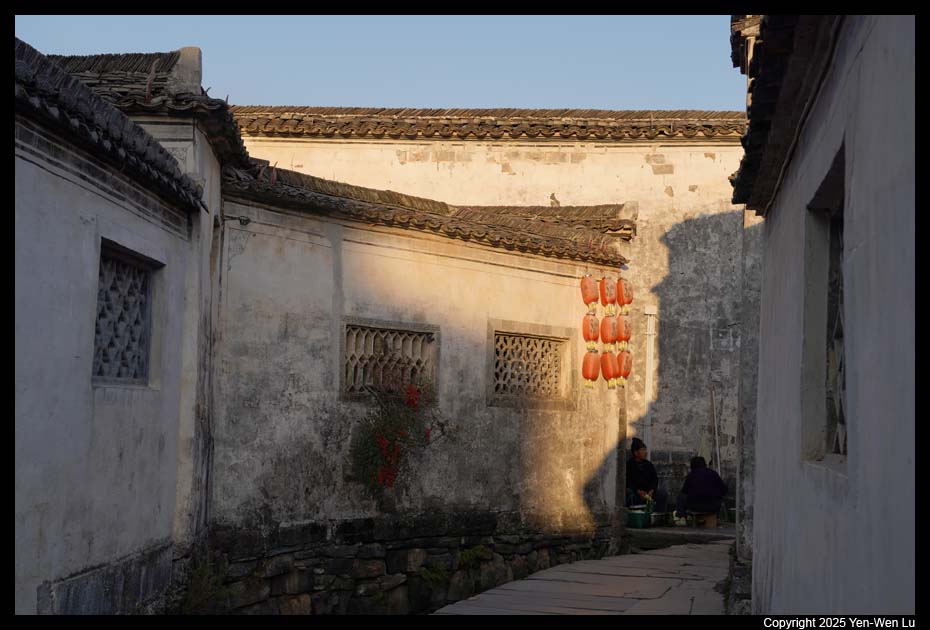
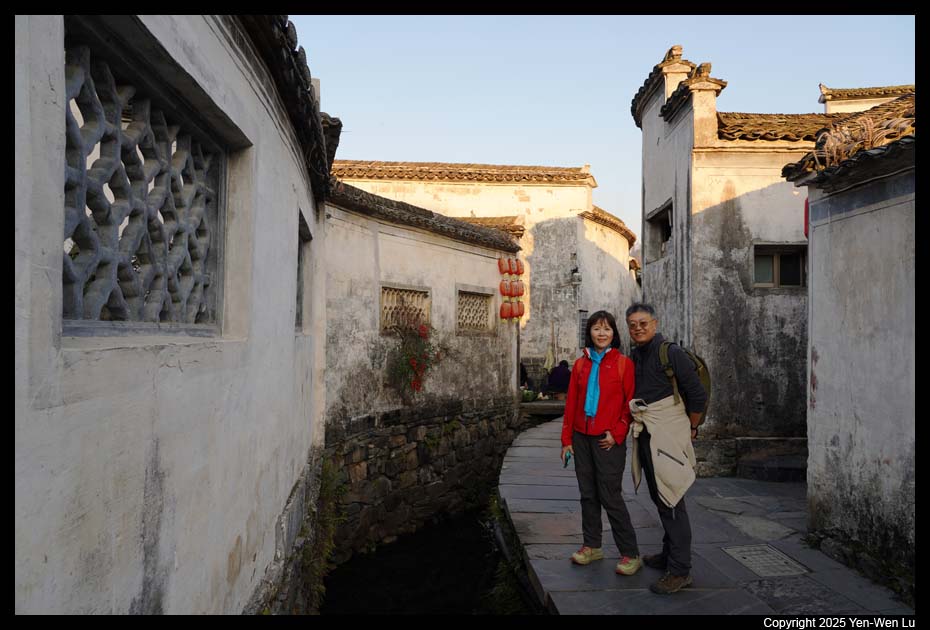
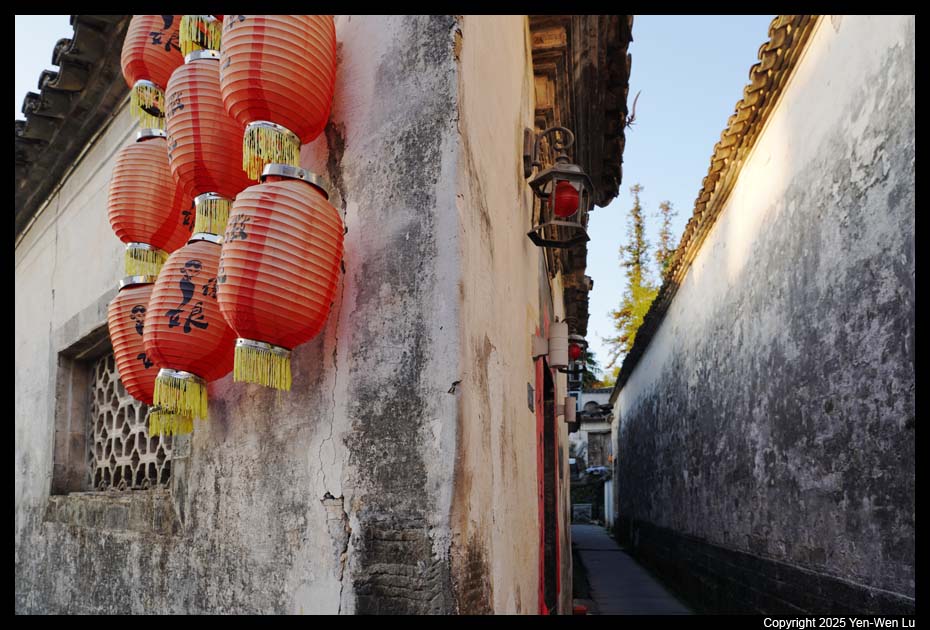
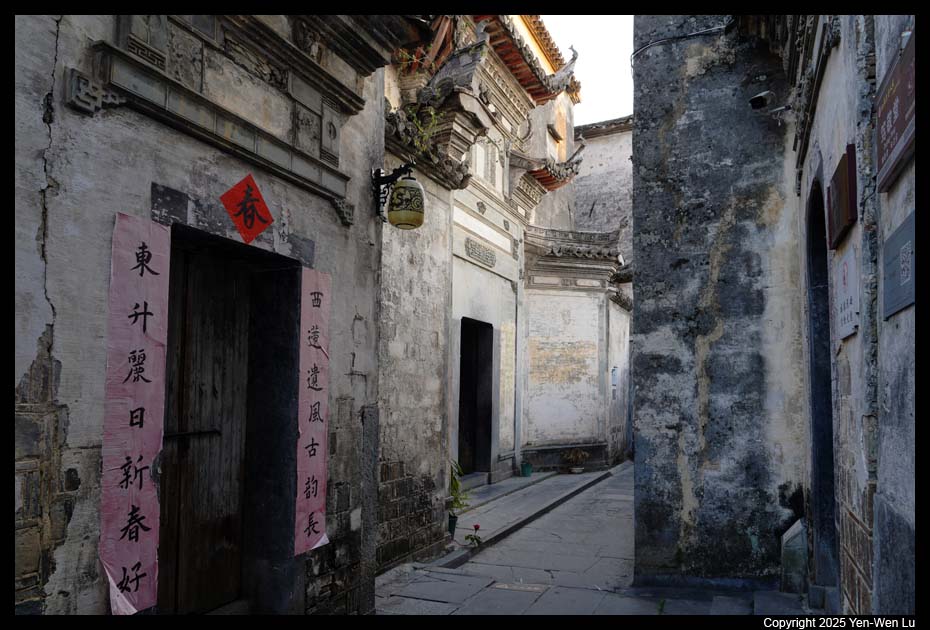
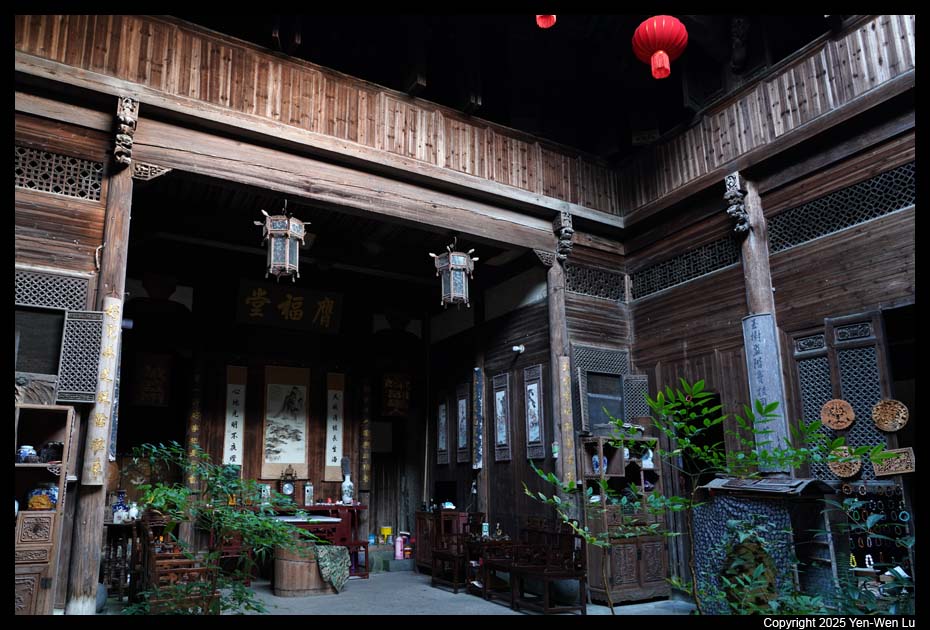
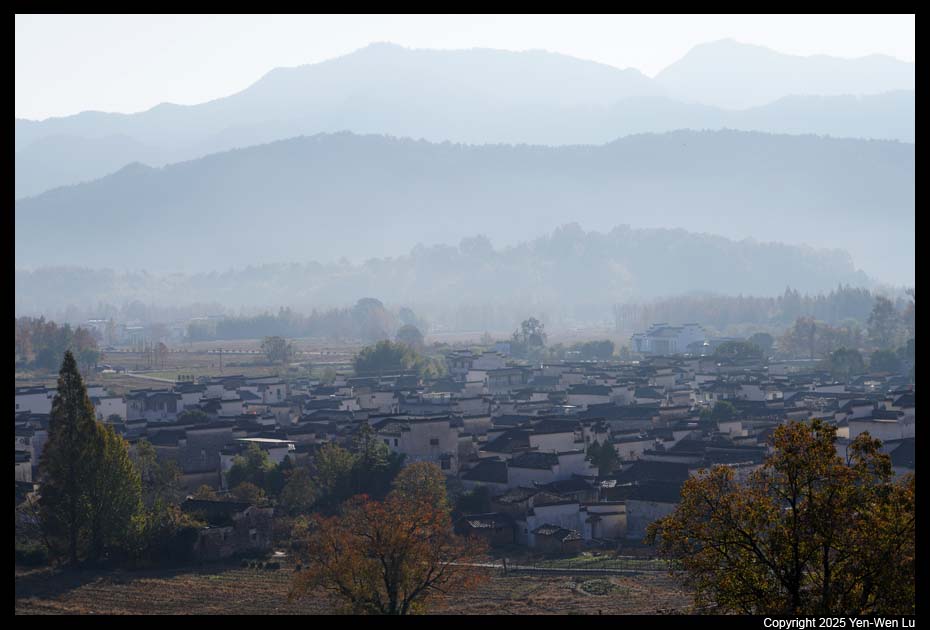
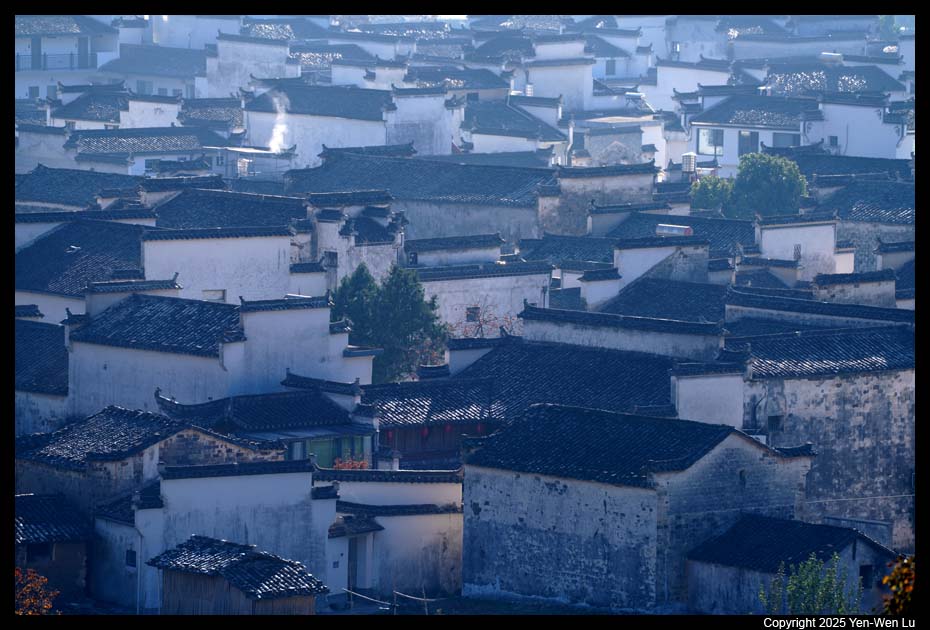
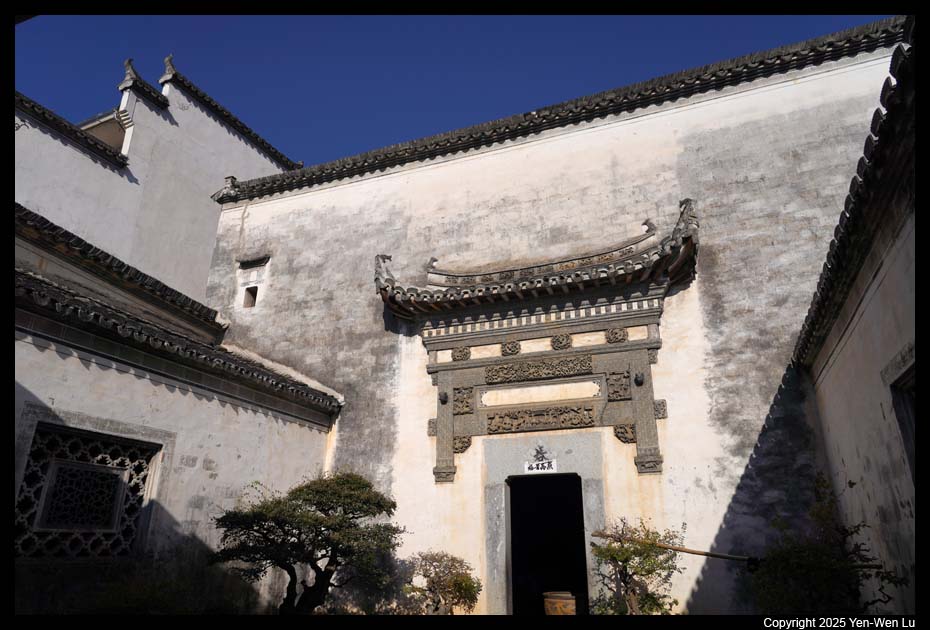
we drove ~ 1 hour to an ancient village Xidi (西递). Xidi and the
nearby town of Hongcun are known for their exceptional preservation of rural
Anhui architecture and city planning during medieval China, and together
they were declared the "Ancient Villages in Southern Anhui" World Heritage
Site by UNESCO in 2000.
First built during the Song dynasty, the village
was originally called Xichuan (西川, West River). It was named "Xidi"
(西递) because there was an ancient post station in the west of the village.
The Hu (胡) family of Xidi are descended from Hu Changyi (胡昌翼), a son of
Emperor Zhaozong of Tang (唐昭宗), who was adopted by the Wuyuan Hu family.
The rise of the village was closely tied to the fortunes of the Hu family.
During the Ming dynasty (1368–1644), family members had started in business
as merchants, leading to construction of major buildings. By the middle of
the 17th century, the influence of the Hu family expanded from commerce into
politics. The prosperity of Xidi peaked in the 18th and 19th centuries, at
which time the village comprised about 600 residences.
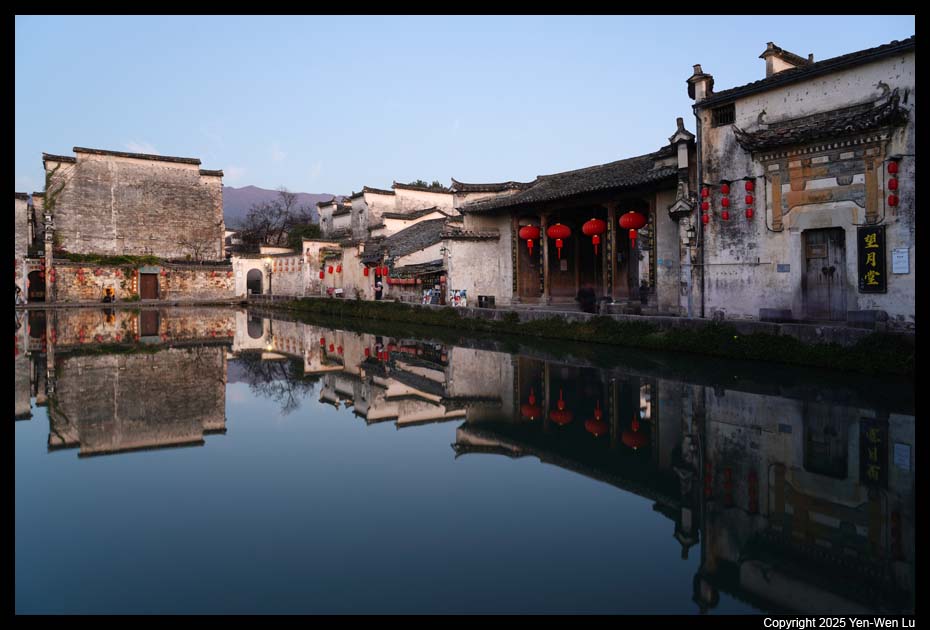
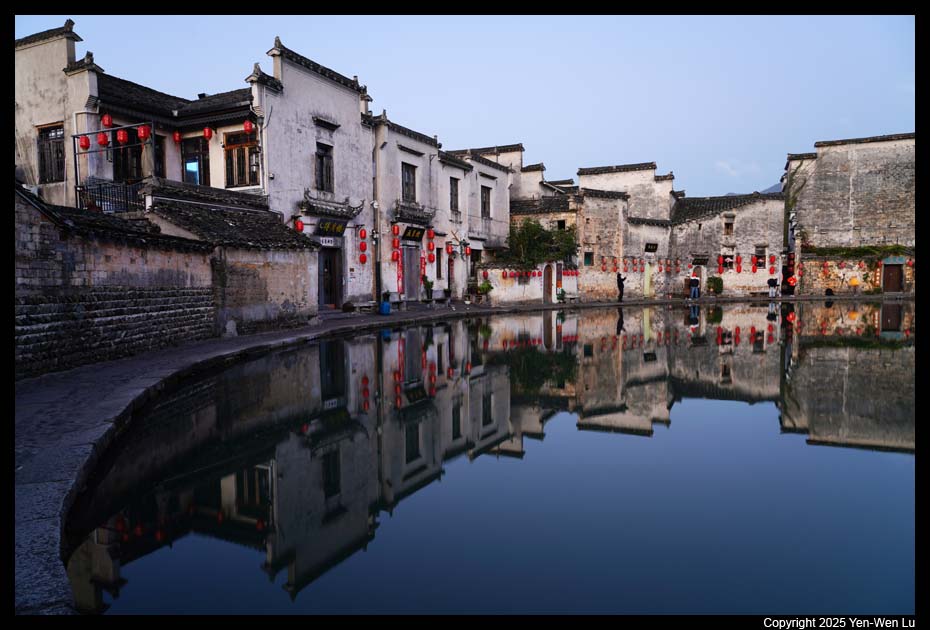
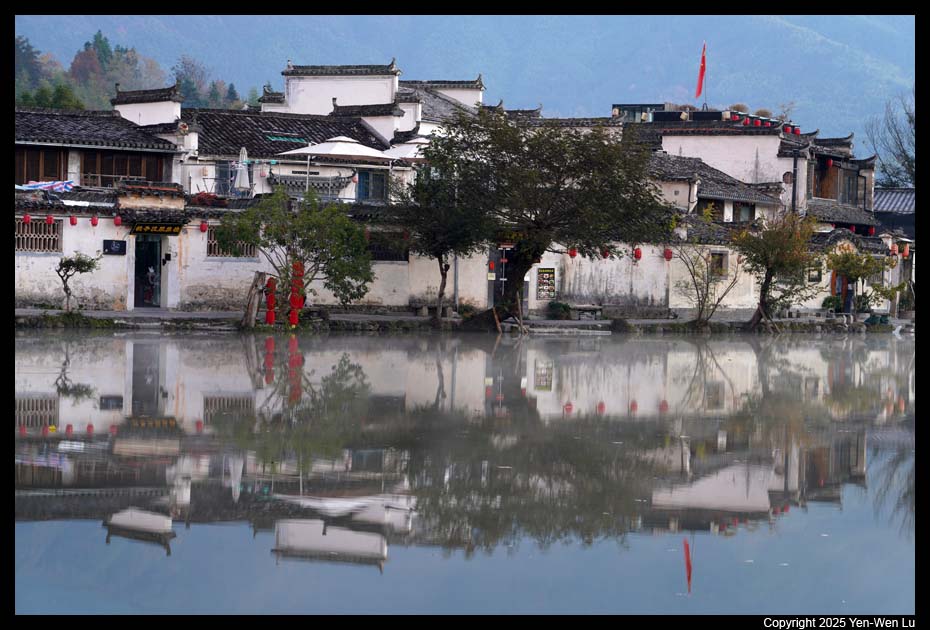
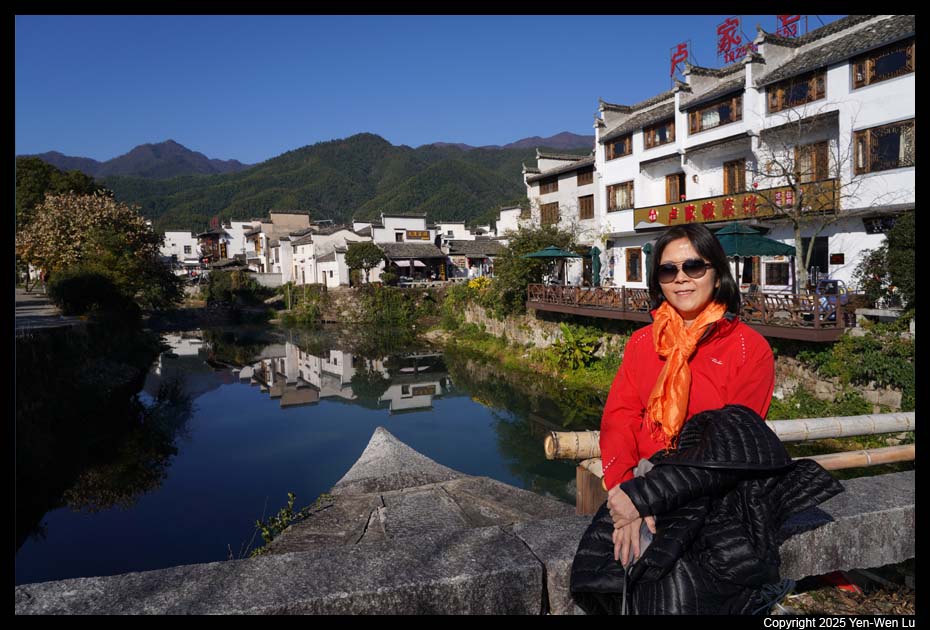
- Hongcun (宏村)
Hongcun was established in 1131AD by Wang Wen (汪文), a
general during the Southern Song dynasty. The Wang family became
prosperous merchants and the city grew in size from 1400AD to about 1900AD.
The architecture and carvings of the approximately 150 residences dating
back to the Ming and Qing dynasties are regarded as the best example of
typical Hui-style architecture. After the movie Crouching Tiger,
Hidden Dragon (臥虎藏龍, 2000) was filmed in Hongcun, more and more people get
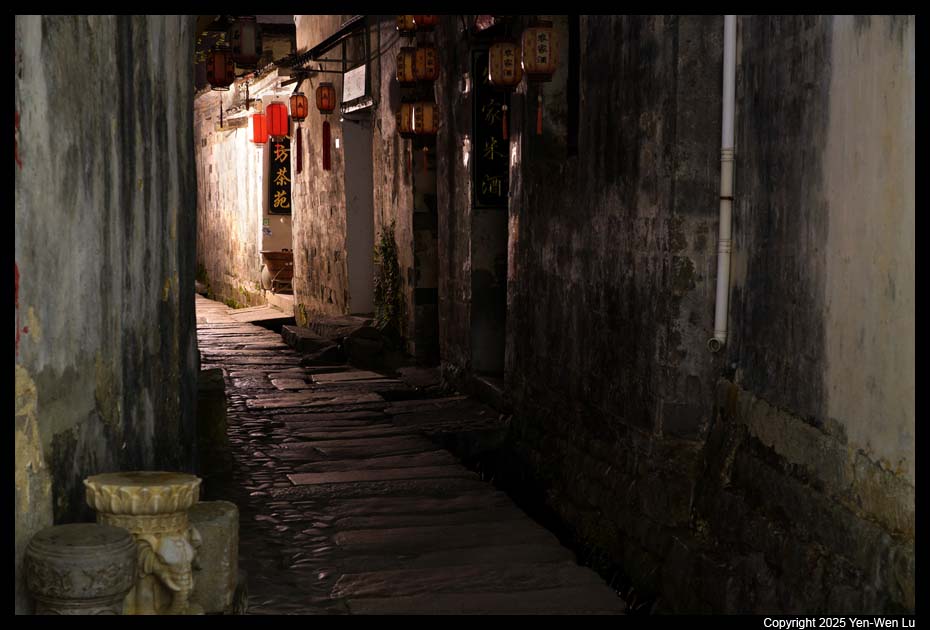
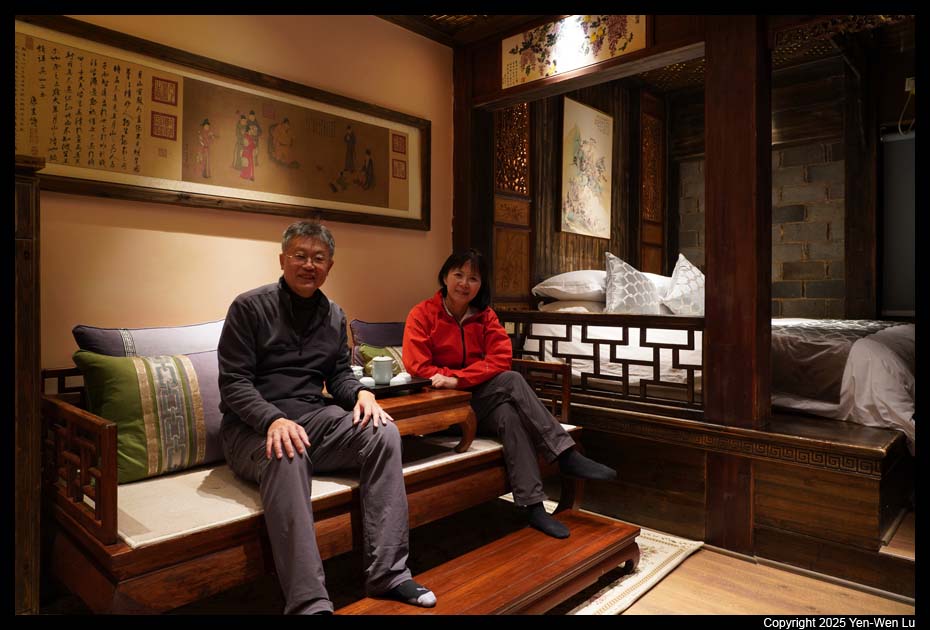
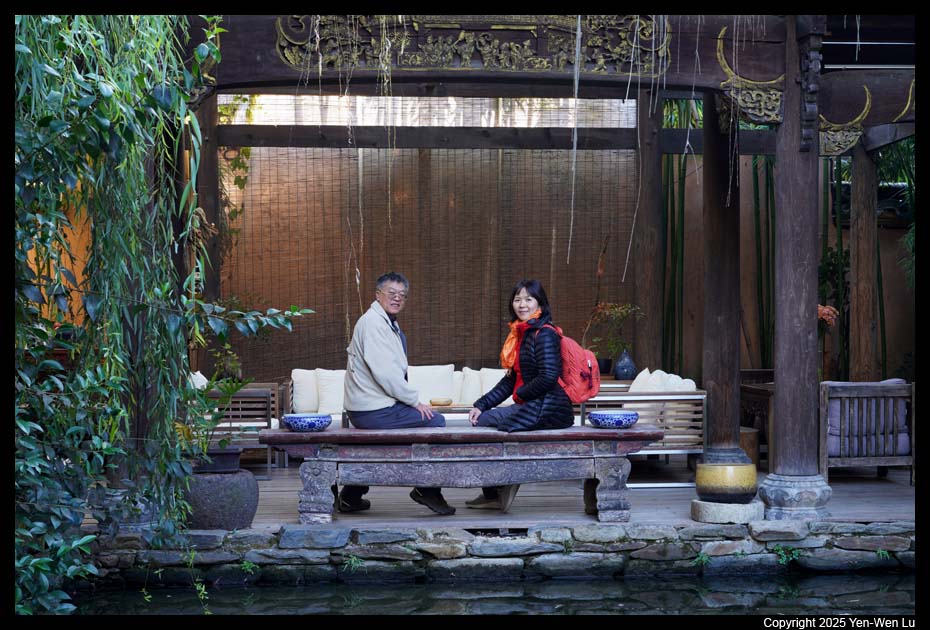
to know this ancient village. We stayed in a very nice boutique hotel,
Zhang Mansion (張公館), inside the old Hongcun village.
Day 5 (11/22) ...
-
Hongcun (宏村)
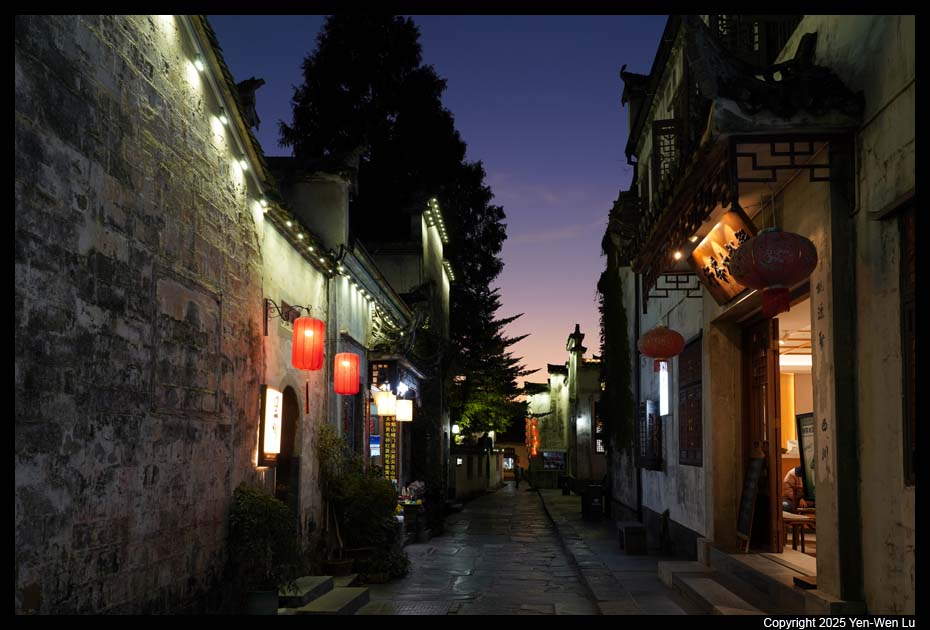
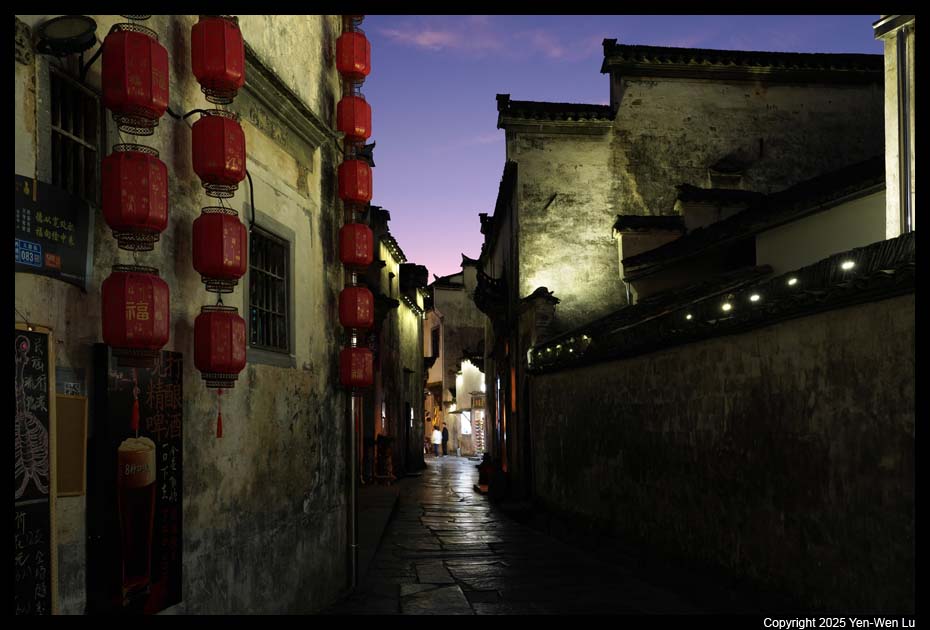
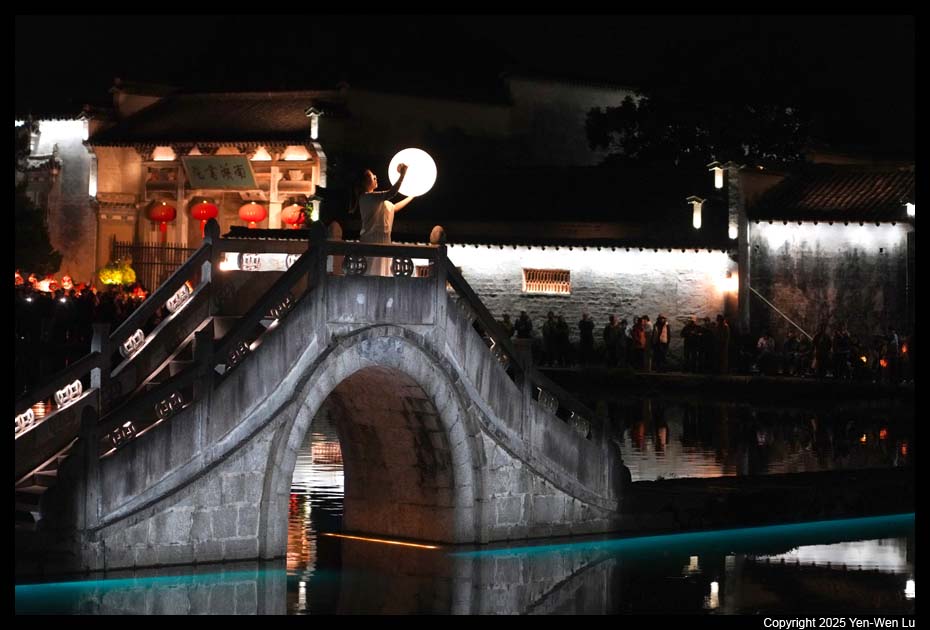
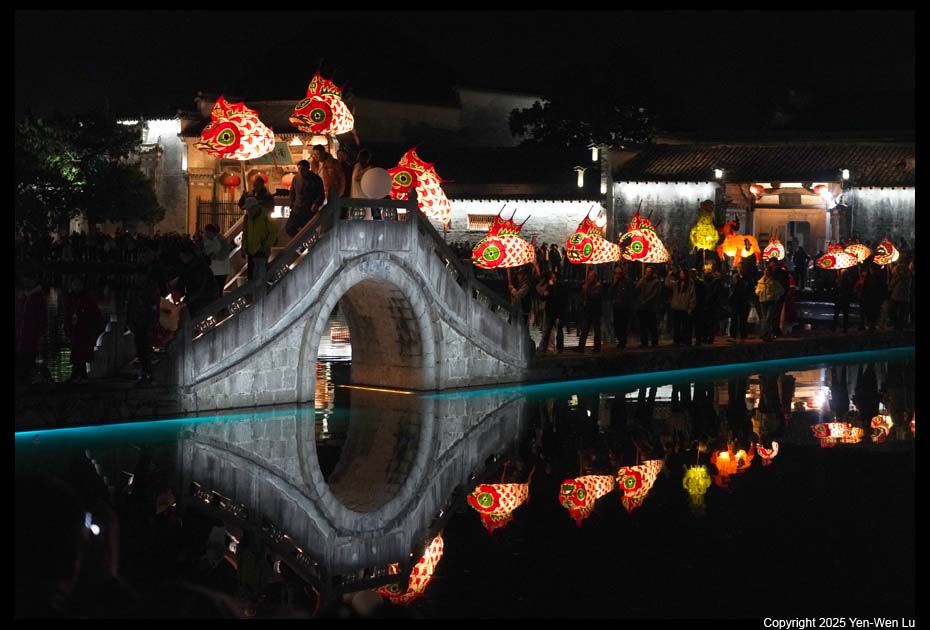
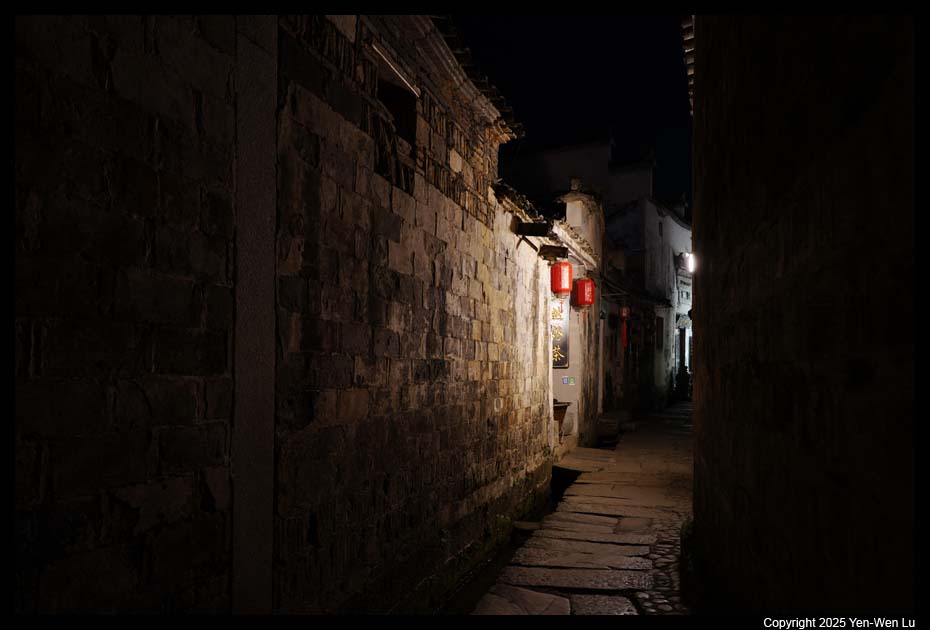
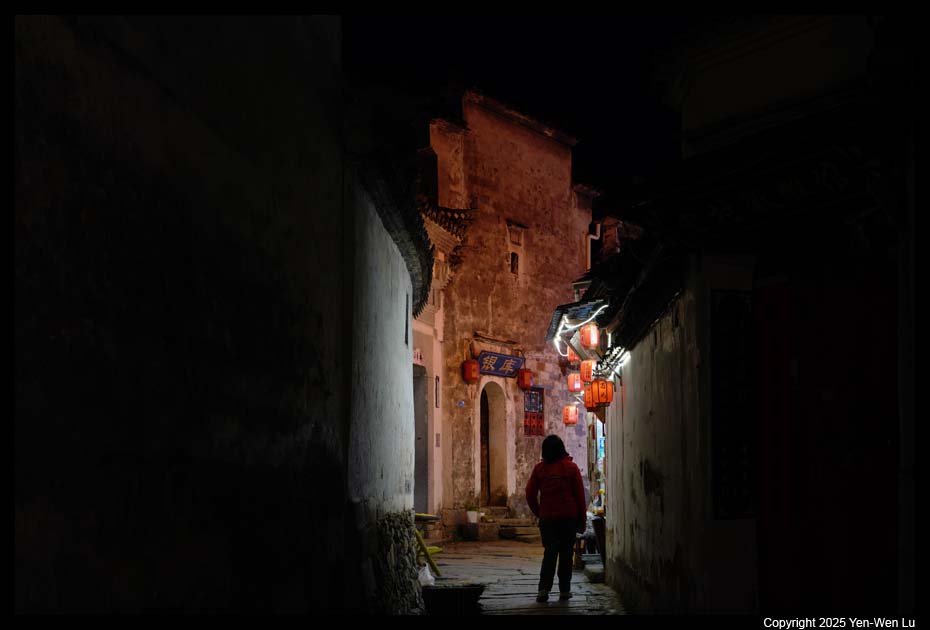
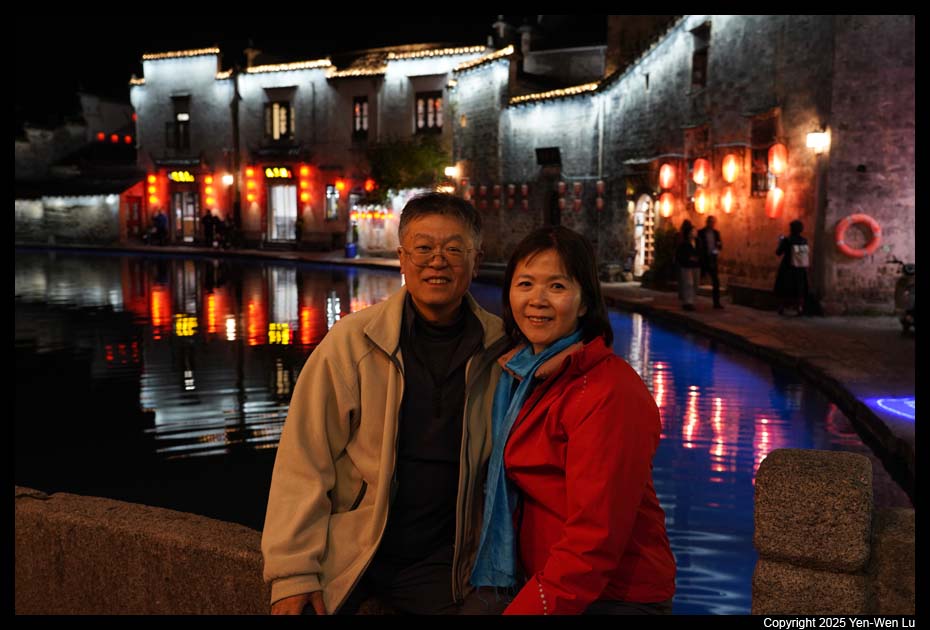
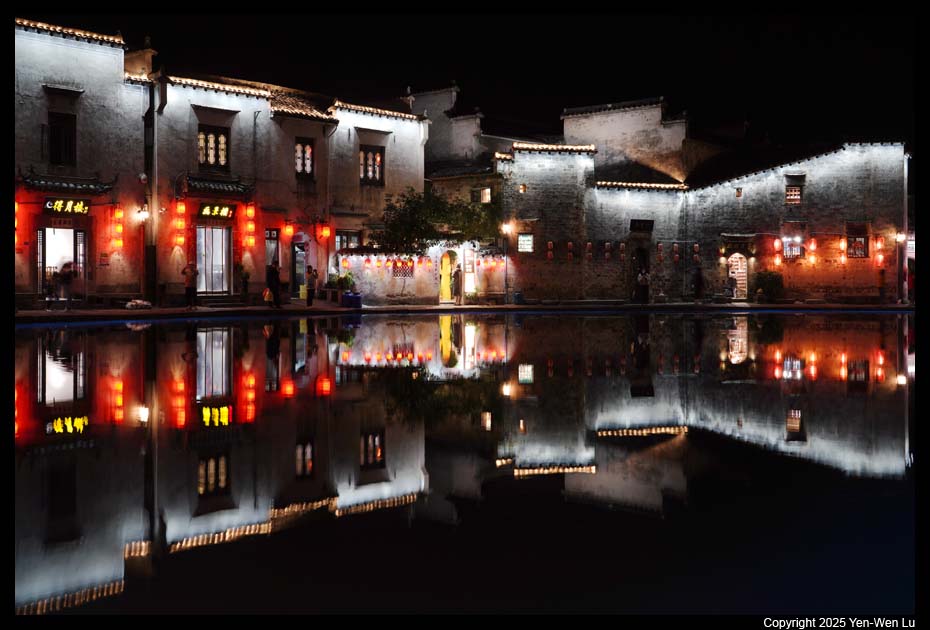
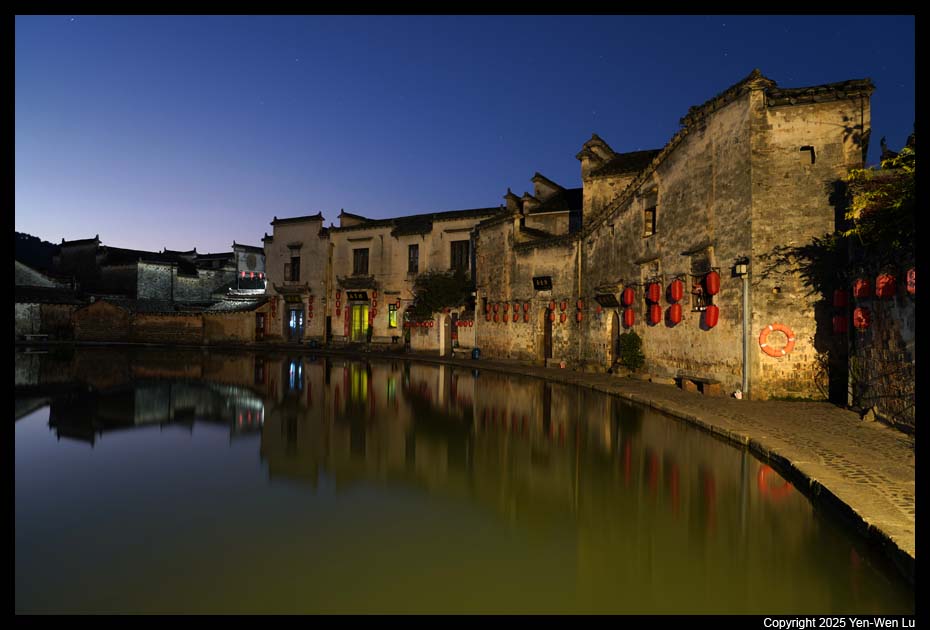
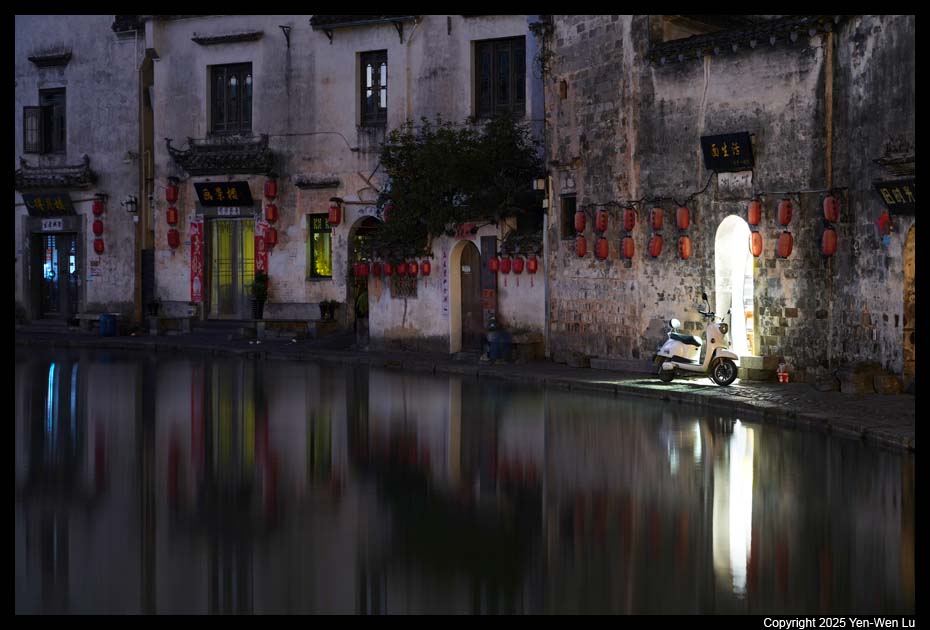
I walked to the center of the old village, Moon Lake (月沼),
before dawn to capture the blue hour of the ancient village buildings.
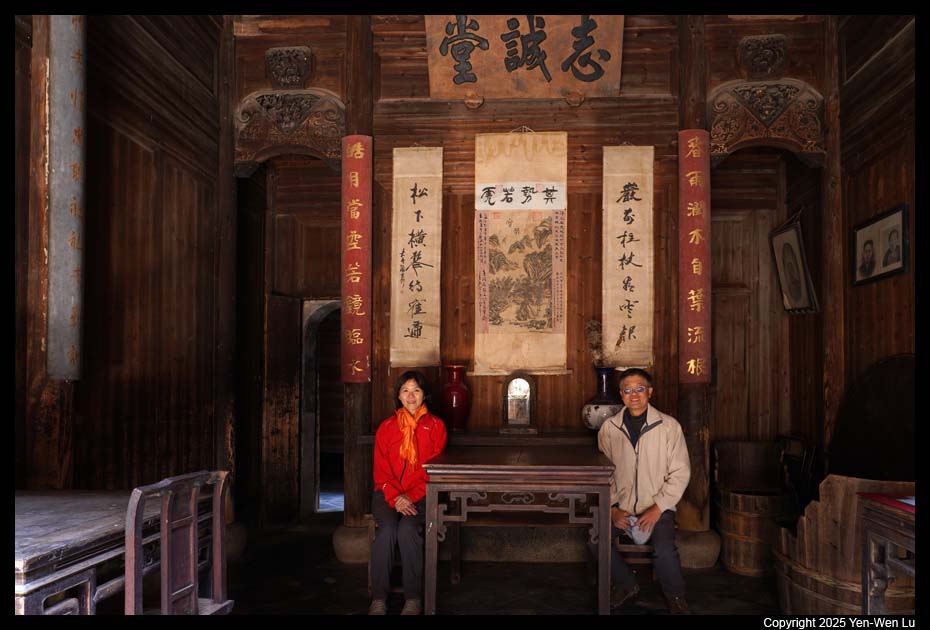
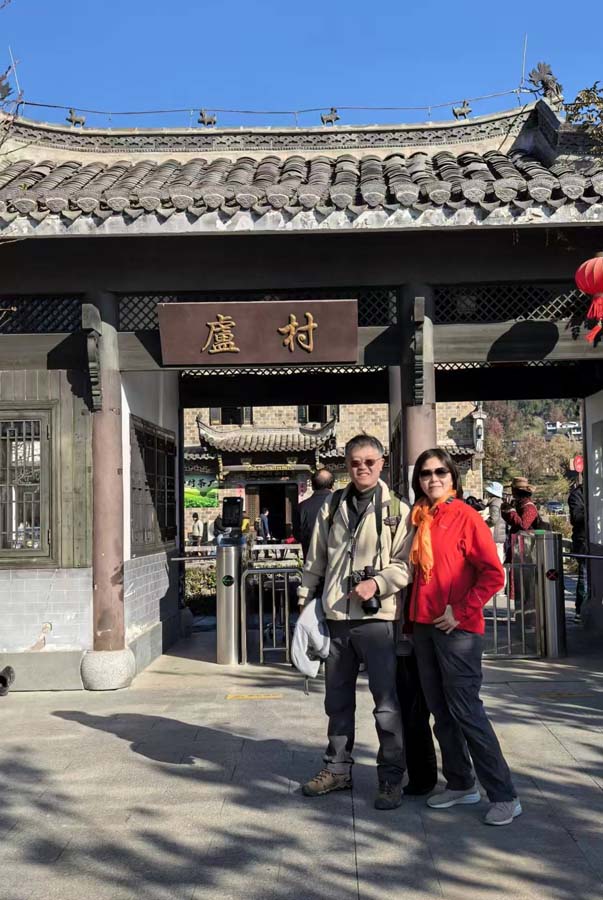
- Lucun (盧村)
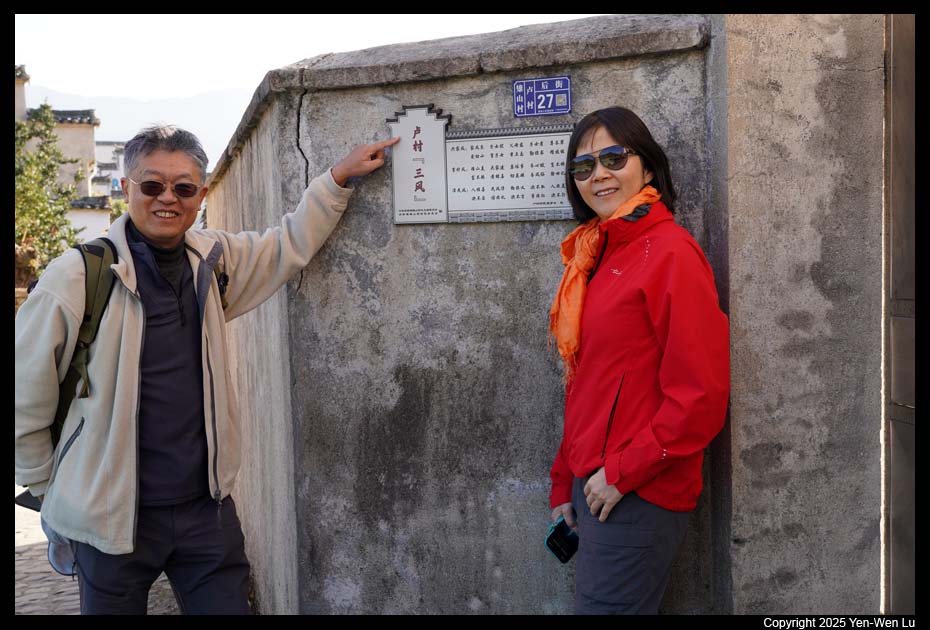
Located just 2km north of Hongcun Ancient Village, Lucun
Village is a quiet ancient village worth a quick stop especially for me
(same last name, Lu (盧)). Lucun Village, also called Zhishan Village
(雉山村), is a tranquil ancient village with about 49 well-preserved ancient
houses, more than 300 families and over 1,000 villagers (90% of them are Lu
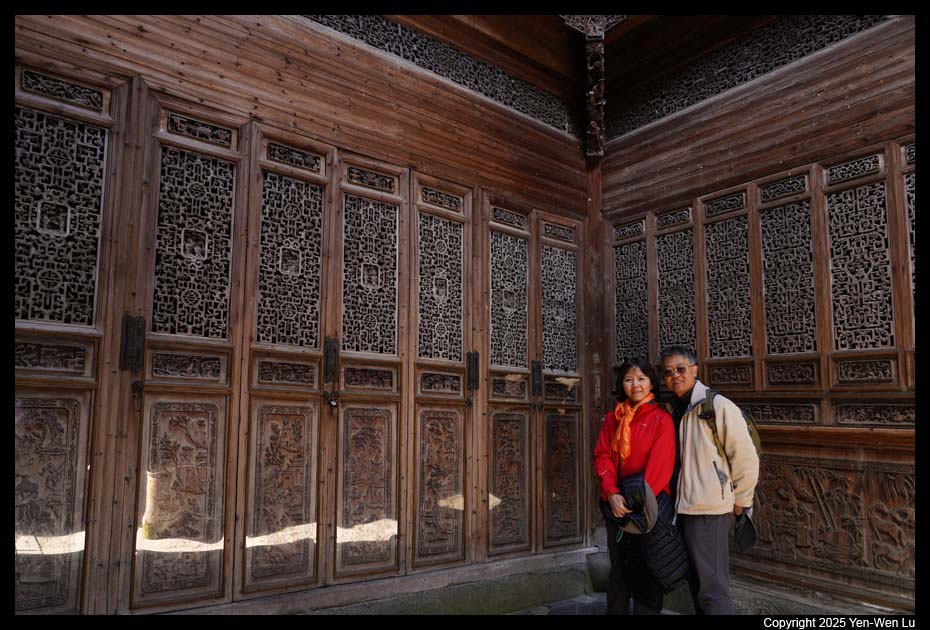
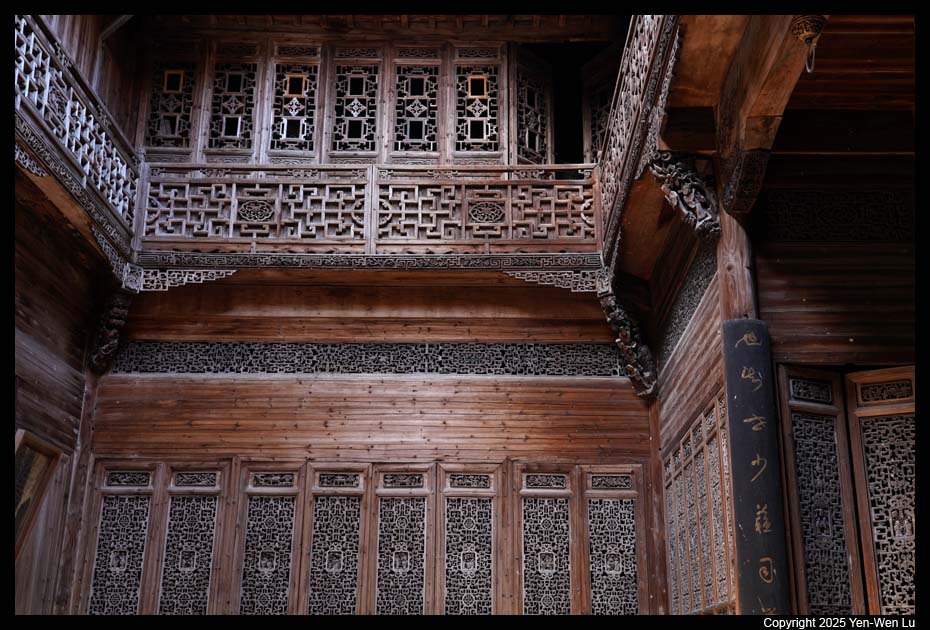
family). The Wooden Carved Houses are the famous architecture
complex of 7 ancient residences of Lu Family, 盧邦燮
(清代道光年間), the locals call him a
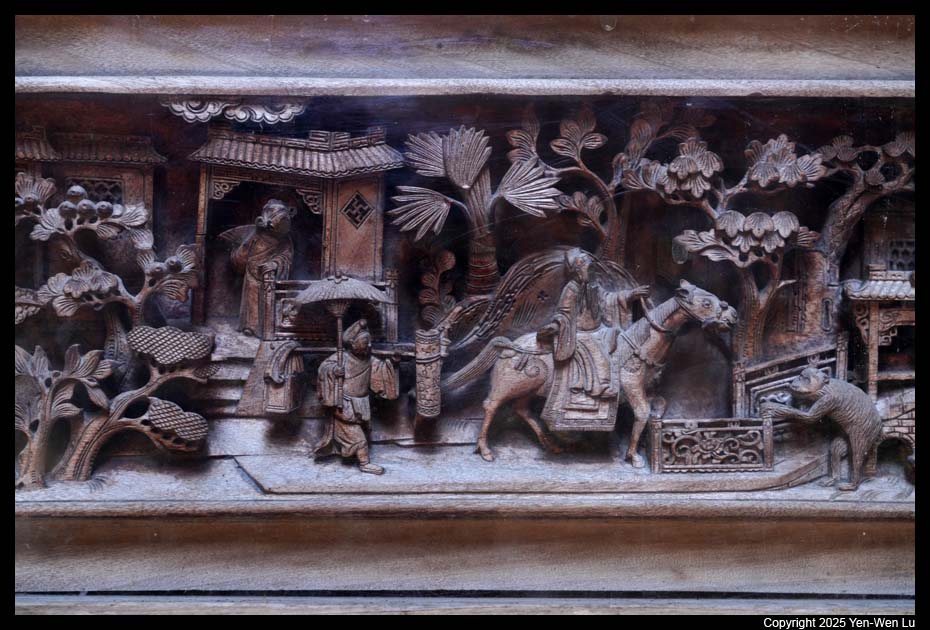
millionaire, 盧百萬. The complicated and beautiful wooden carvings has
been retained by their descendants, which now are regarded as a masterwork
in Anhui’s wooden carving art as well as the Top Wood Carved Residence in
China (unfortunately, many faces of the wood carving figures were destroyed
during the Cultural Revolution).
Next ...
We went to Huangshanbei Train Station at about 11:30AM to catch our train to
our next destination: Guilin (桂林).
It's an amazing 4-day trip in the Huangshan area to experience the nature beauty
of mountain peaks and immersive culture of ancient villages. We were
fortunate enough to have a super nice weather during our entire trip and have a
super guide April (who could climb so many stairs and helped carry our stuff
effortlessly) so we could fully enjoy our time (for both photography and
sightseeing) in Huangshan.
[Back to Photo Page]
[Gallery]