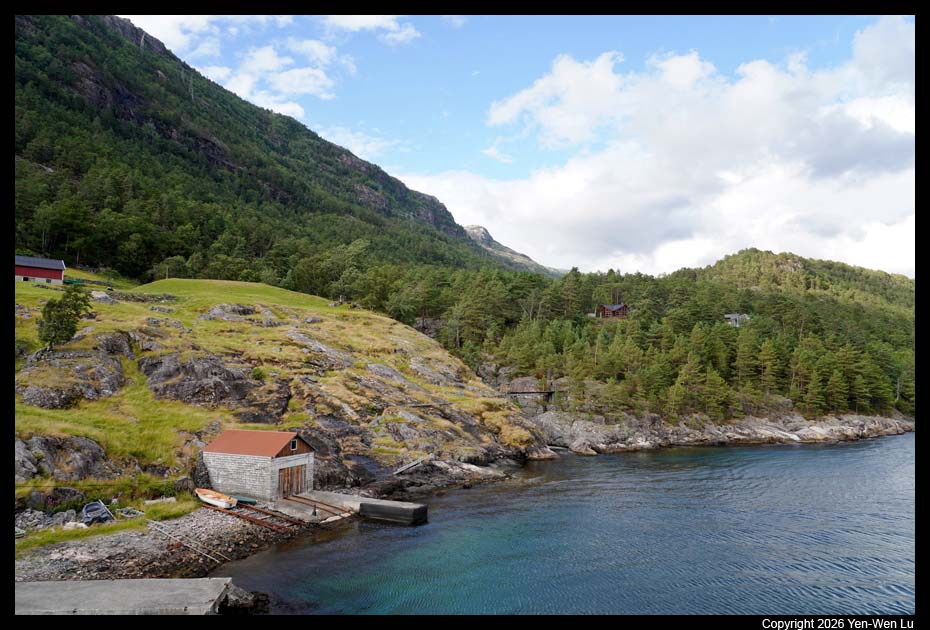
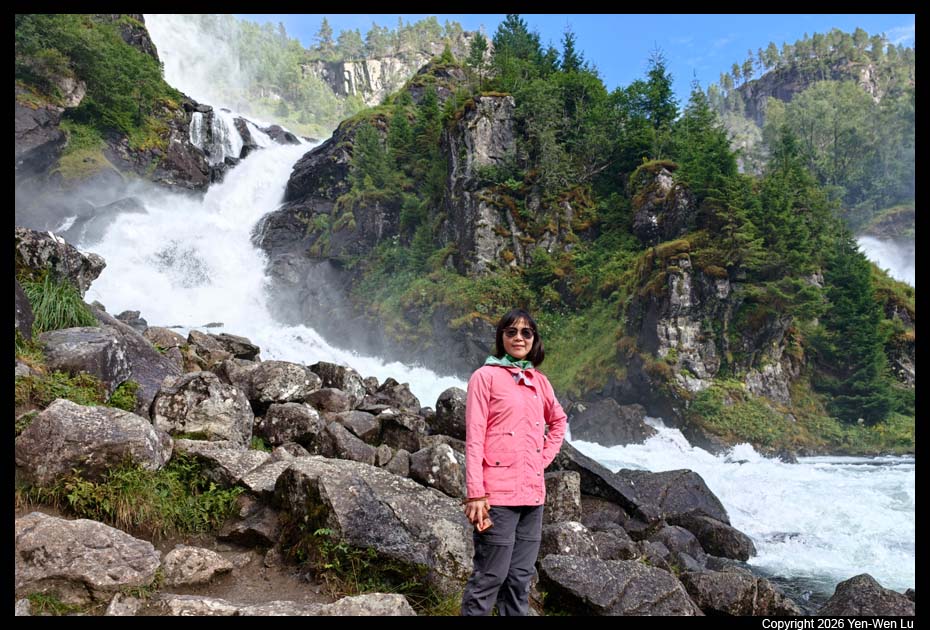
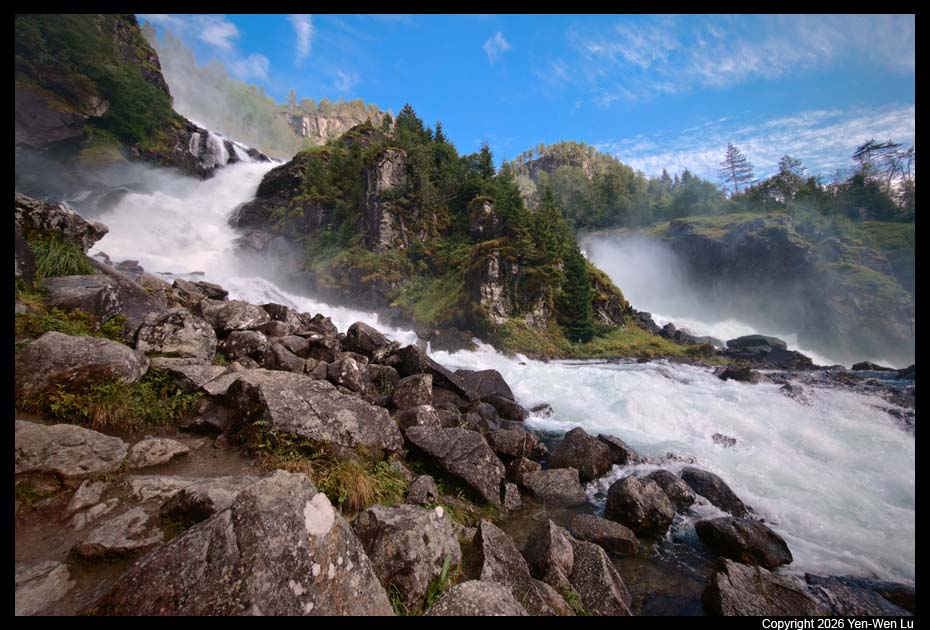
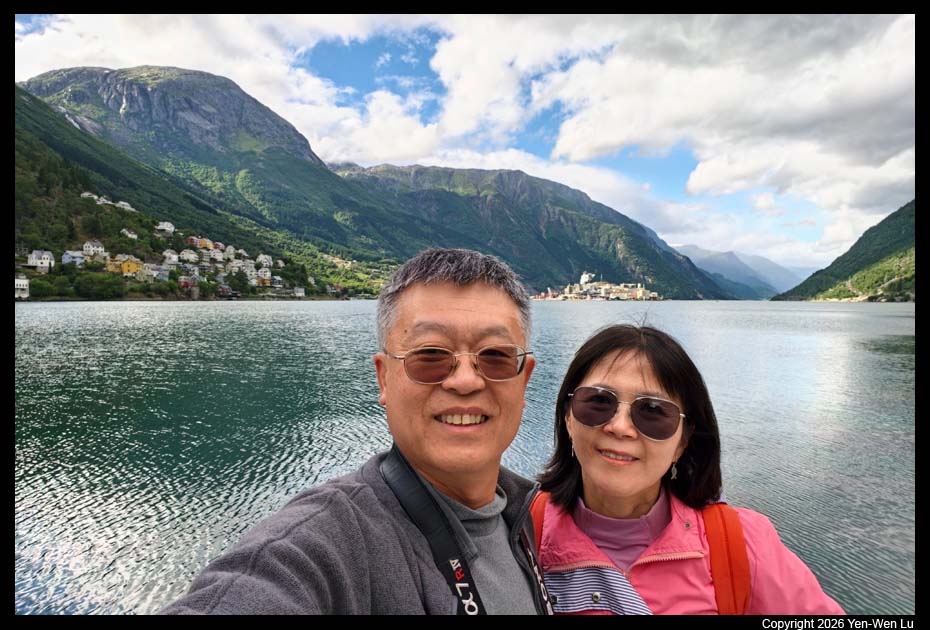
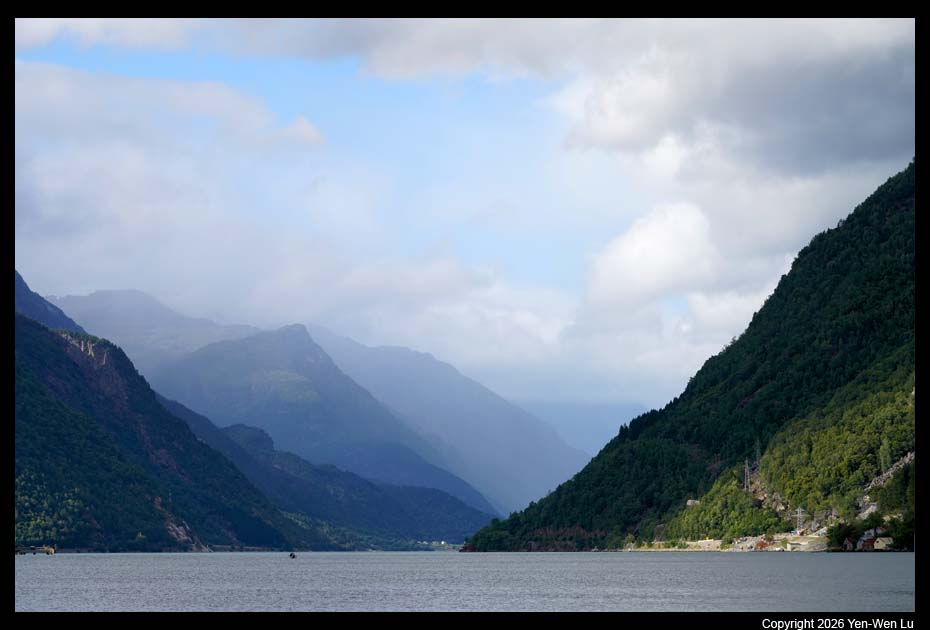
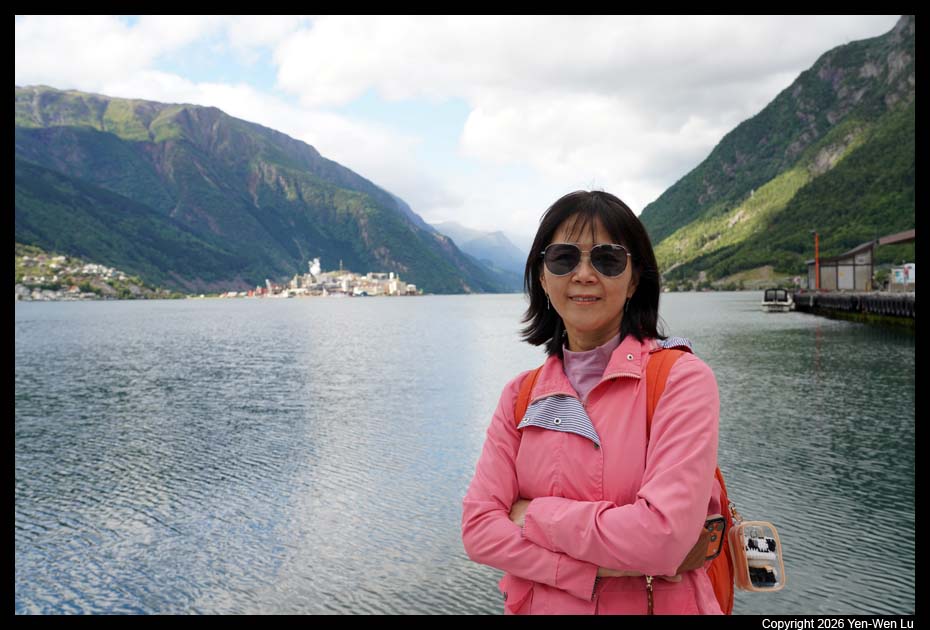
Western Norway is world-famous for its deep fjords, steep mountains, and
roaring waterfalls. It contains four of the most famous fjords in Norway:
Sognefjord, Geirangerfjord, Hardangerfjord, and Lysefjord. It also has
three most famous rock formations in Norway:
Preikestolen,
Trolltunga, and
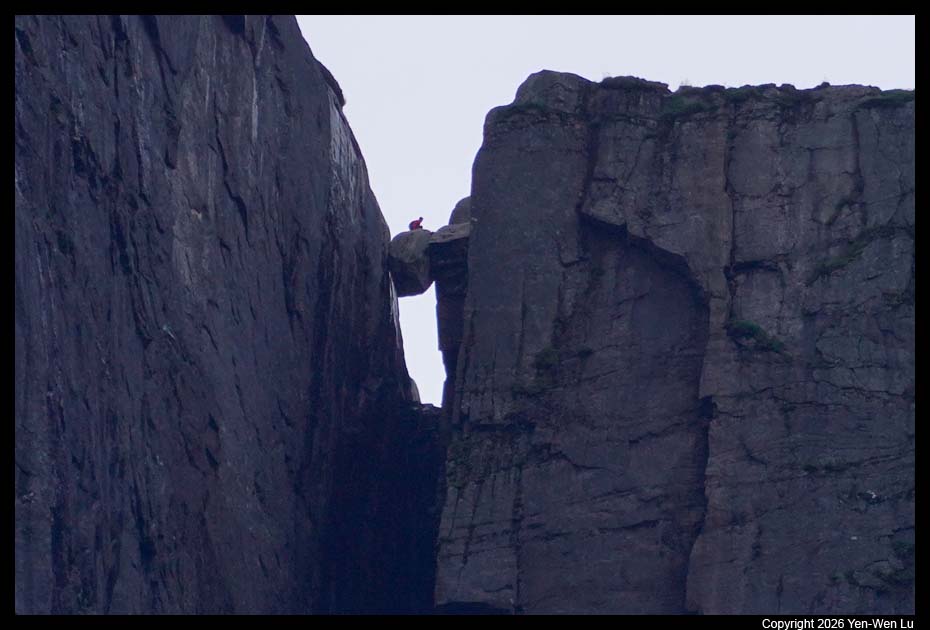
Kjeragbolten.
Western Norway was the main launching pad for the Viking expansion westward
across the Atlantic Ocean. During the Middle Ages, Western Norway became
the economic and political center of the country. With the gateway cities
like Bergen and Stavanger, and providing the most spectacular fjord and mountain
scenery in Norway, Western Norway has been a tourist mecca for centuries.
Getting there ...
We had an early morning flight from Oslo (8:55AM) to Stavanger
(9:45AM). I originally booked a traditional gas rental car at Stavanger
Airport, but I was convinced to change to an electric car (VW ID.4) since Norway
is the world’s leading benchmark for electric vehicle (EV) adoption, with EV
commanding over 97% of all new car sales, and it has such a good infrastructure
for EV charging across the country.
[Oslo] [Stavanger--Bergen]
[Lofoten]
Day 5 (7/29) ...
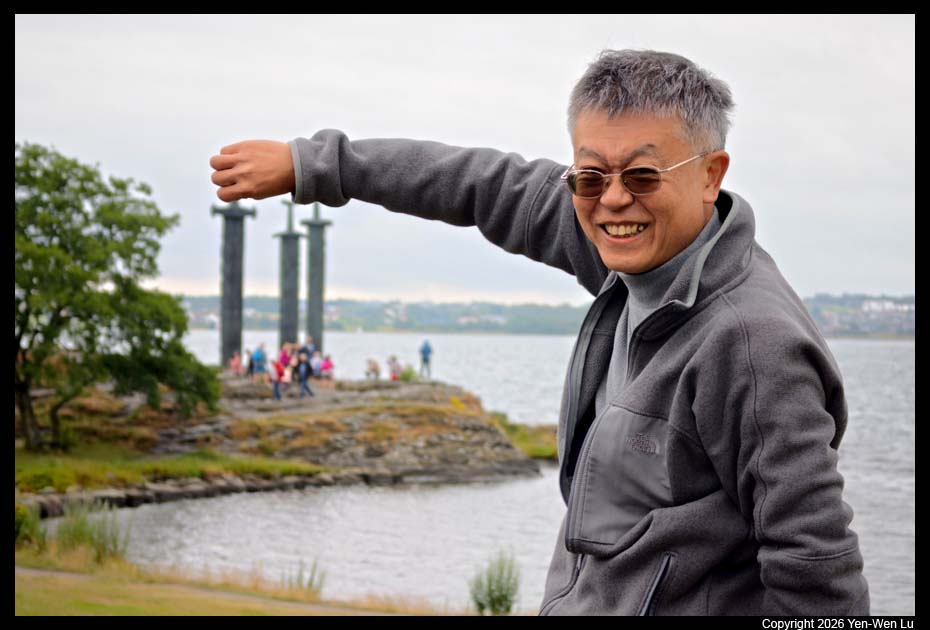
- Sverd i Fjell
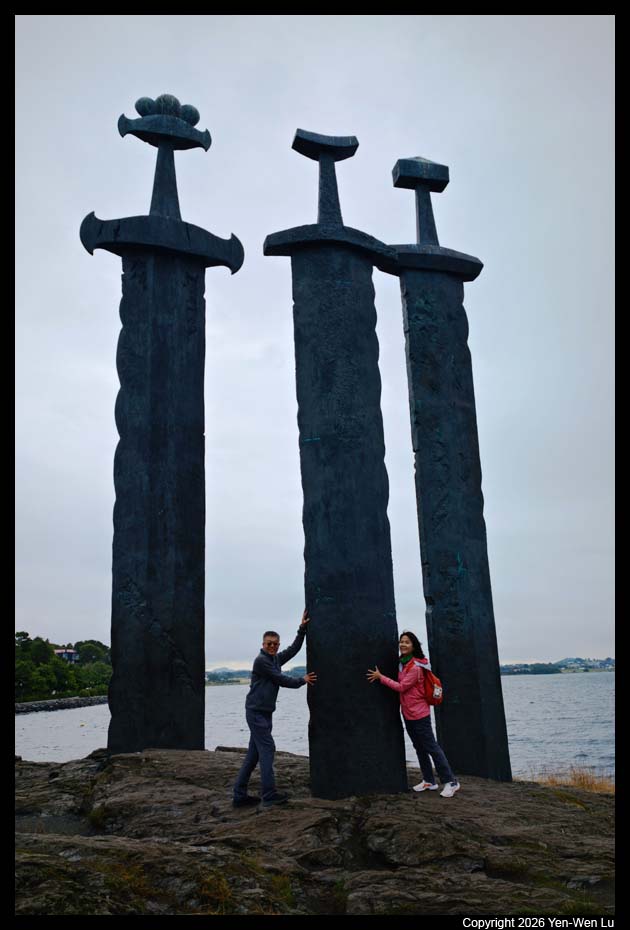
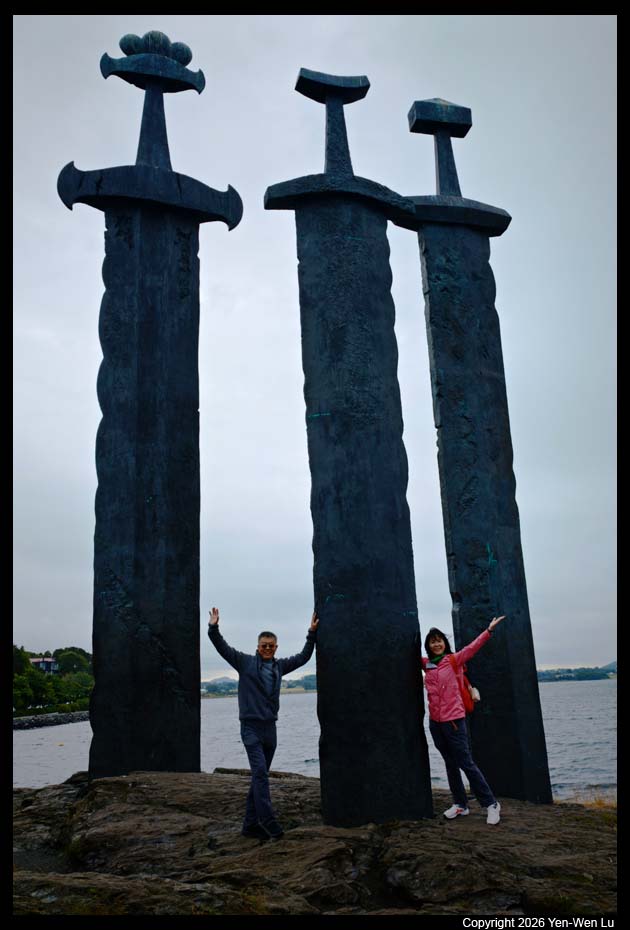
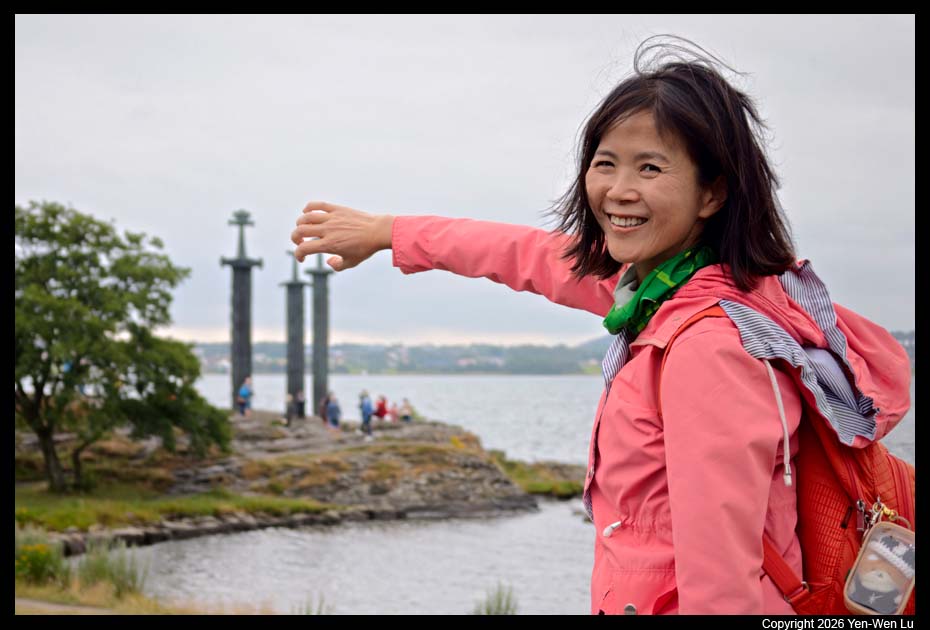
Our first stop was to pass by Sverd i fjell (Swords in
Rock), a stunning commemorative monument located on the shores of the
Hafrsfjord, just outside the city center of Stavanger in Western Norway. It
is one of Norway's most iconic historical landmarks, representing the
unification of the country under a single king. Designed by
Norwegian sculptor Fritz Røed and unveiled by King Olav V in 1983, the three
giant bronze swords stand 10 meters (33 feet) tall.
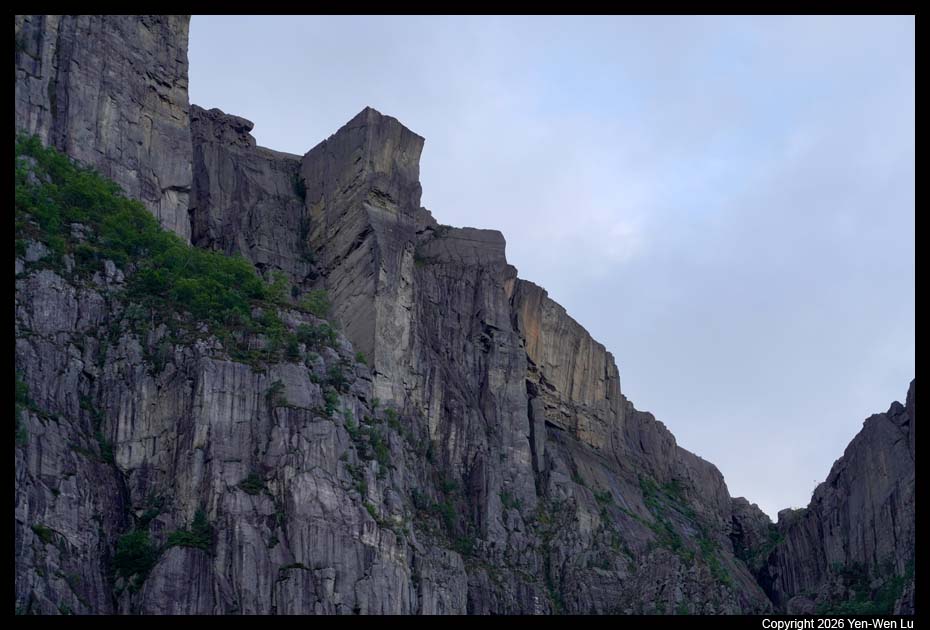
- Preikestolen
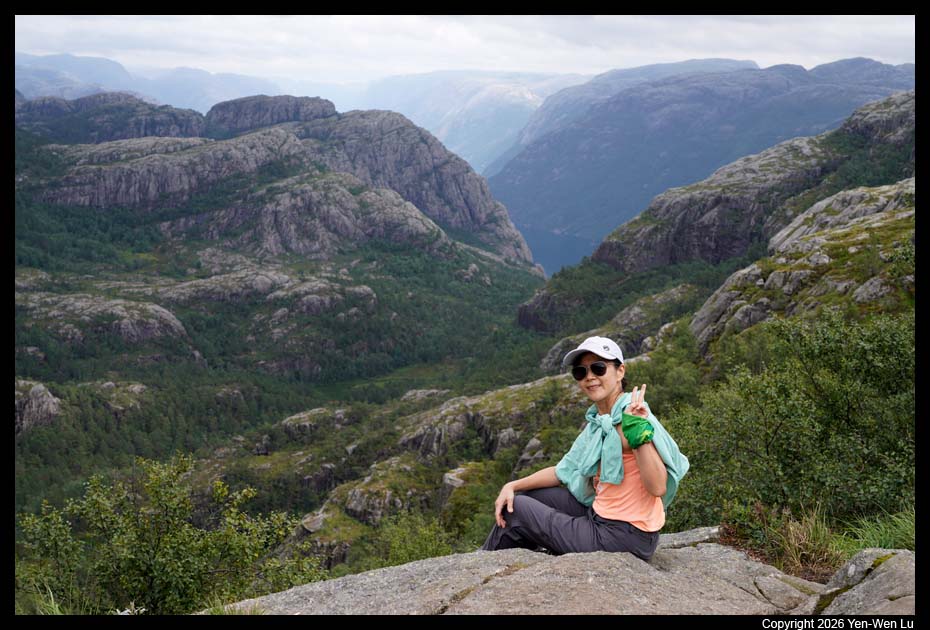
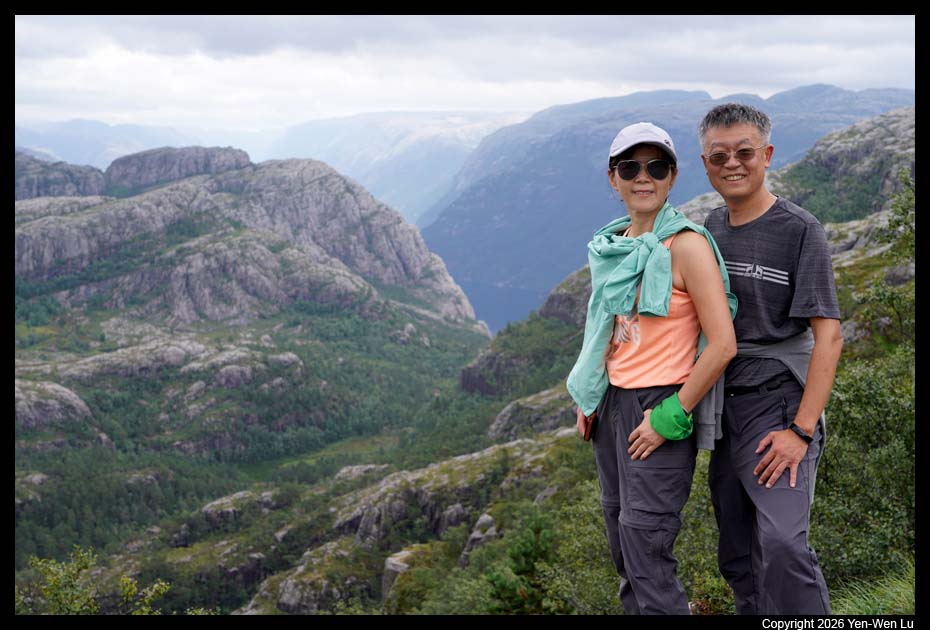
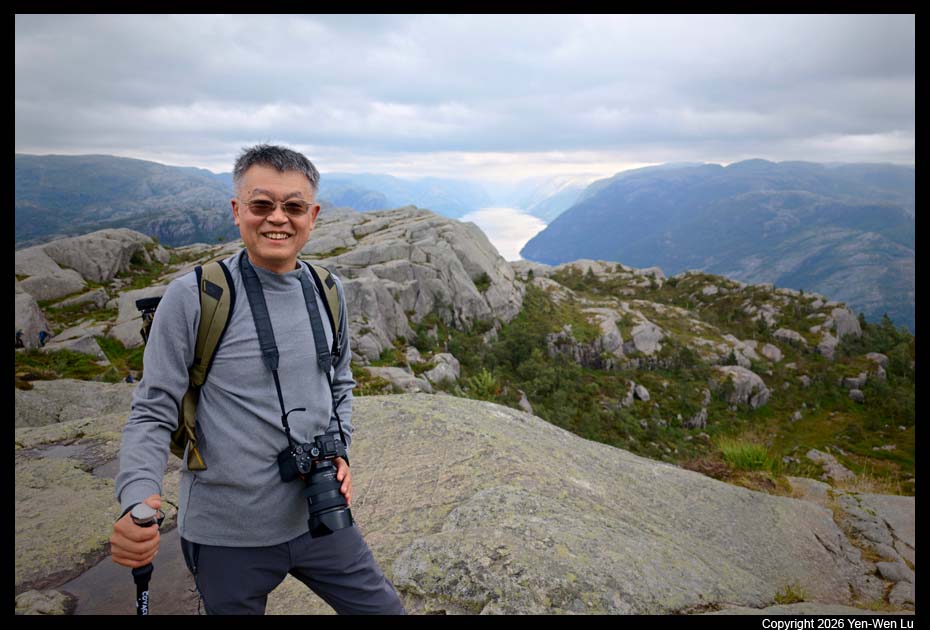
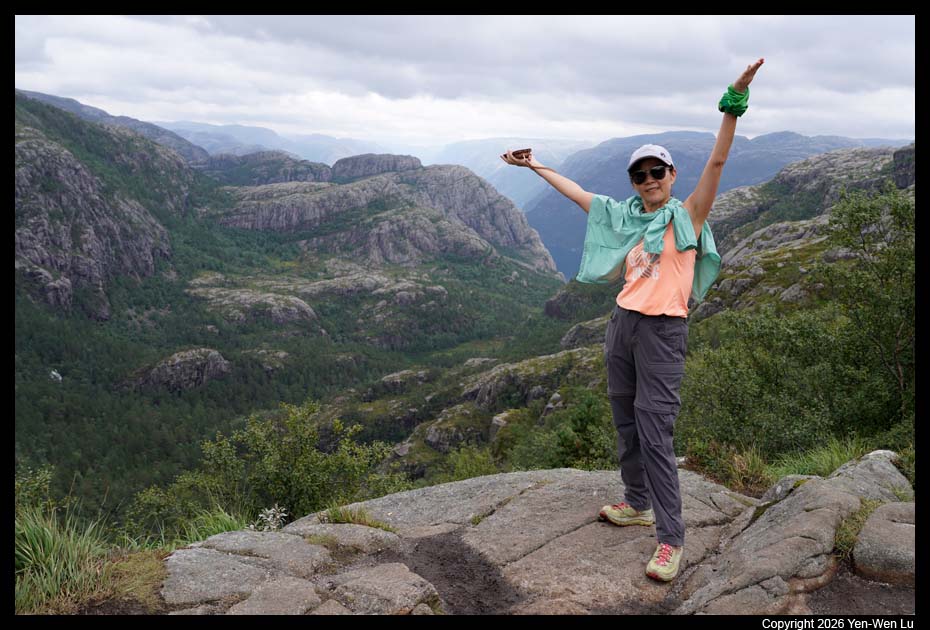
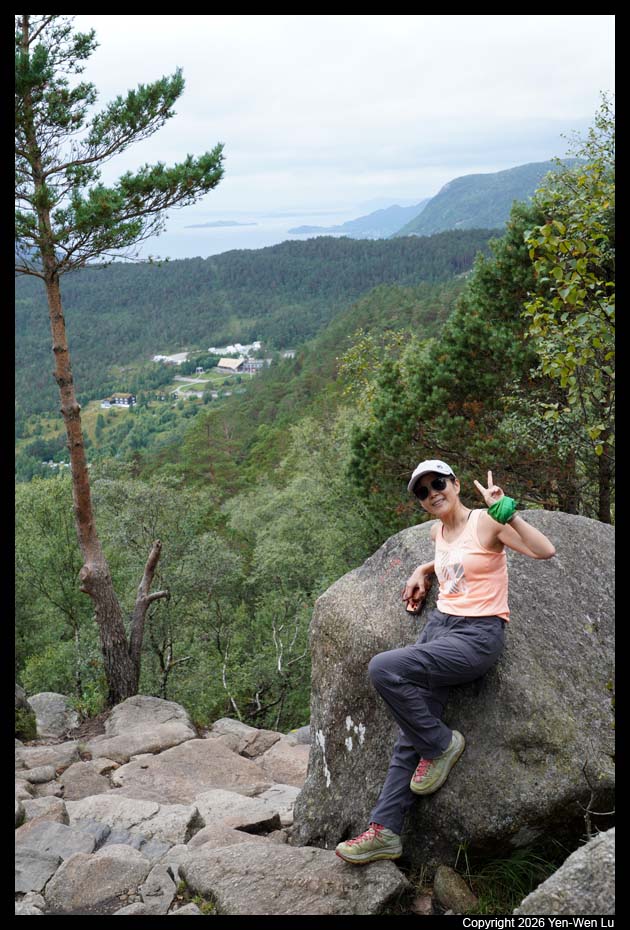
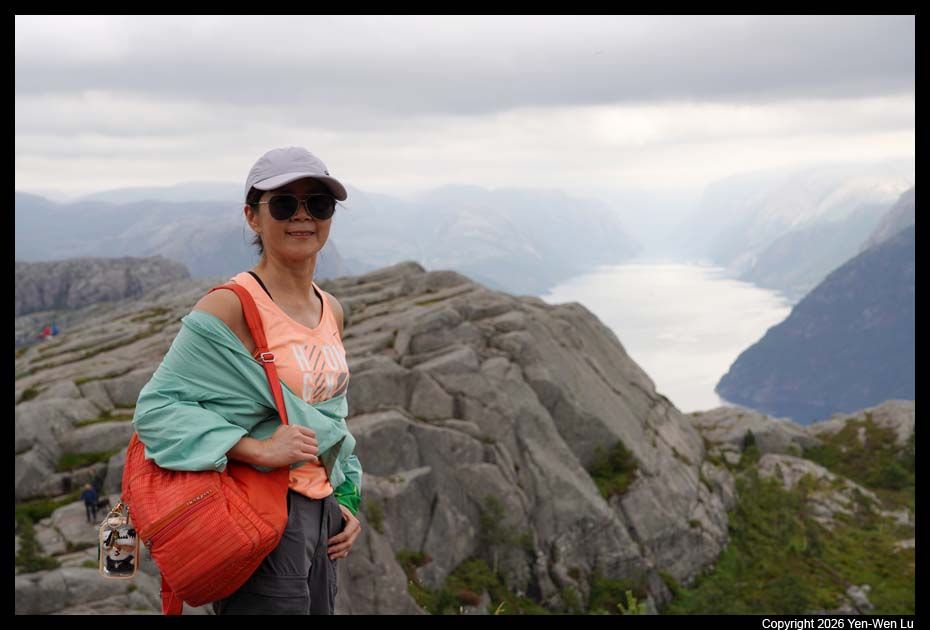
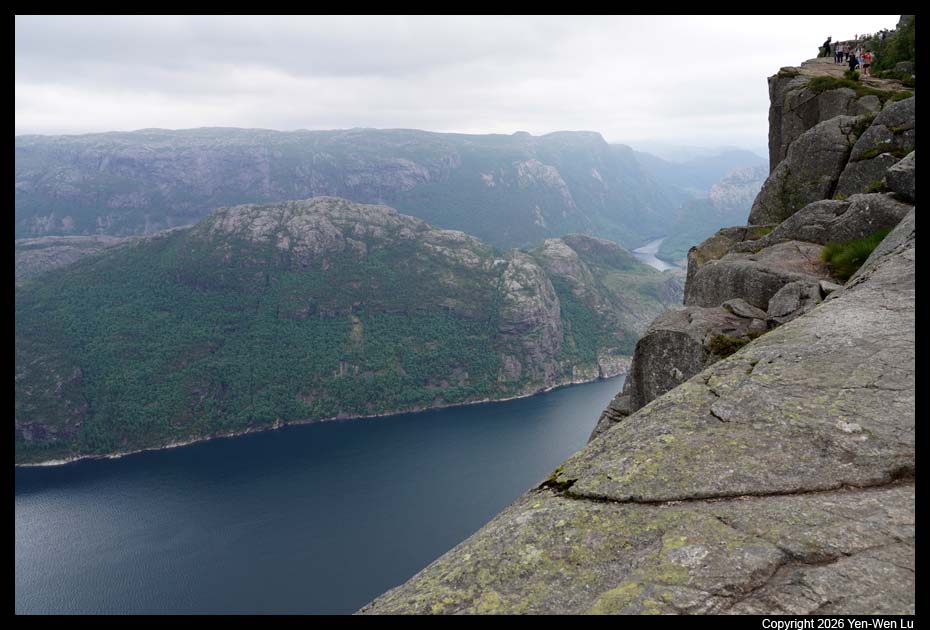
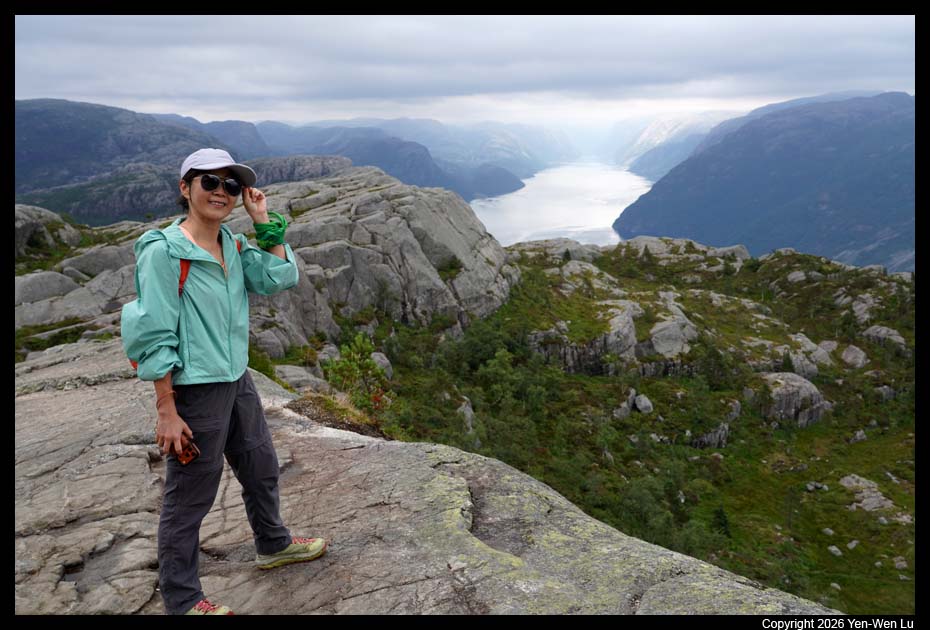
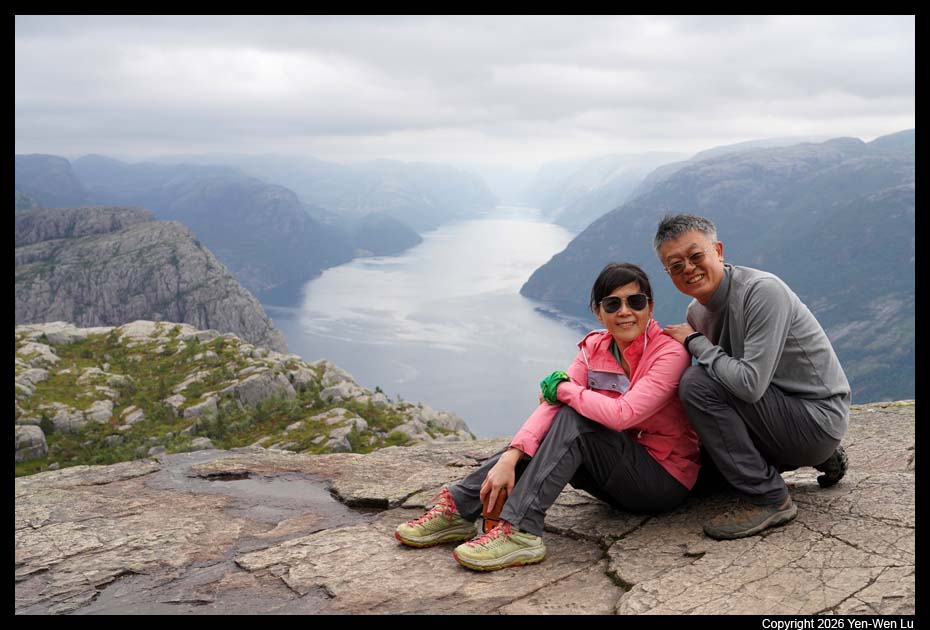
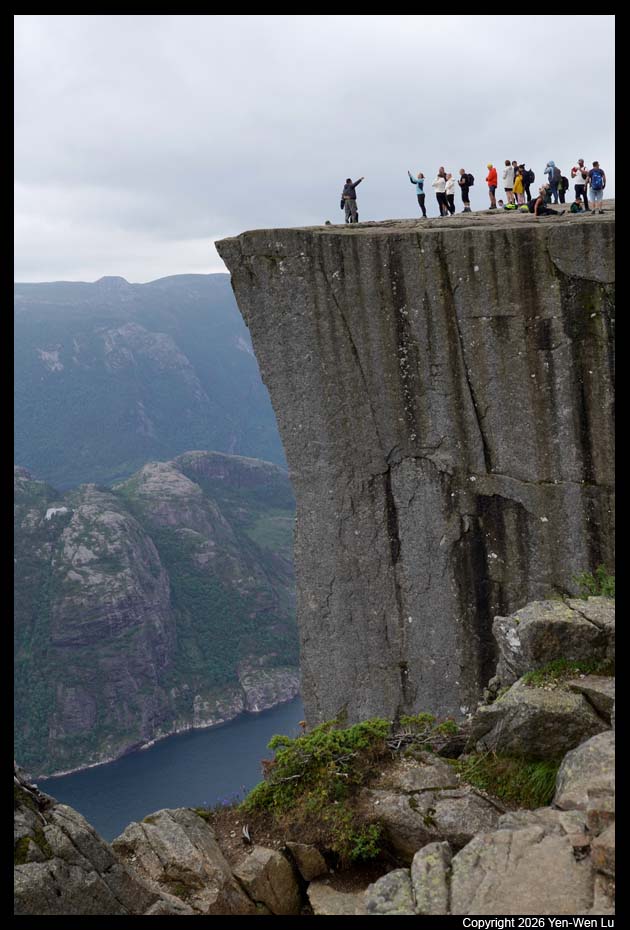
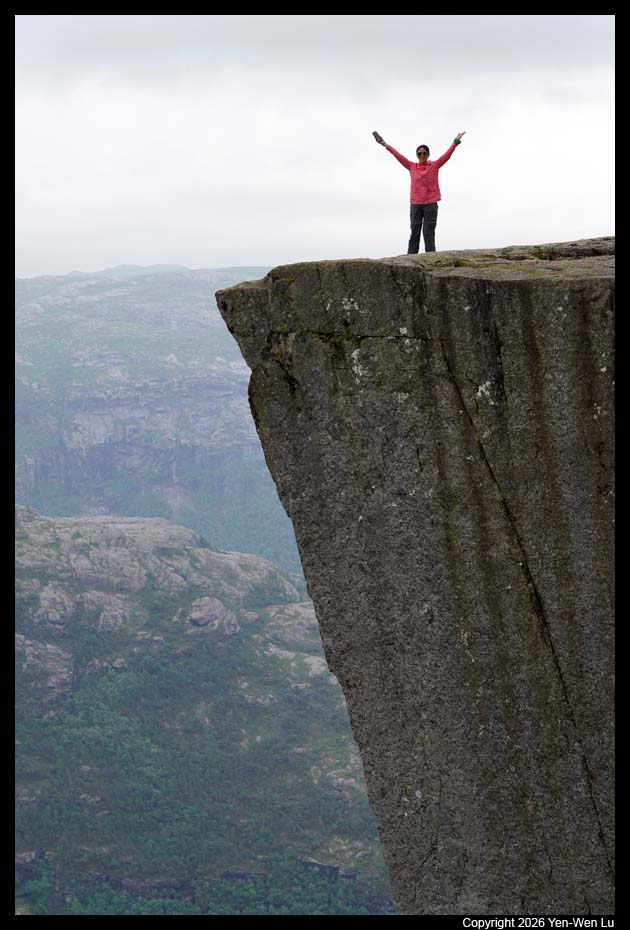
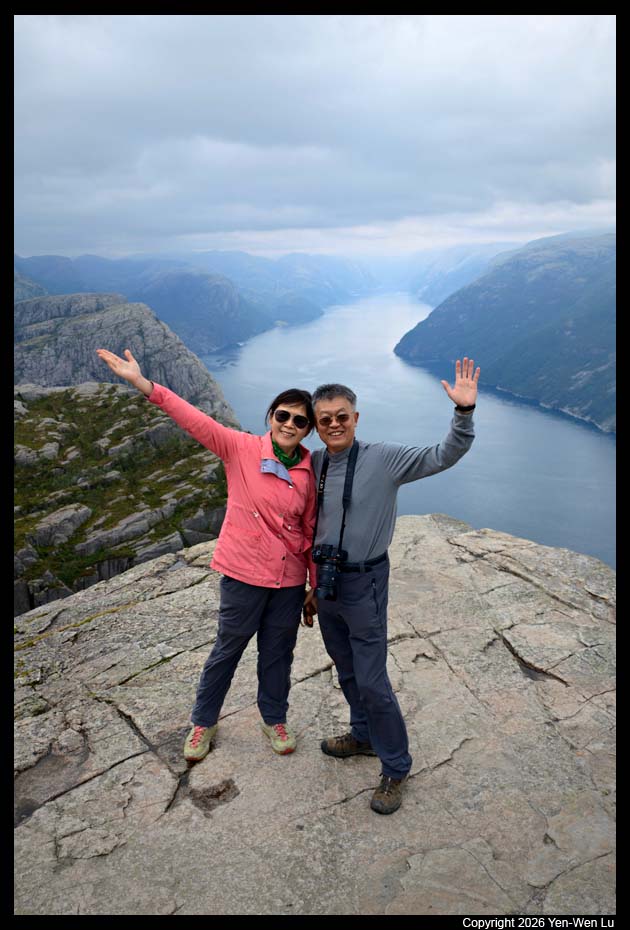
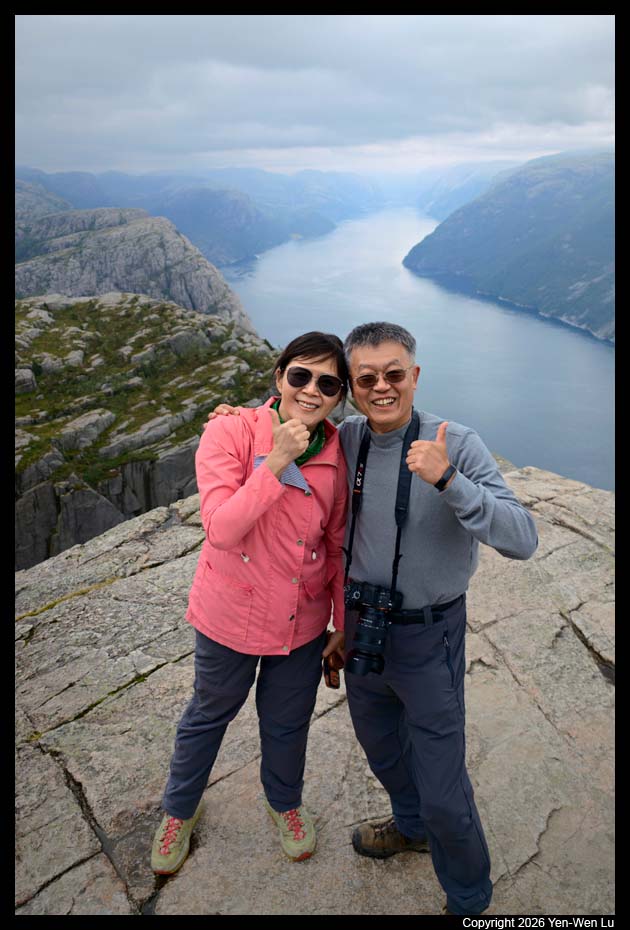
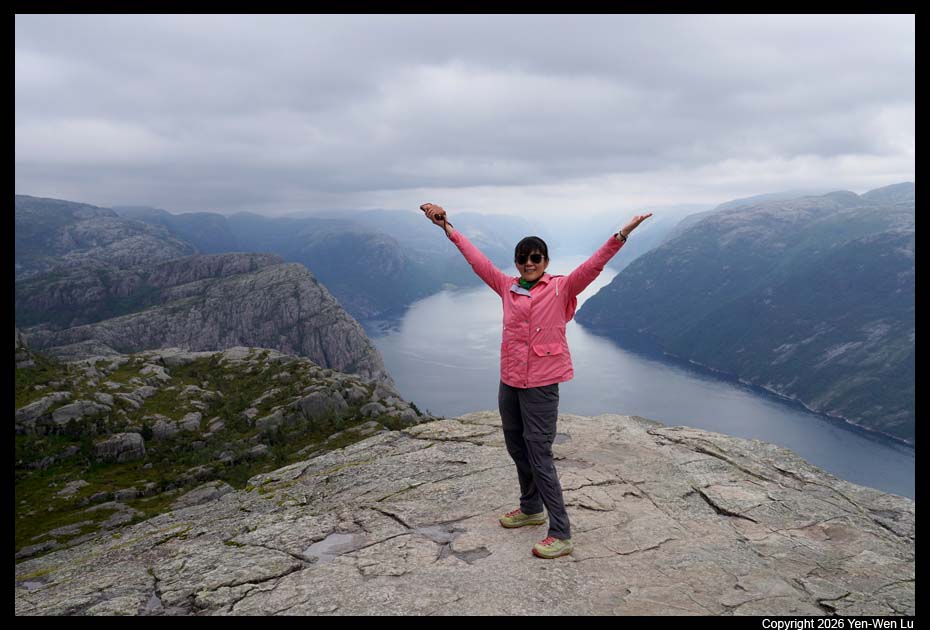
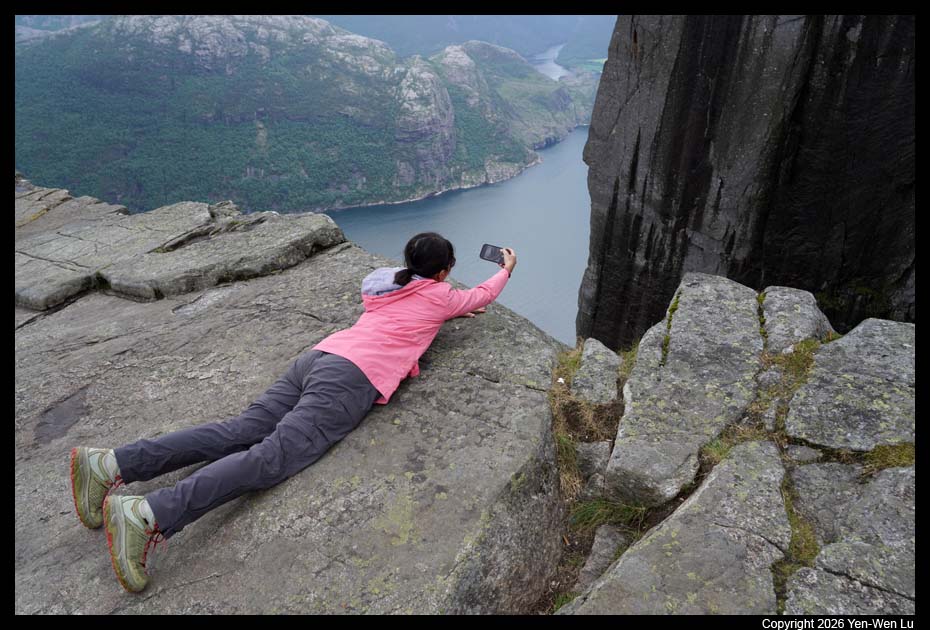
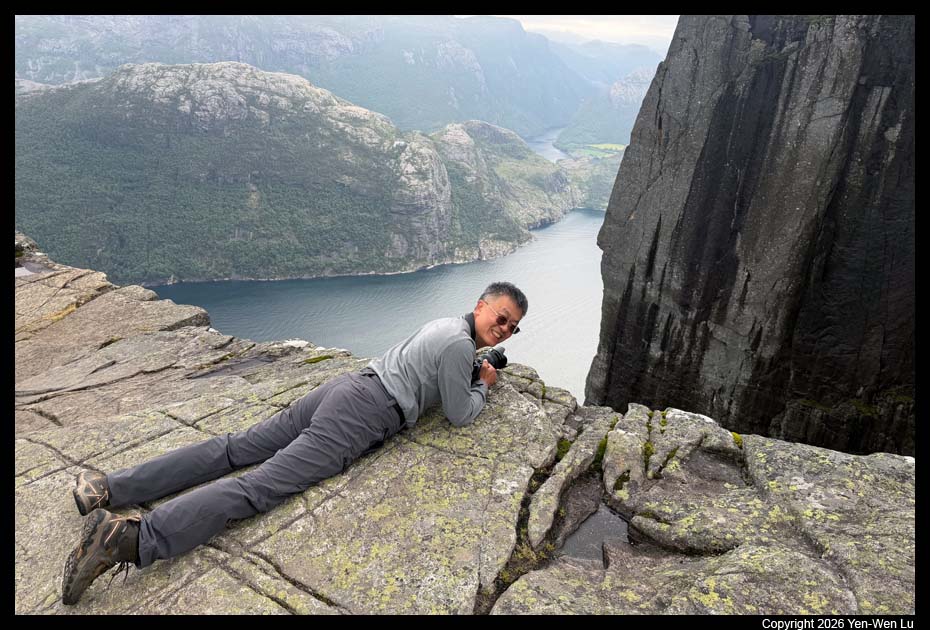
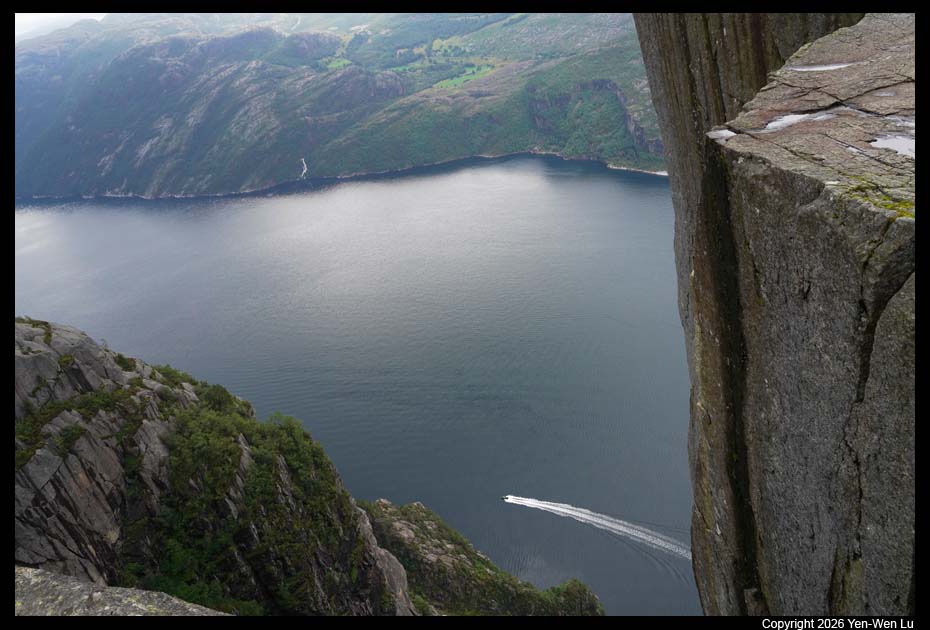
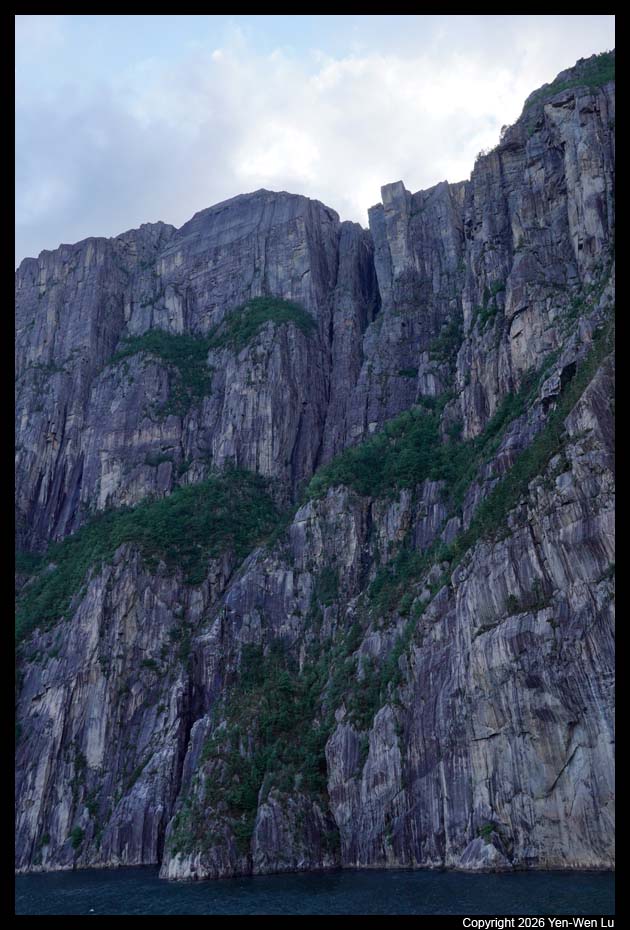
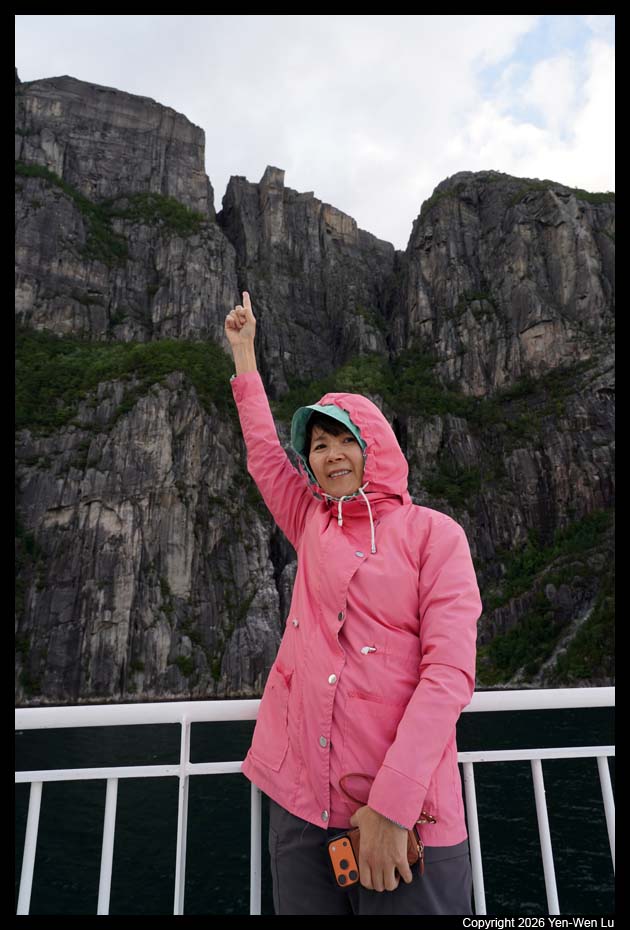
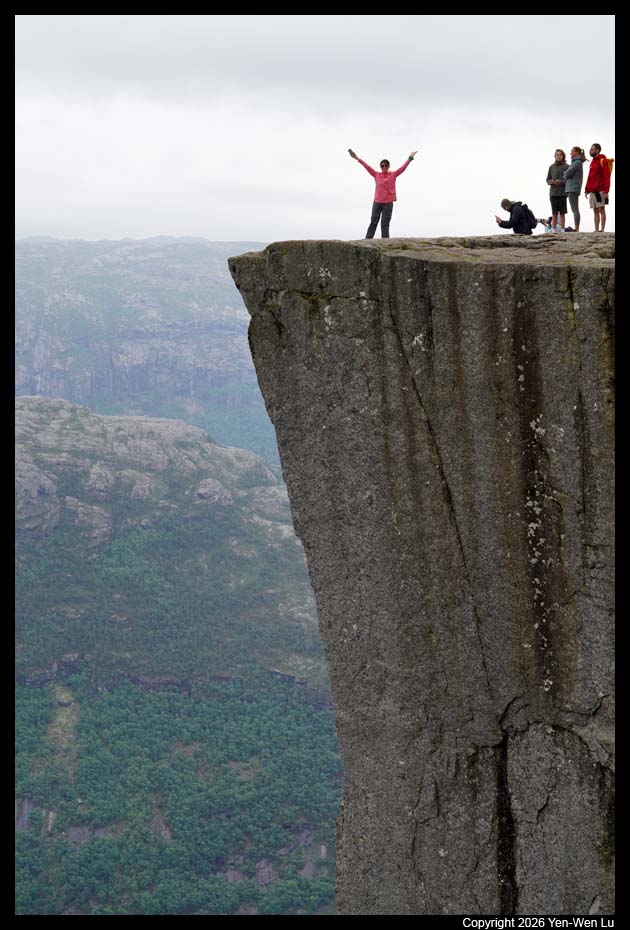
Preikestolen (Pulpit Rock), which was formed more than
10,000 years ago is the most iconic natural landmark in Norway. From the top
of the 604 meters high cliff directly above the Lysefjord, you will find the
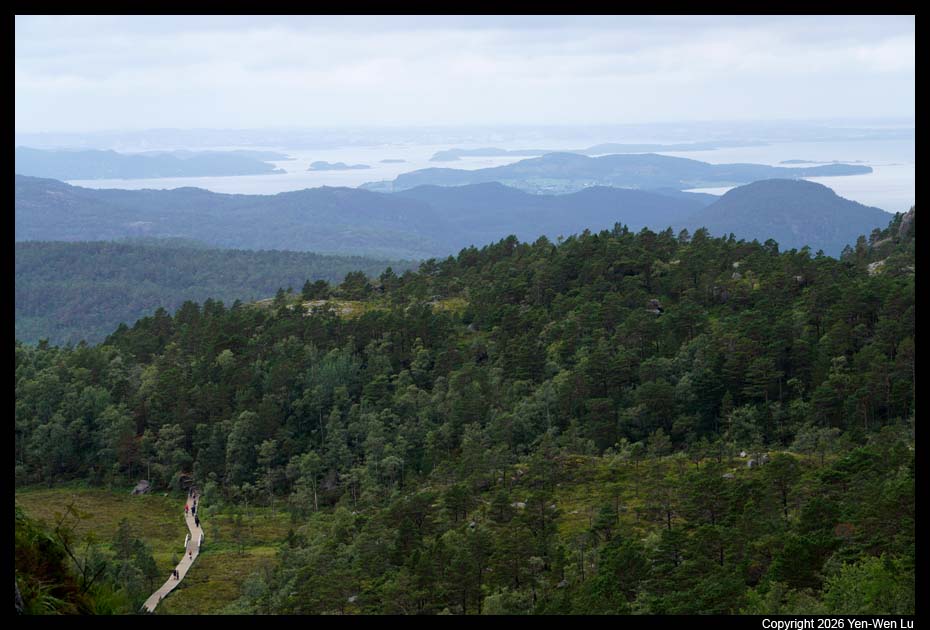
most dramatic views that Fjord Norway has to offer. The hike to
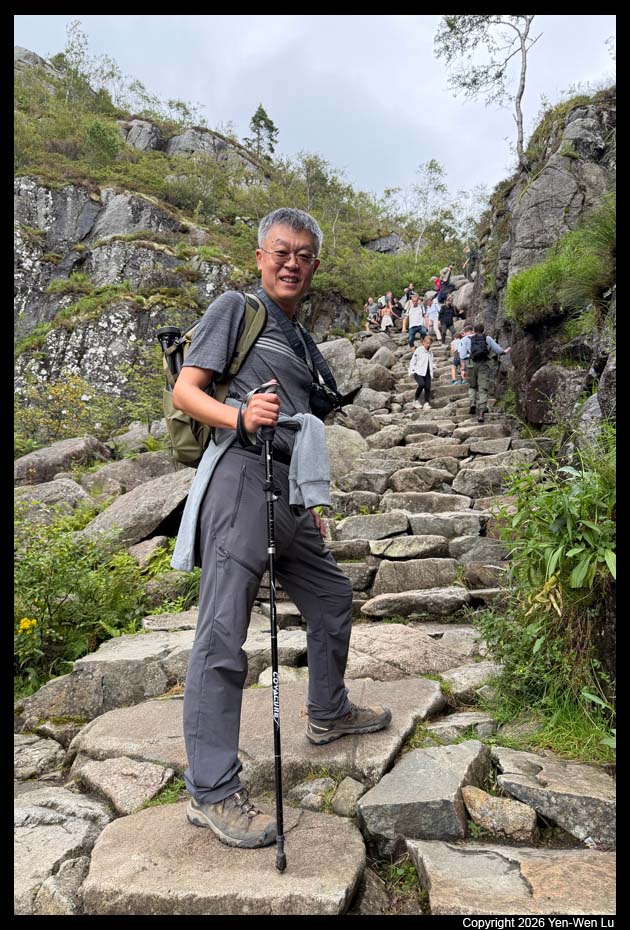
Preikestolen is of moderate difficulty. In total, the 8-km hike (with ~ 400
meter elevation gain) takes about 4-5 hours (round trip). The trail, which
has significant shifts in terrain, includes swampland, forests, and stone
stairways built by Nepalese sherpas. It is the easiest hike among the
Norwegian famous three rocks (Preikestolen,
Trolltunga, and
Kjeragbolten) so there were
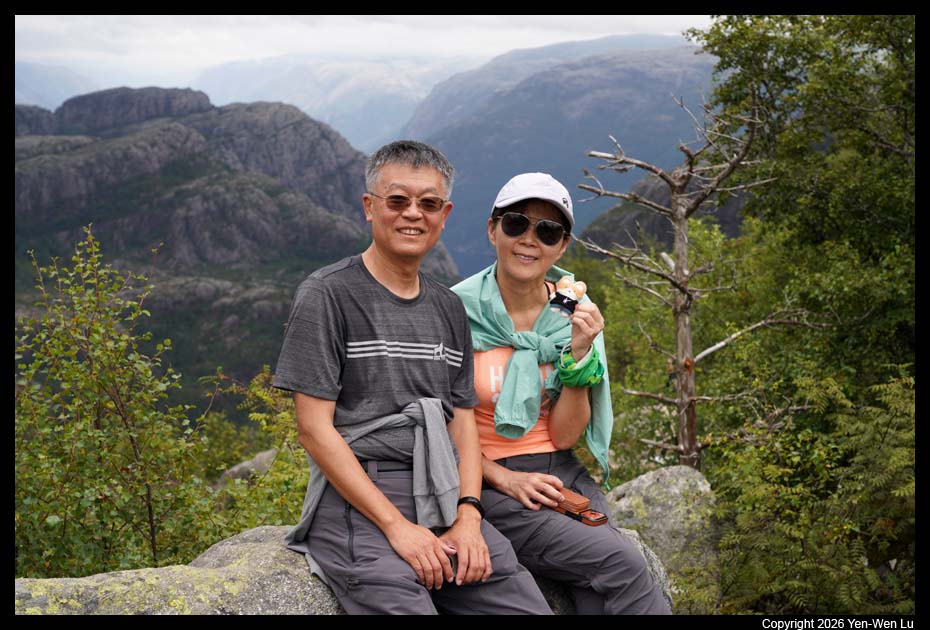
a lot of hikers on this trail. We started our hike at about
1:40PM (from P2 parking) and got to the top at about 3:40PM. Most
hikers had started to return when we got to Preikestolen. There were
not many people staying on the Preikestolen at about 4PM so we could take
many photos without waiting in a long queue.
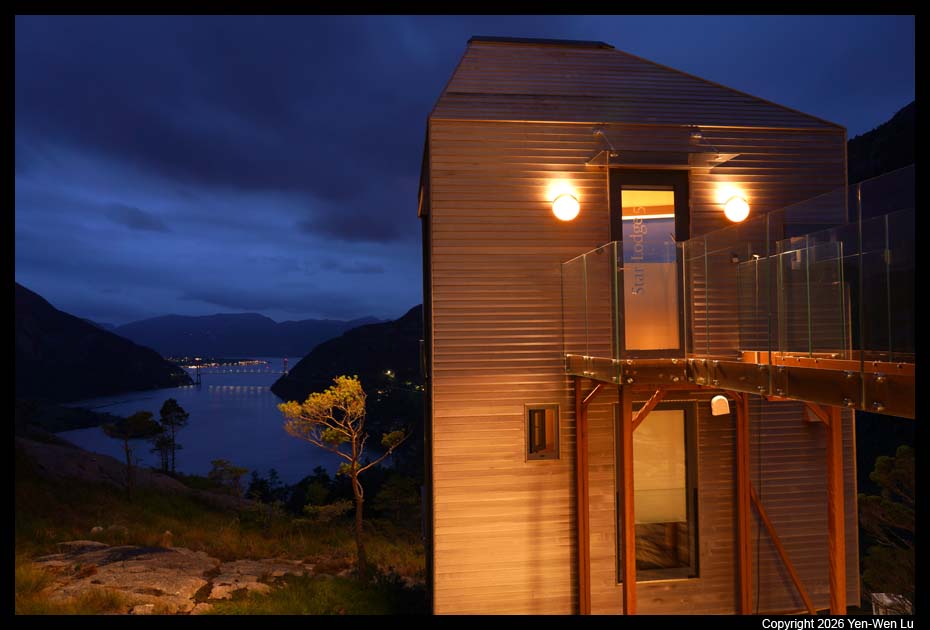
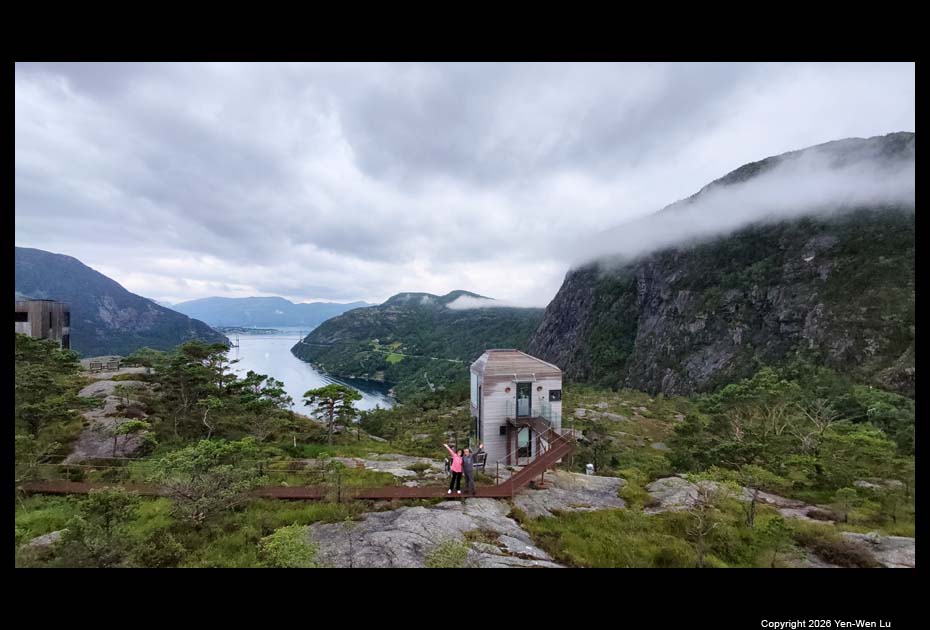
- The Bolder
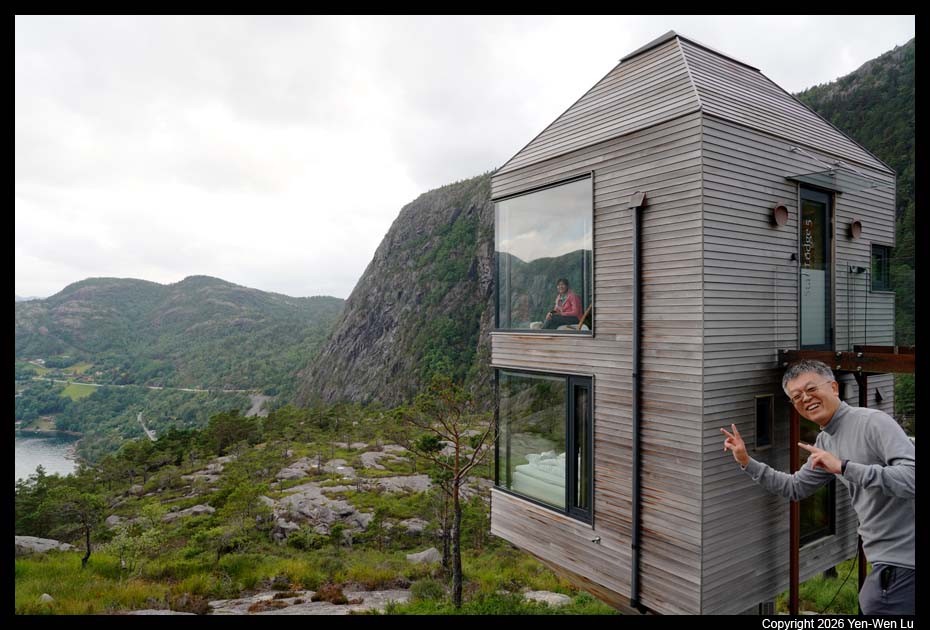
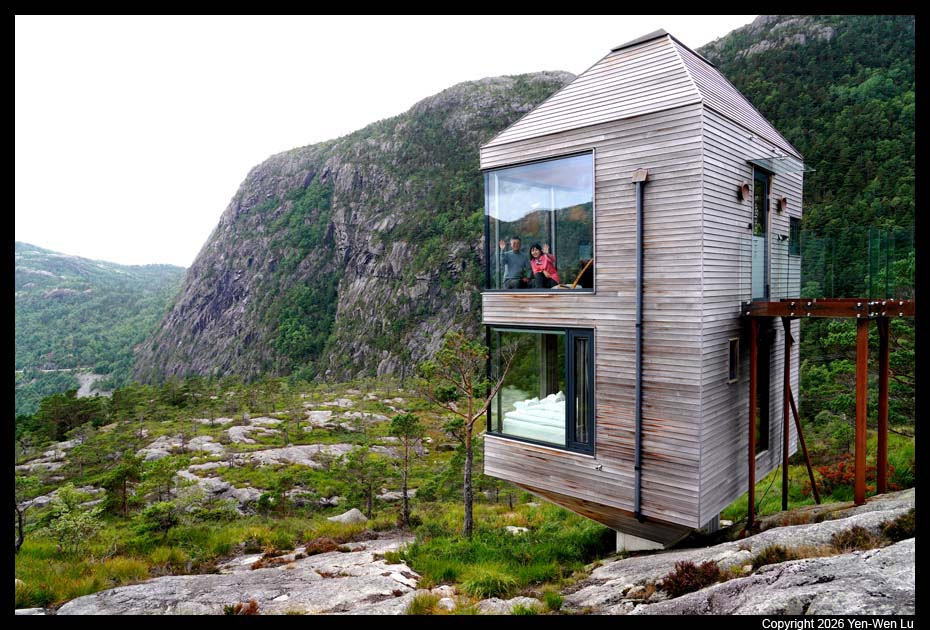
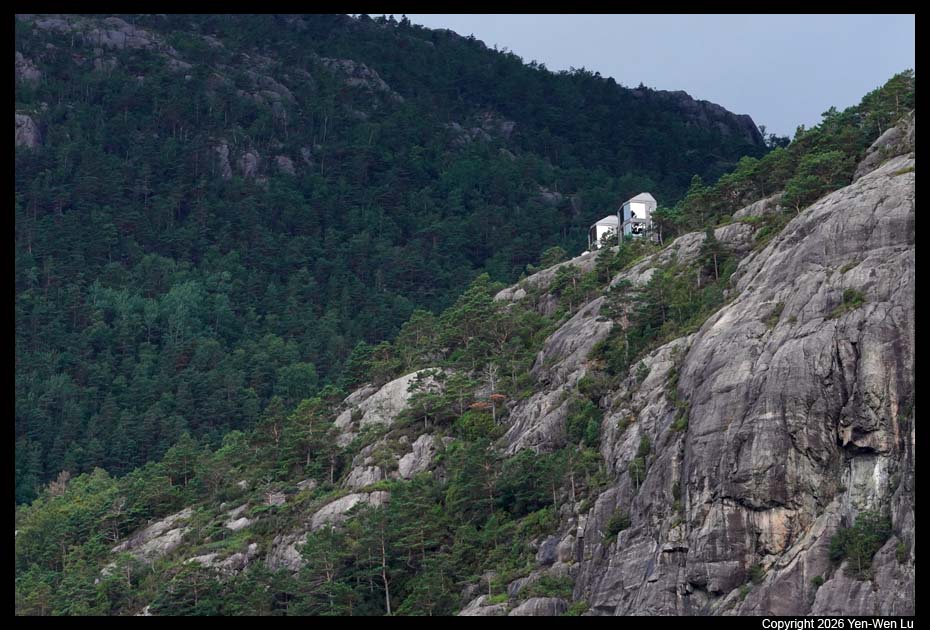
Perched on the
edge of the majestic Lysefjord, the Bolder offers a one-of-a-kind escape in
architecturally stunning lodges. Nestled amidst rugged mountains and
breathtaking fjord views, these unique cabins provide the perfect blend of
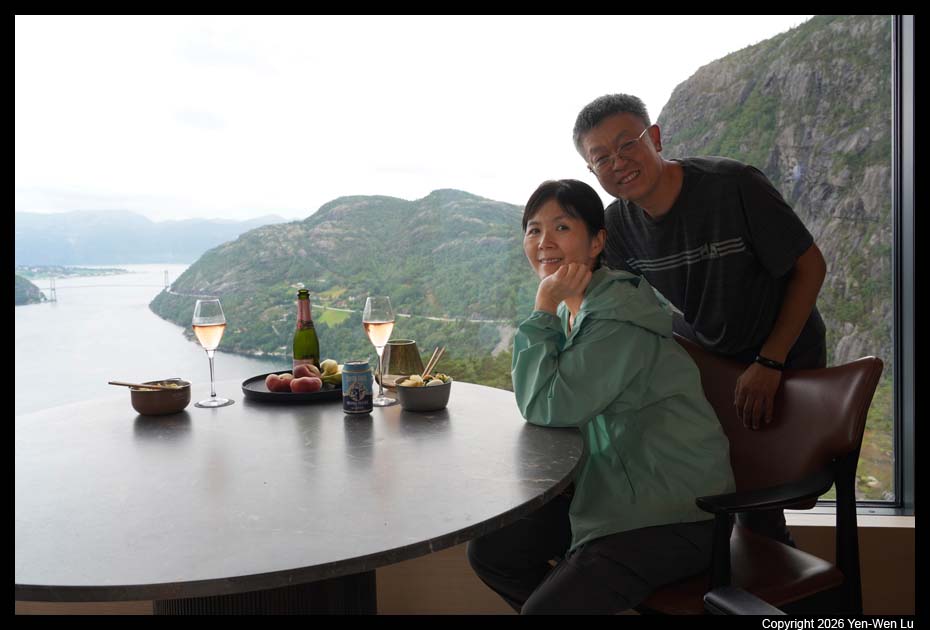
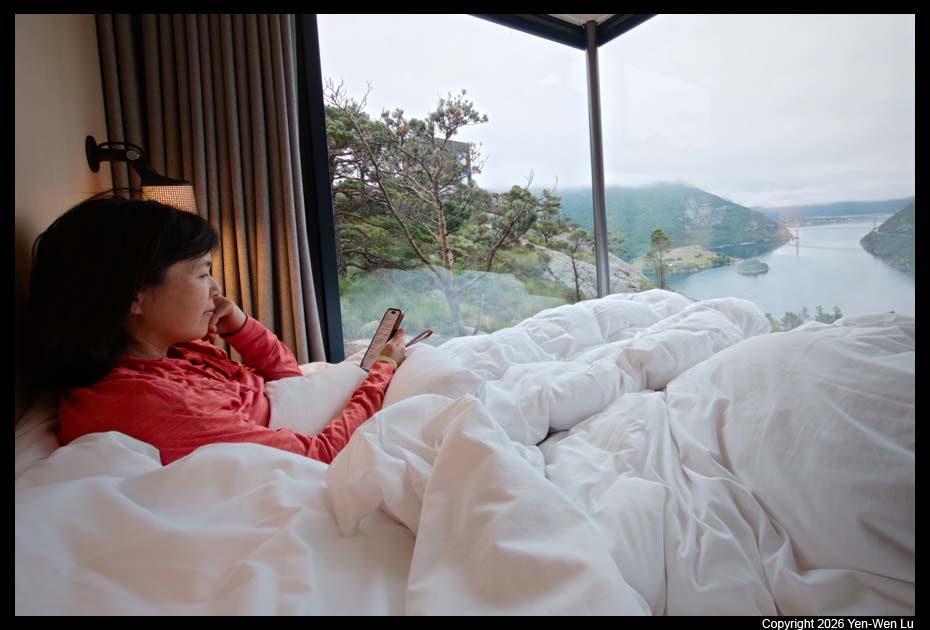
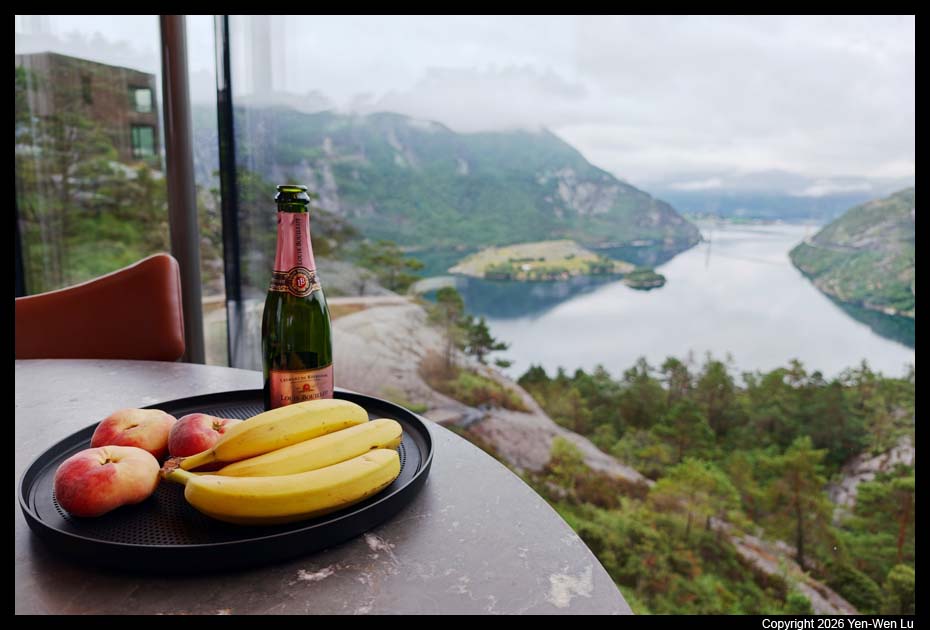
modern design and natural tranquility. We booked a
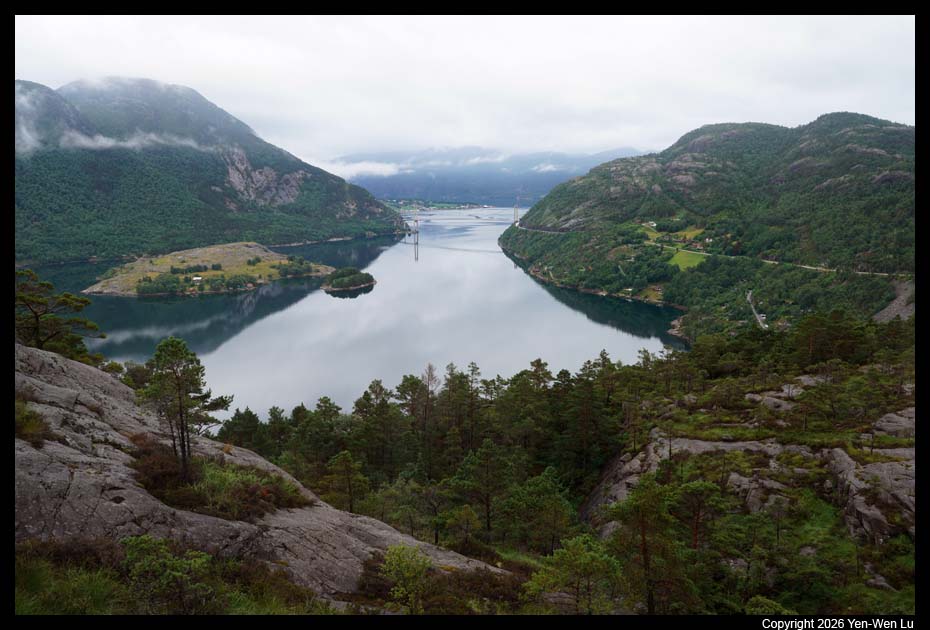
Star Lodge, with
panoramic windows facing the fjord and Lysefjord Bridge.
Day 6 (7/30) ...
- The Bolder
The weather did not look good, so we did not do any hike
this morning. Instead, we enjoyed the panoramic views from the comfort
in our cabin.
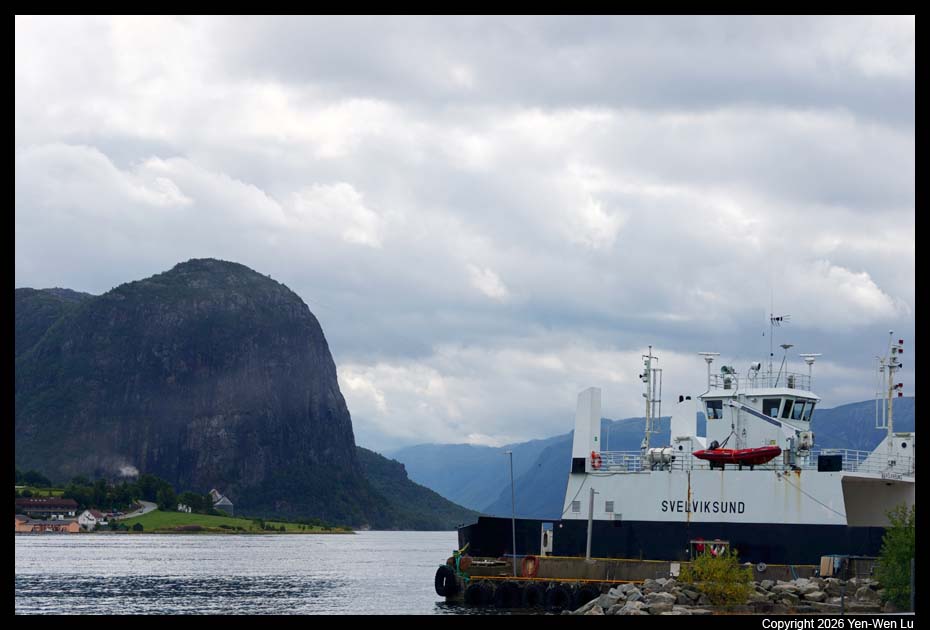
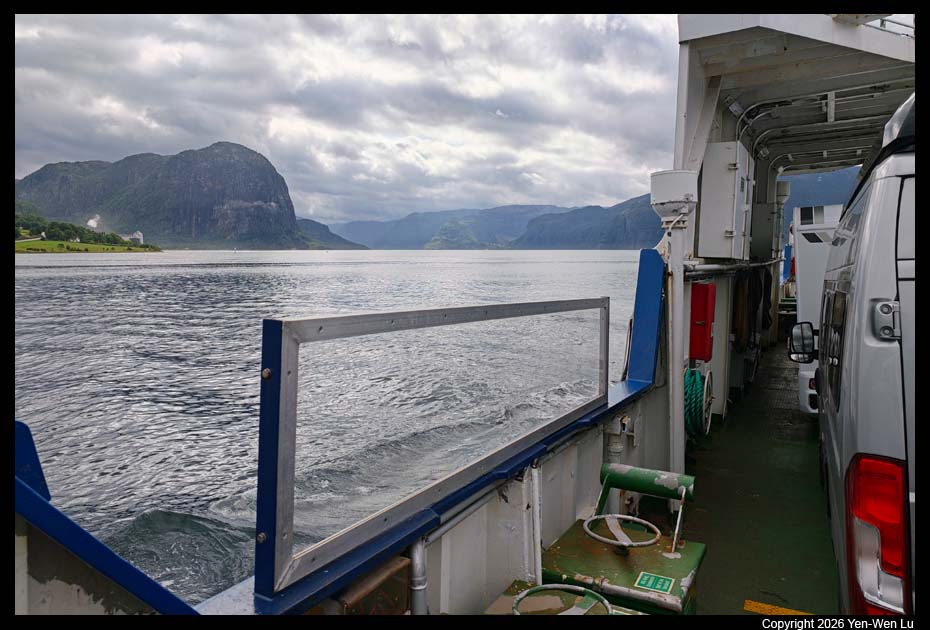
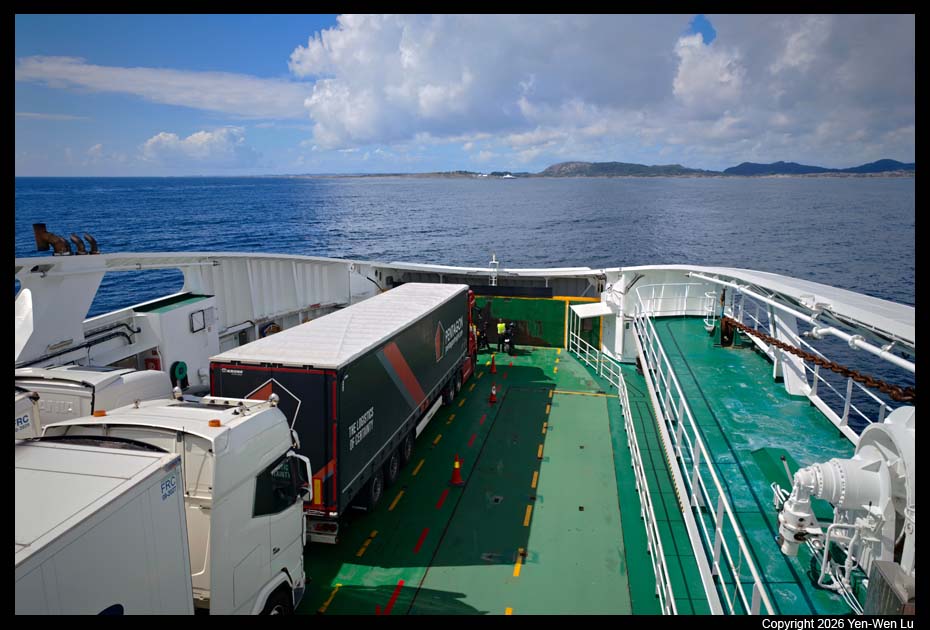
- The plan today was to do a scenic drive (so we could take a rest and
recovered from the long hike to Preikestolen yesterday) to Lysebotn, at the
eastern end of the Lysefjord, and then took a scenic car ferry to go through
the entire length of the Lysefjord to Lauvvik, at the mouth of the
Lysefjord, and then drove to Stavanger for a night. The first leg of
this road trip was to take a ferry to cross the water from Oanes to Lauvvik
(our first car ferry ride of many in this Western Norway part).
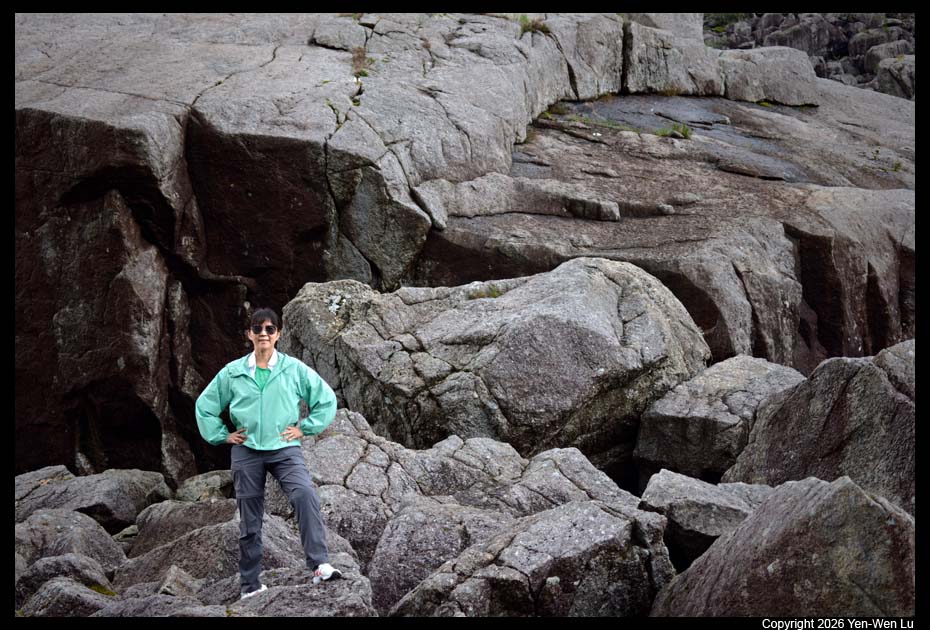
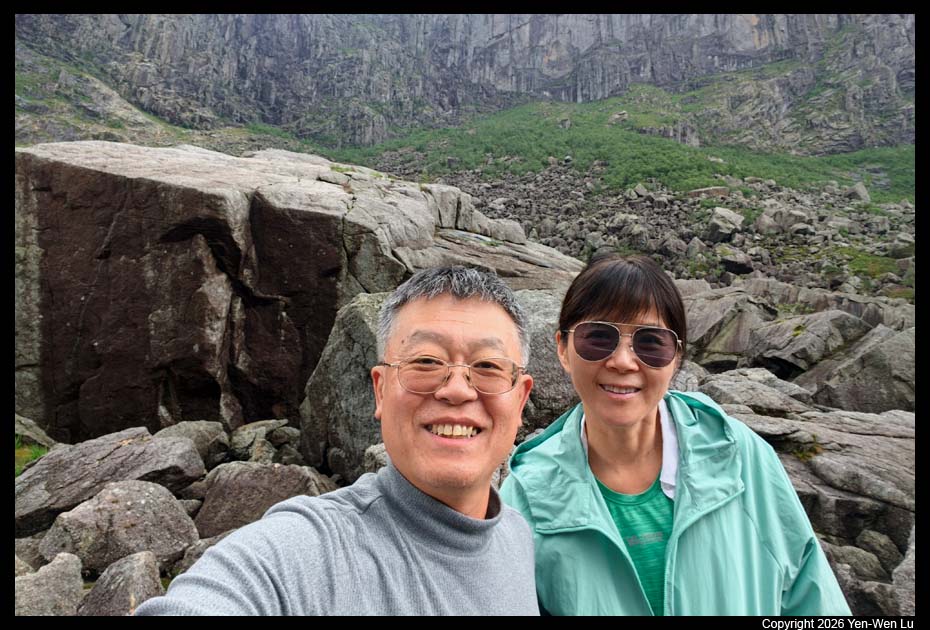
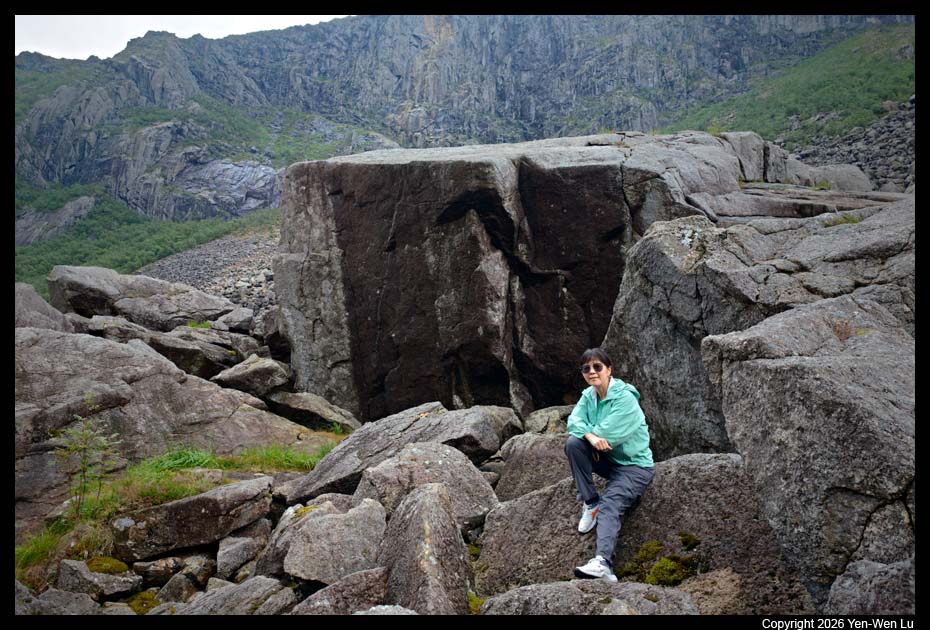
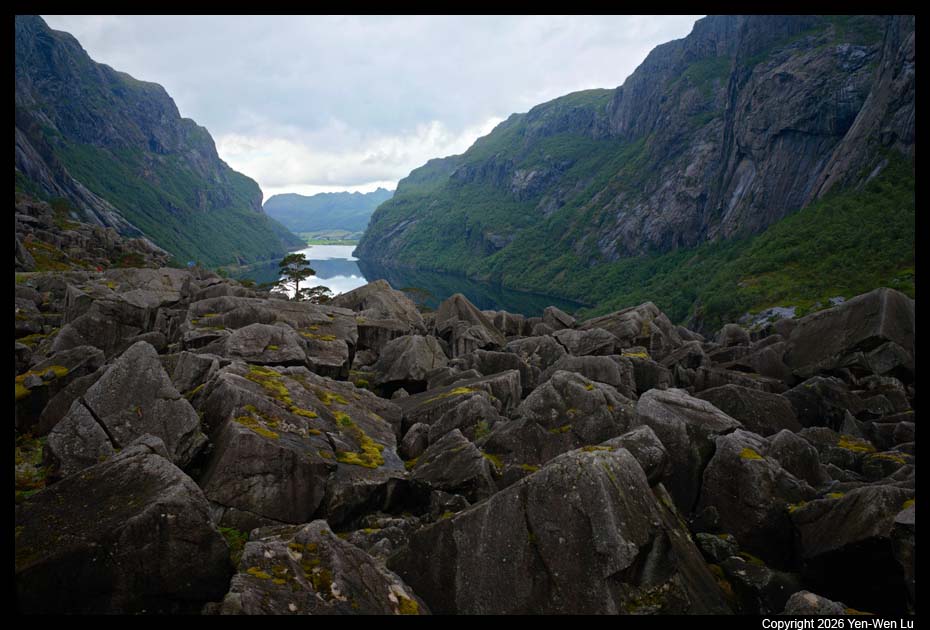
- Gloppedalsura Magma Geopark
After lunch at a small town Byrkjedal, we
detoured a little bit to visit a special place, Gloppedalsura, the
UNESCO-recognized Magma Geopark. The unique
landscape was set in motion toward the end of the last ice age, roughly
10,000 years ago. As a massive glacier retreated through the Gloppedalen
valley, it left behind an end moraine (a ridge of glacial debris) that
dammed up the local river and created a high-altitude lake. Shortly after,
the sheer cliffs on the southern side of the valley collapsed in a
catastrophic landslide, sending millions of tons of granite blocks crashing
down directly on top of the moraine.
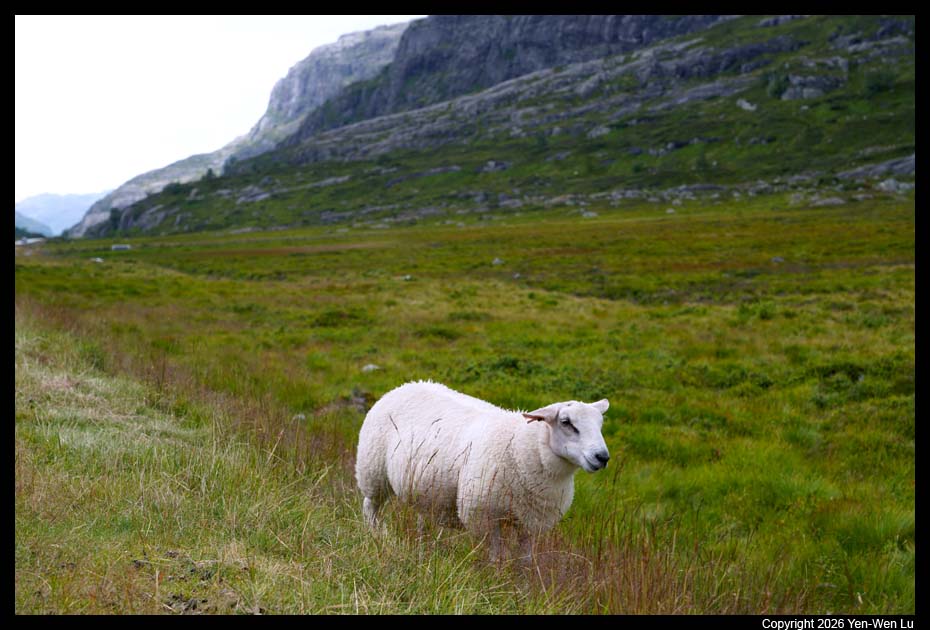
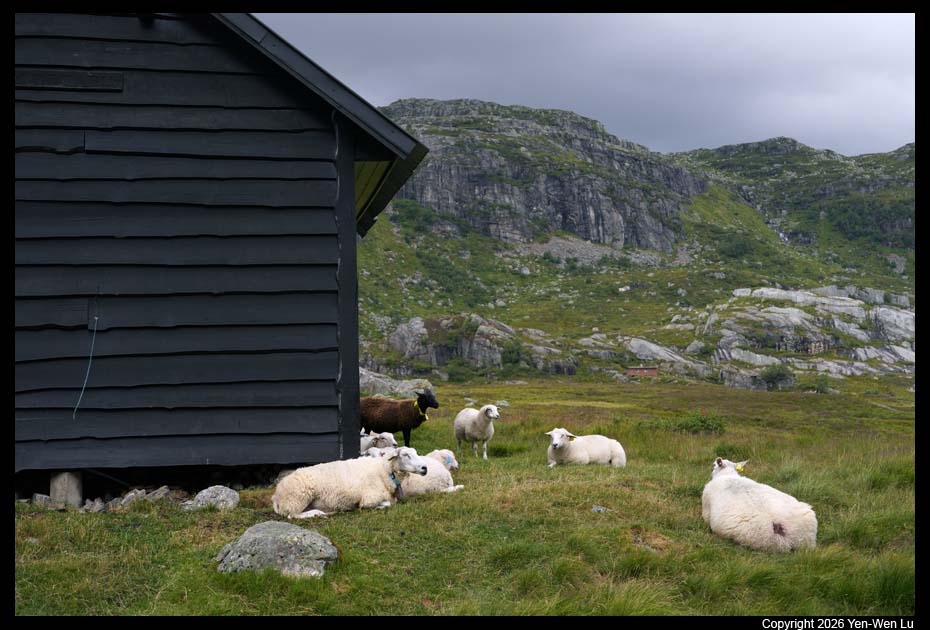
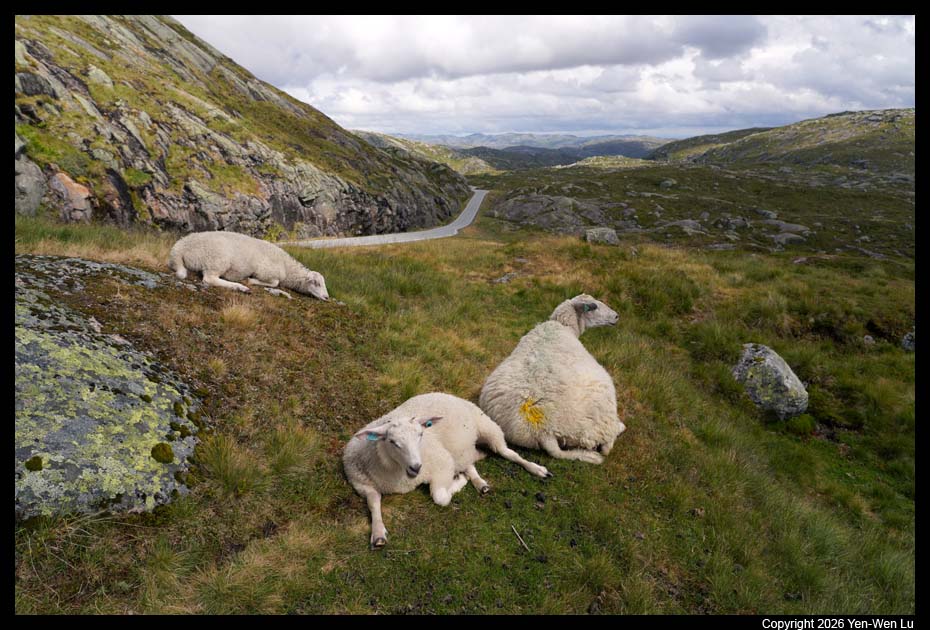
- We continued to drive eastward on the scenic but super narrow Road 450
(Fv450) and Sirdalsveien. We stopped at a few places to take some
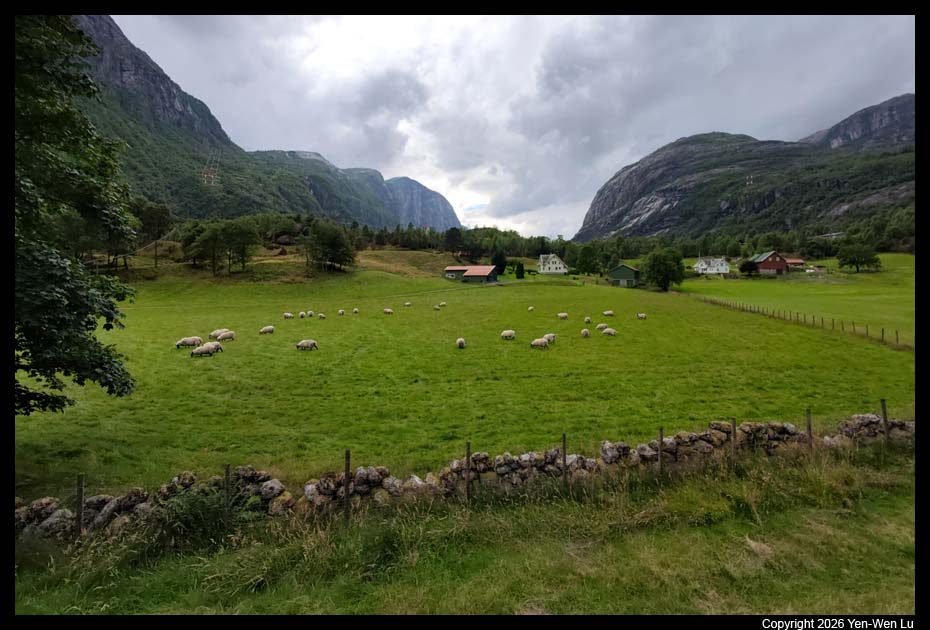
photos of many sheep along the roadside.
-
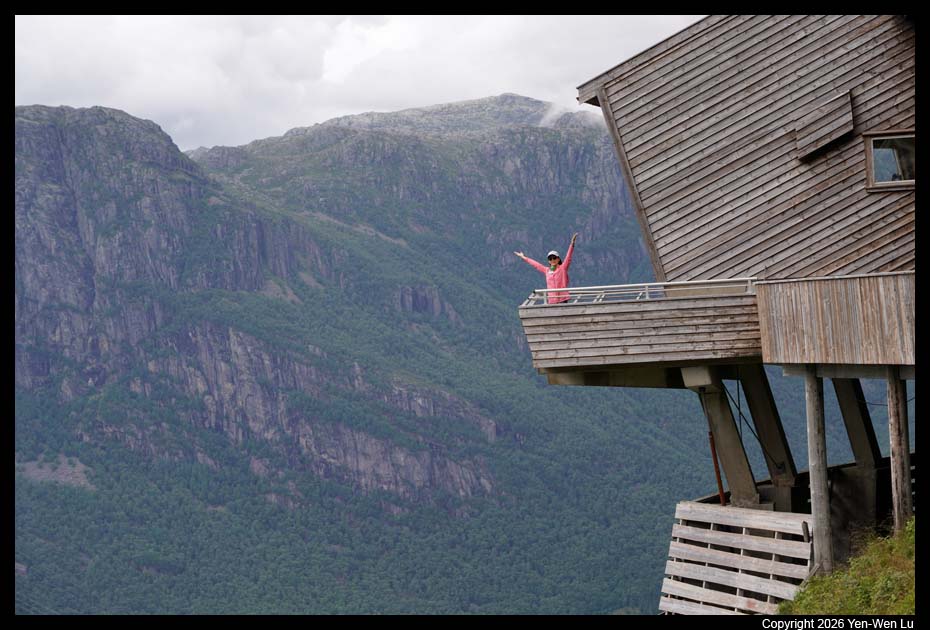
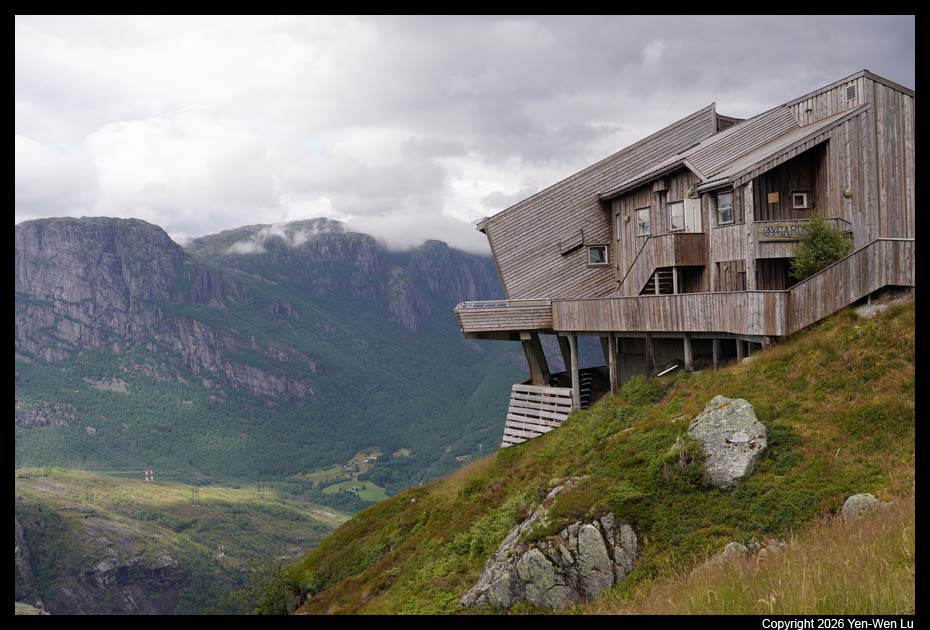
Kjerag Cafe
Kjerag Cafe & Restaurant (also widely known as Øygardstøl or
the Eagle’s Nest) is a dramatically positioned panoramic eatery perched on a
cliffside 640 meters (2,100 feet) directly above the village of Lysebotn. It
serves as the official basecamp and trailhead for the world-famous
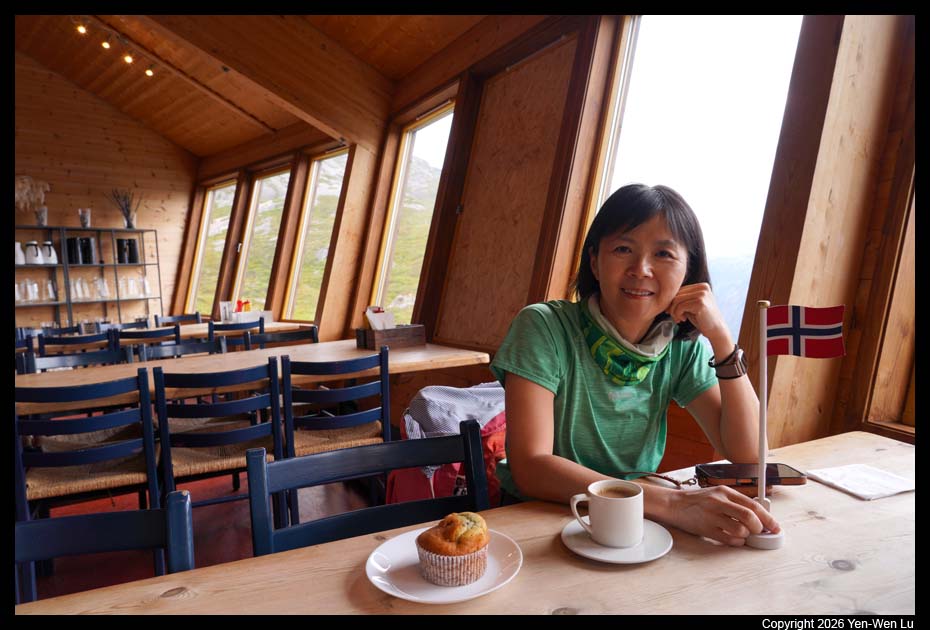
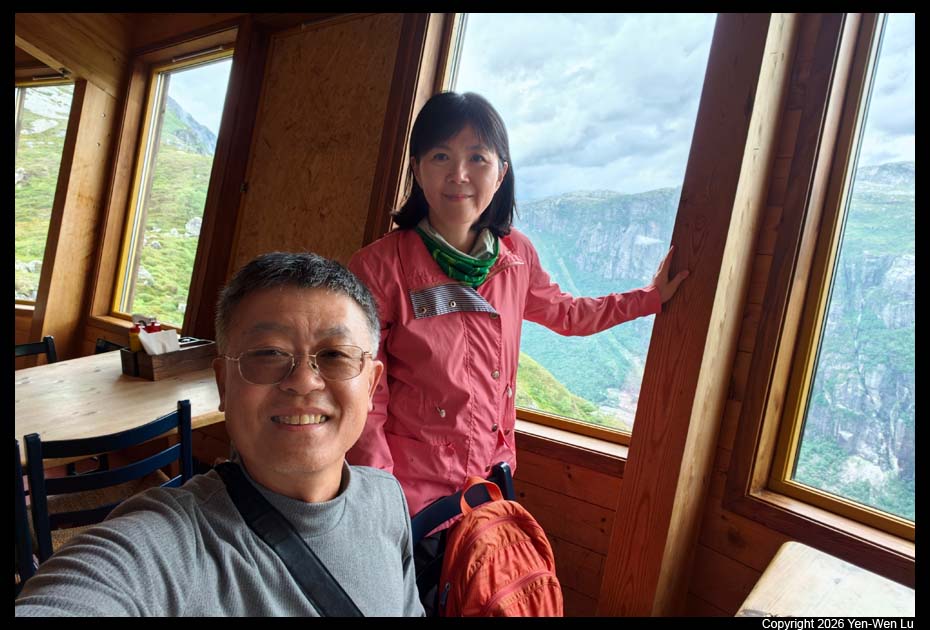
Kjeragbolten hike. We decided not to take the challenge to hike to
Kjeragbolten, and just had a relaxed snack and coffee at the cafe.
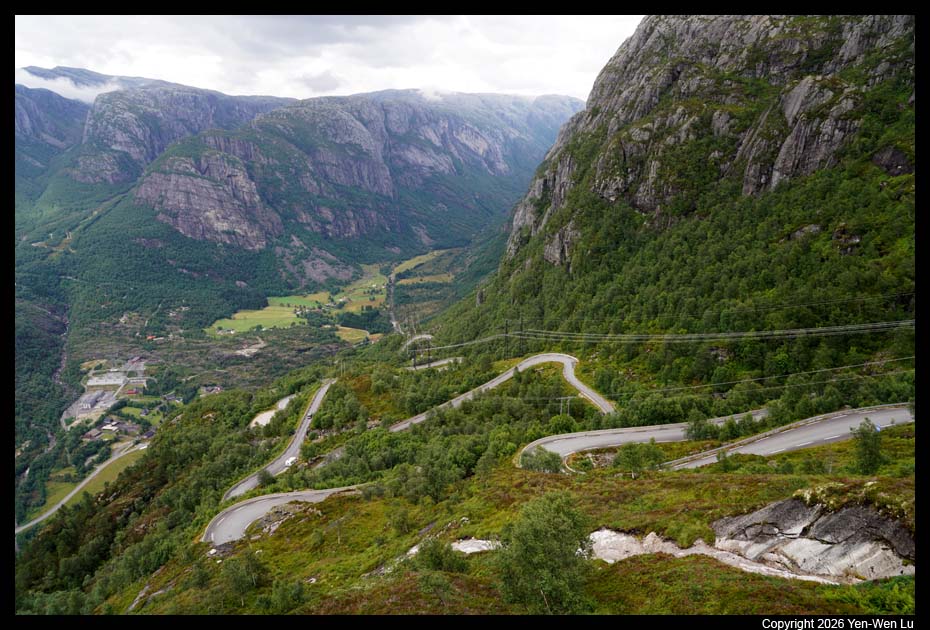
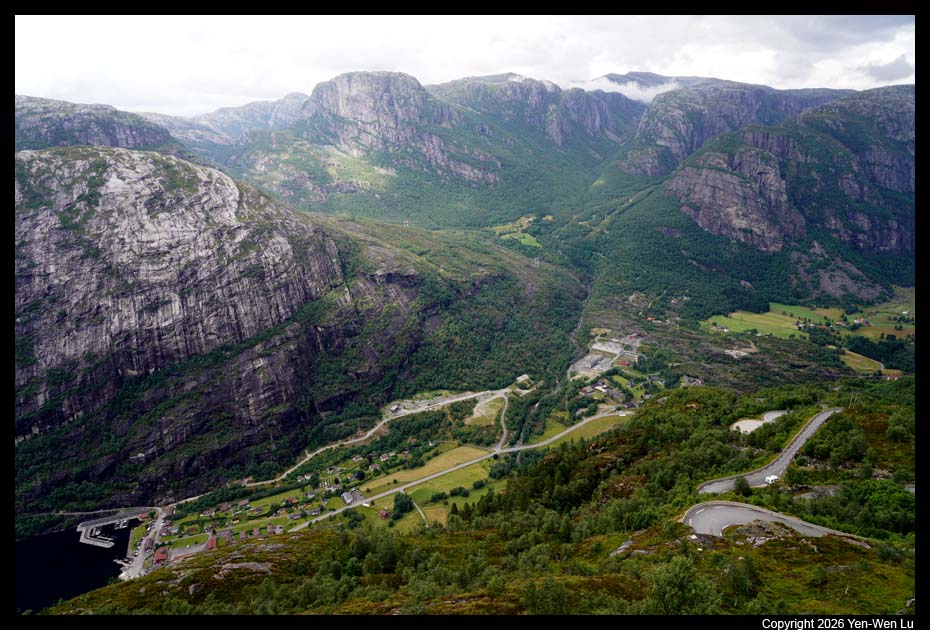
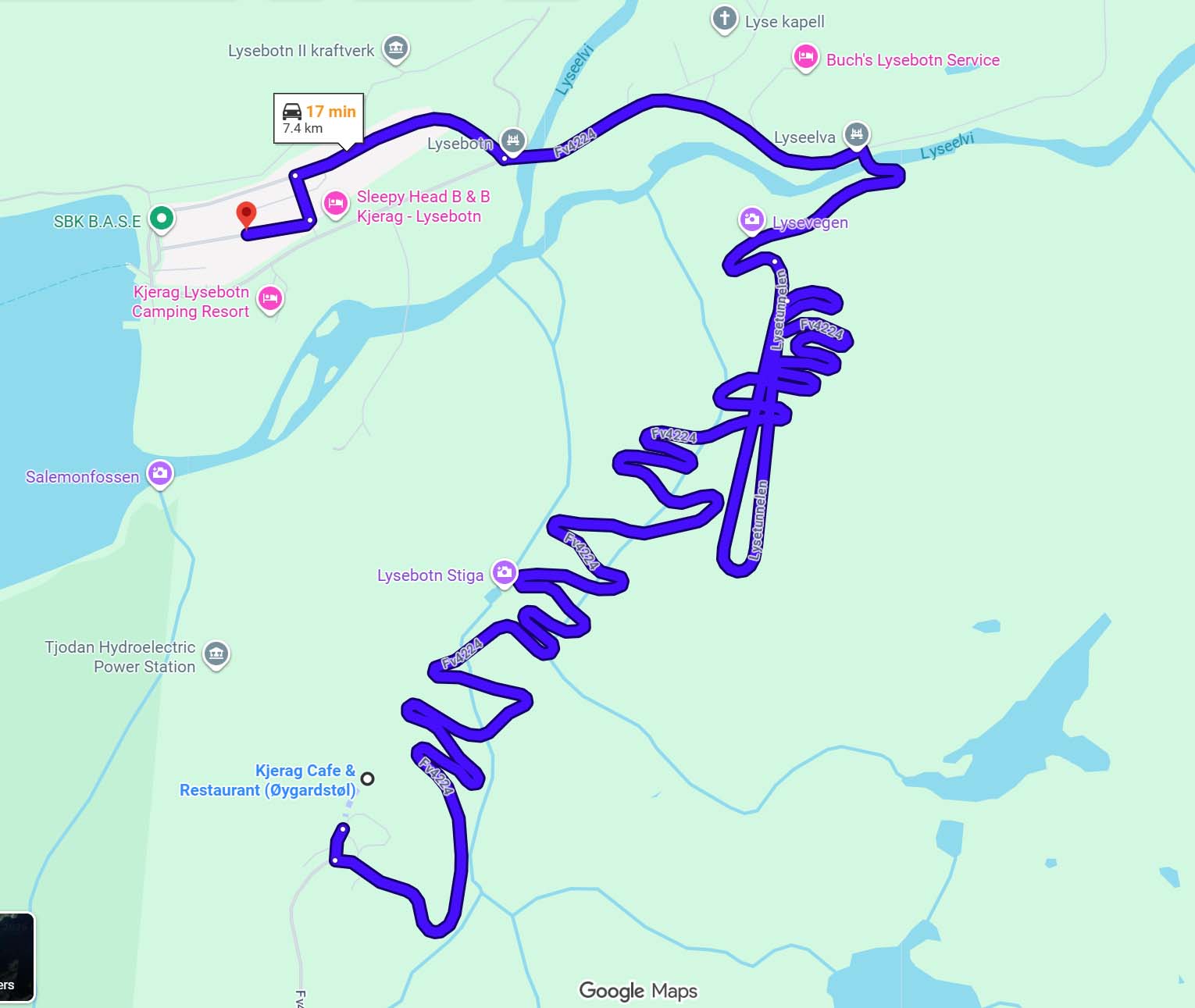
The road from
Kjerag Cafe down to Lysebotn (Fv4224, local name Lysevegen) is crazy tight 27
hairpin turns dropping over 900 meters (3000 ft) down a sheer mountain wall to
the edge of the Lysefjord. At the very bottom of the hairpins, just
before hitting the village floor, the road plunges into an incredible
1.1-kilometer loop tunnel (aka the "Corkscrew" tunnel) that rotates 340 degrees
entirely inside the mountain rock. Here is what it looks like on
Google Map.
- Lysebotn
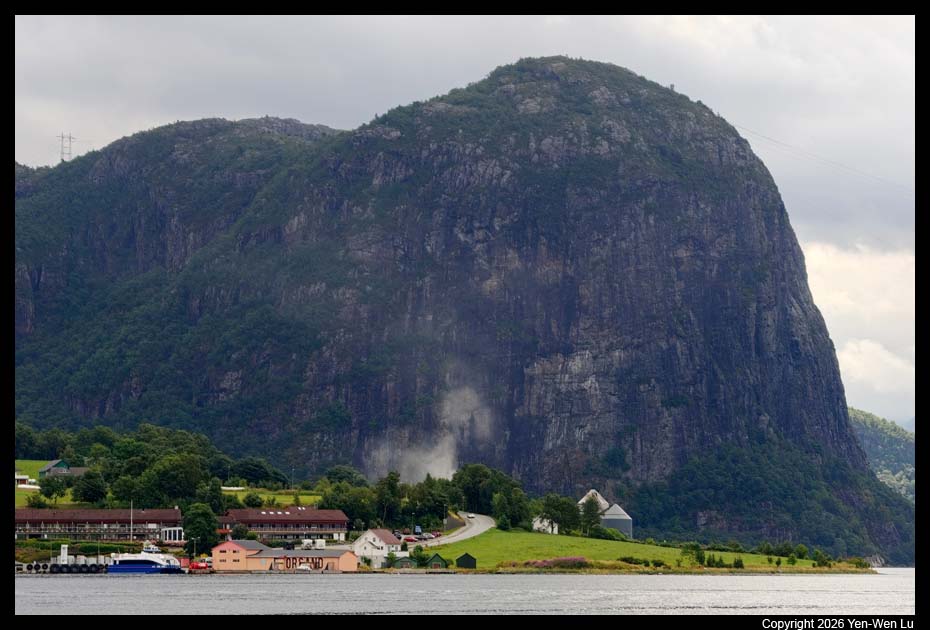
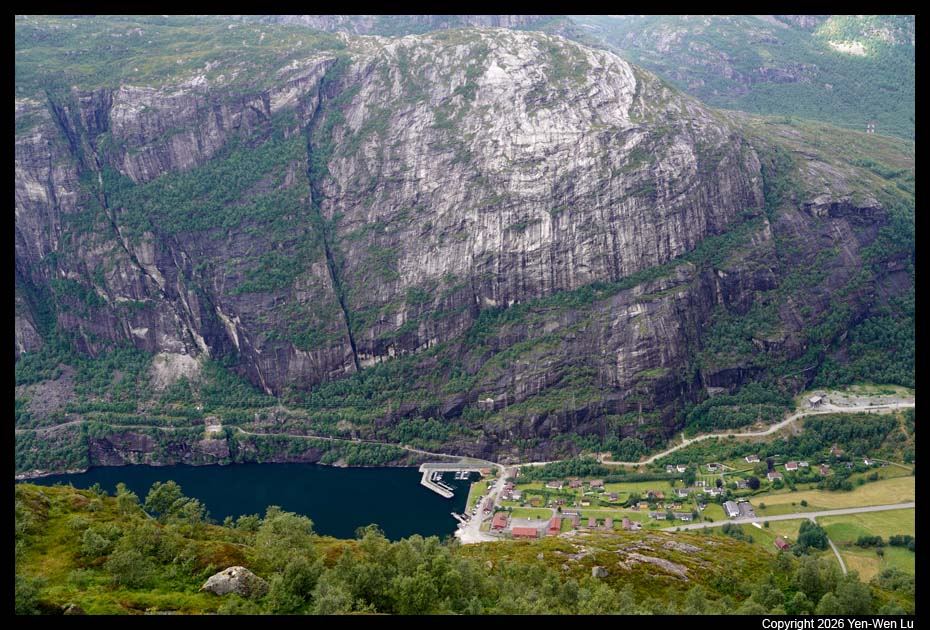
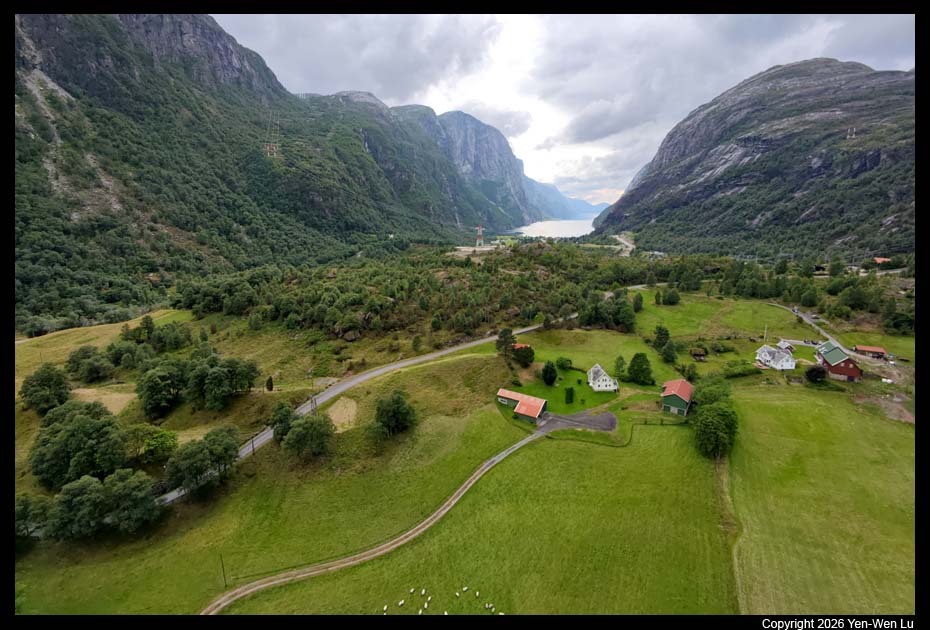
When we got to the bottom at Lysebotn, I tried to use my drone to take the
photos of the crazy road and the fjord. However, my drone (HoverAir)
could not fly high enough (it has the max flight ceiling of 120 meters
according to the FAA's 400-foot limit in US) to see the road clear enough,
so I had to settle with the nice view of the fjord and the farm land.
On internet, you can find some
photo of this road down to Lysebotn.
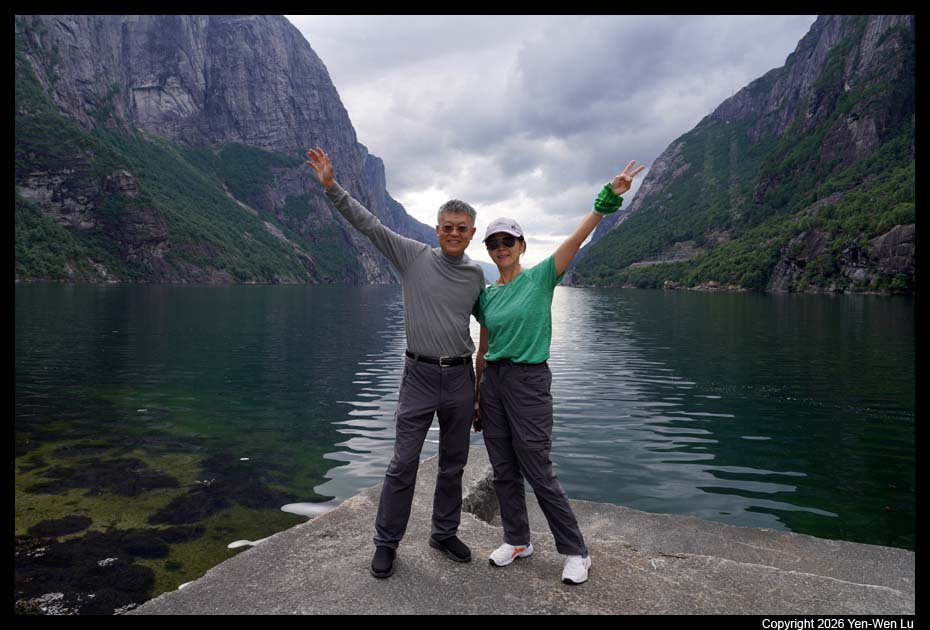
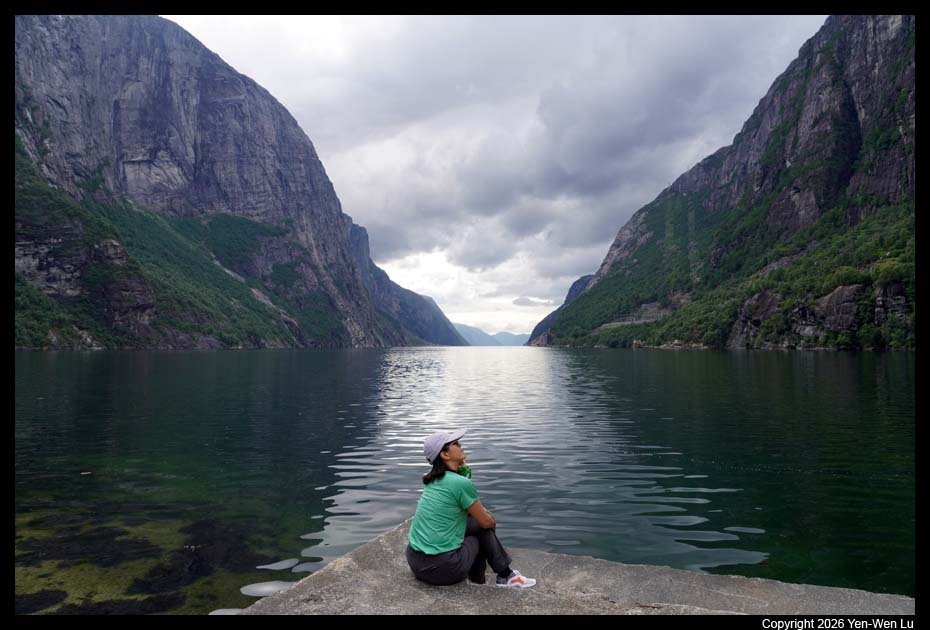
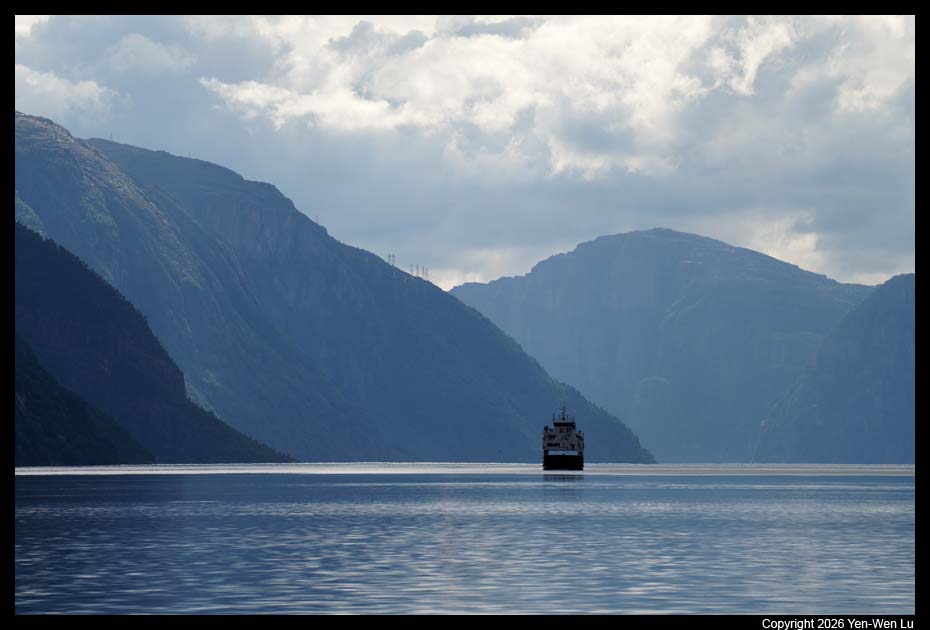
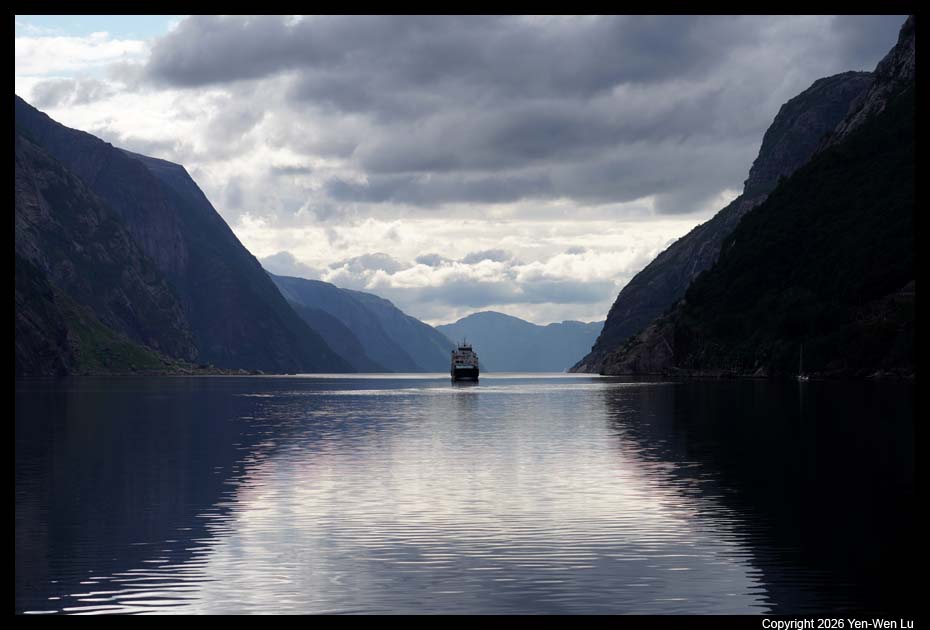
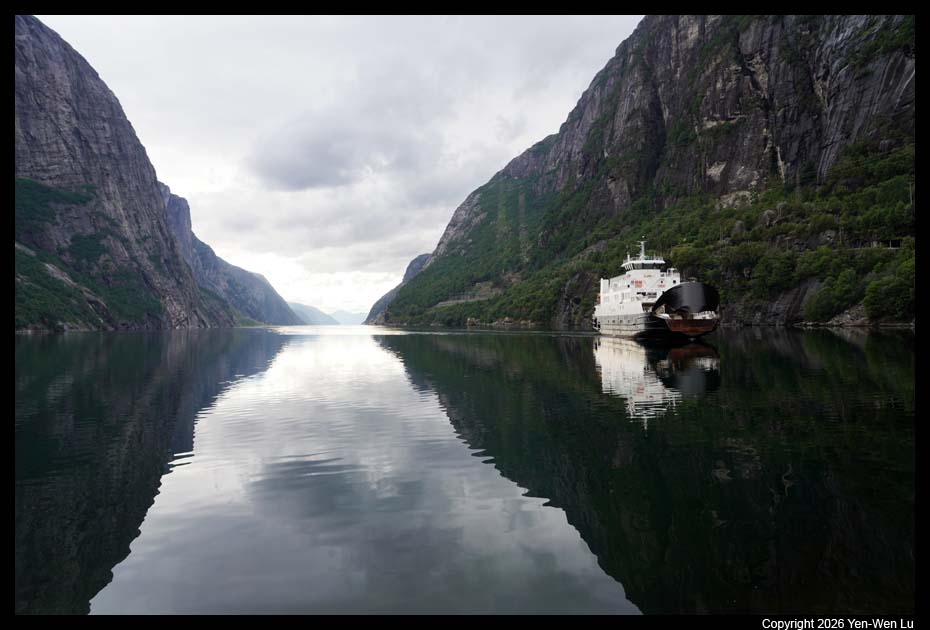
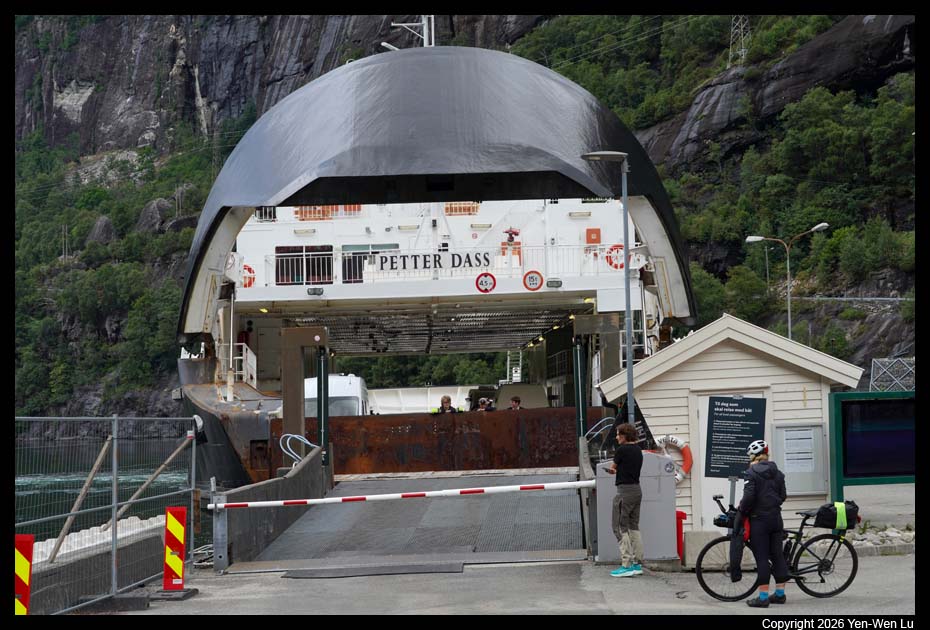
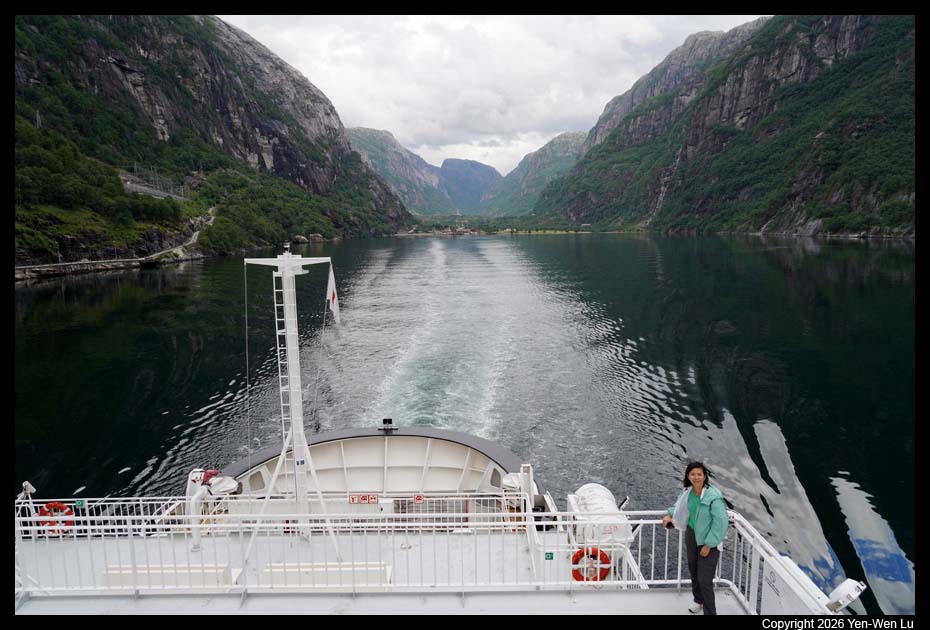
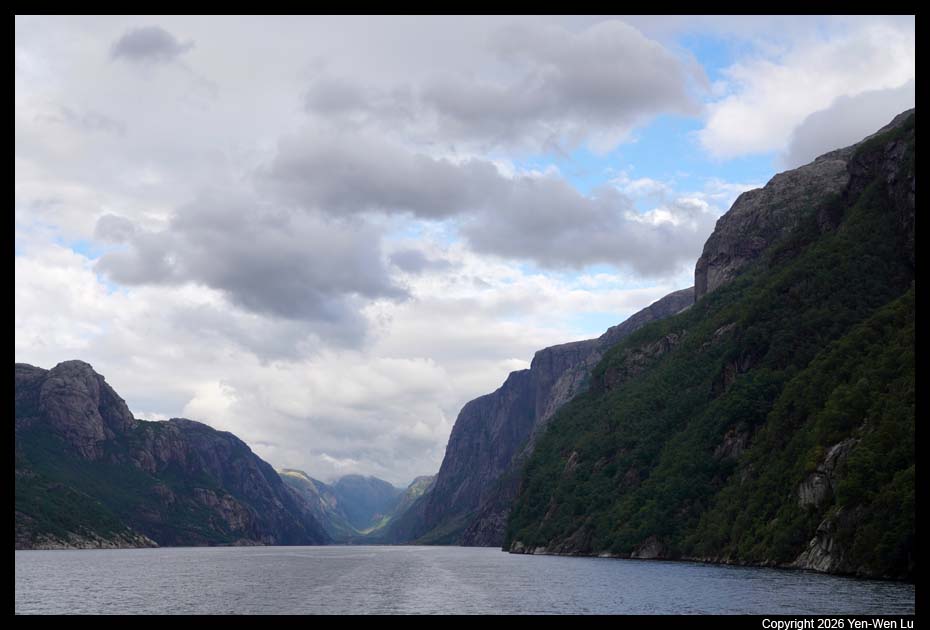
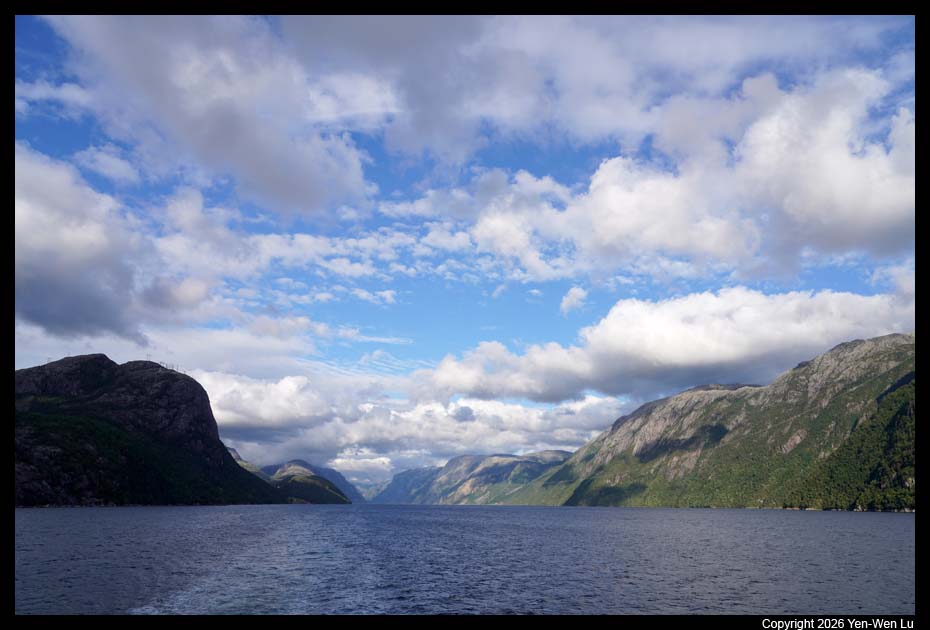
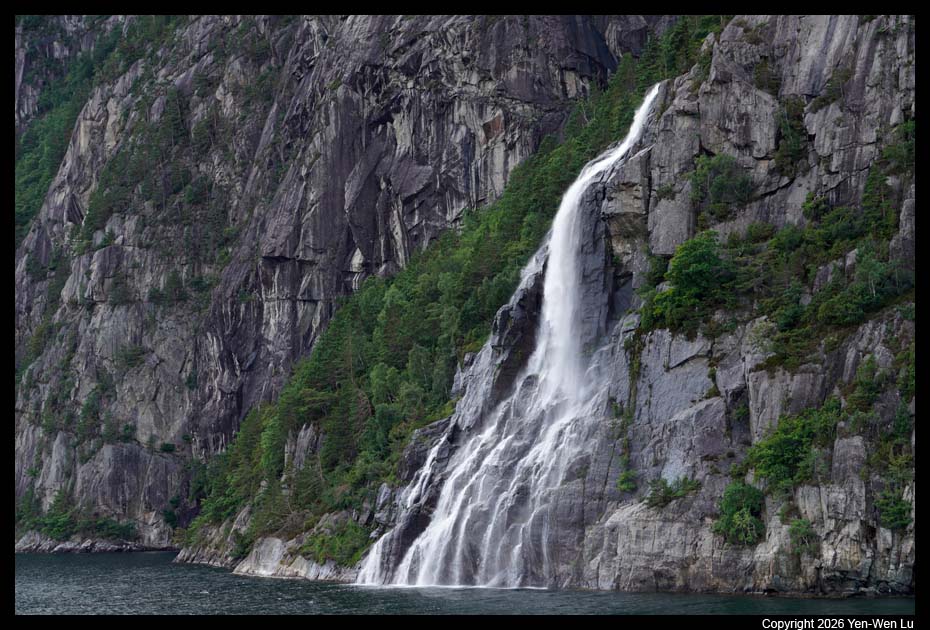
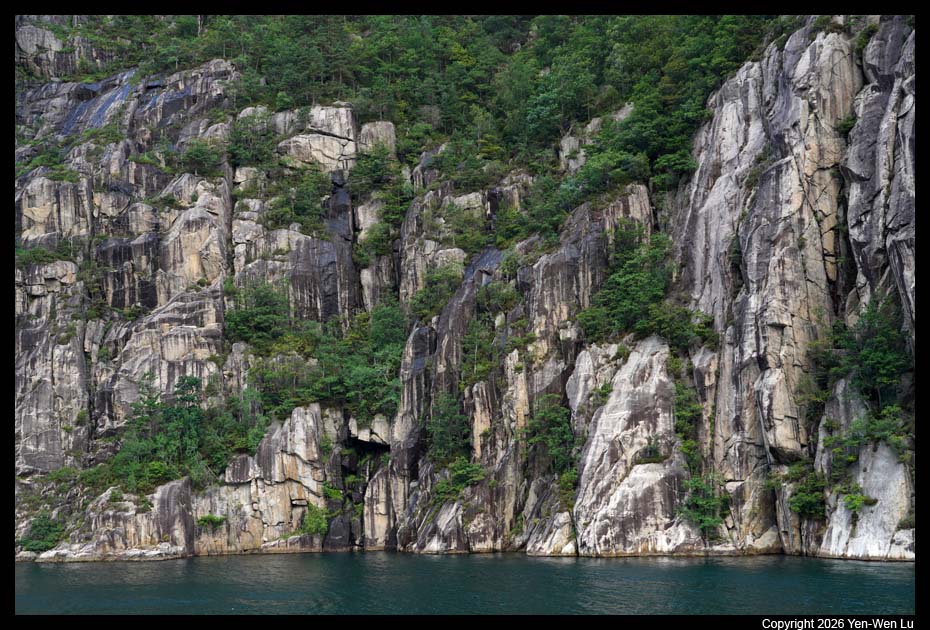
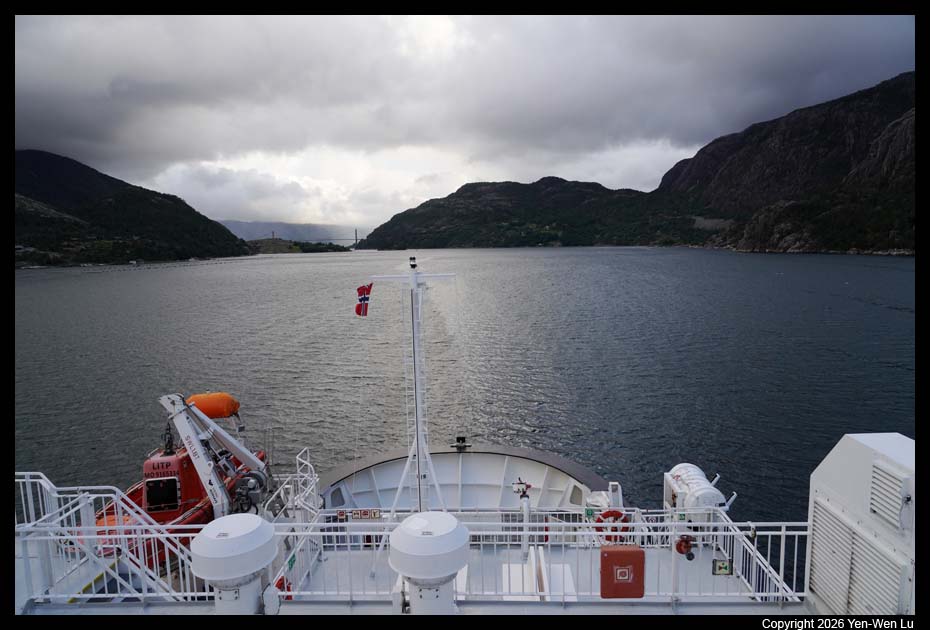
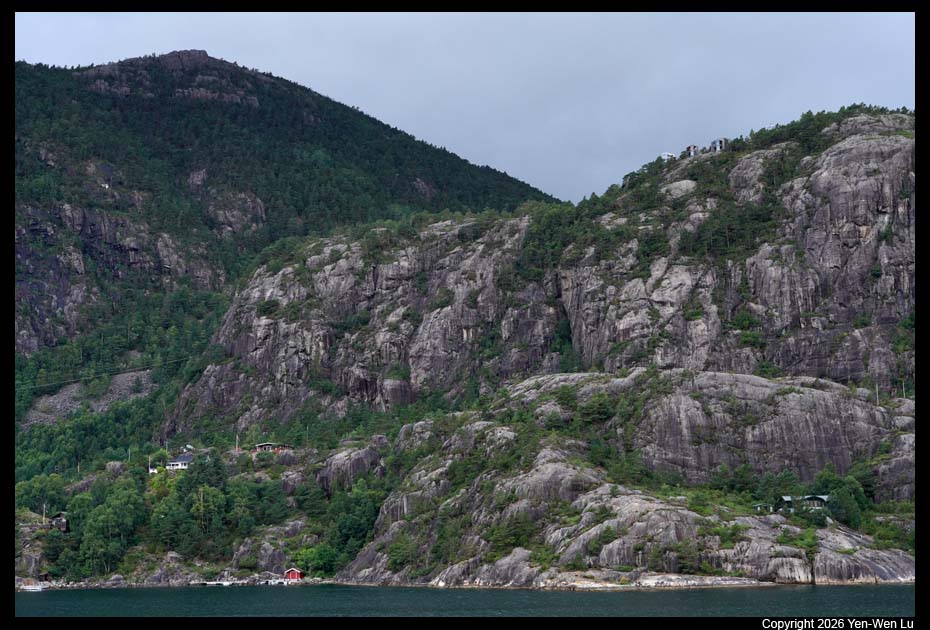
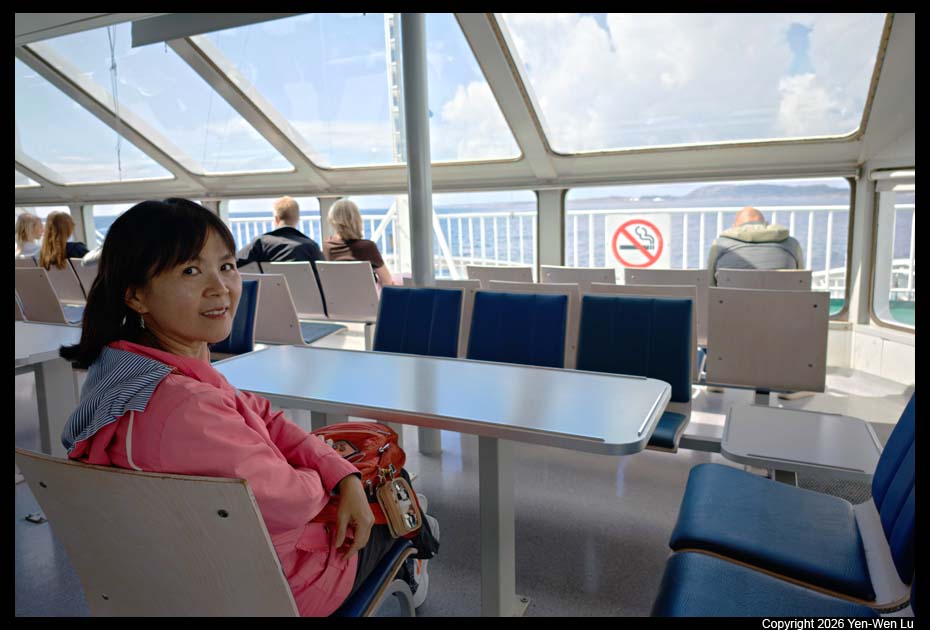
- Lysefjord
I booked the
scenic car ferry from Lysebotn (6PM) to Lauvvik (8:10PM). It
offers the perfect combination of practical transport and sightseeing, a
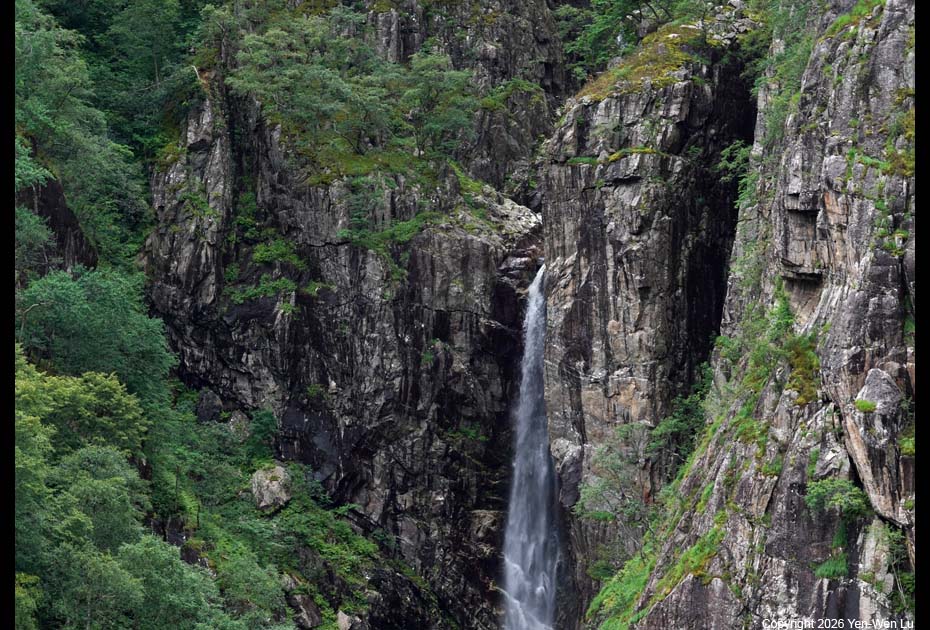
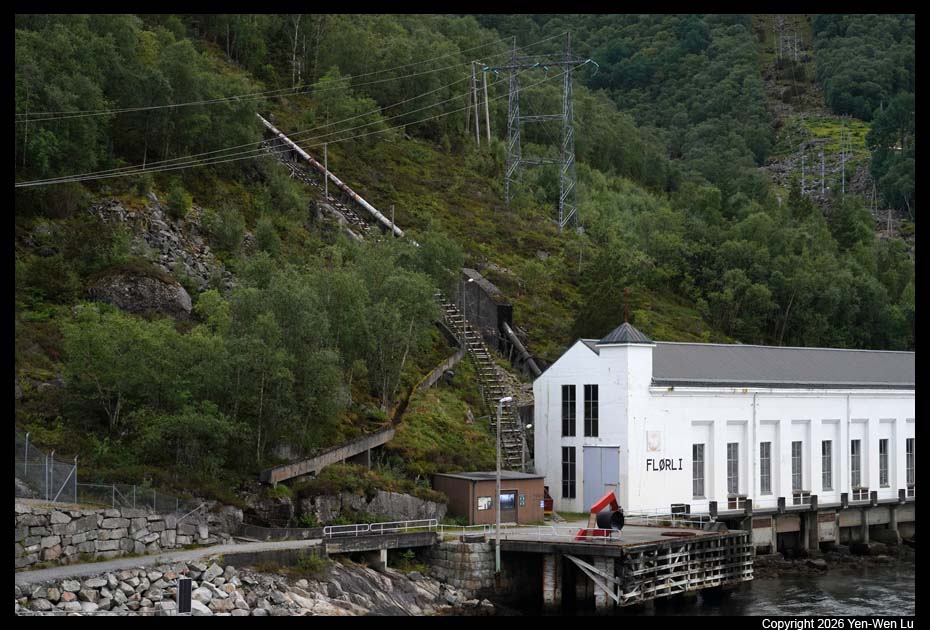
spectacular journey through the heart of the 42-km Lysefjord with iconic
views of Preikestolen, waterfalls, and mountain cliffs.
Day 7 (7/31) ...
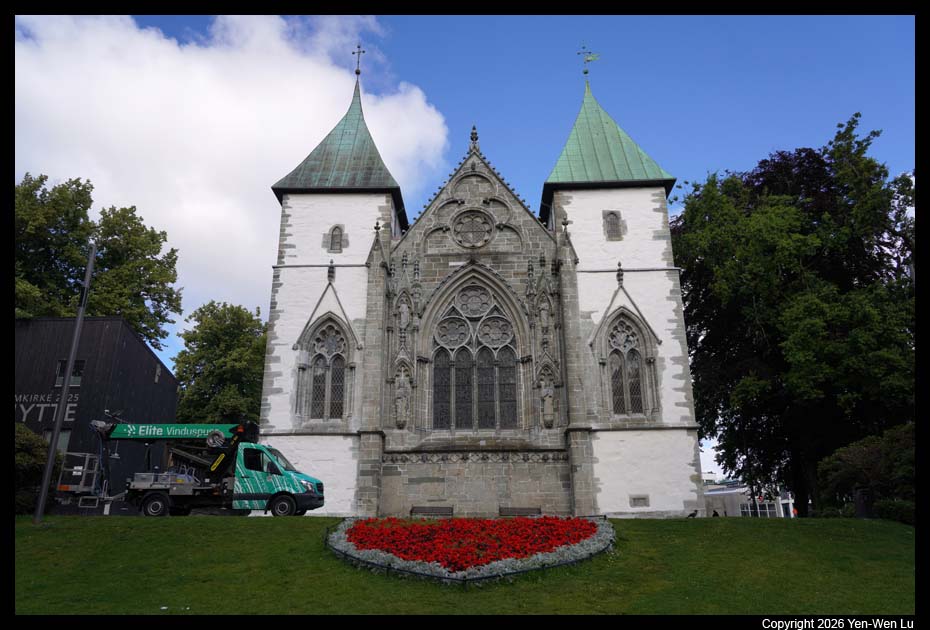
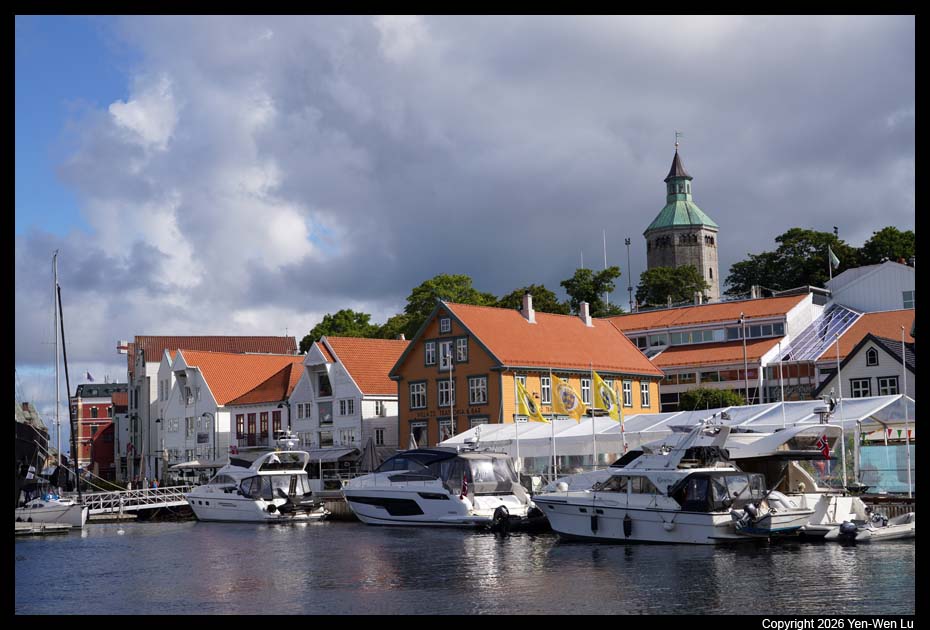
- Stavanger
Stavanger is a vibrant coastal city in southwestern Norway
and the third largest city (and fourth most populous metropolitan area) in the
country. It is globally recognized as the "Oil Capital of Norway" today
due to its central role in the nation's North Sea petroleum industry. Despite
its modern industrial muscle, Stavanger is a deeply historic, picturesque city
that serves as the premier basecamp for exploring the world-famous Lysefjord
region.
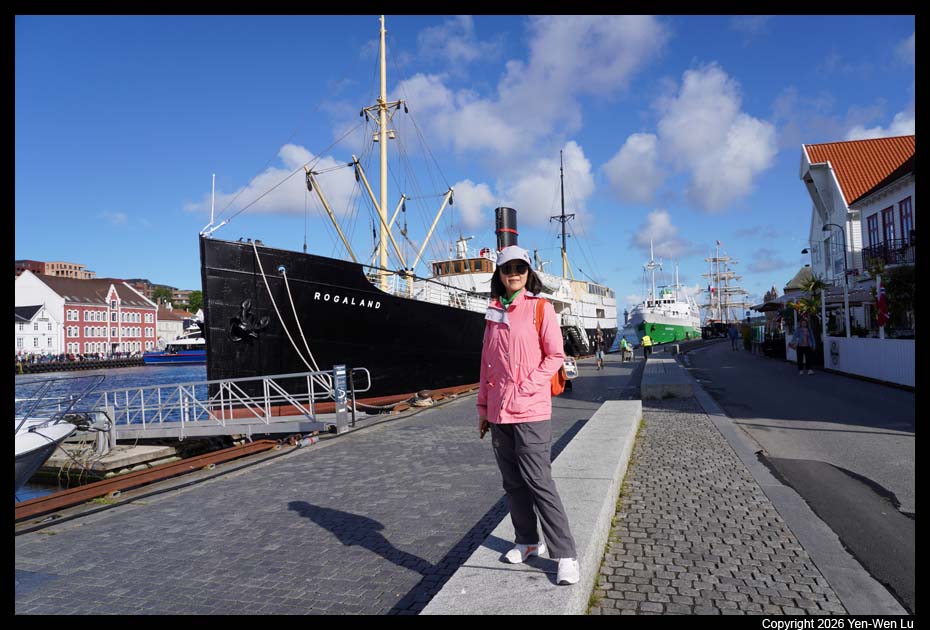
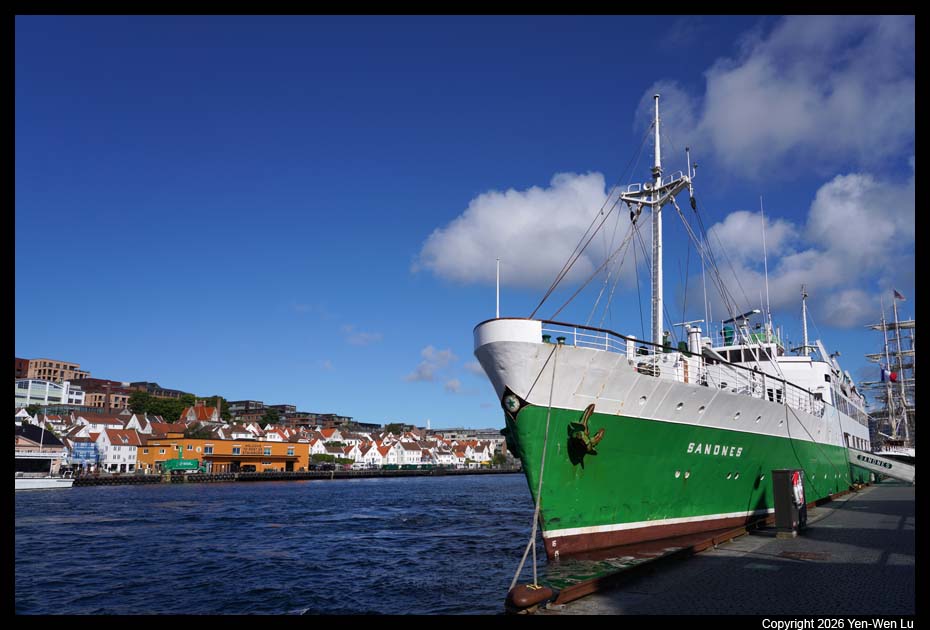
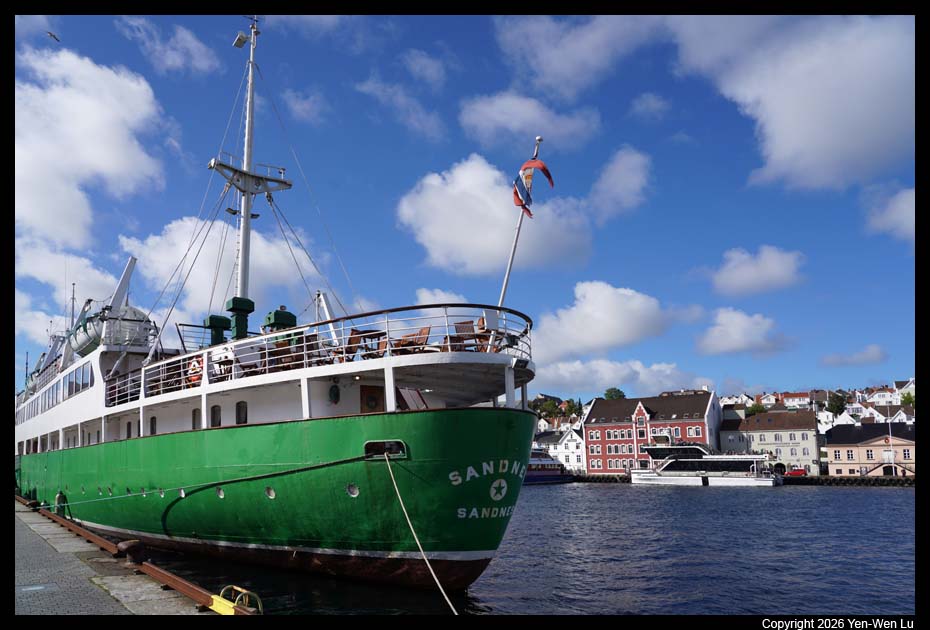
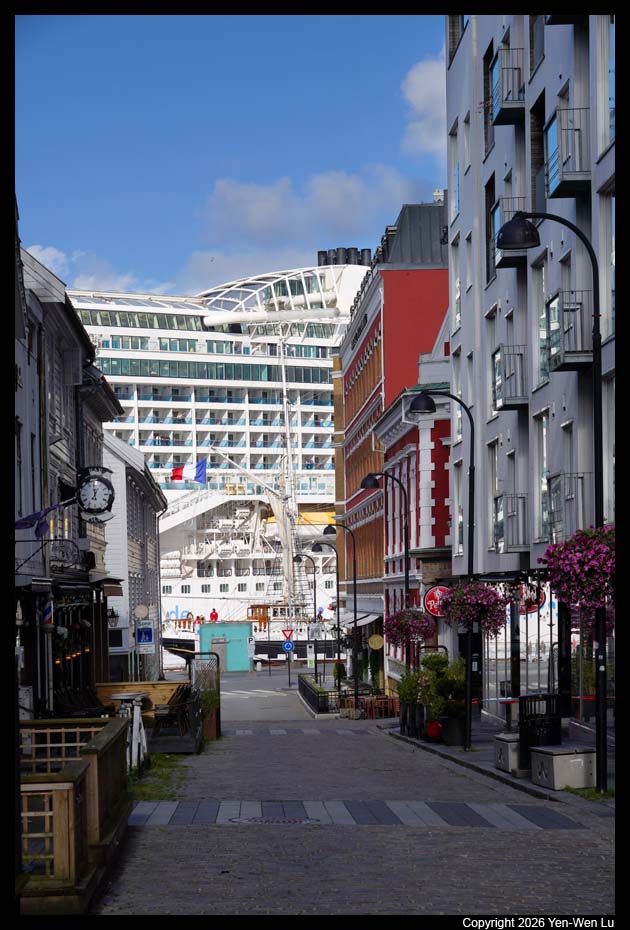
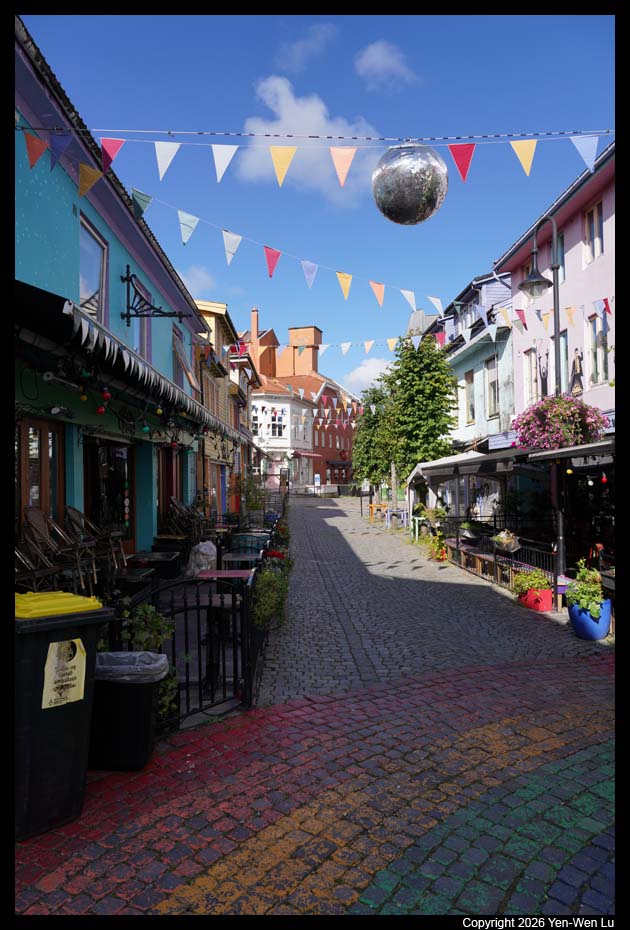
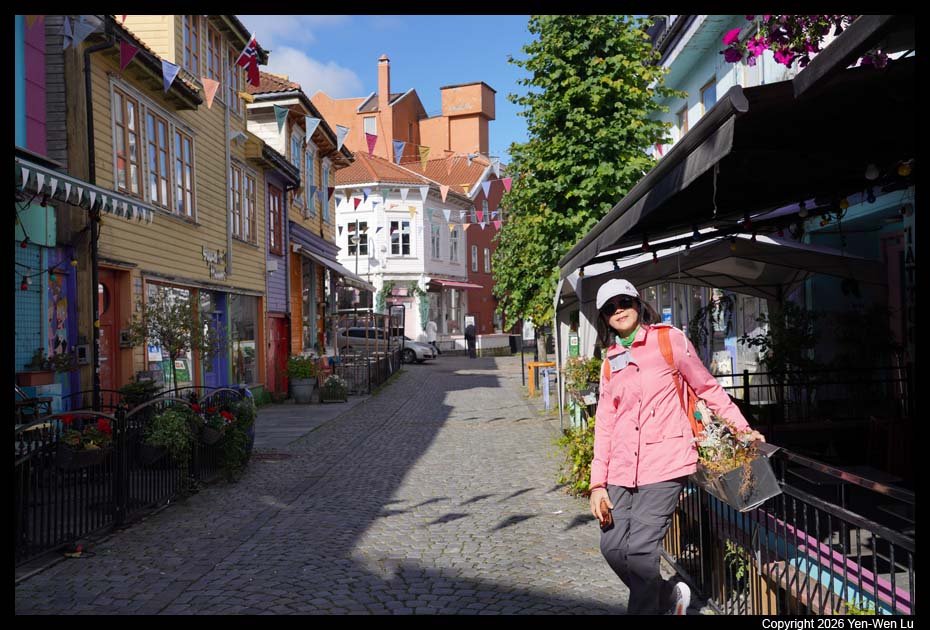
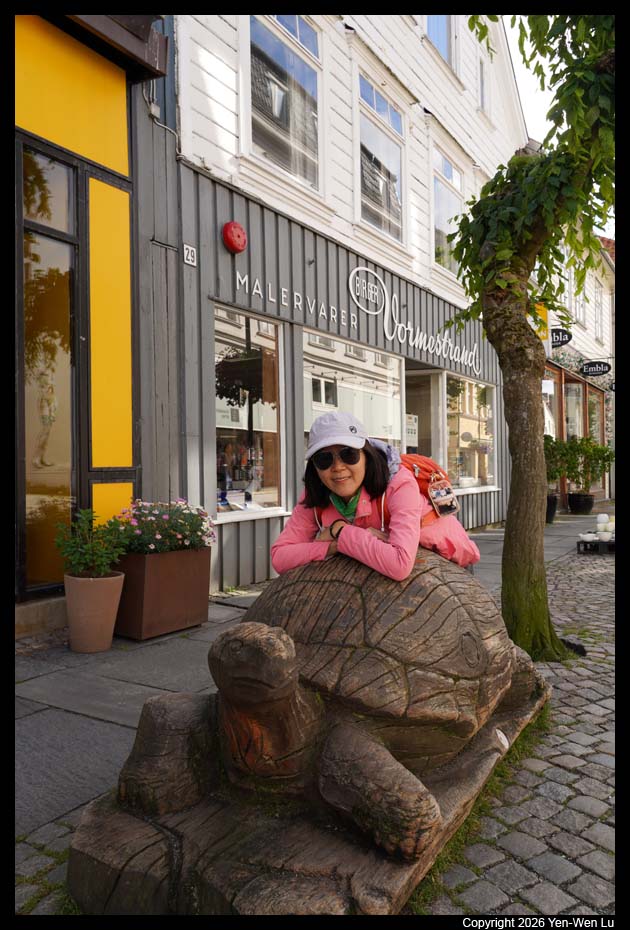
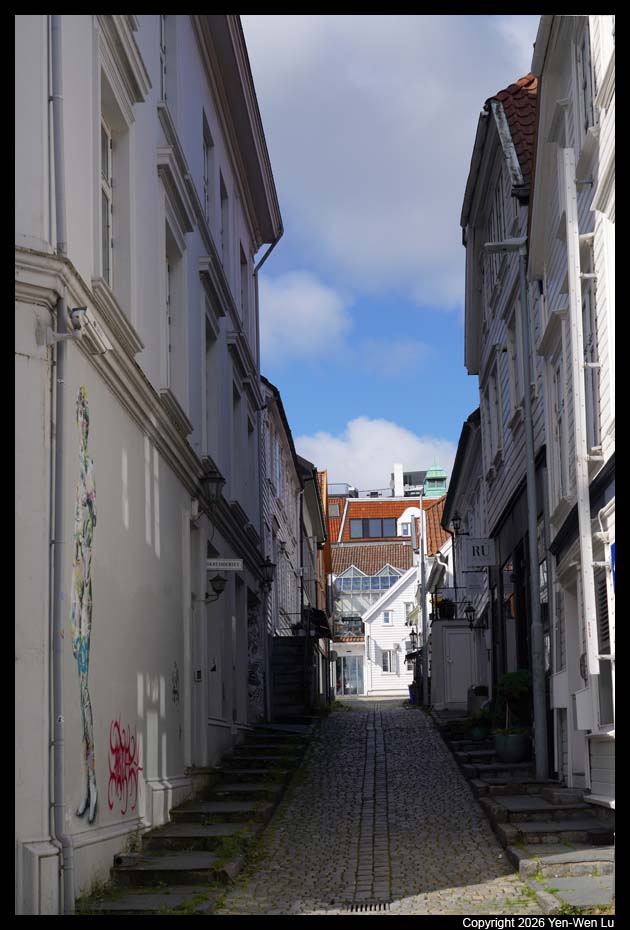
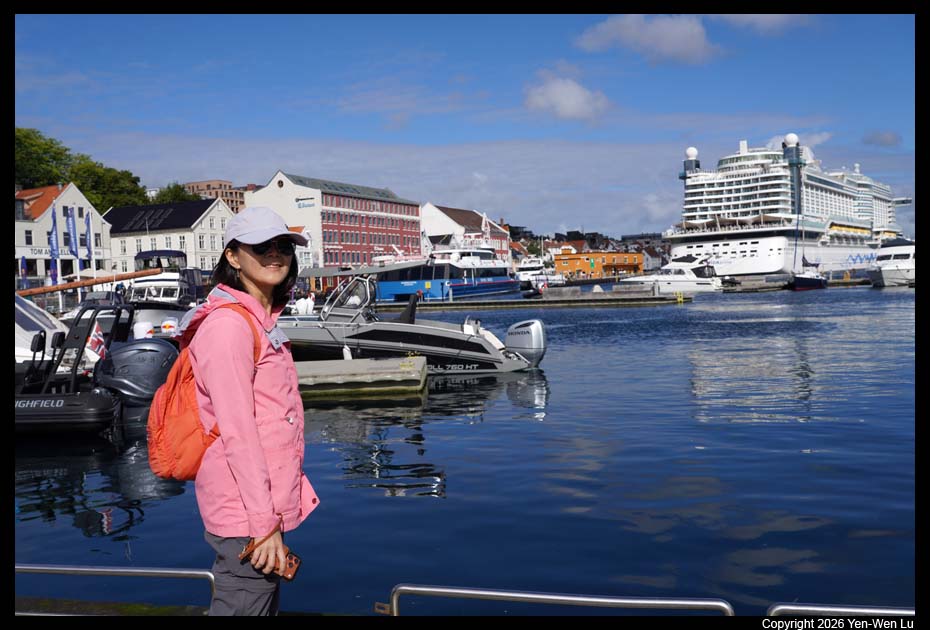
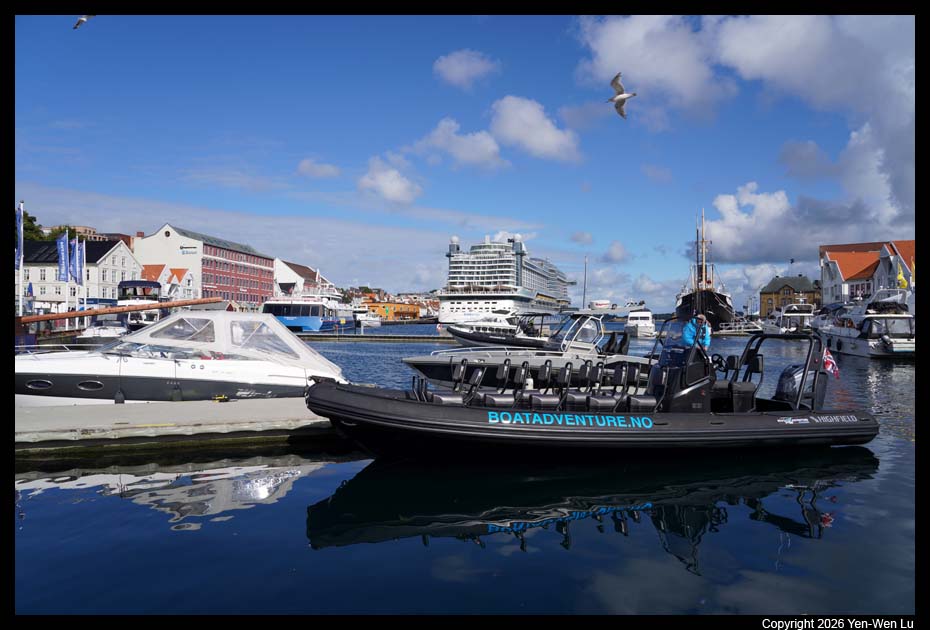
After breakfast in the hotel, we walked to the harbor and
explored the colorful streets of Fargegaten (Øvre Holmegate), and then walked
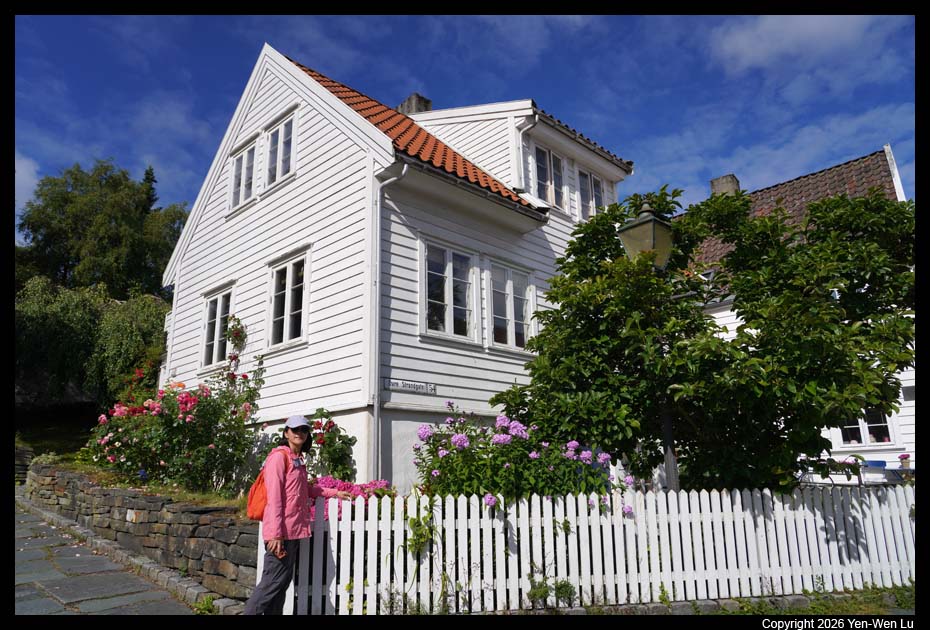
back to the Old Stavanger (Gamle Stavanger), composed of hundreds of
beautifully preserved, white-painted wooden cottages with cobblestone lanes.
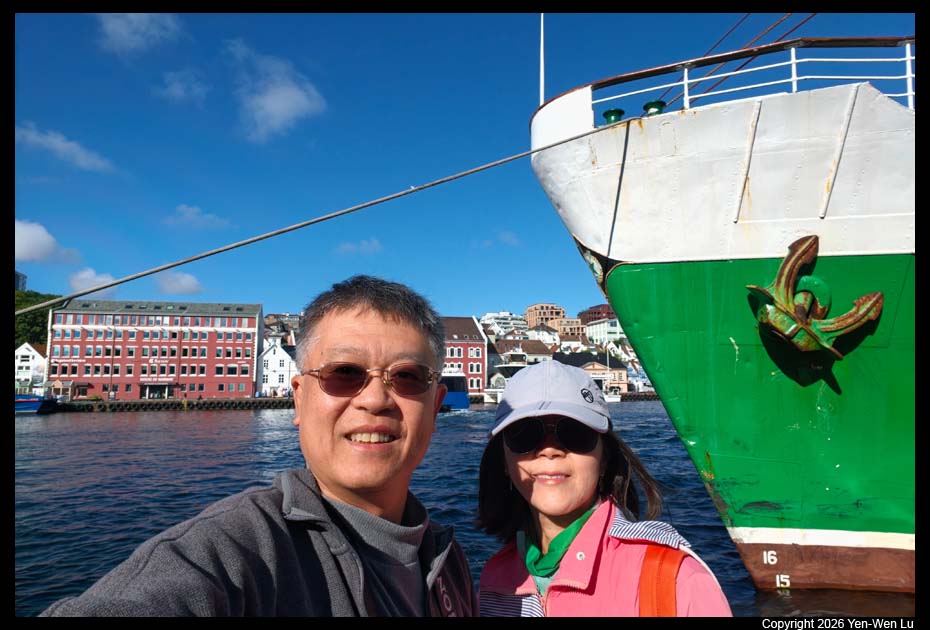
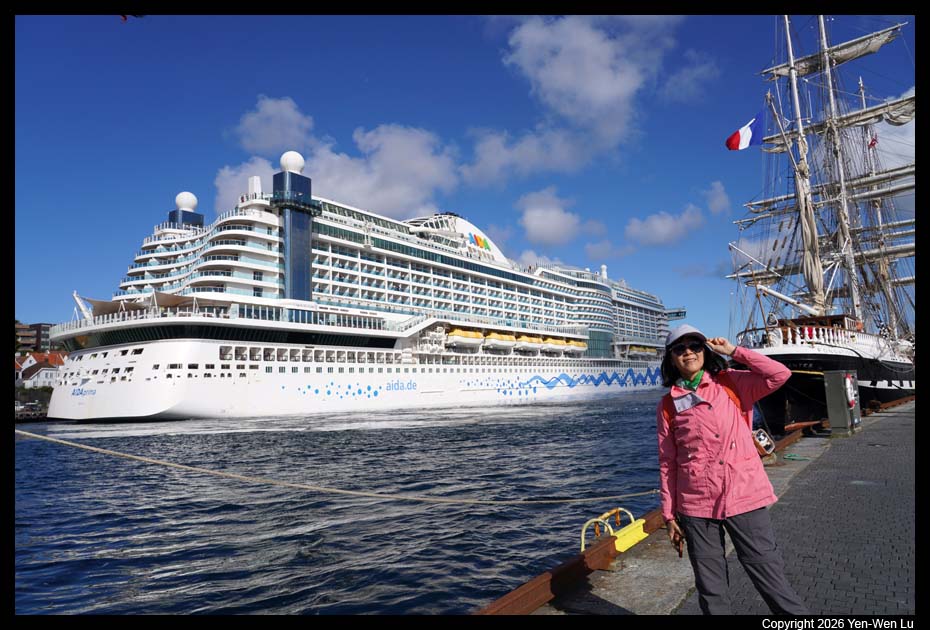
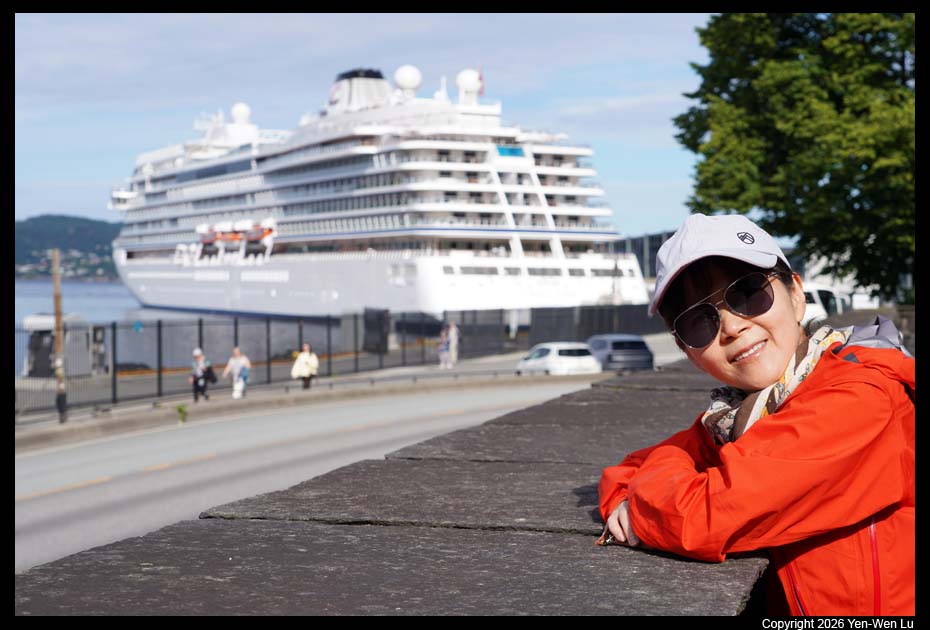
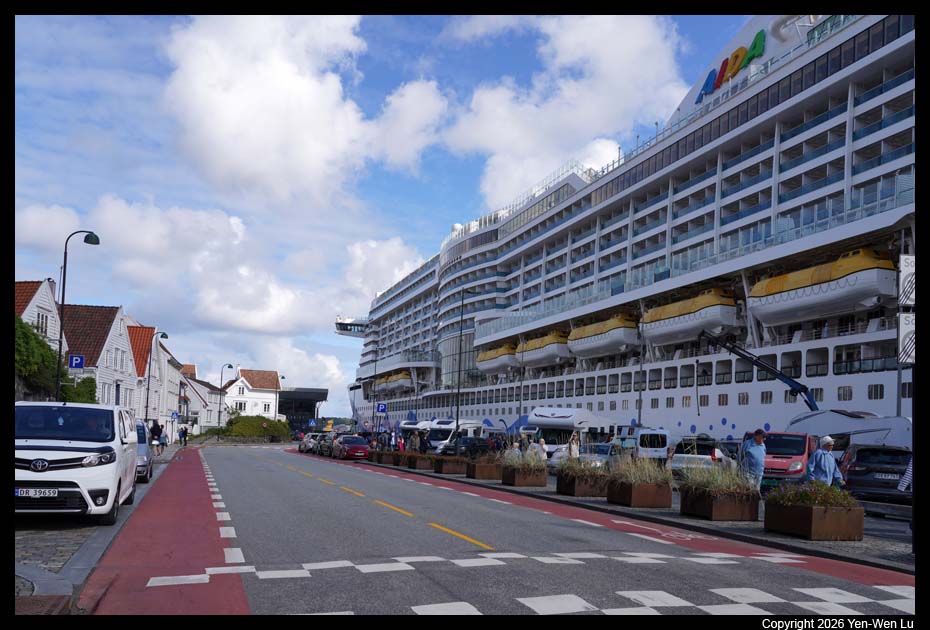
But when we got to the Old Stavanger, a big
cruise ship had arrived
and tons of passengers had disembarked and started to pour into the small old
town...
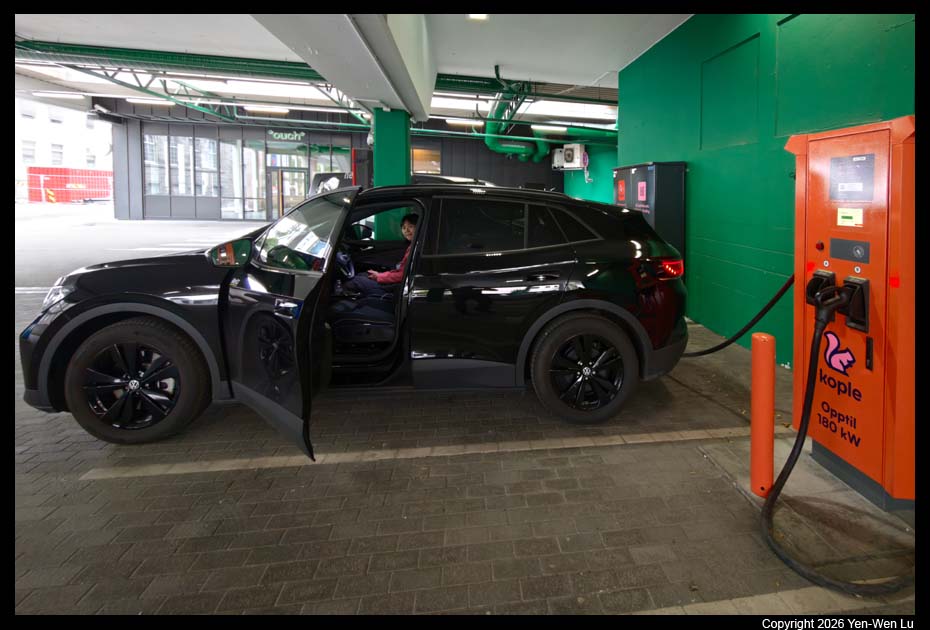
After check out of the hotel, we found a place to
charge our EV car and a burger place
("Ouch Burger") right next to the charging station for our lunch. After we
finished our lunch and also finished charging the vehicle, we had a little
incident: we did not know how to unplug the charging cable. We
struggled for more than 15 minutes, and eventually some guests from the burger
place came to our rescue :-)
- Odda
Odda is a bustling industrial town located in the hardanger
region of Western Norway. It sits at the absolute southern tip of the
Sørfjorden (a scenic branch of the massive Hardangerfjord) and is nestled
tightly between two steep mountain walls. In recent years Odda has
transformed into a major global tourism basecamp because it has become the
gateway to the world-famous Trolltunga hike.
Day 8 (8/1) ...
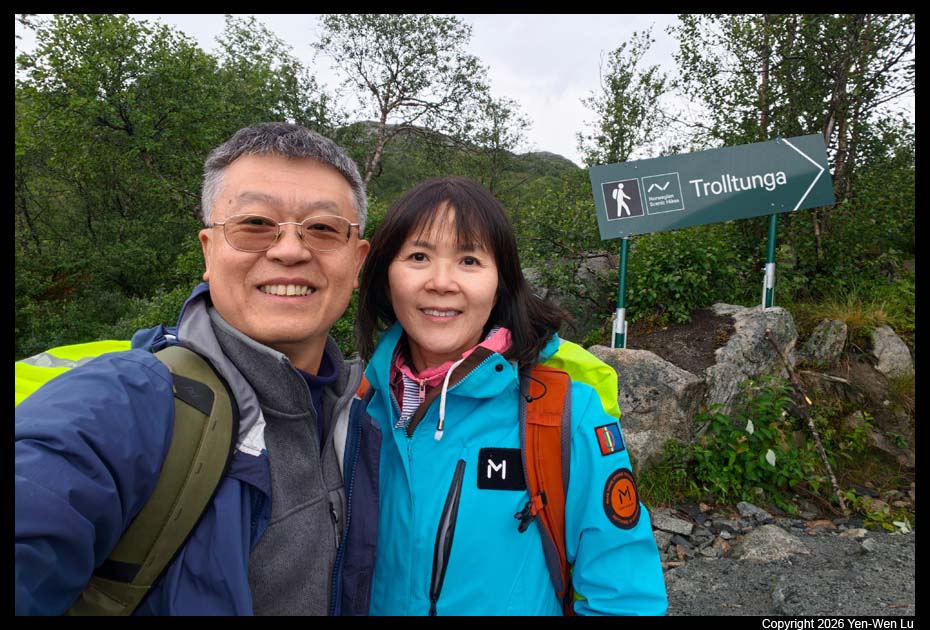
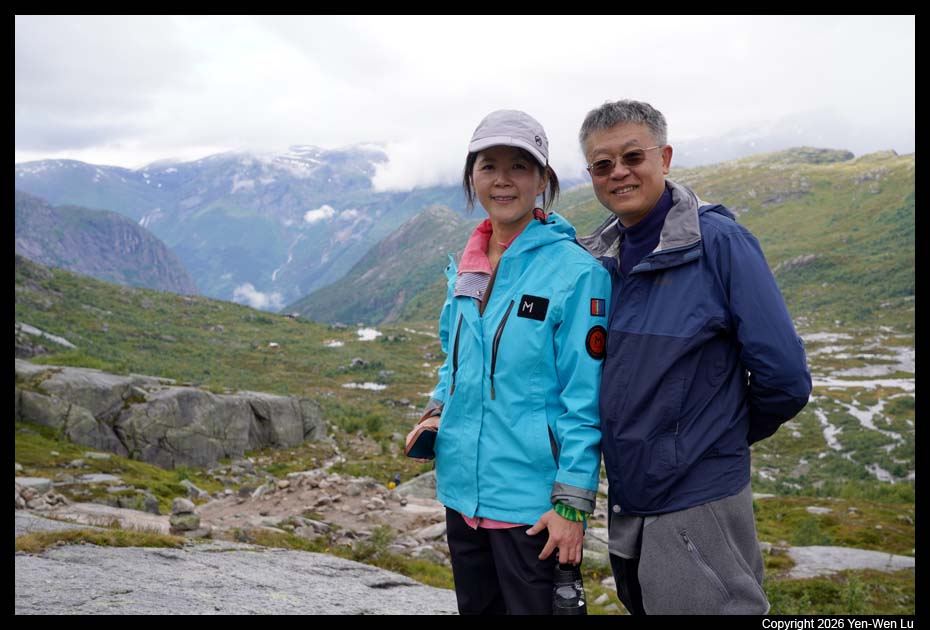
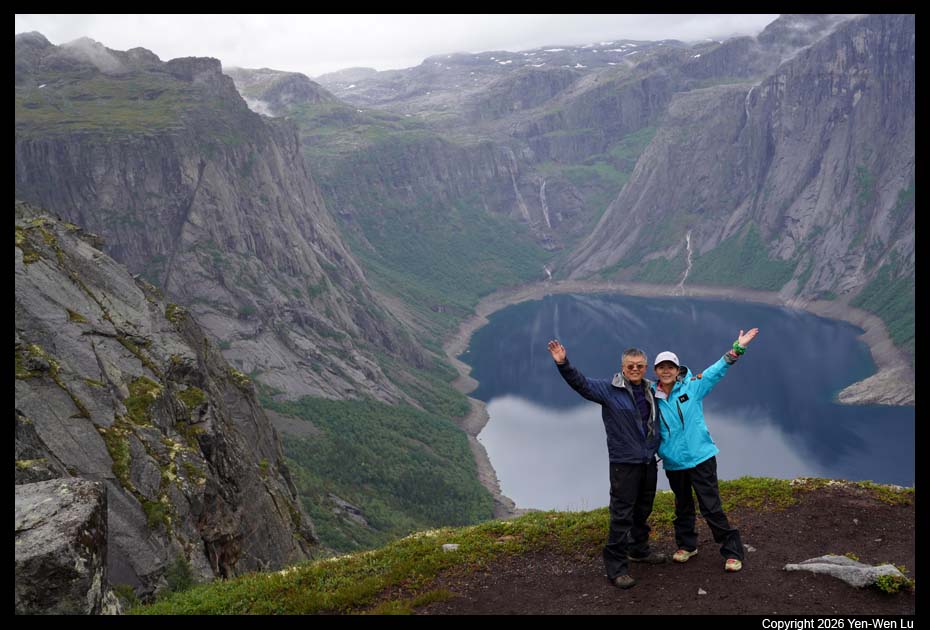
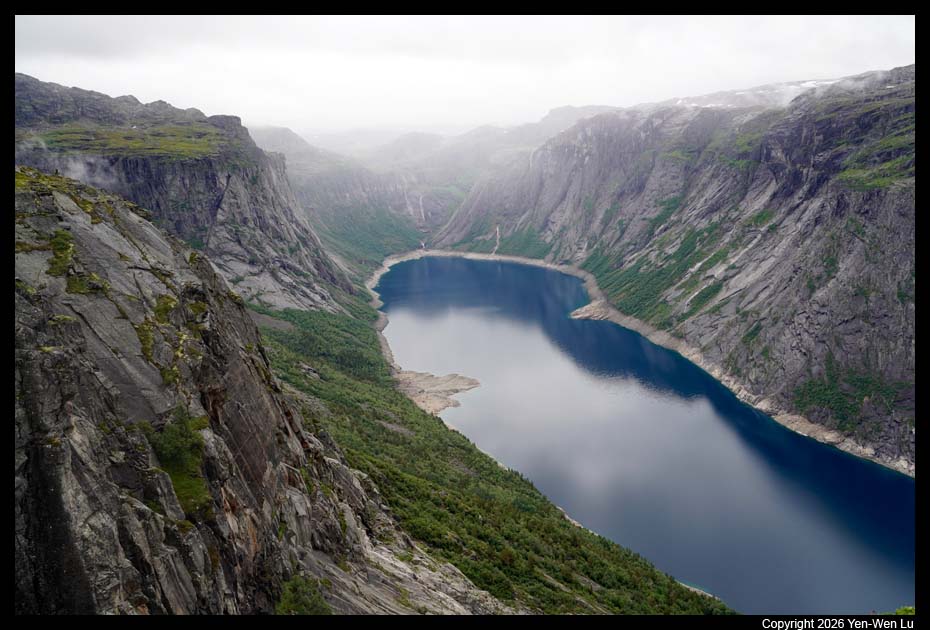
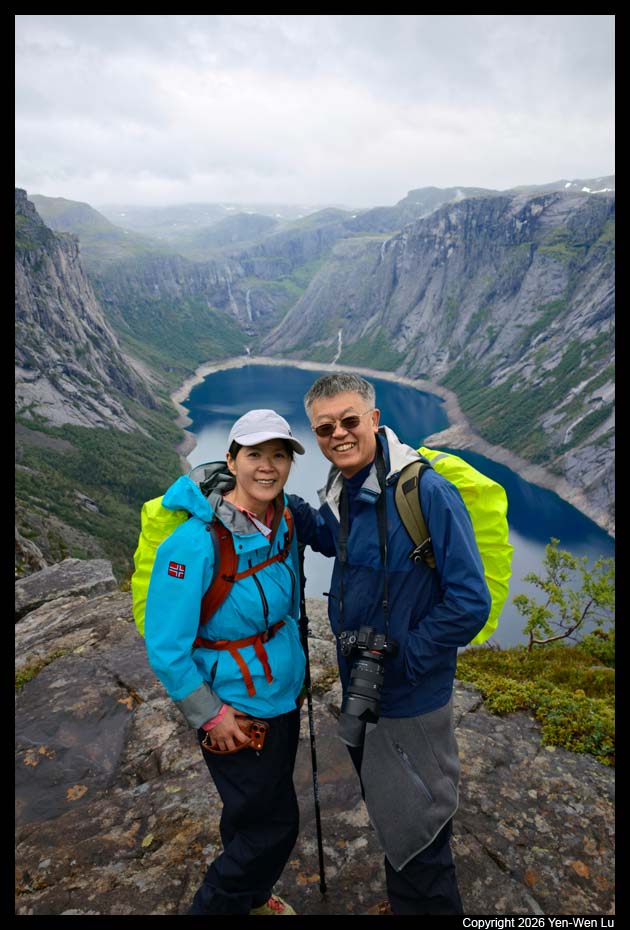
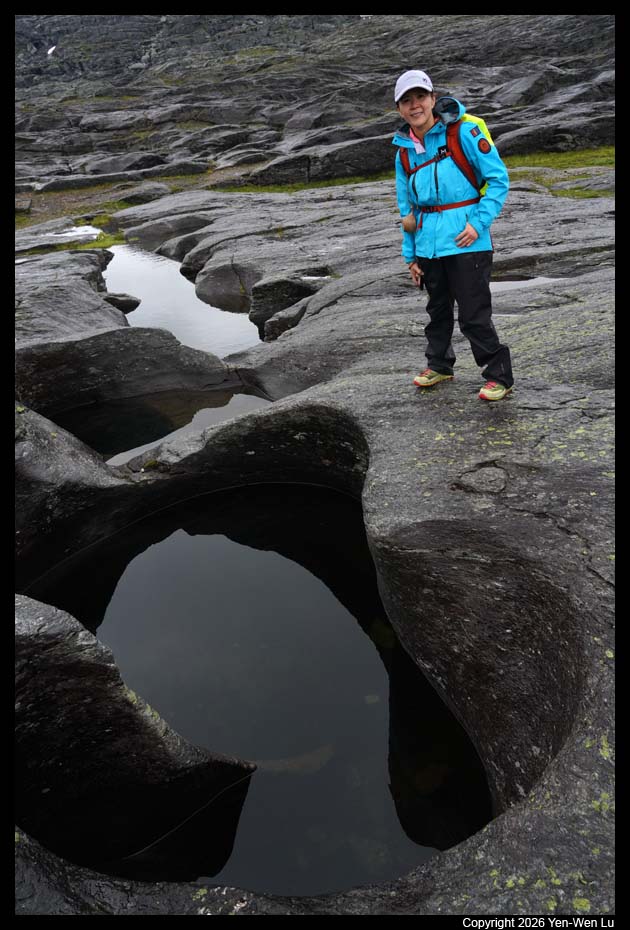
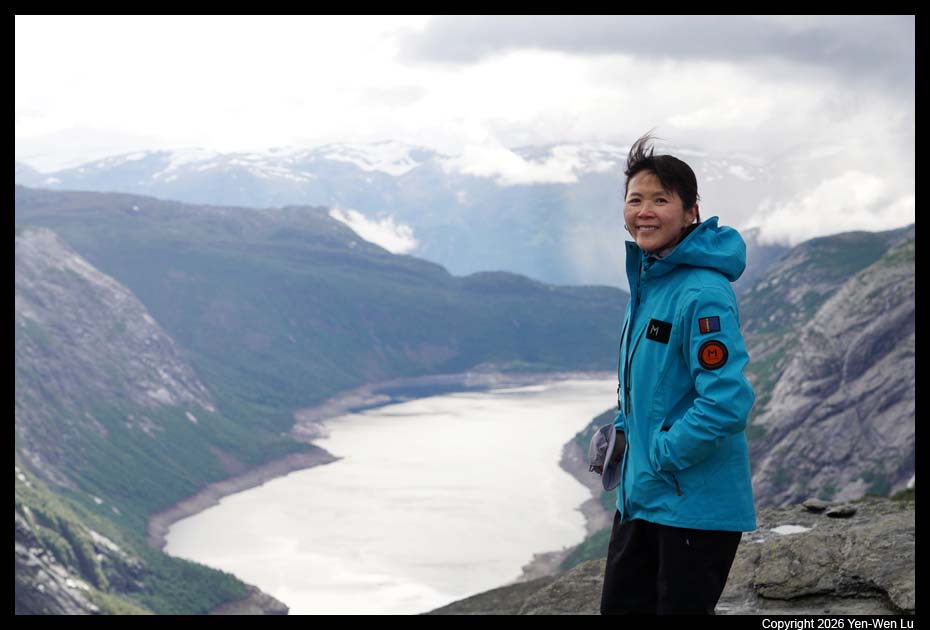
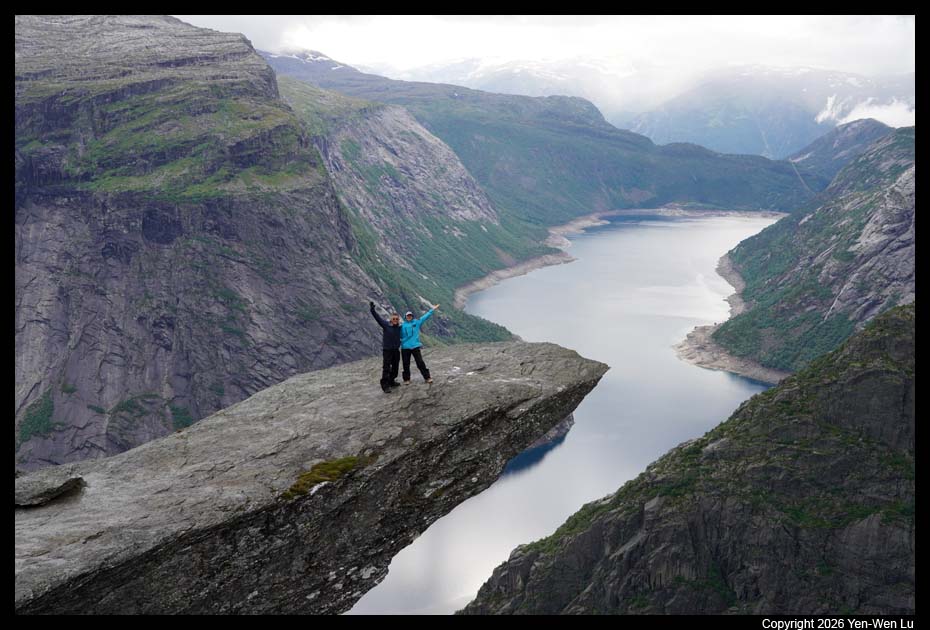
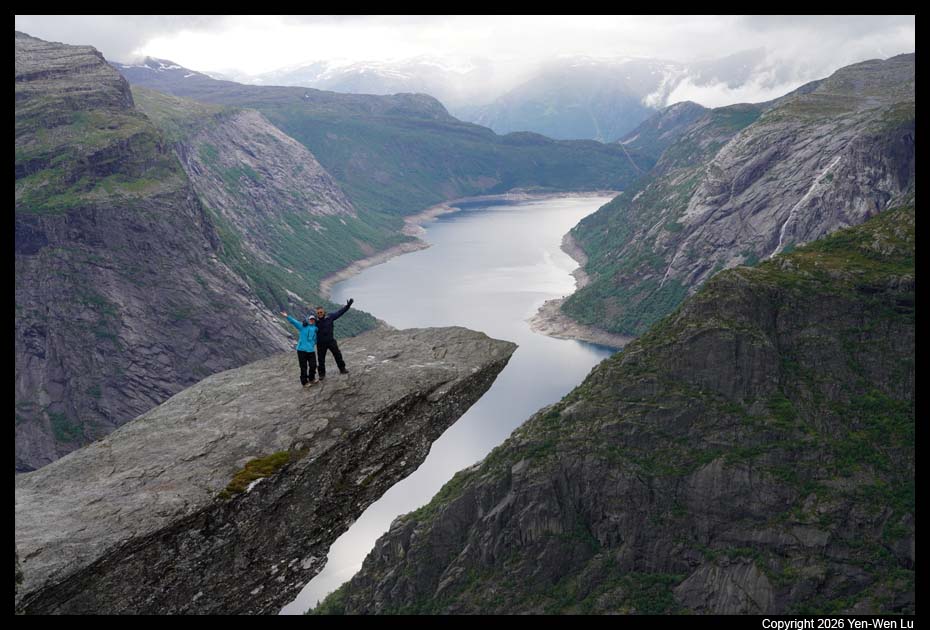
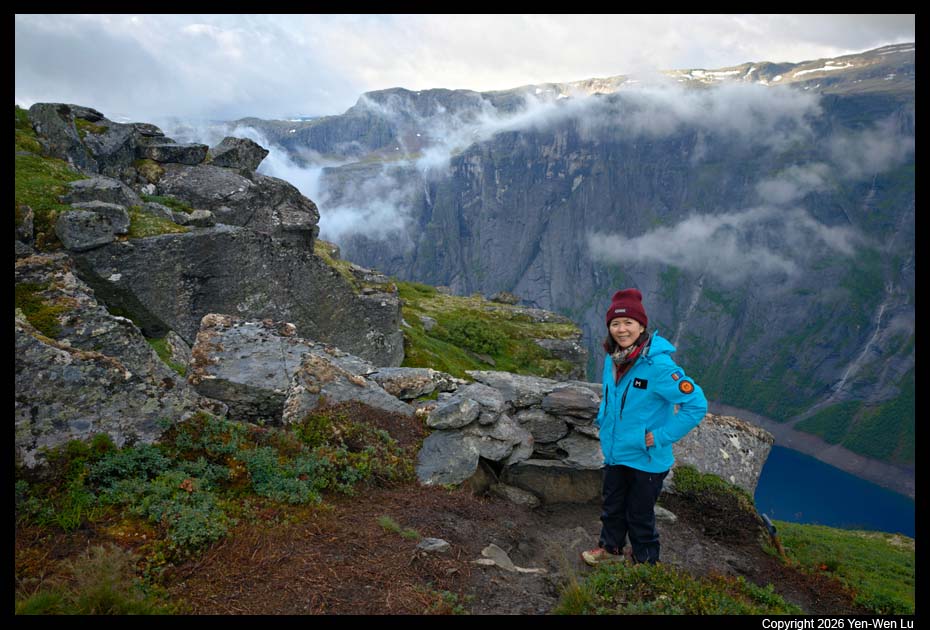
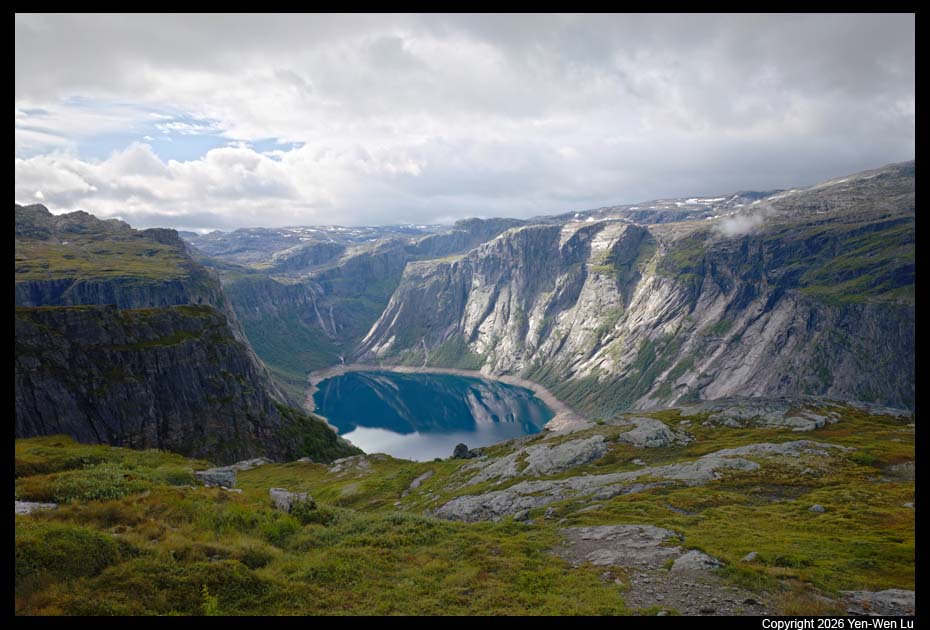
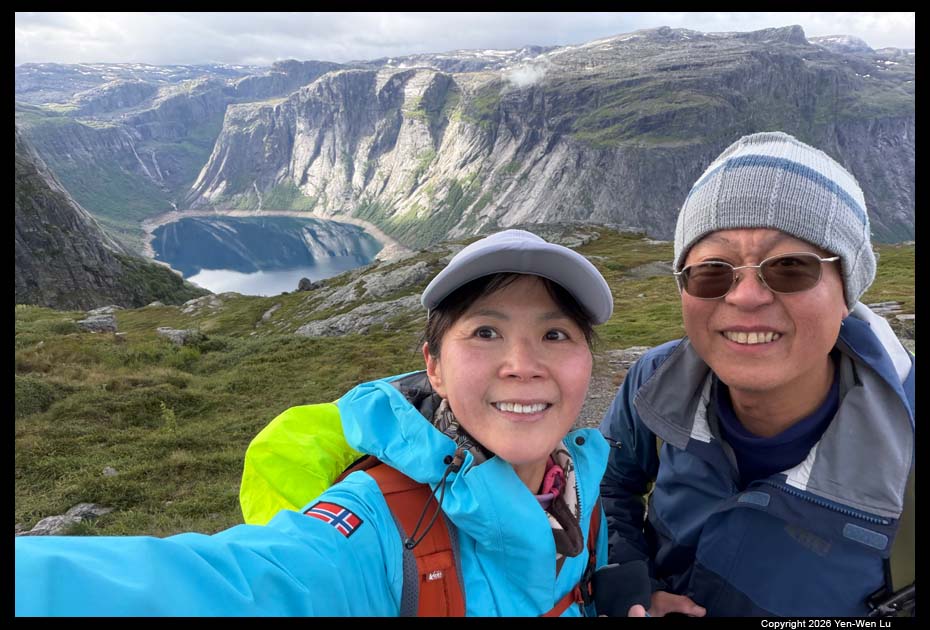
- Trolltunga
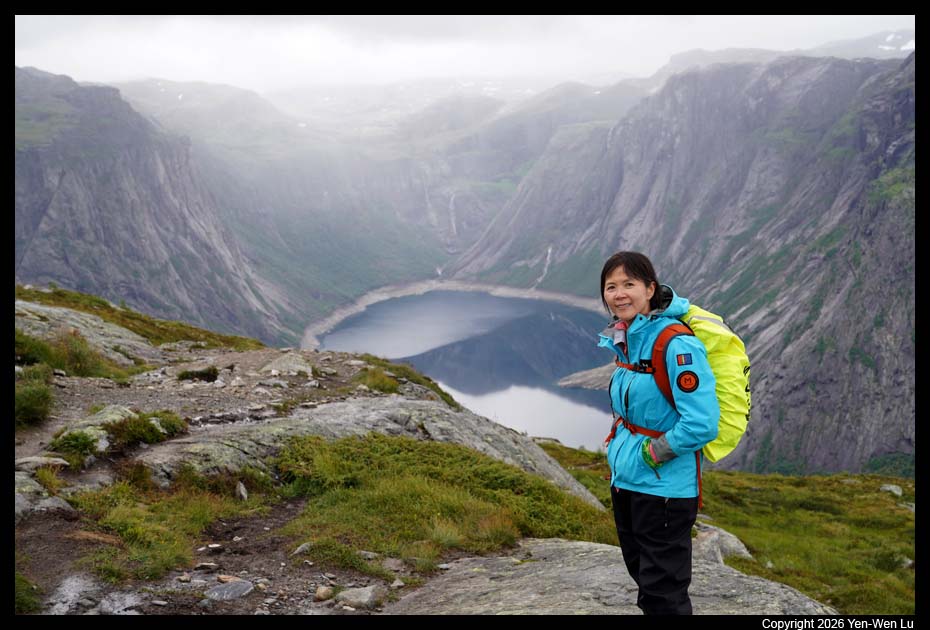
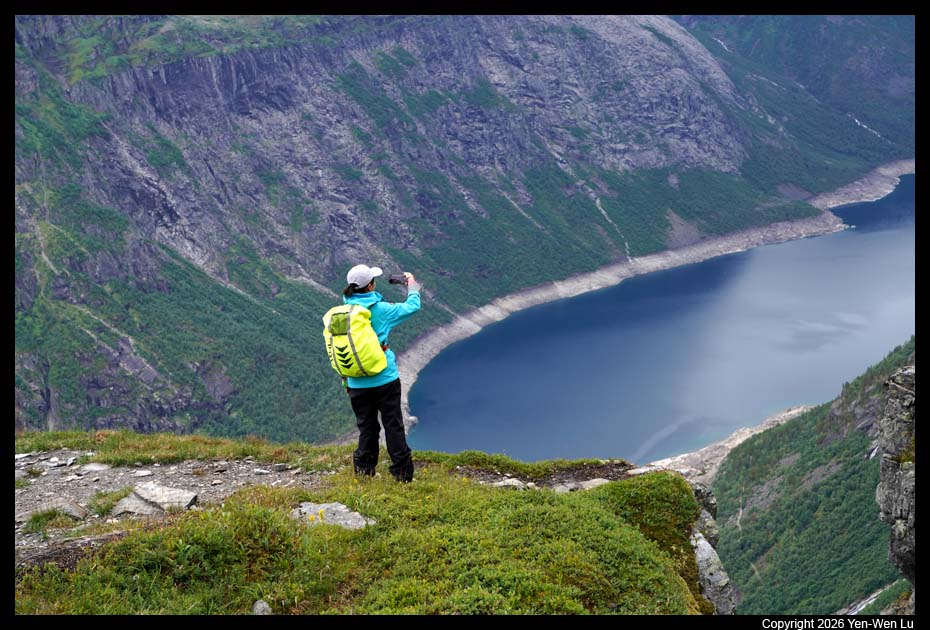
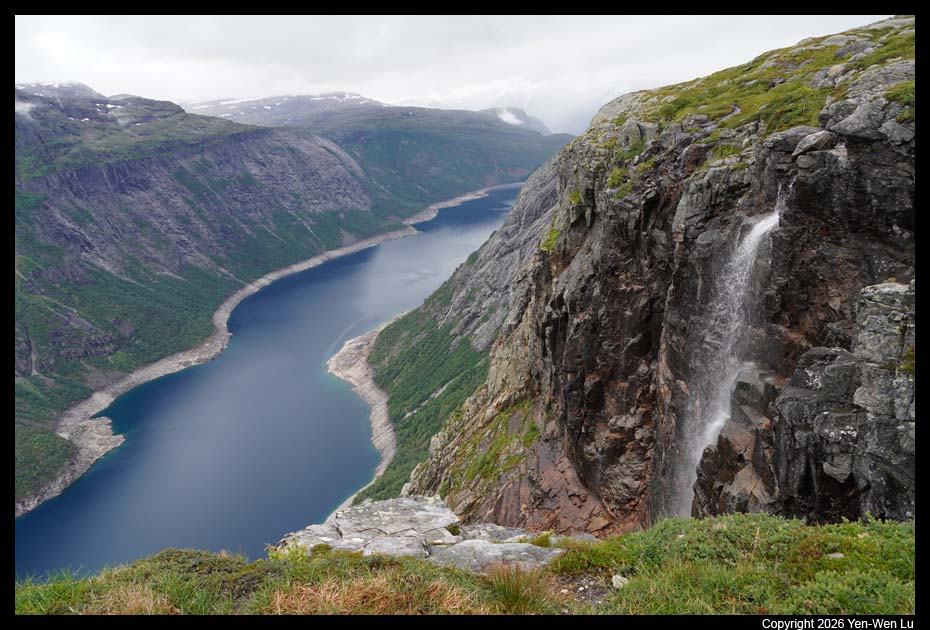
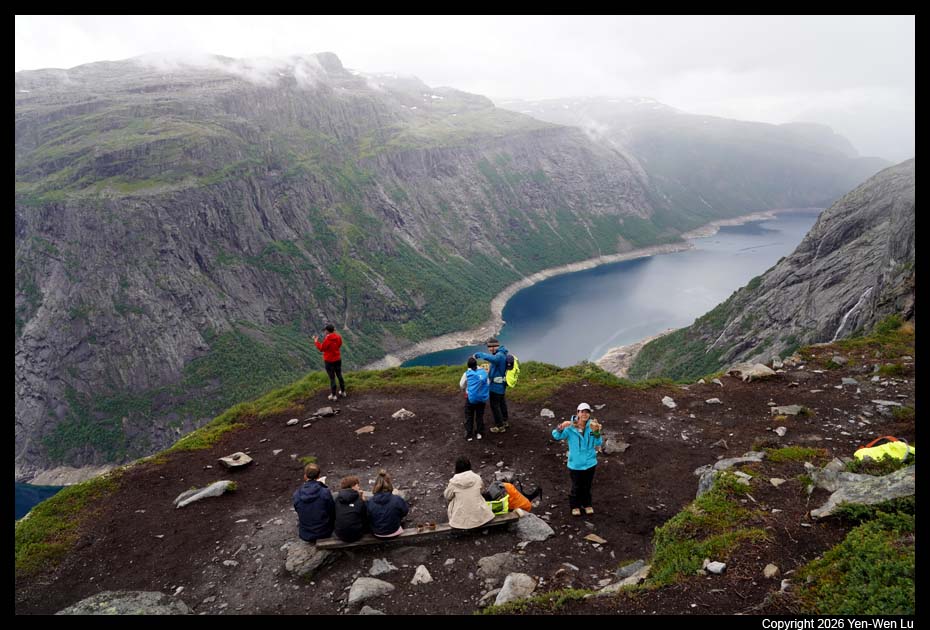
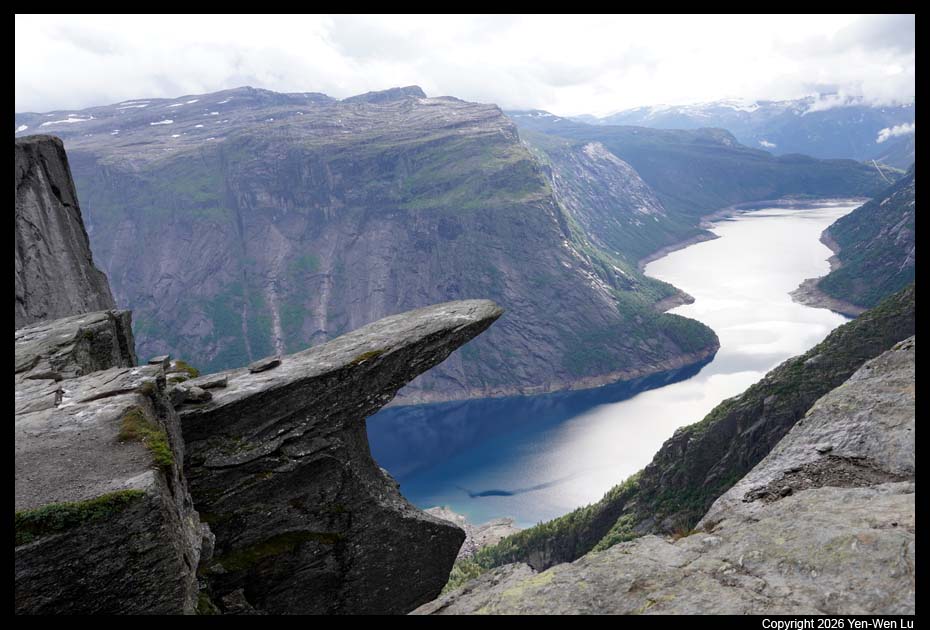
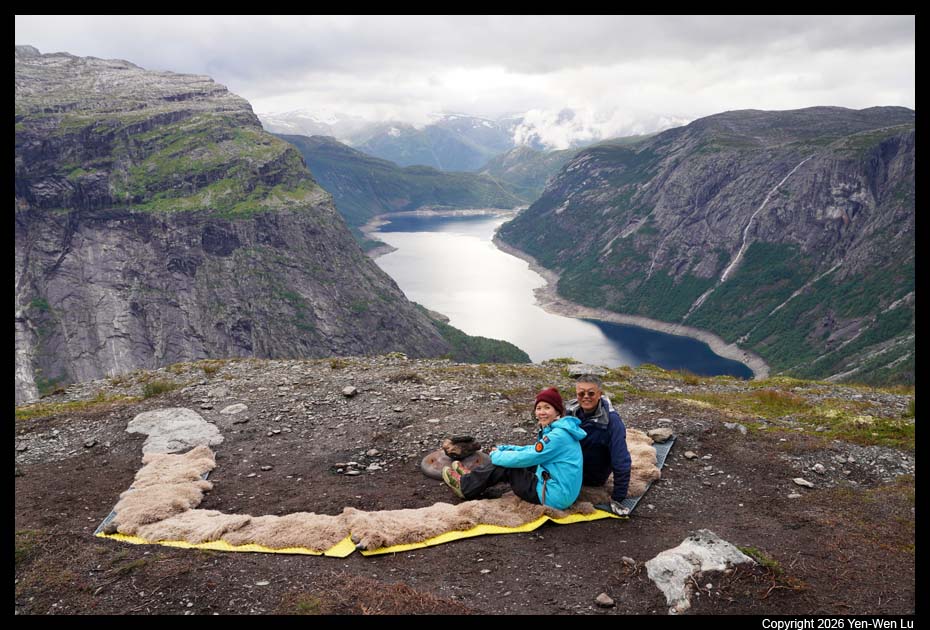
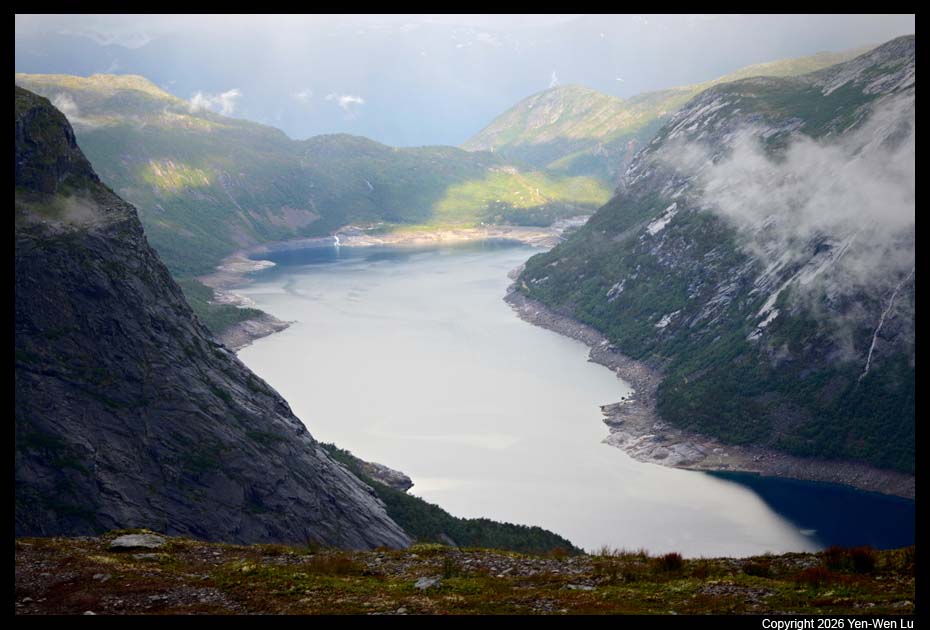
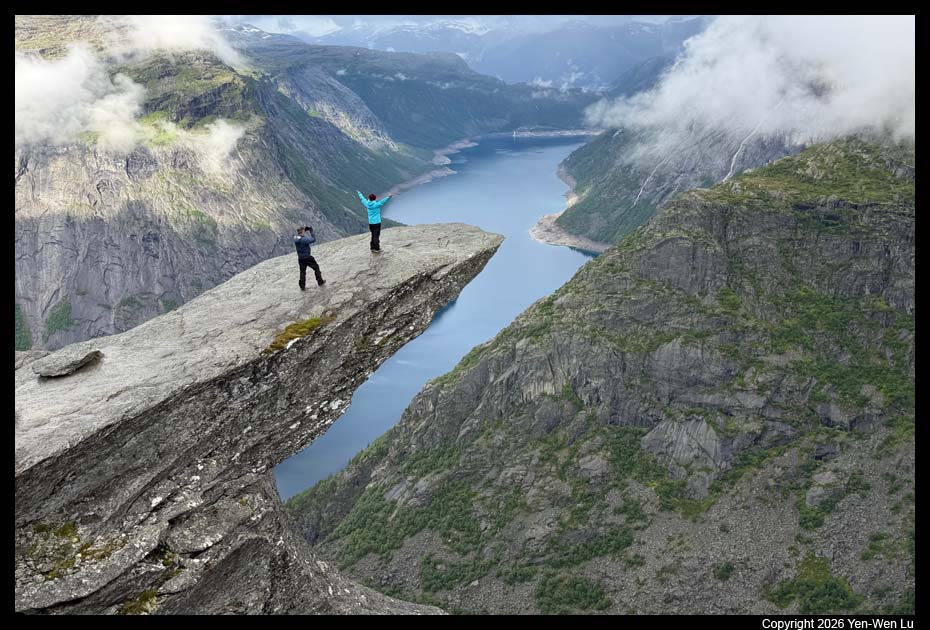
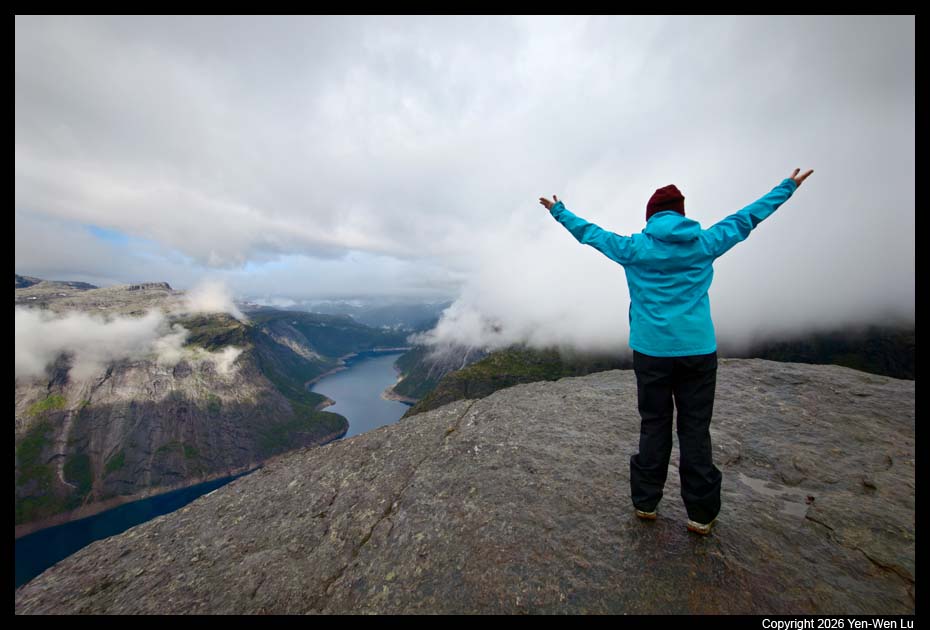
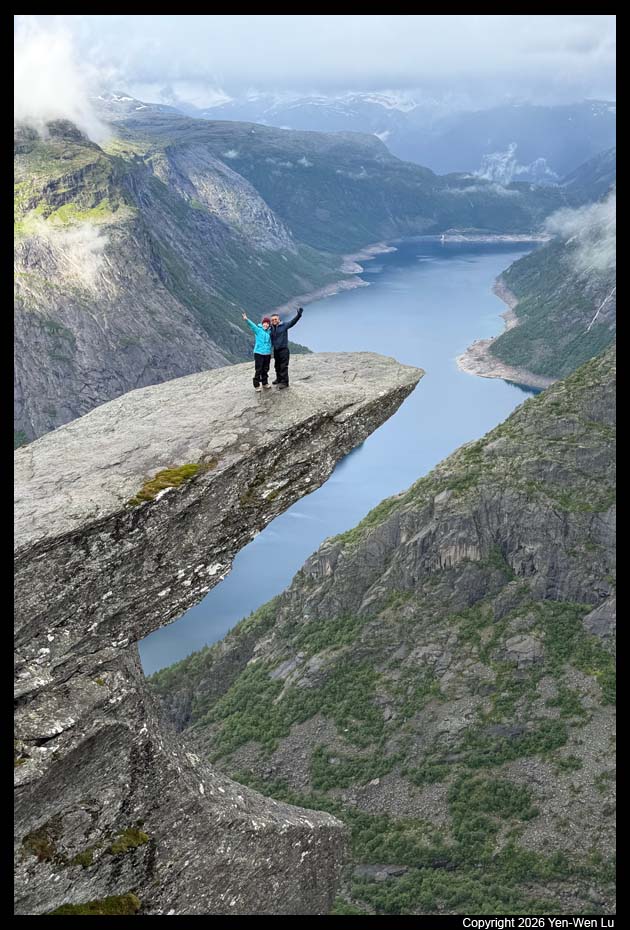
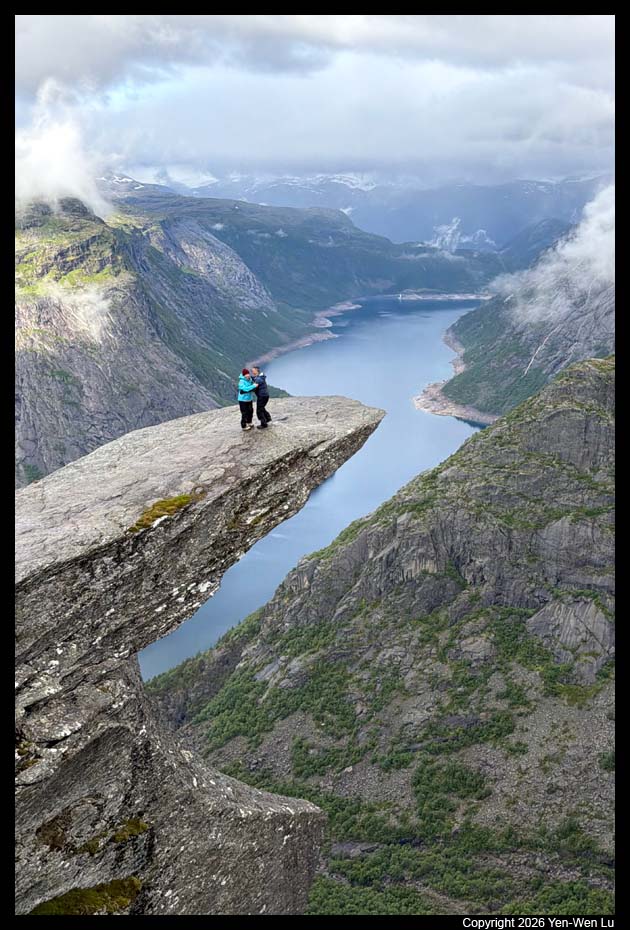
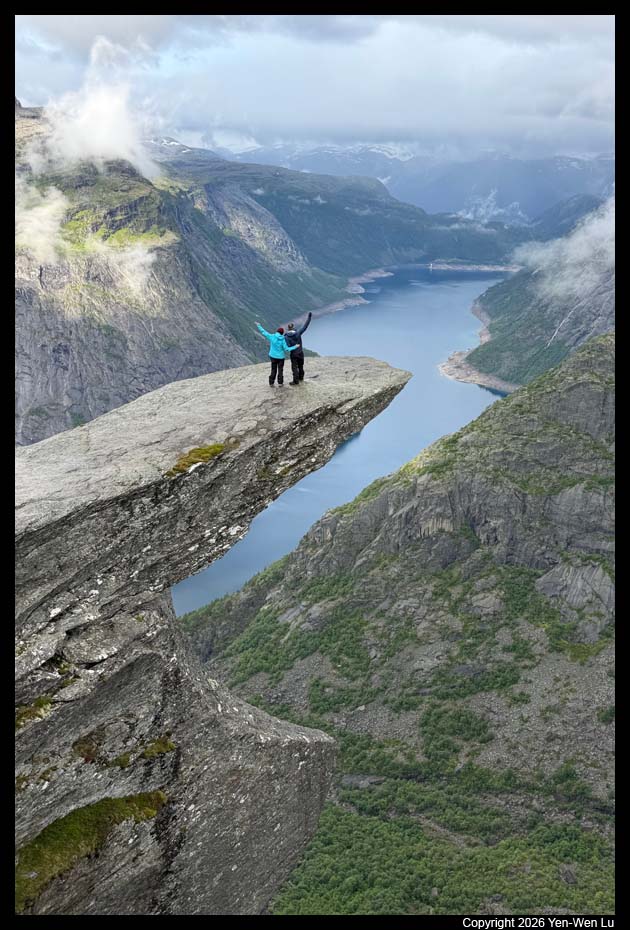
Trolltunga (Troll's Tongue) is one of the most
spectacular, world-famous rock formations in Norway. It is a thin,
horizontal slab of granite that juts straight out from a mountain cliff face
700 meters (2,300 feet) above Lake Ringedalsvatnet. Since the
Trolltunga hike (20-km round trip with 300 meters elevation gain) is
considered very strenuous and physical demanding, I was hesitated if we
should take this hike when I planned this Norwegian trip. Then I came
across this
guided
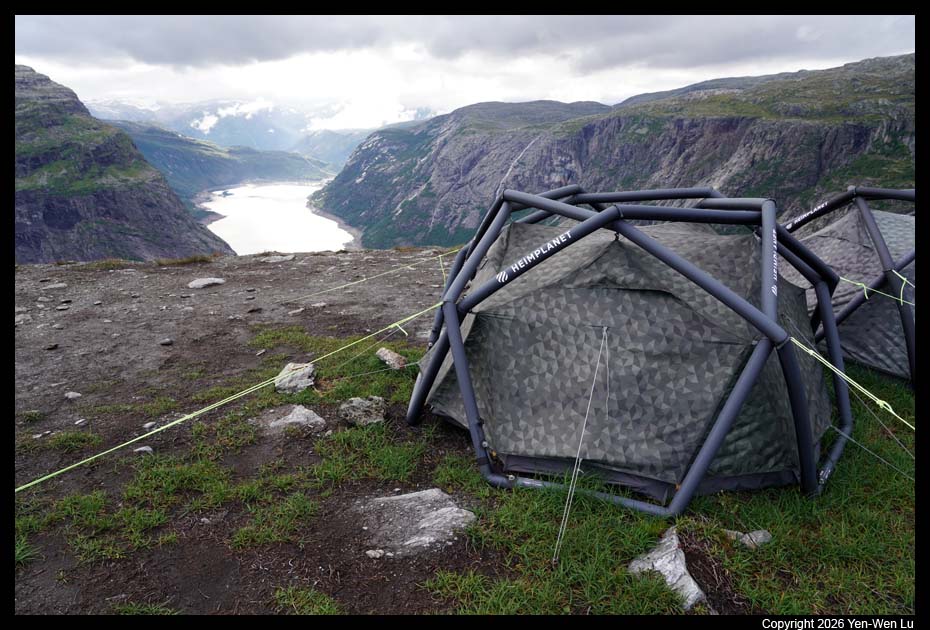
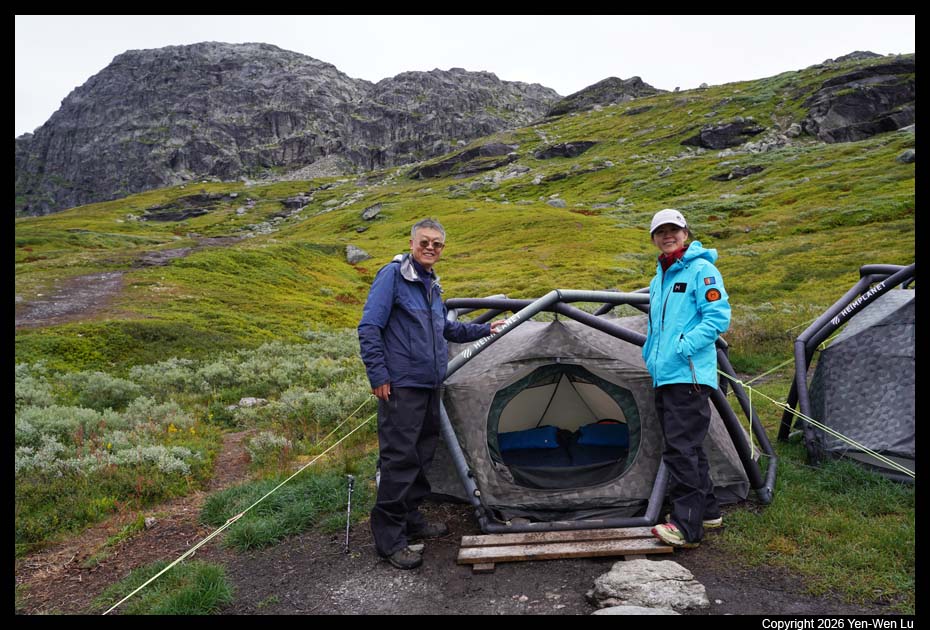
camping tour to Trolltunga when I did more research. Instead of
doing 20km in a day, we only need to do 11km (1 more km from Trolltunga to
the campsite) in a day and we could stay in private tents with hot dinner
meal, and the good thing was we did not need to carry any camping gears.
I was so excited to have this camping tour option available to make my dream
to Trolltunga come true.
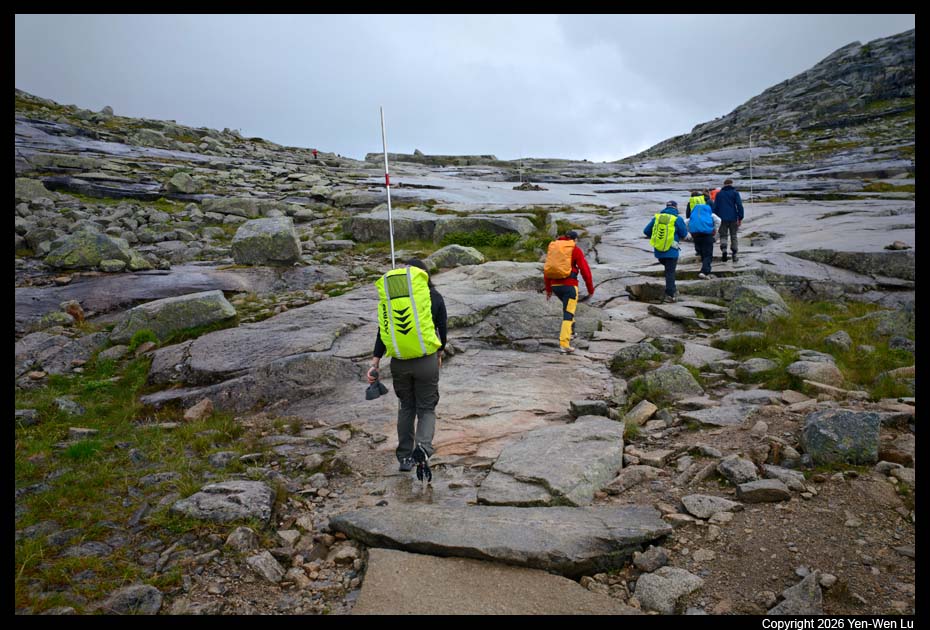
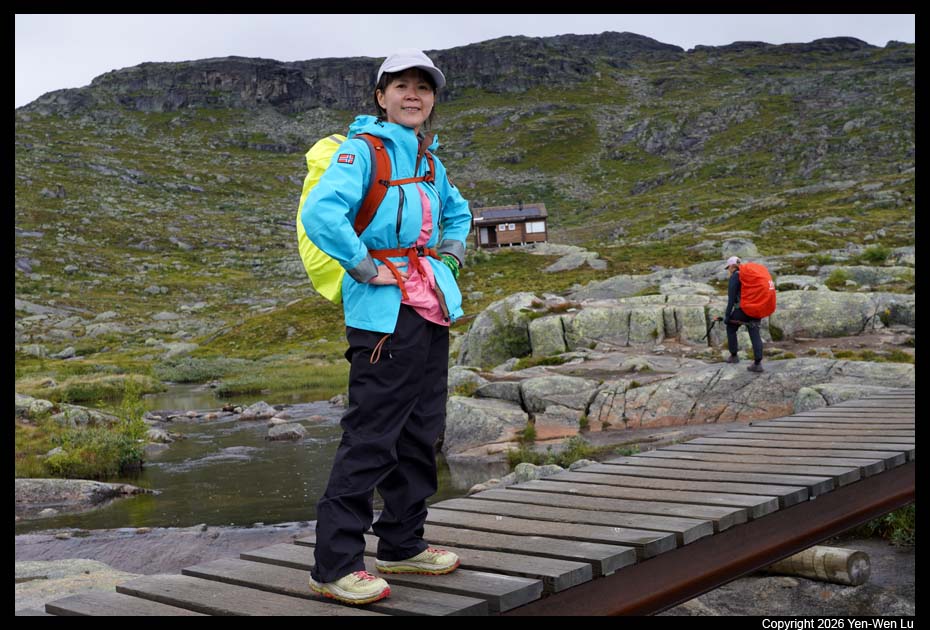
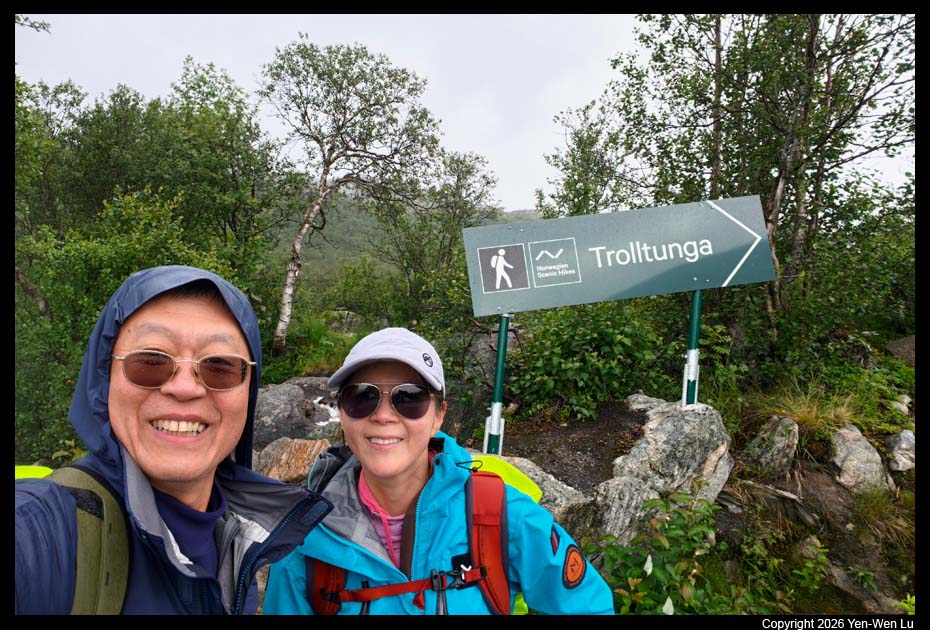
Most of day-trip hikers had to start early to be
able to do 20-km in a day. Our tour started at 11:15AM at P2 parking
because we only needed to do 1-way in a day. After some introduction
and gear check (we decided to rent rain pants, rain covers for our
backpacks, and a raincoat for Woanyu), we were driven to P3 to start our
hike at about noon. Our hiking/camping group had total 9 guests (from
all over the world) and 3 guides. The lead guide set up the pace to
hike in a very comfortable speed, and 2 other guides remained at the rear of
the hiking group to make sure everyone was with the group.
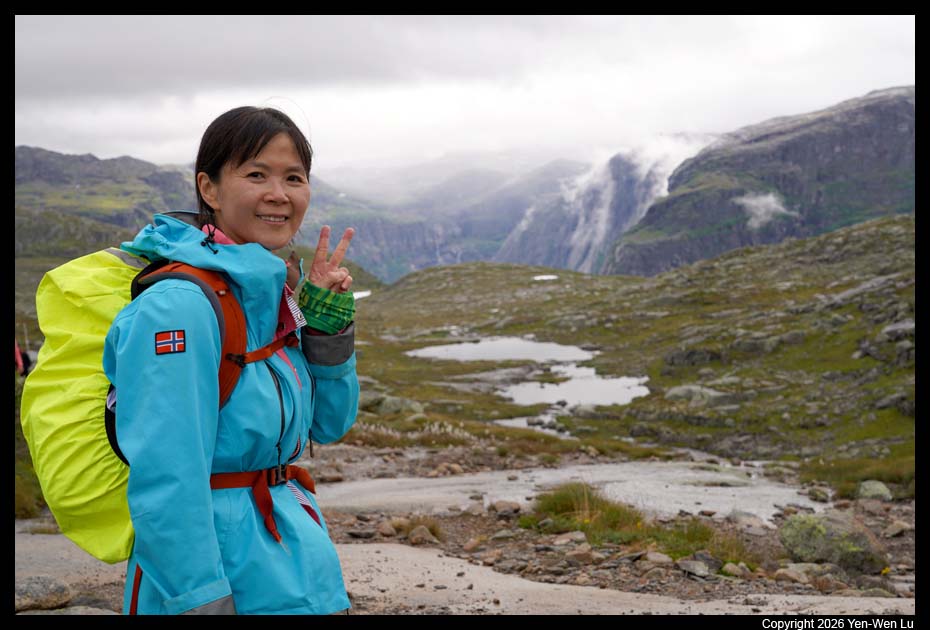
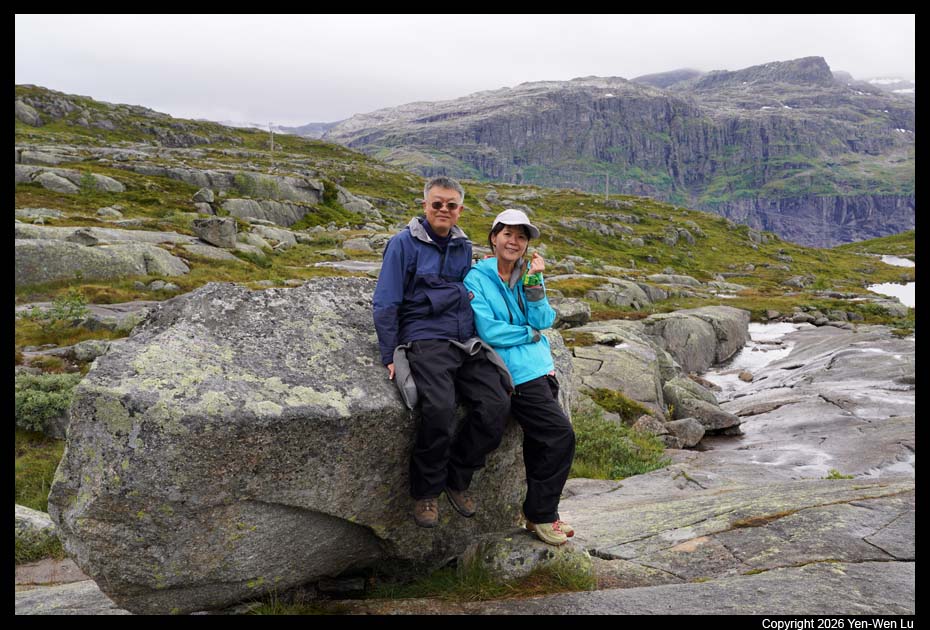
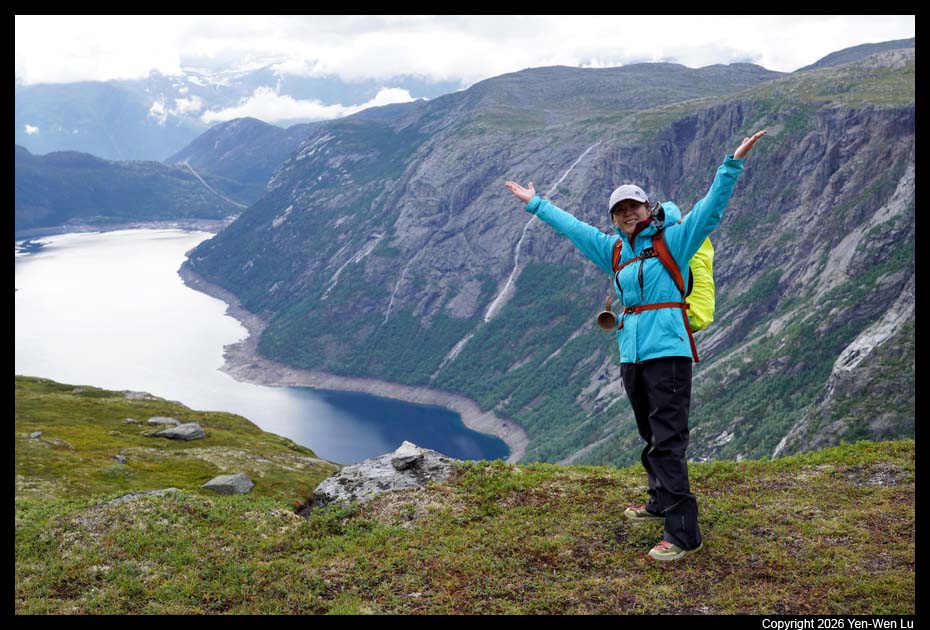
We had a late lunch at about 3:30PM. We
hiked down a side trail to a flat region with incredible panoramic
views of the lake and mountains to have home-made delicious chicken
sandwiches (also carried by our guides).
We finally arrived at Trolltunga at about
5:30PM. At this time of the day, all day-hikers were gone, and
we had the Trolltunga to ourselves and we could take photos as long as
we wanted. We had to climb down a steep wall (with a few
iron rung steps) and the path leads to Trolltunga is wide enough
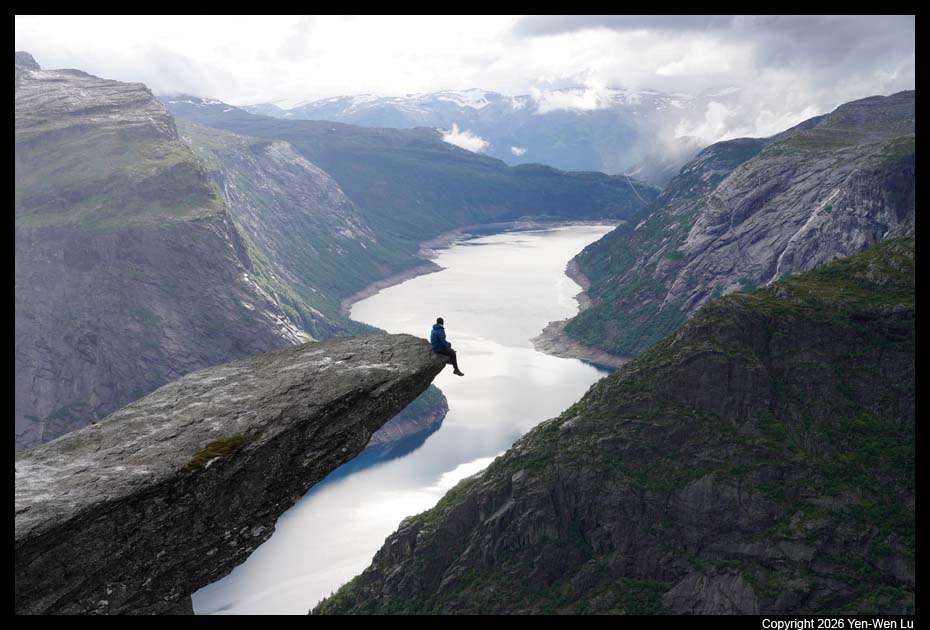
without any worry about the high cliff. One of our hiking
group members was not afraid of height and he even
sit at the edge of the
Trolltunga for pictures (we could not even look!).
- Trolltunga Camp
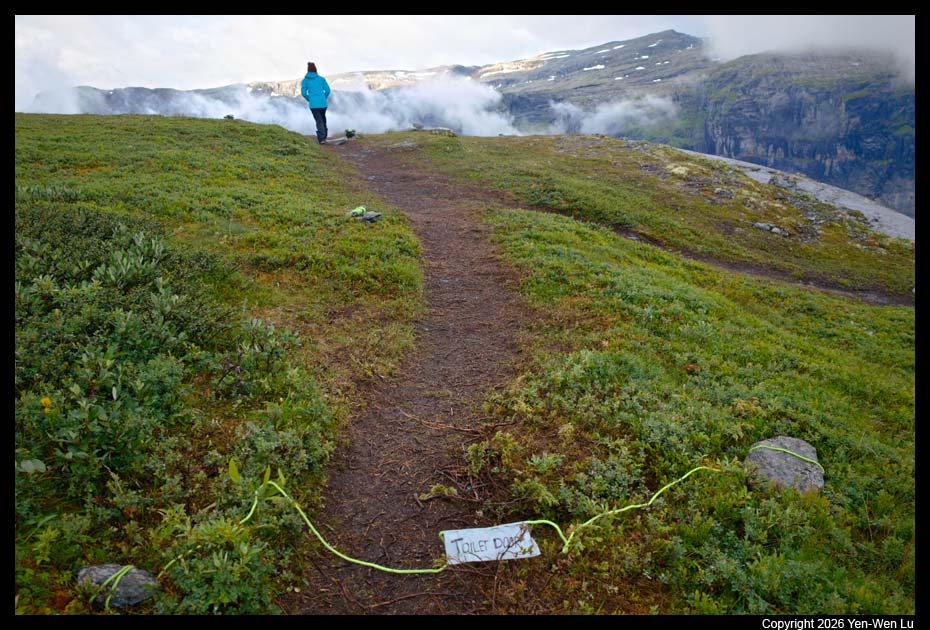
After about another one kilometer from the
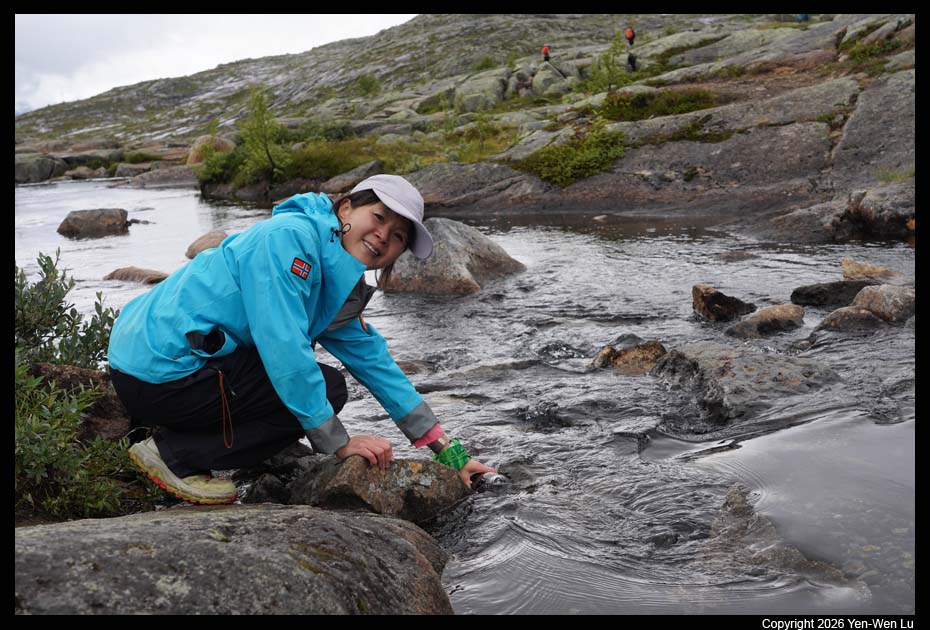
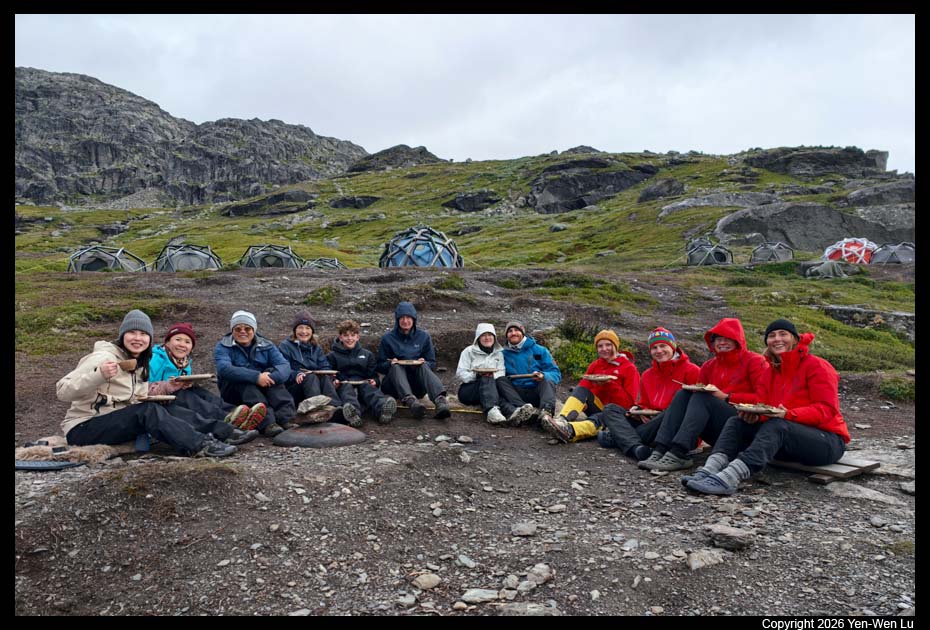
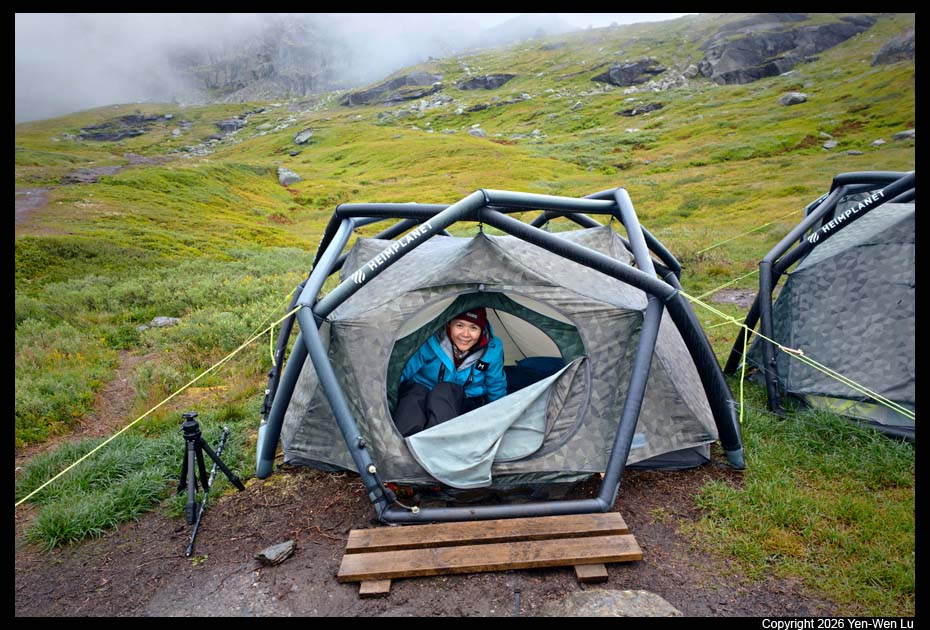
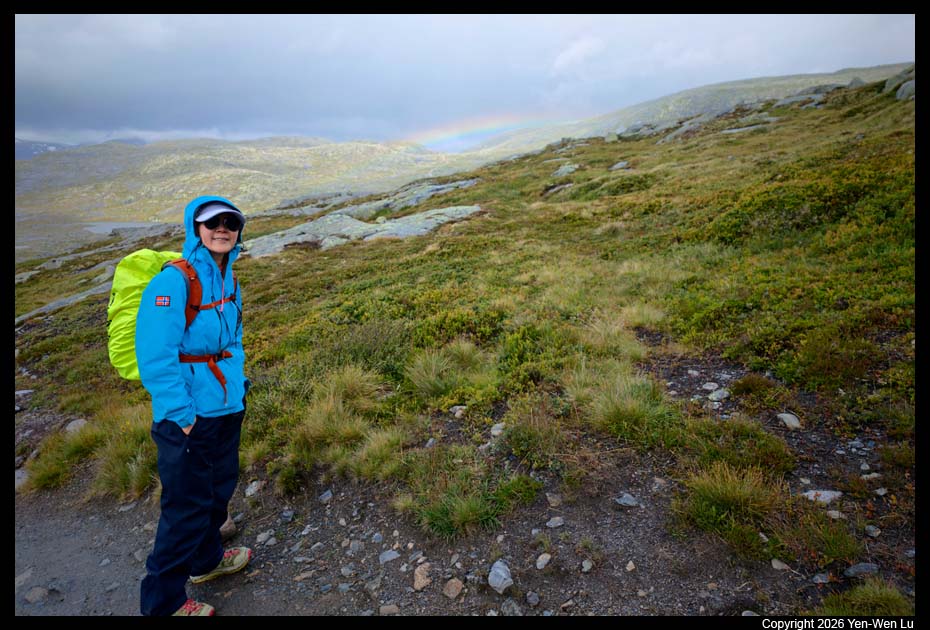
Trolltunga, we reached our beautiful campsite. Since the weather
was not bad (it had been raining on and off during our hiking in the last 6
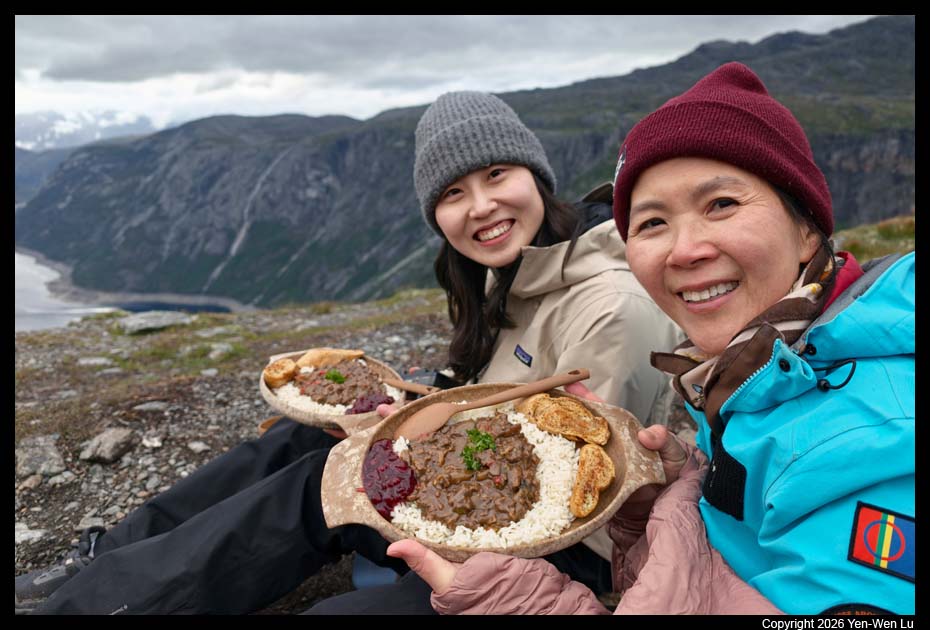
hours...), we all sit together on the ground for the
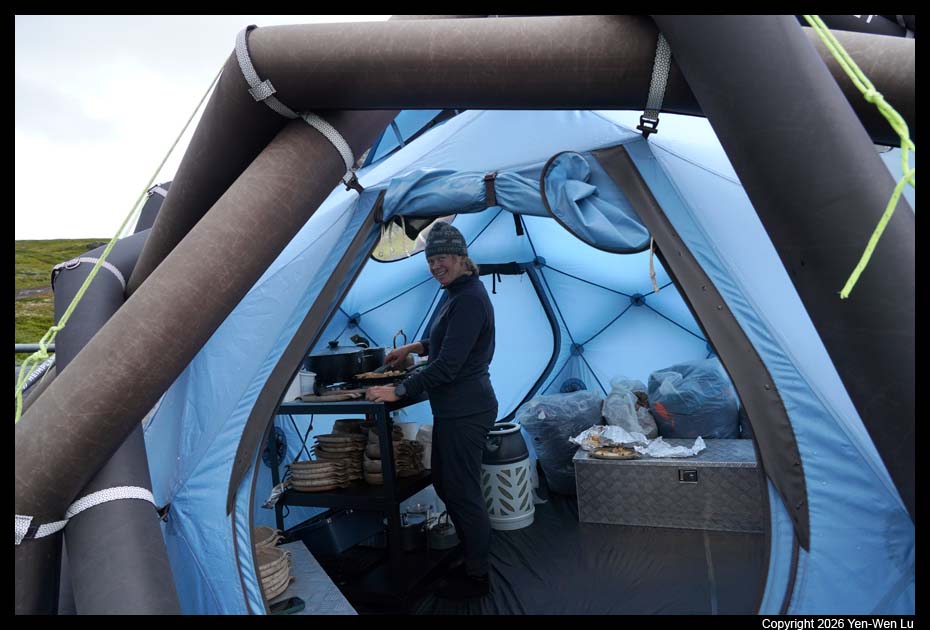
delicious hot dinner
(reindeer meat with lingonberry jam and rice) cooked by one of the guides.
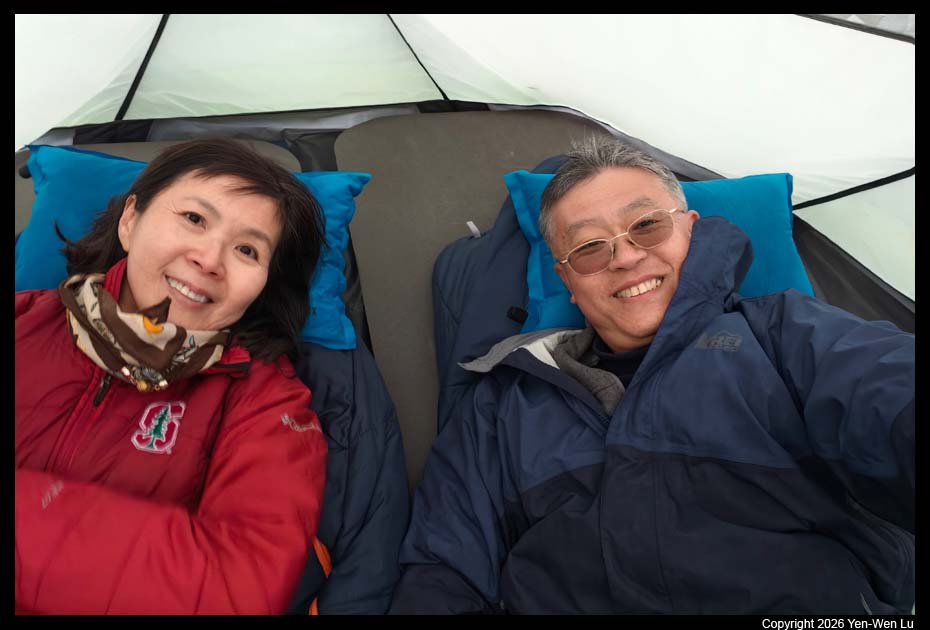
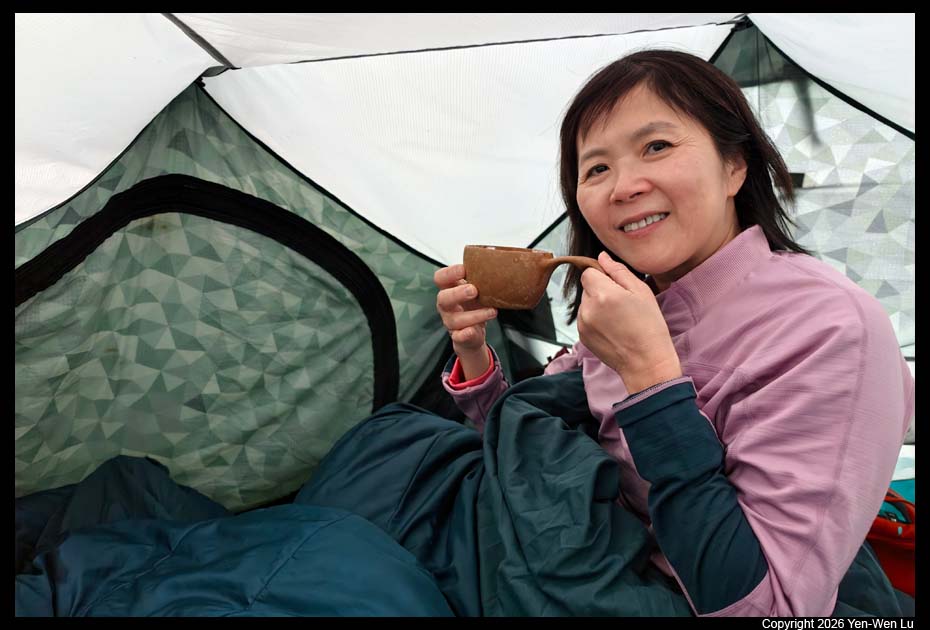
After dinner, we retreated to our tent to take a break and we felt so
comfortable in our sleeping bag that we decided not to get up to join the
group when the guides called us for camp fire for s'more and hot chocolate
(the guide actually delivered the hot chocolate to our tent later).
Day 9 (8/2) ...
- Trolltunga Camp
We had a reasonably good night sleep even though it
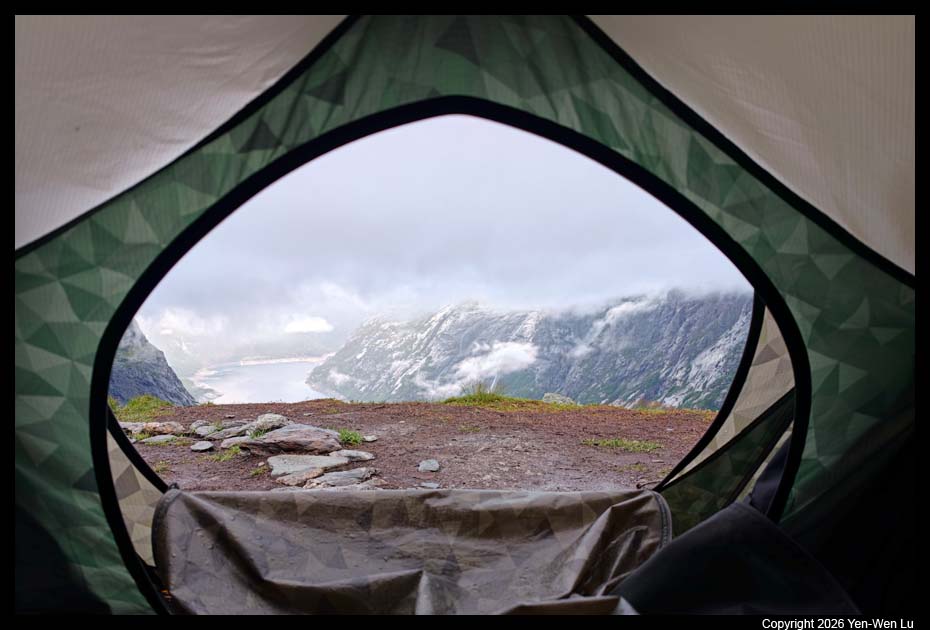
was raining hard from time to time at night. The view when we first
opened our tent was gorgeous and let you feel all efforts have been
rewarded.
- Trolltunga
After a simple breakfast (hot porridge) in the
tent, we started to prepare our hike. We did not need to do any
cleanup work for the tents. Two of the guides remained behind in the
camp to do whatever house keeping work when we started to hike down at about
8:15AM, and we got to Trolltunga again at about 8:45AM to have another
chance to take more pictures at the Trolltunga.
With a few rest stops, we were back to P3
trailhead at about 1PM (less than 5 hours!) and completed our mission
for Trolltunga adventure.
After the hike, we drove back to Odda to have a
nice lunch (with a young girl from China/Sweden in our hiking/camping
group) and then drove together to our next destination: Bergen.
Day 10 (8/3) ...
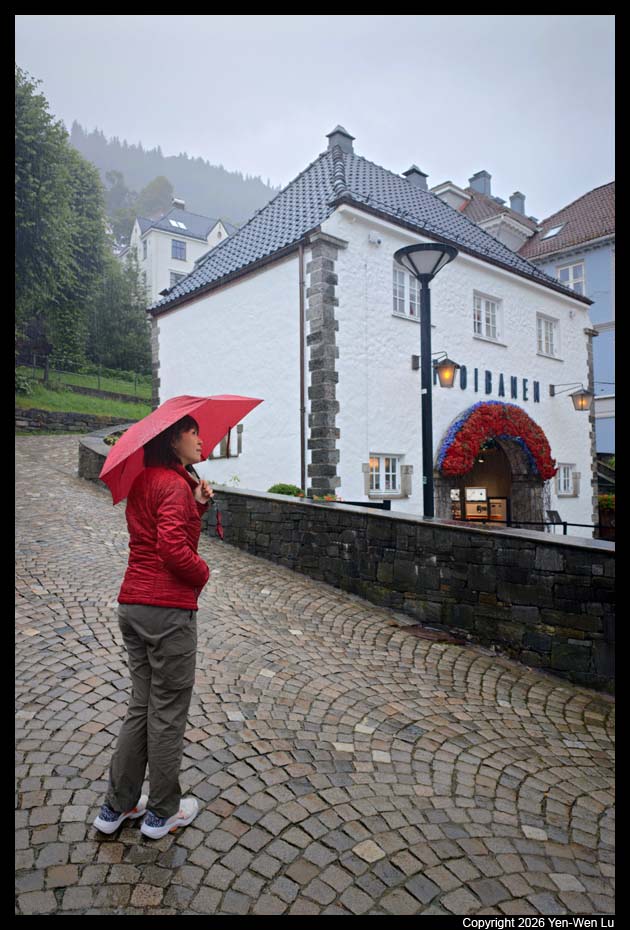
Bergen, historically the capital of Norway, is the country’s second-largest
city and the ultimate gateway to the western fjords. Tucked between steep
mountains and the North Sea, it is famous for its rich maritime history,
colorful wooden wharf, and lively cultural scene. Because of its position
against the coastal mountains, Bergen is one of Europe's wettest cities,
averaging over 200 rainy days a year. We got up early and went down
from our apartment to a cafe next door for breakfast, and no surprise, it was
raining as usual...
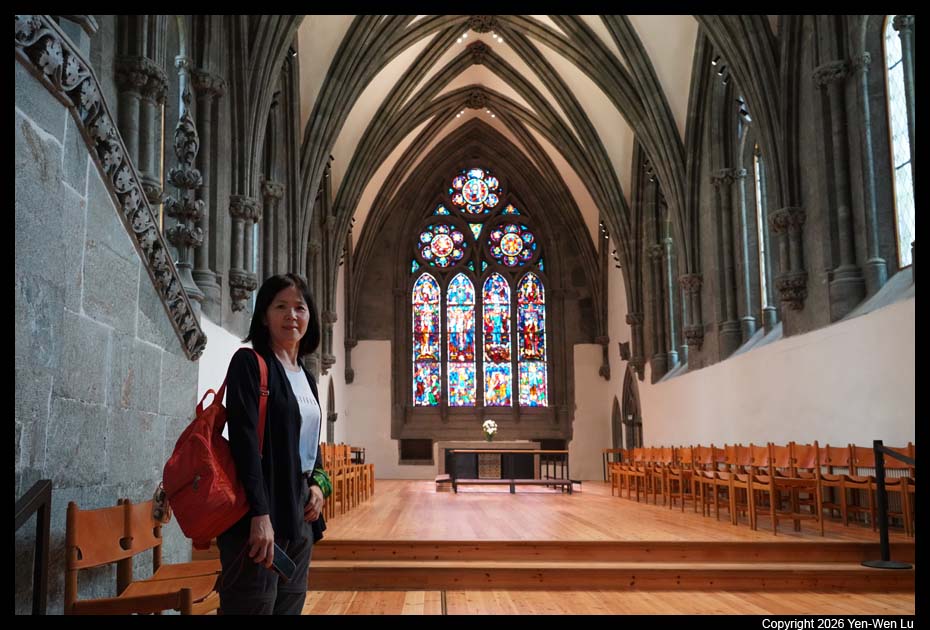
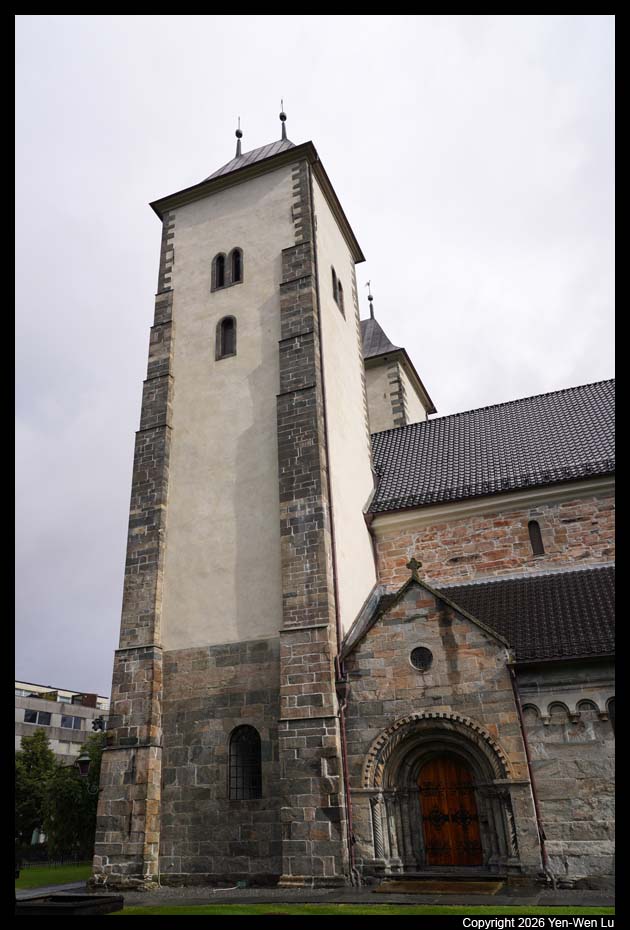
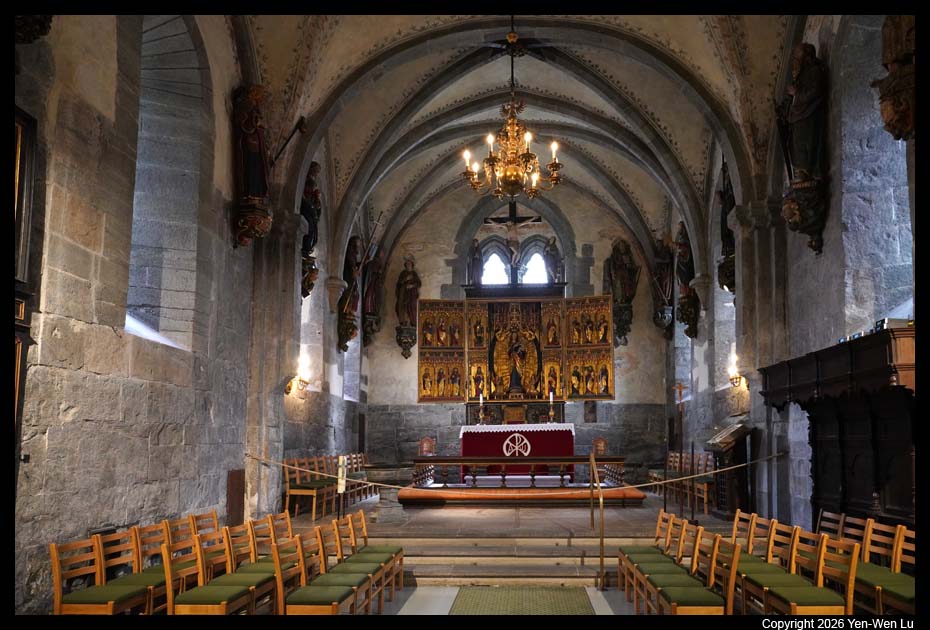
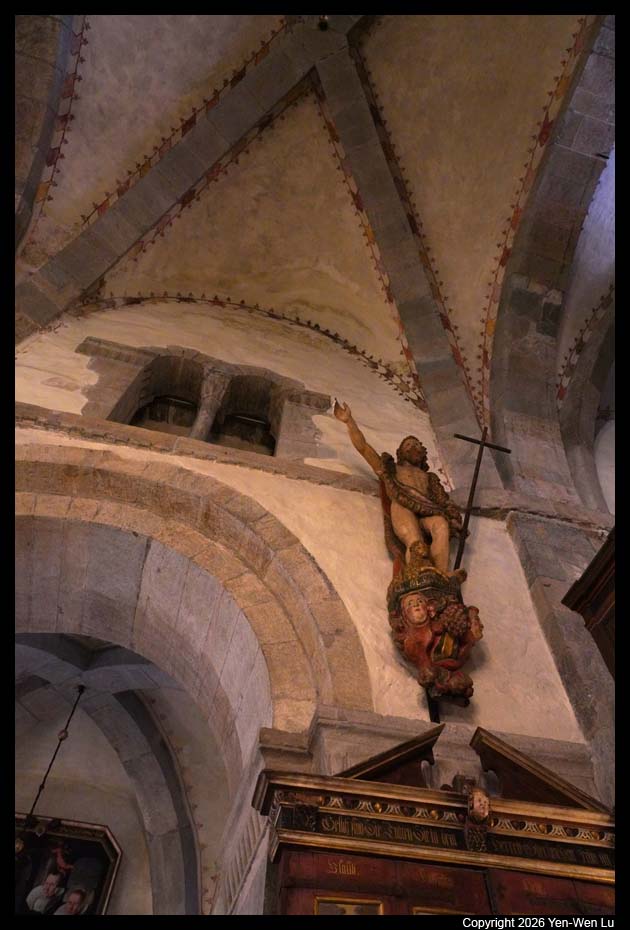
- St Mary's Church (Mariakirken)
After the rain stopped, we were out to
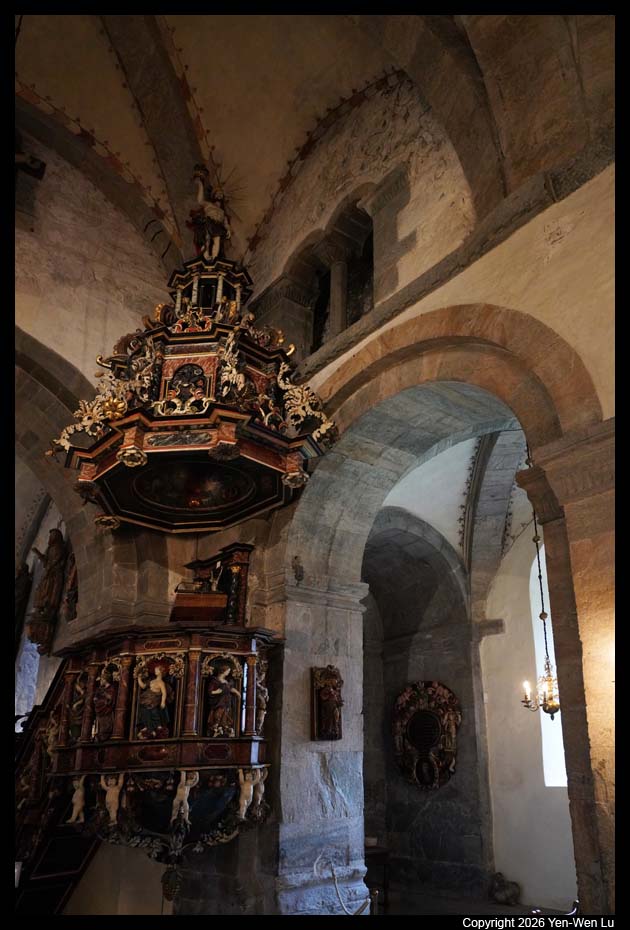
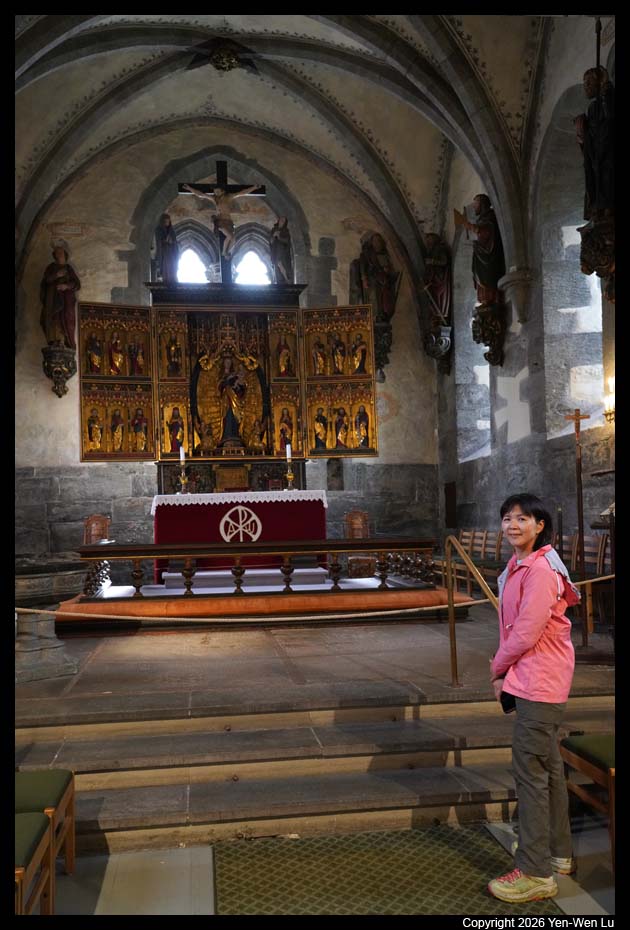
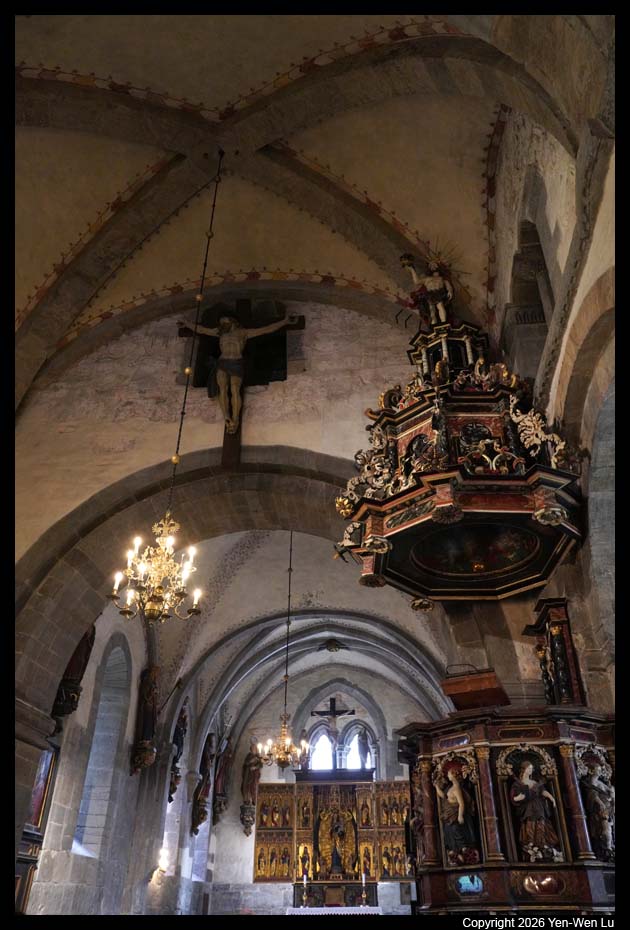
explore the Bergen old town. St Mary`s church is the oldest existing
building in Bergen. The construction of the church is believed to have
started in the 1130s or 1140s and completed around 1180. The church
has been in continuous use since early medieval period.
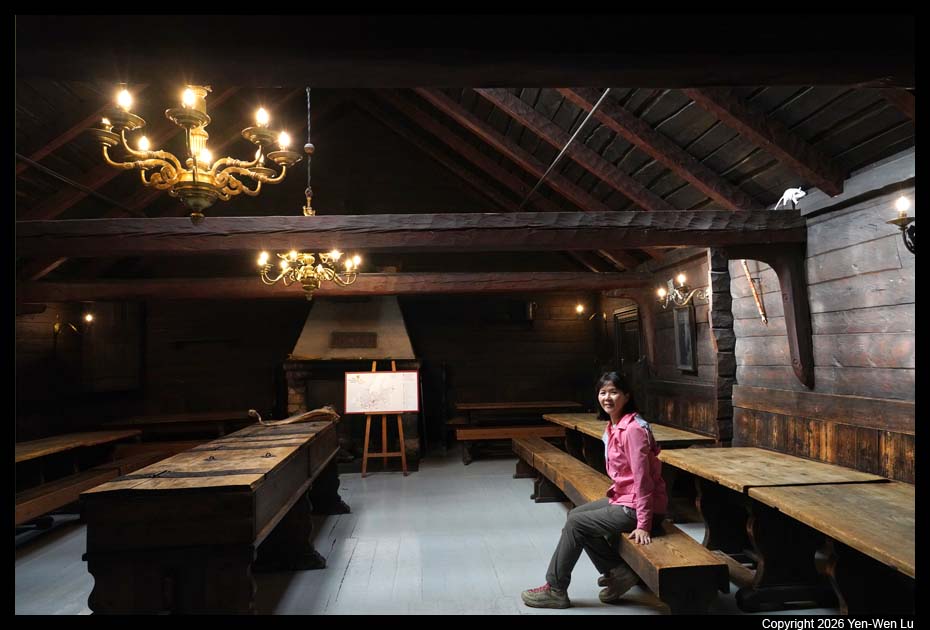
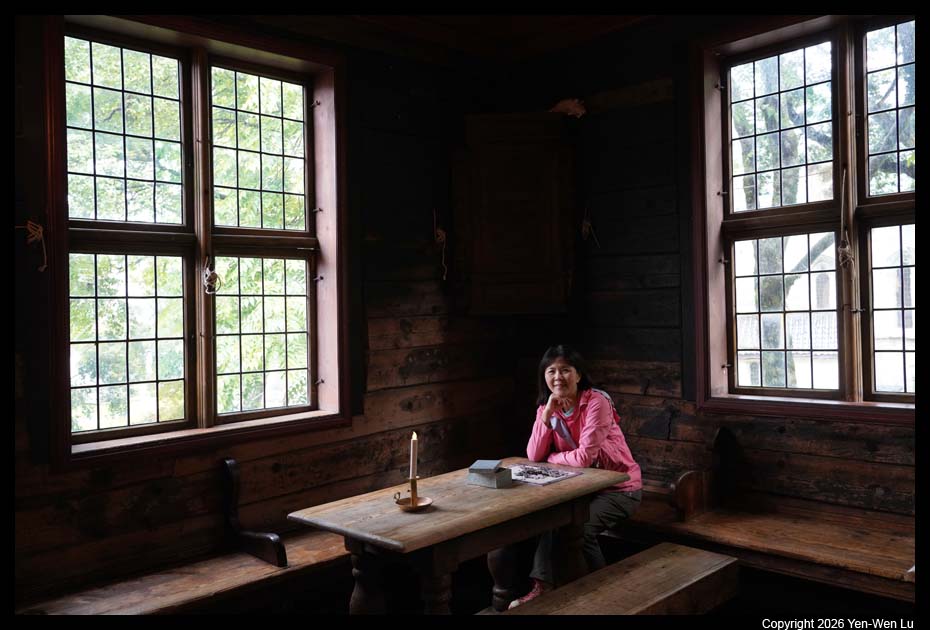
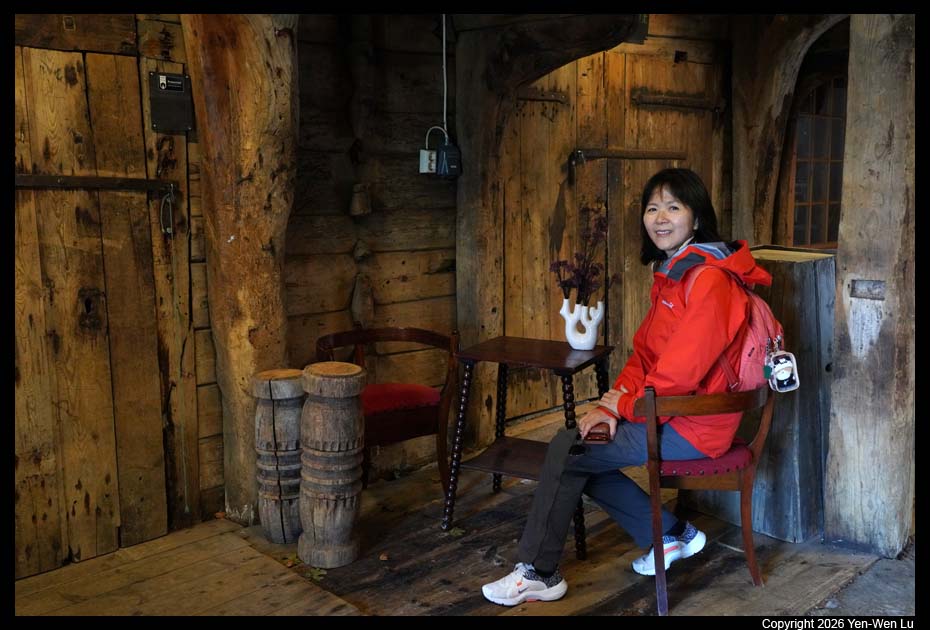
- Schotstuene, a part
of the Hanseatic Museum
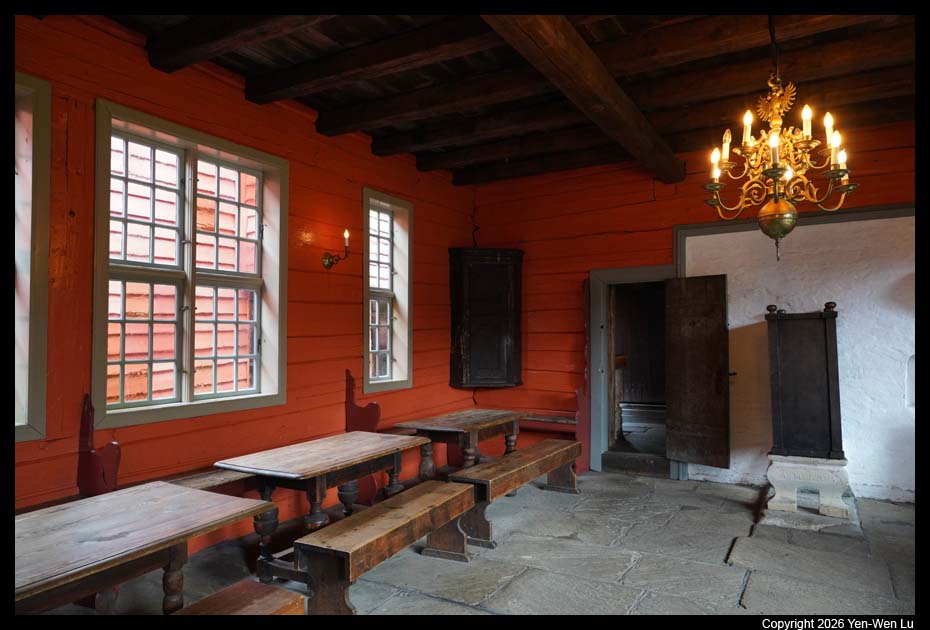
Schøtstuene, the beautiful assembly rooms of
the Hanseatic merchants and a part of the Hanseatic Museum (the main
building of the Hanseatic Museum was currently closed due to a massive
foundation restoration project), are located at the World Heritage Site
Bryggen. Schøtstuene, with its typical and colorful wooden buildings,
has four assembly rooms; two cook houses and a nice garden with seating.
The Hanseatic League is a powerful commercial and defensive network of
merchant guilds and market towns in Central and Northern Europe that
dominated maritime trade in the North and Baltic Seas from the 14th to the
18th centuries. Bergen was one of the league's primary trading hubs
(called a Kontor), where German merchants traded grain for high-value
Norwegian stockfish (dried cod).
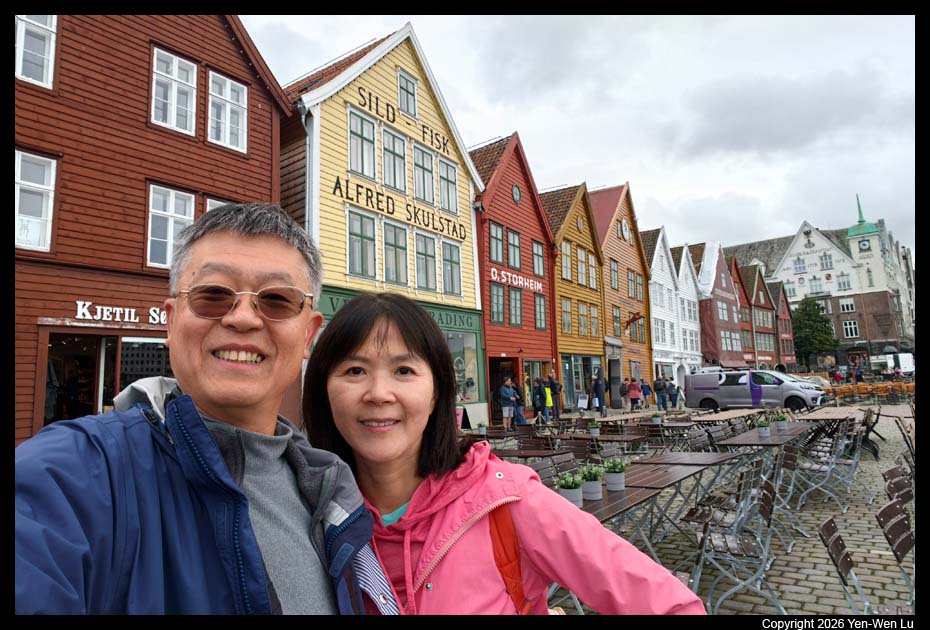
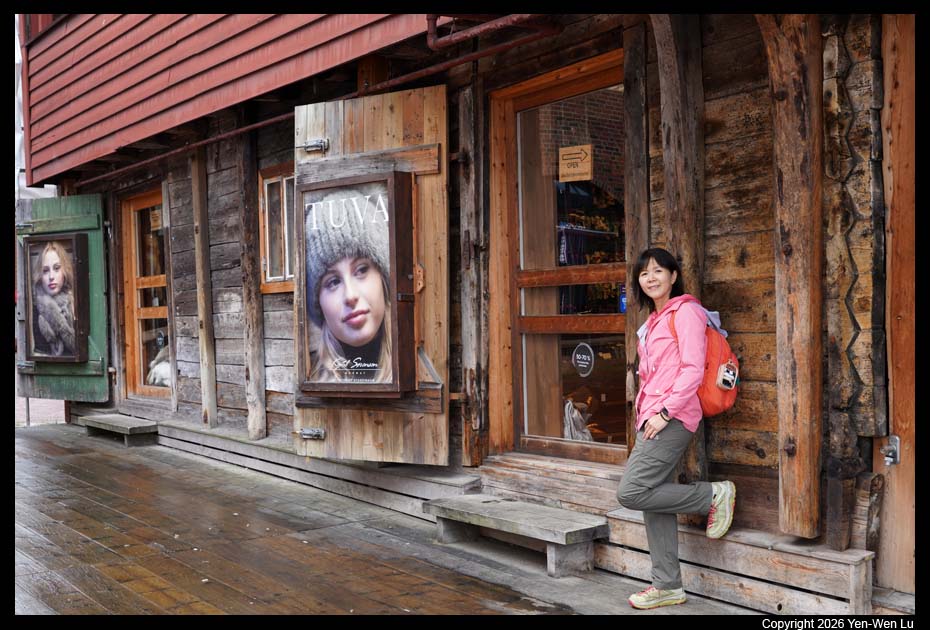
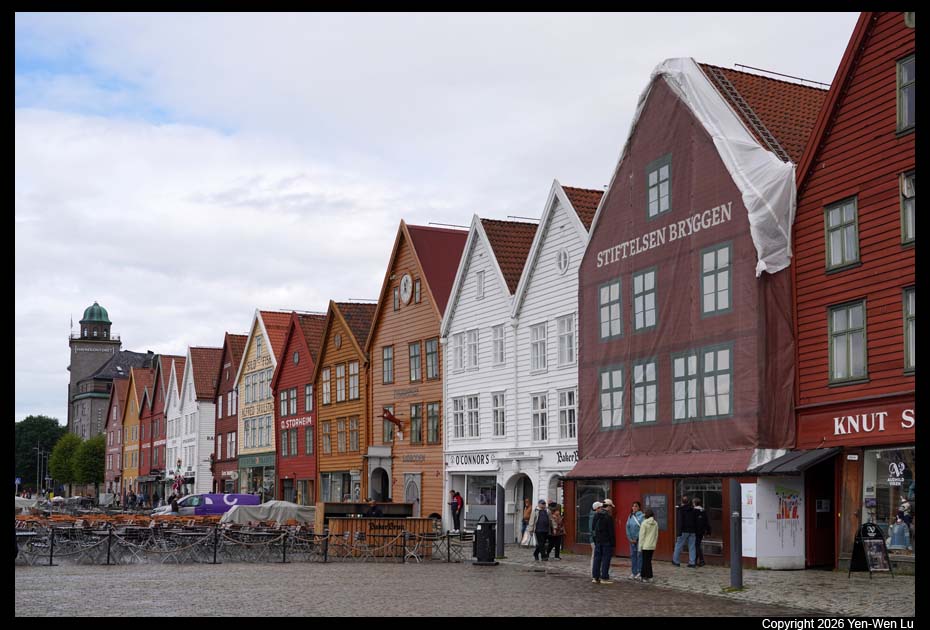
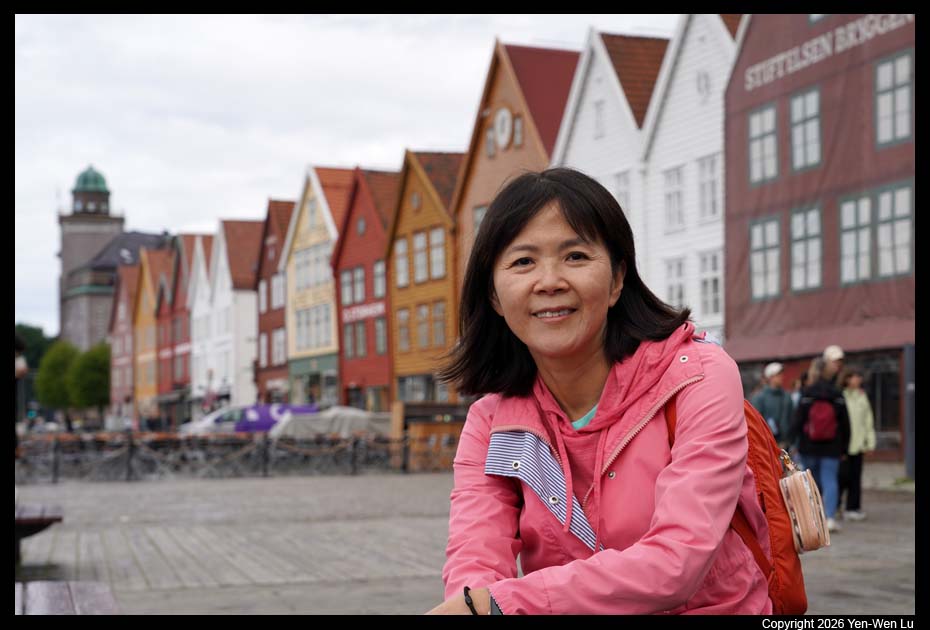
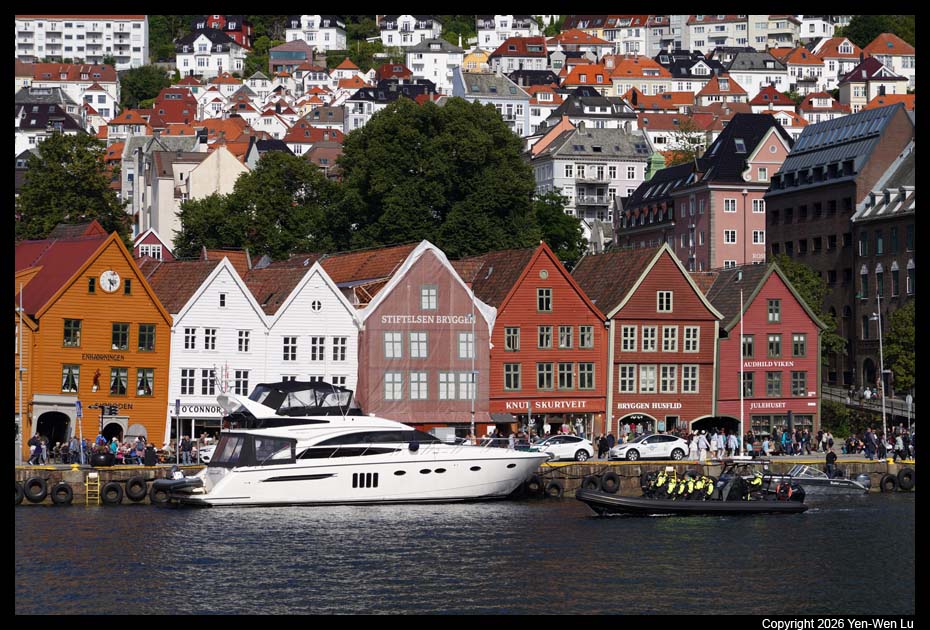
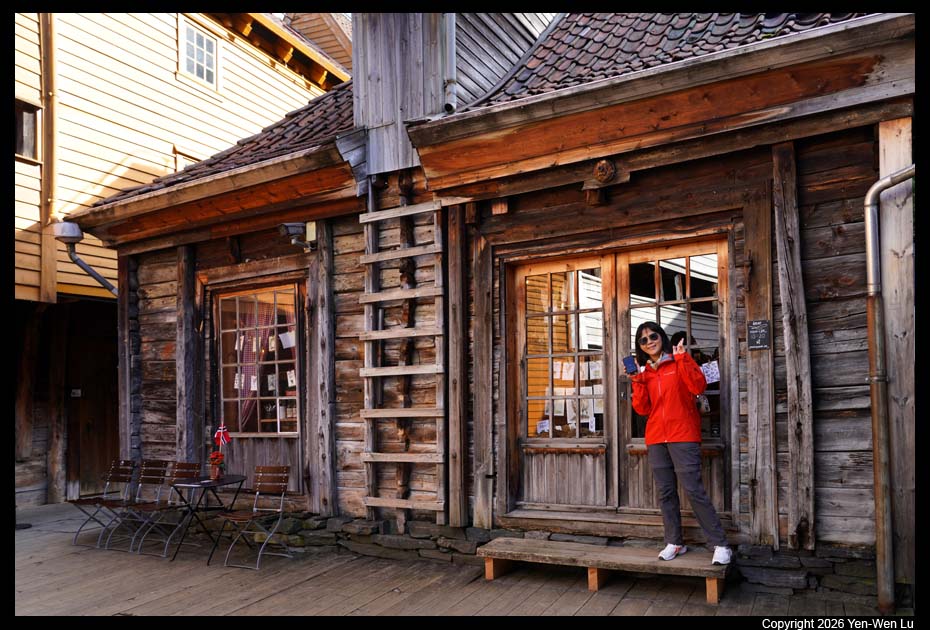
- Bryggen
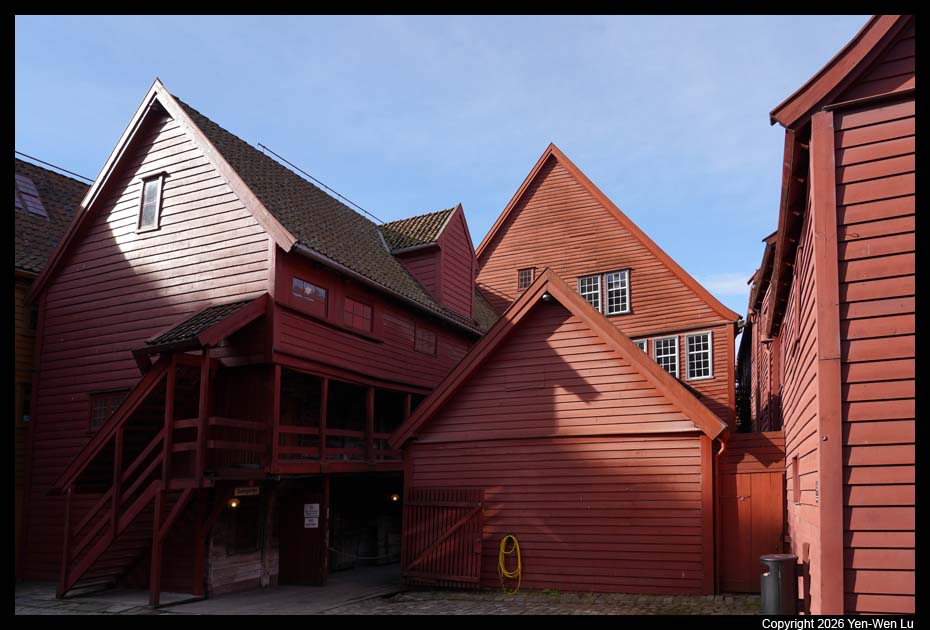
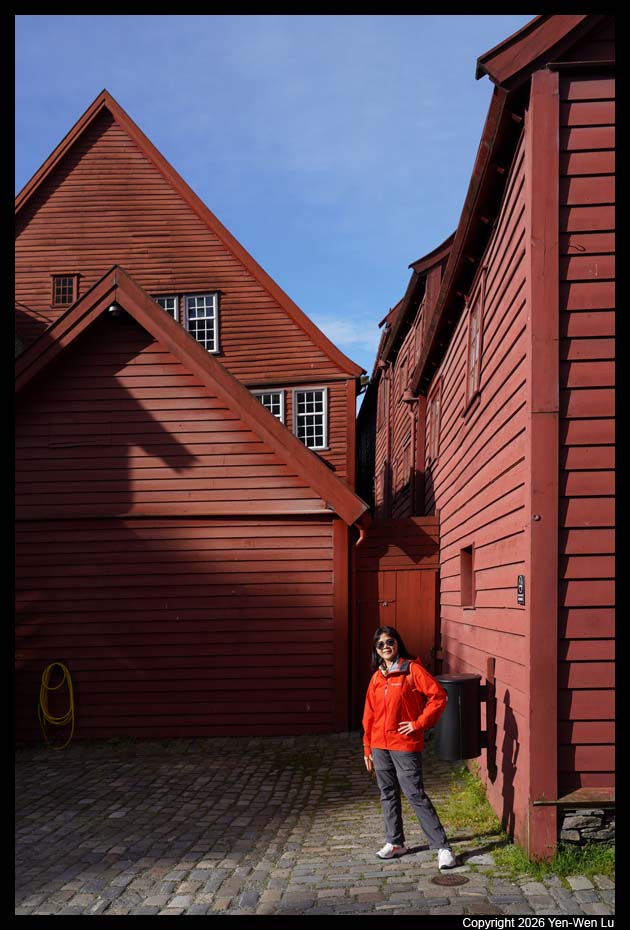
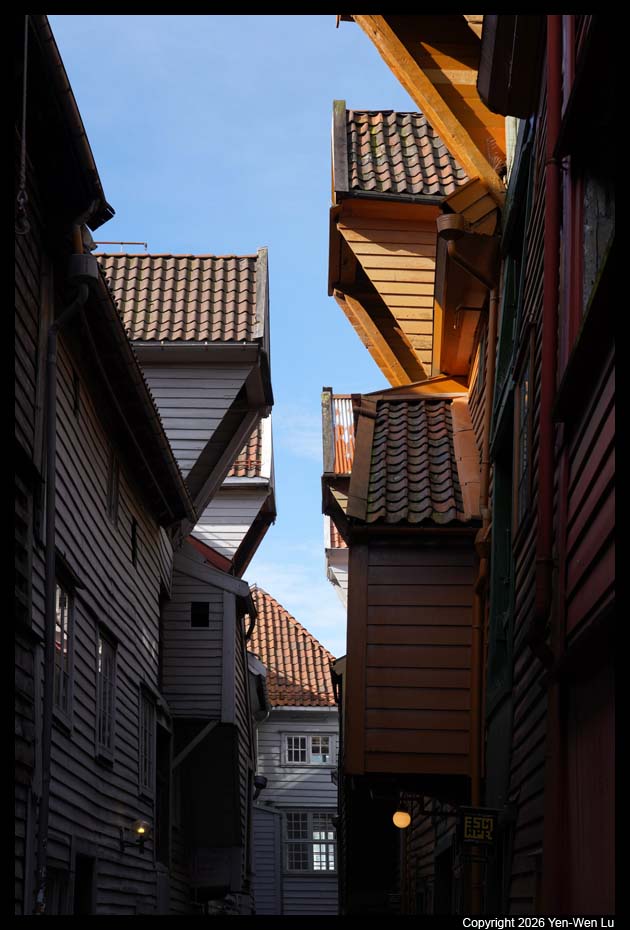
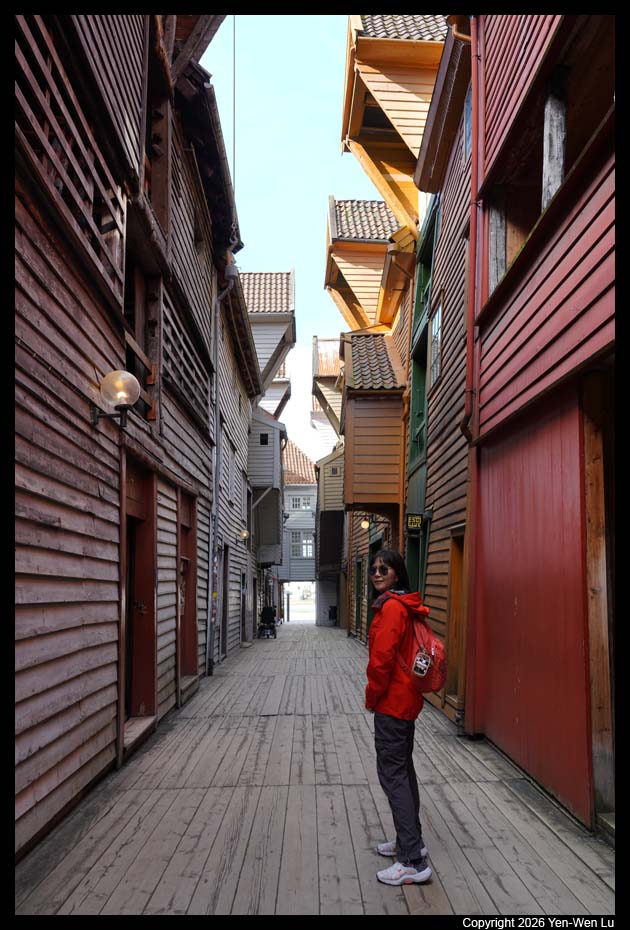
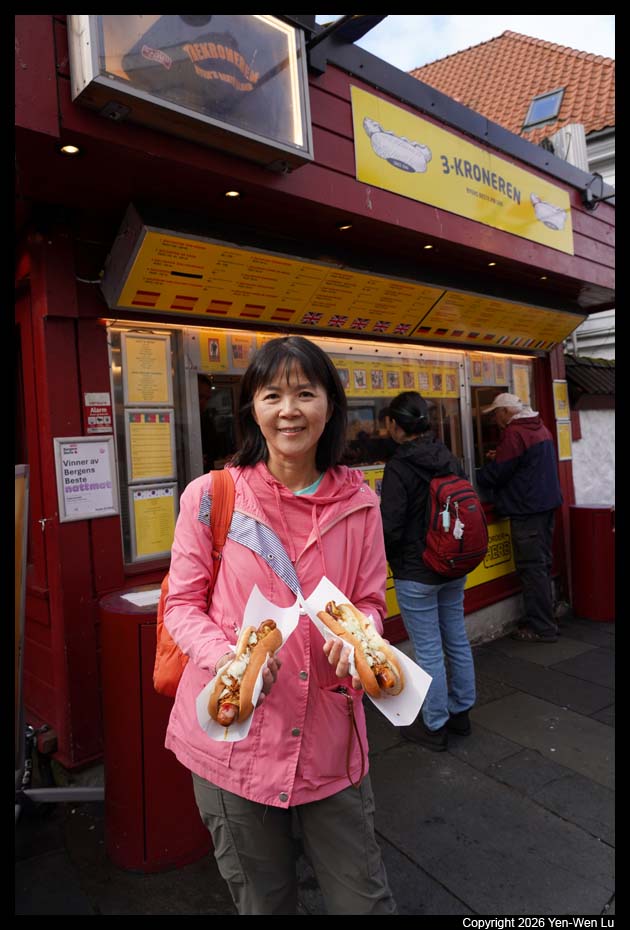
We walked through Bryggen, a historic harbor district in
Bergen, and went back to our apartment to buy the popular
Trekroneren hot dogs
for our lunch.
-
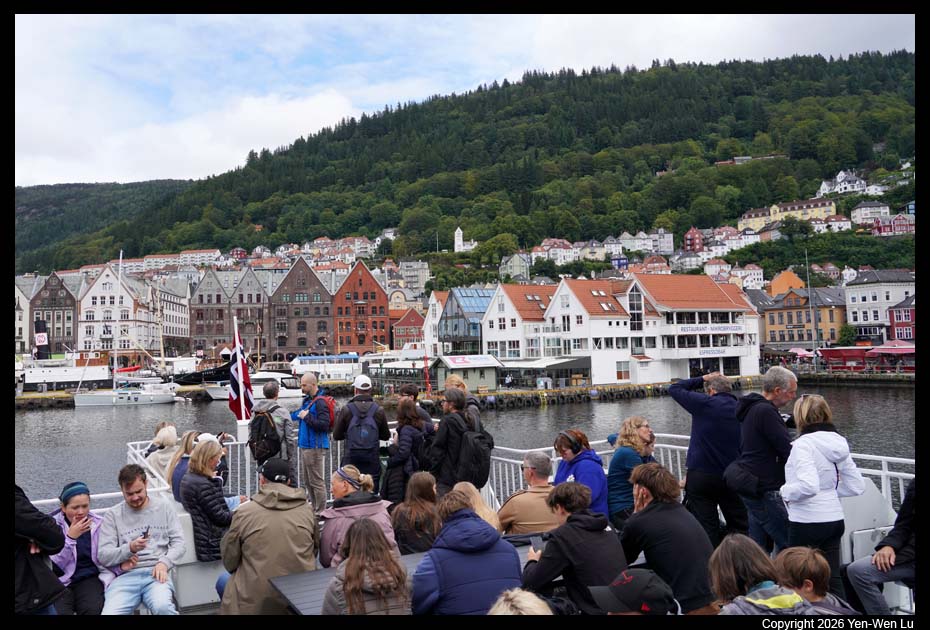
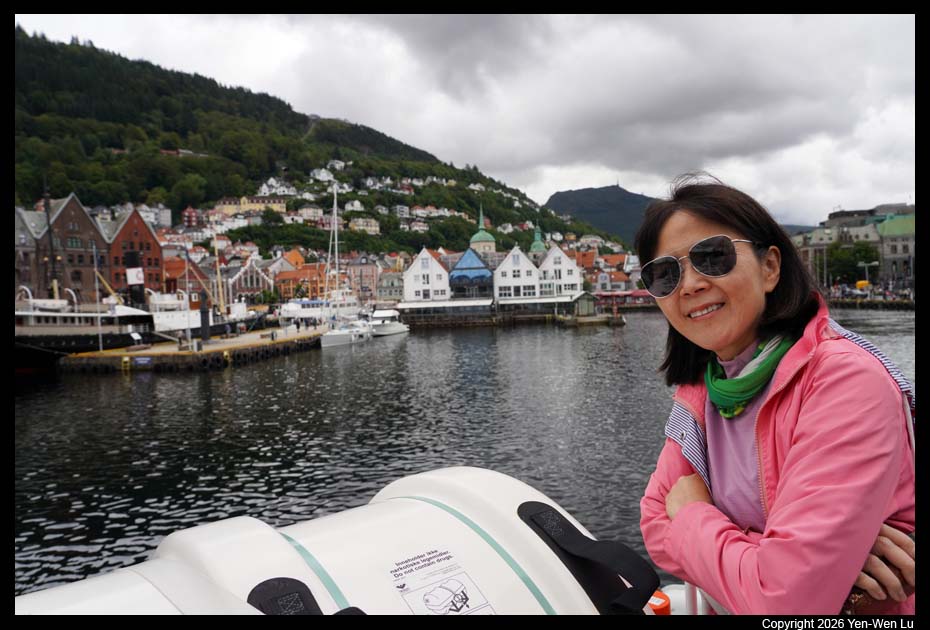
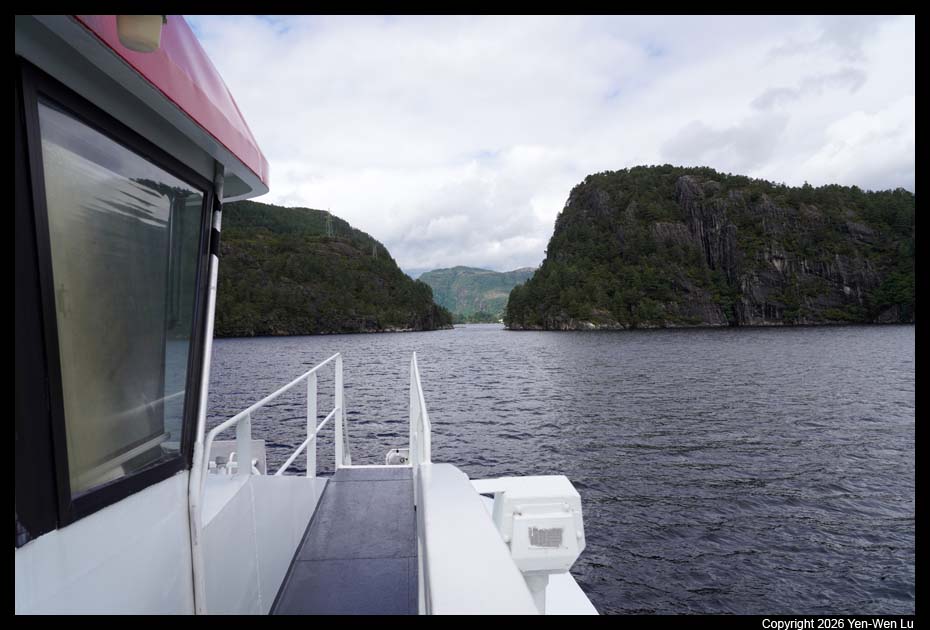
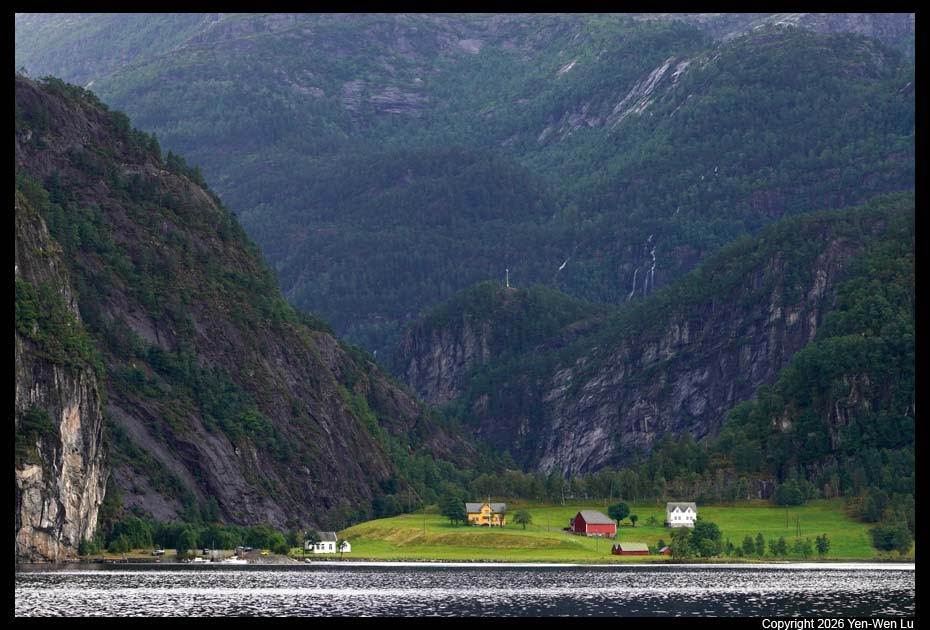
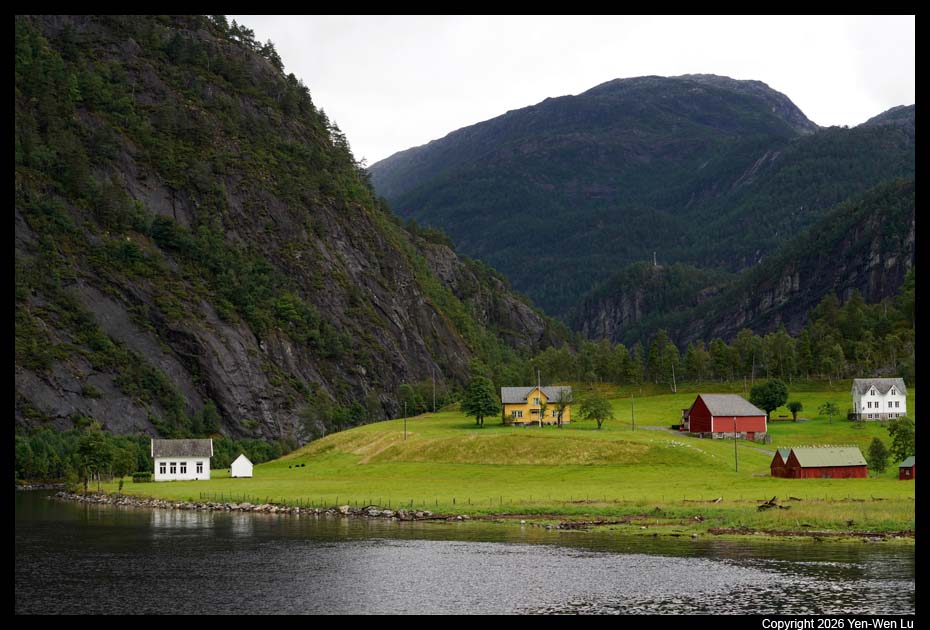
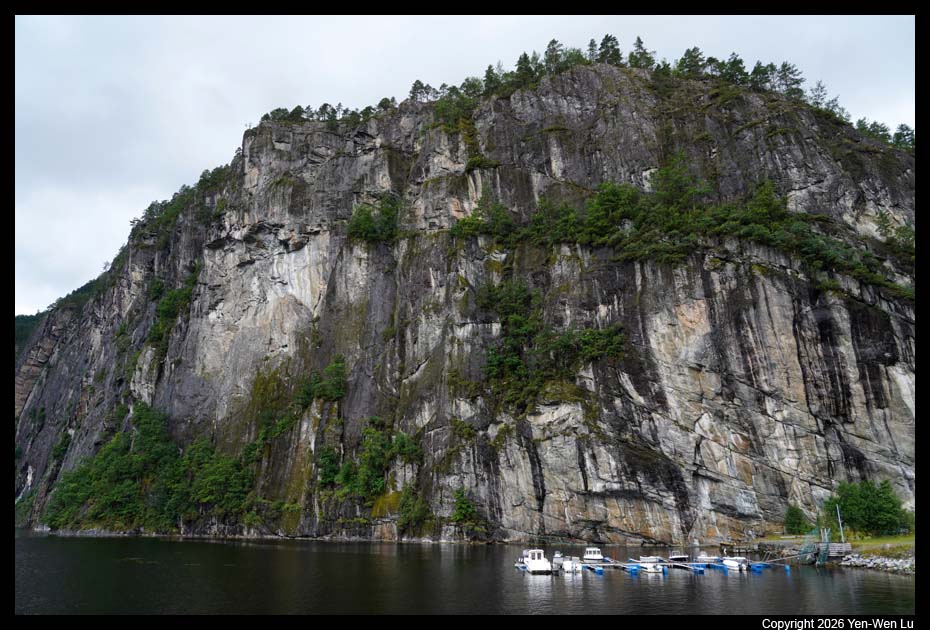
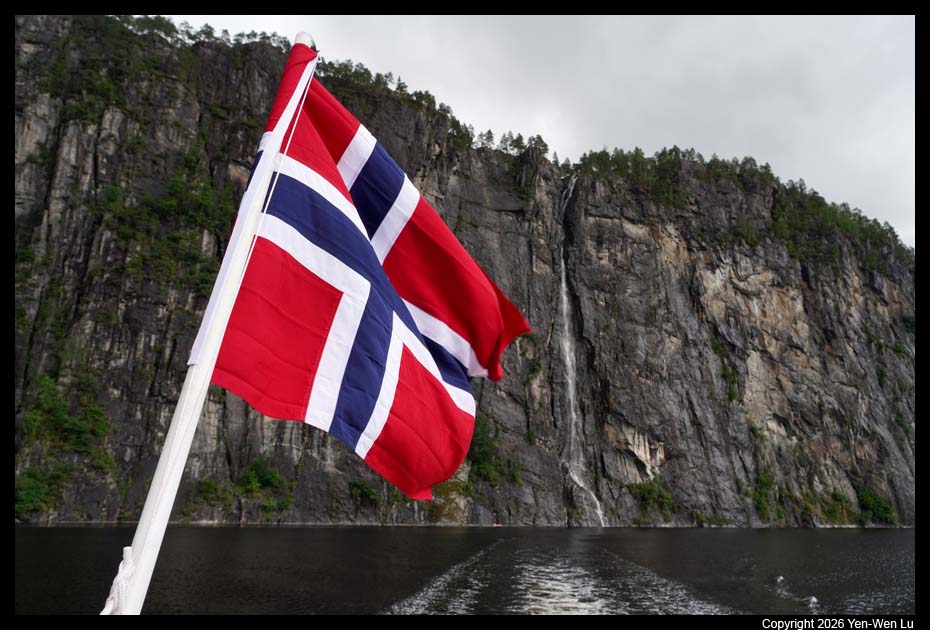
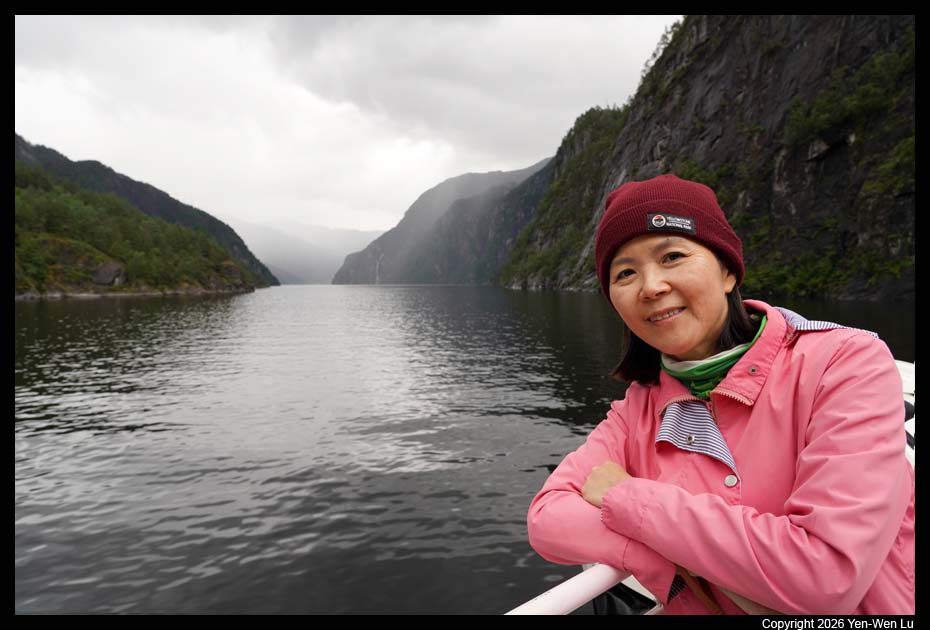
Mostraumen Fjord Cruise
I booked the
Mostraumen Fjord Cruise at 1:30PM. It's a popular 3 to 3.5-hour
round-trip boat ride for travelers who want to experience dramatic,
steep-sided Norwegian fjords, waterfalls, and rushing waterways.
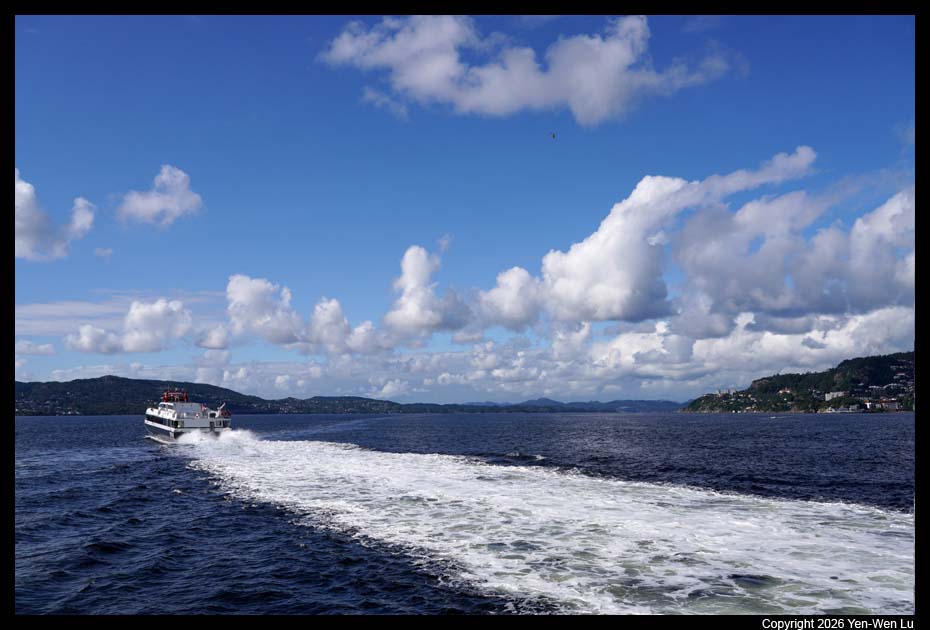
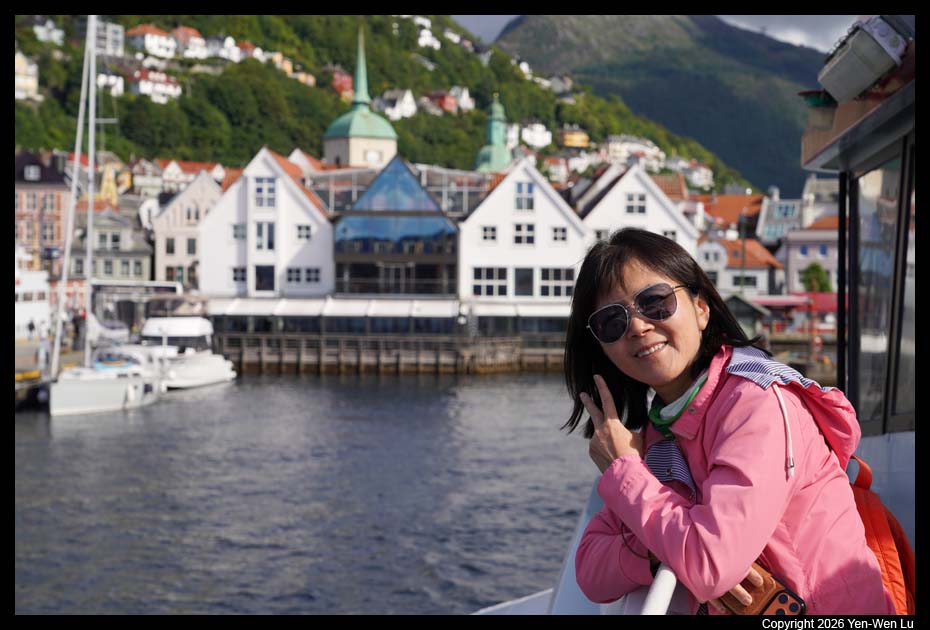
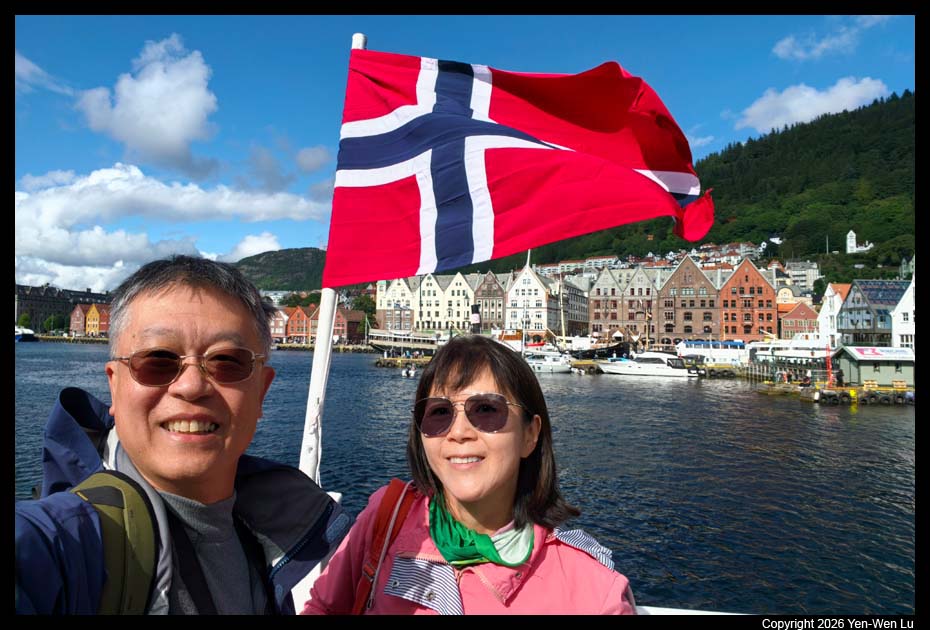
After leaving the Bergen harbor past the historic wooden gables of Bryggen
Wharf and the medieval structures of the Bergenhus Fortress, the boat glided
past the coastal suburban islands before turning into the 27-kilometer-long
Osterfjord. The landscape narrowed progressively, changing from open coastal
waters to sheer, vertical mountain walls. The climax of the tour was
navigating the incredibly shallow and slim Mostraumen channel and between
picturesque islands.
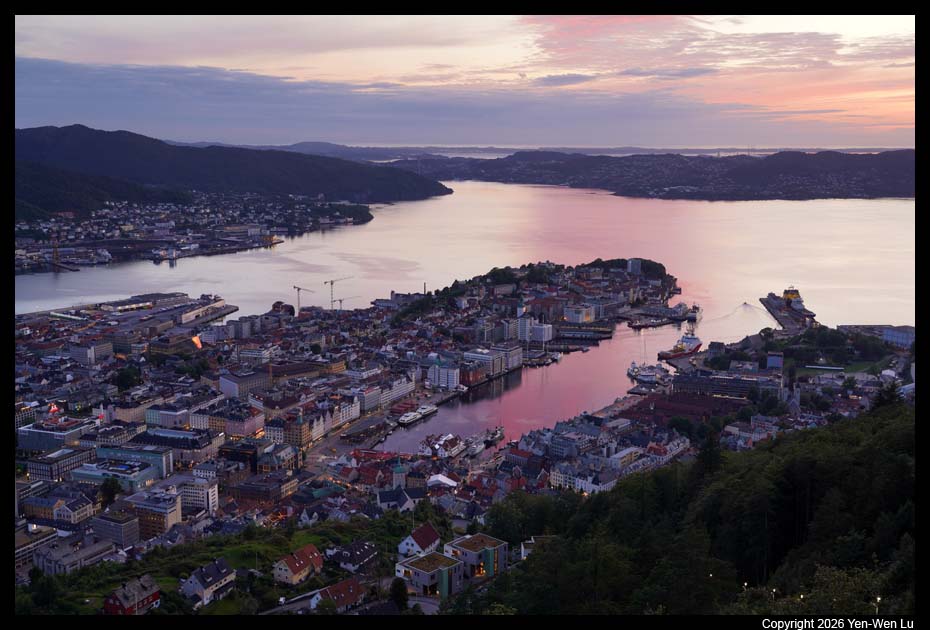
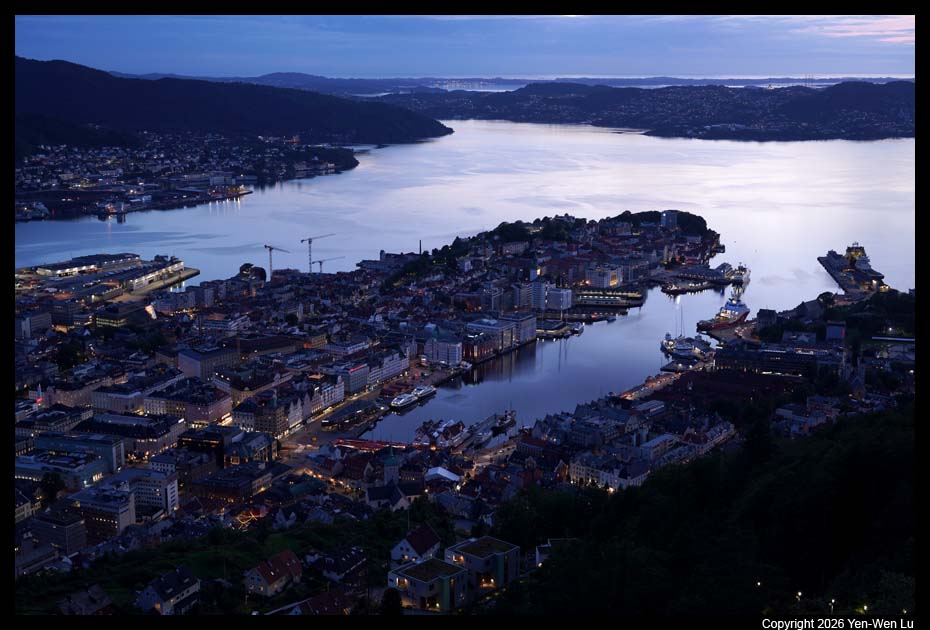
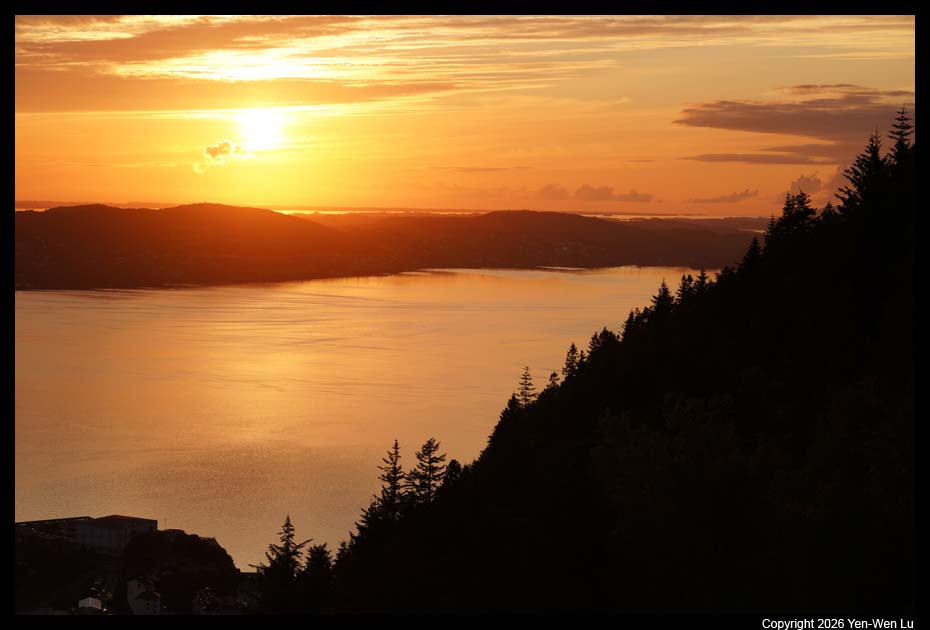
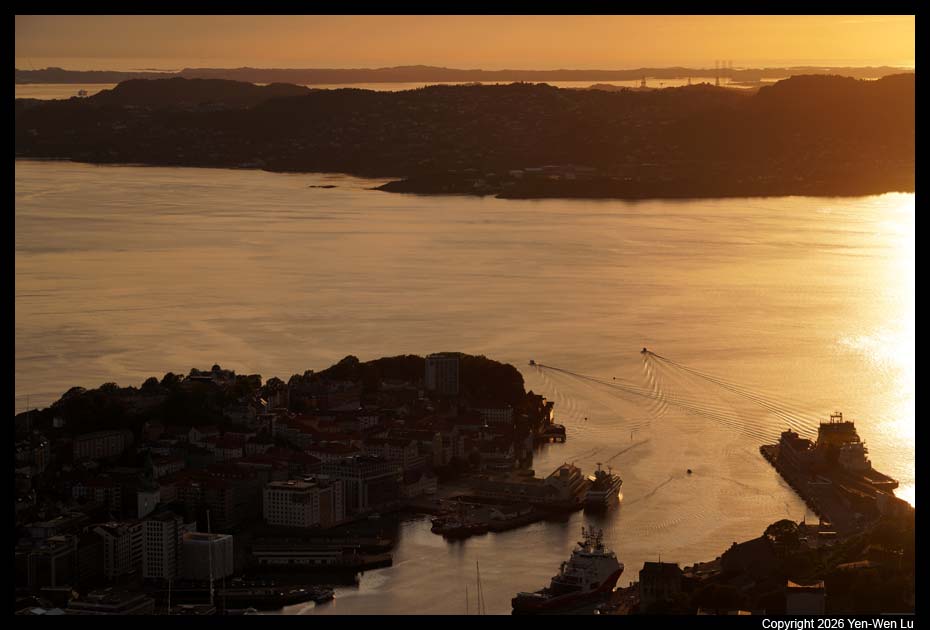
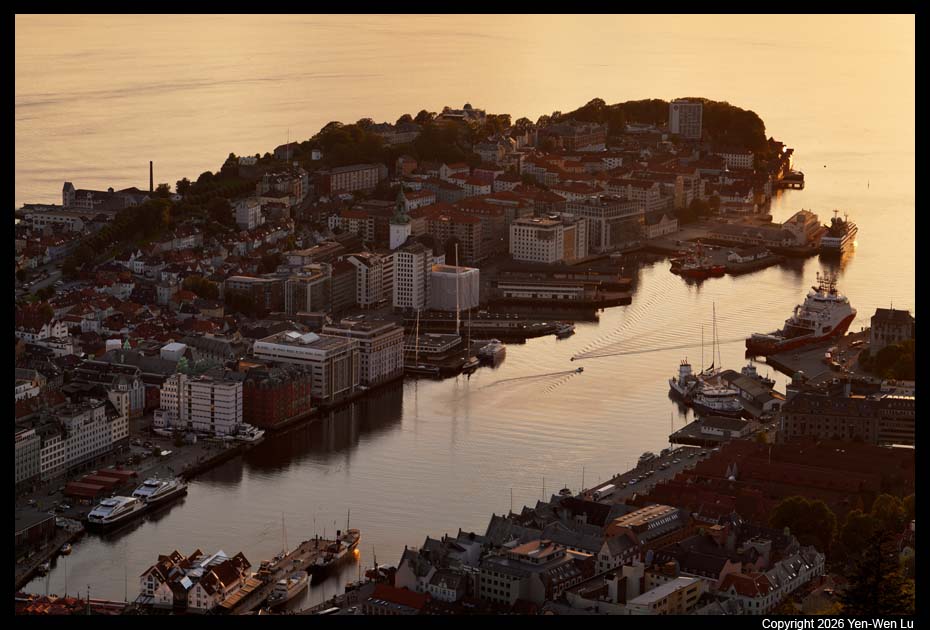
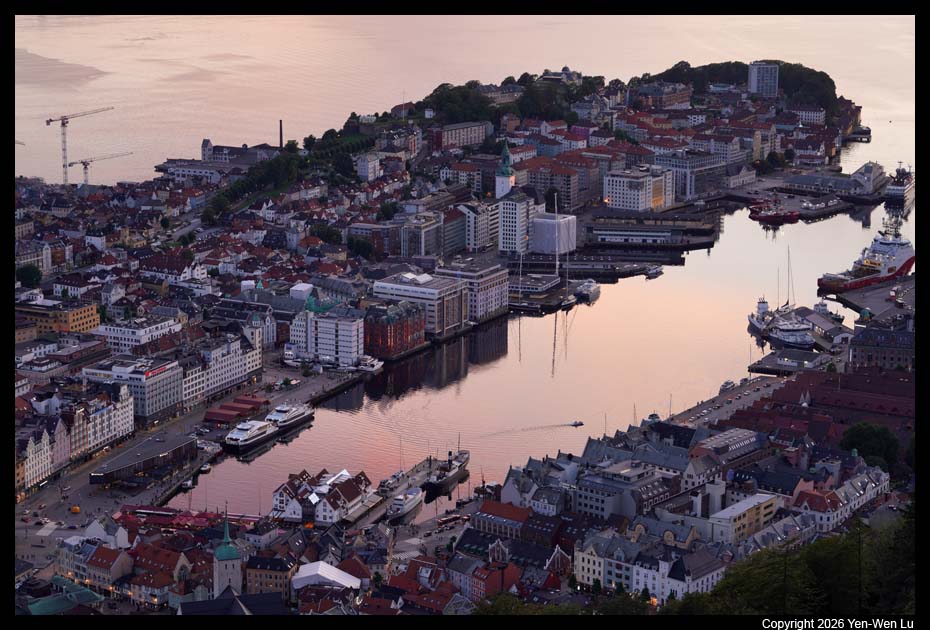
- Fløyen
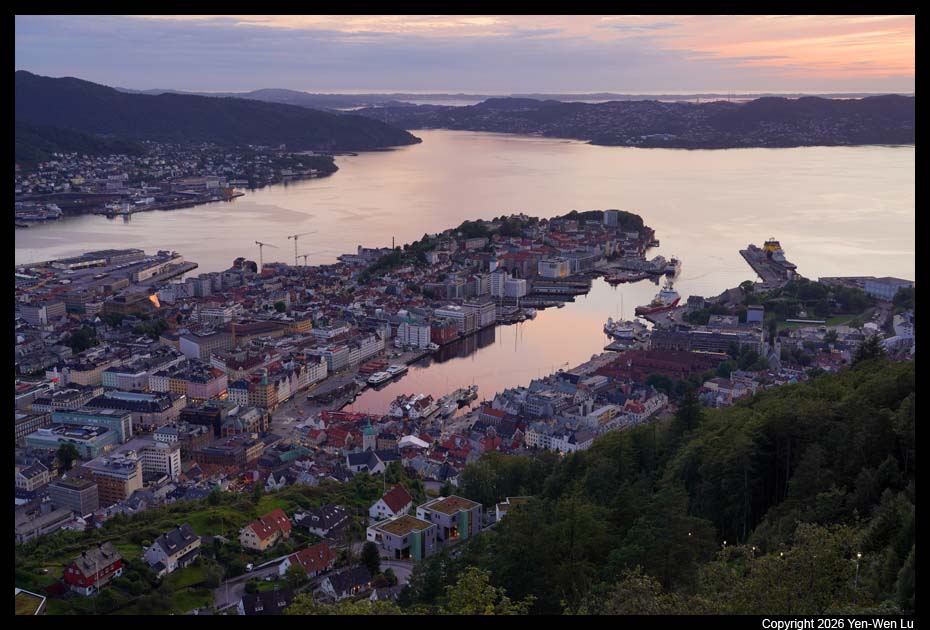
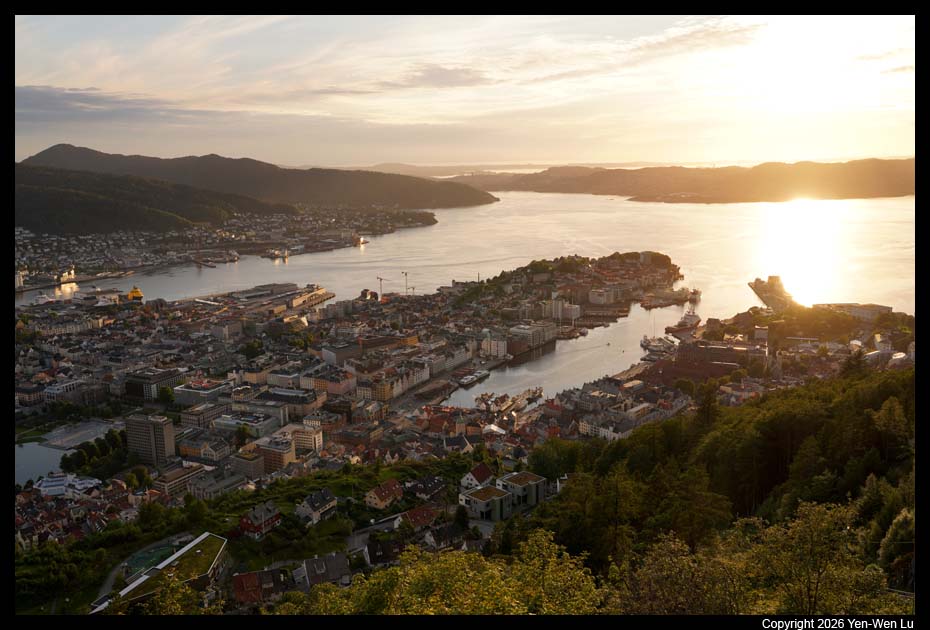
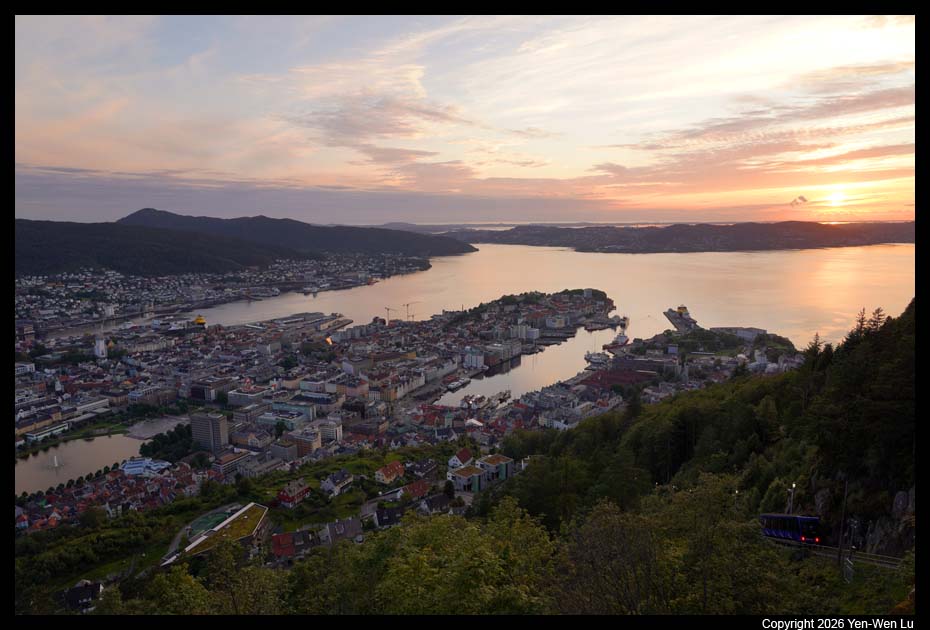
Fløyen (or Mount
Fløyen) is a 399-meter-high mountain rising directly above the city center
of Bergen. After dinner at our apartment, we took the funicular
Fløibanen (only 3-minutes walk from our apartment) to the top of Mount
Fløyen for the spectacular sunset views of the city, the fjord and the
surrounding mountains. The weather had cleared up in the late
afternoon, and we had our first (and only one) fantastic sunset in Western
Norway.
Day 11 (8/4) ...
- Bryggen
Bryggen is a historic harbor district in Bergen, famous for
its iconic colorful wooden commercial buildings lining the eastern side of
the Vågen harbor. Established as a critical trading center by the 12th
century, it served as a major overseas office (Kontor) for the Hanseatic
League from the 14th to the mid-16th century.
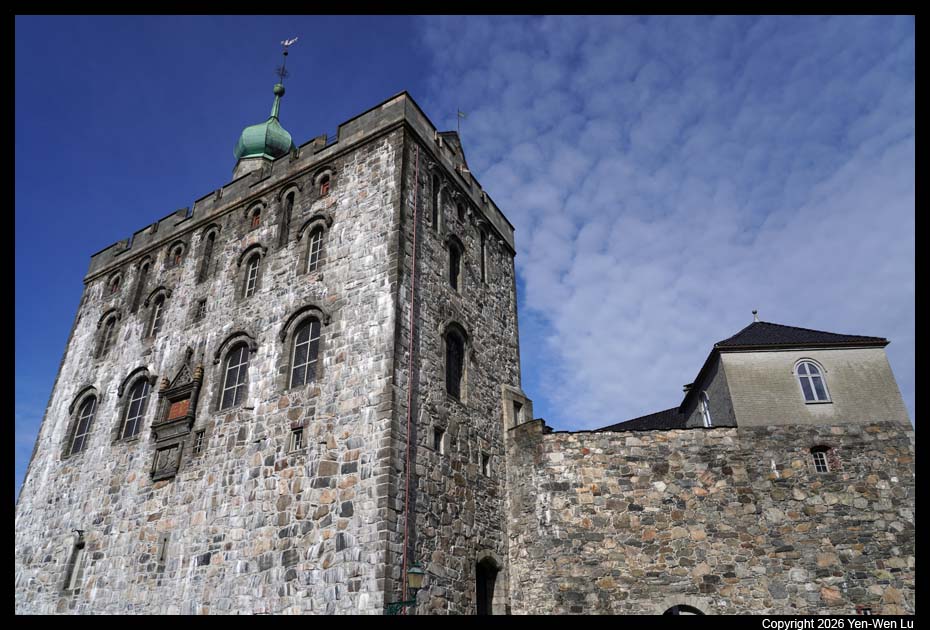
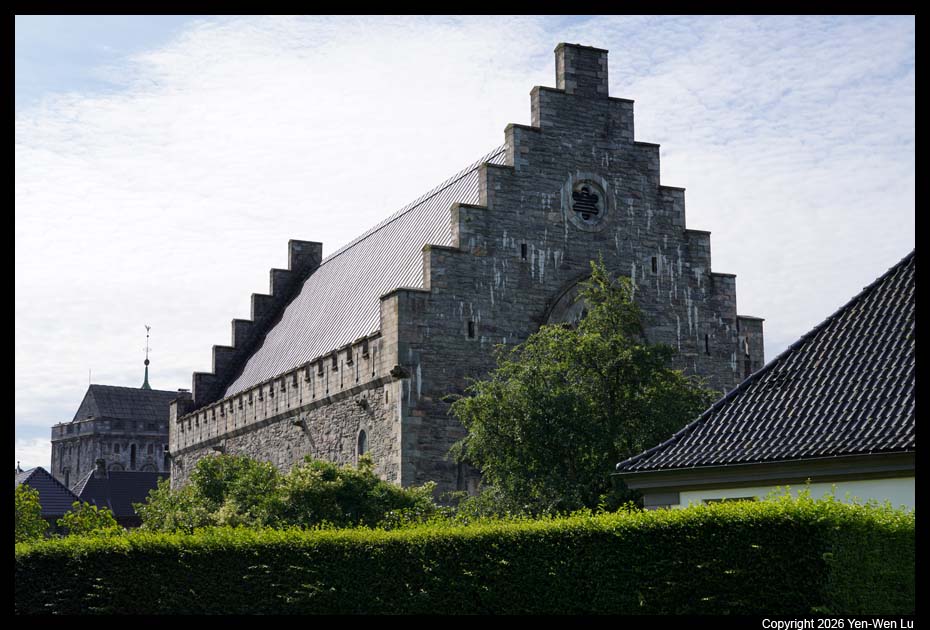
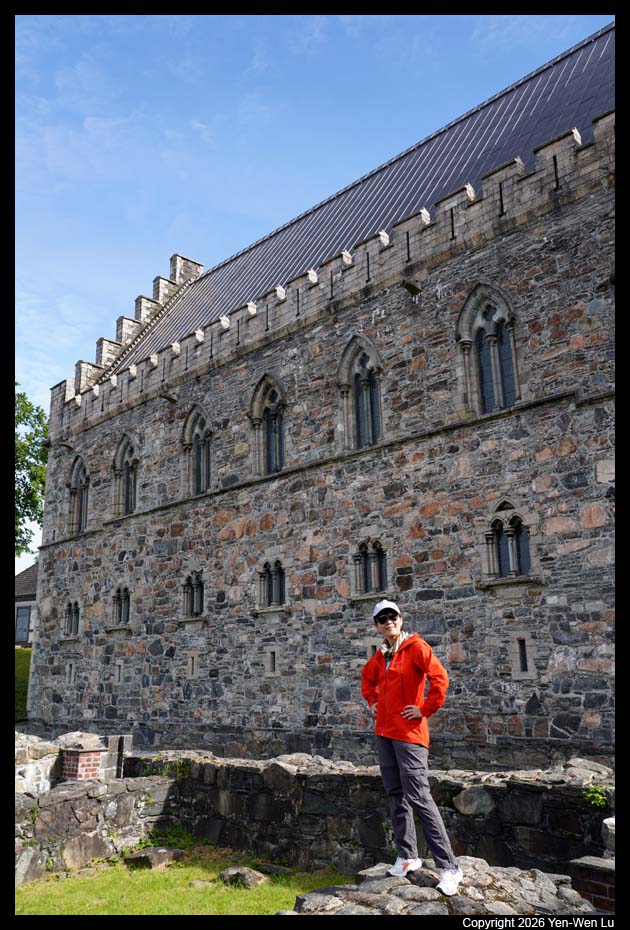
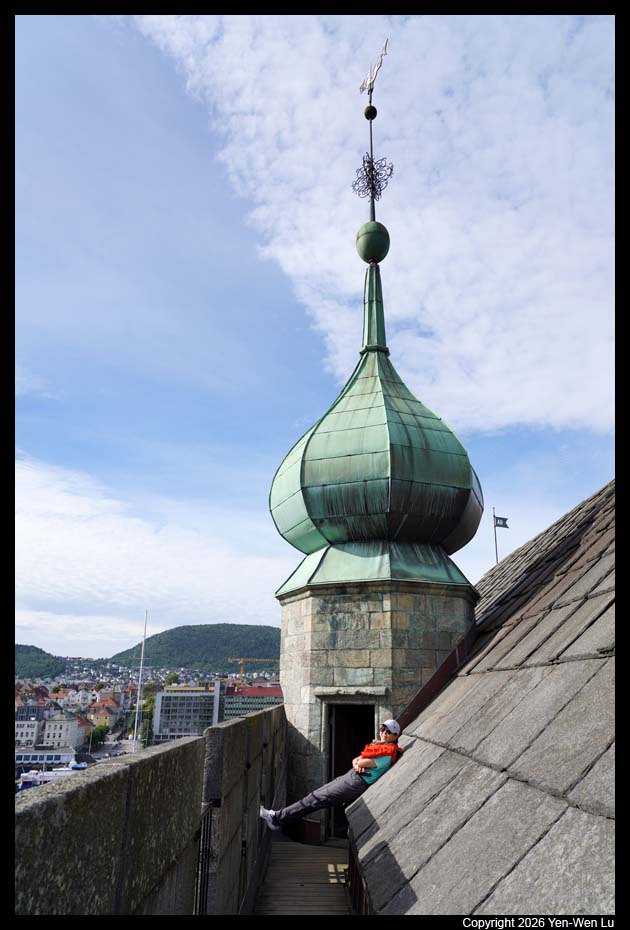
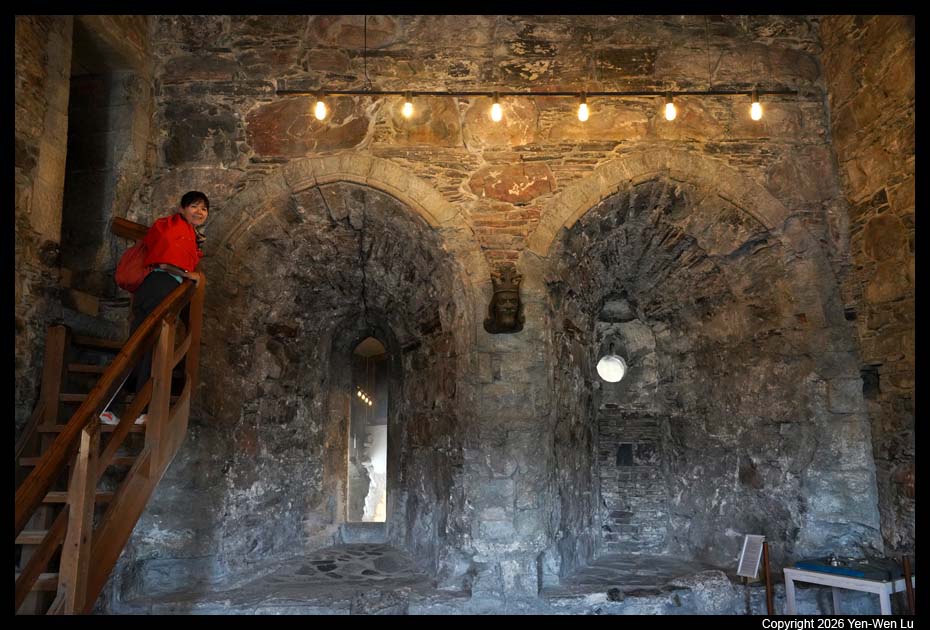
- Bergenhus Fortress
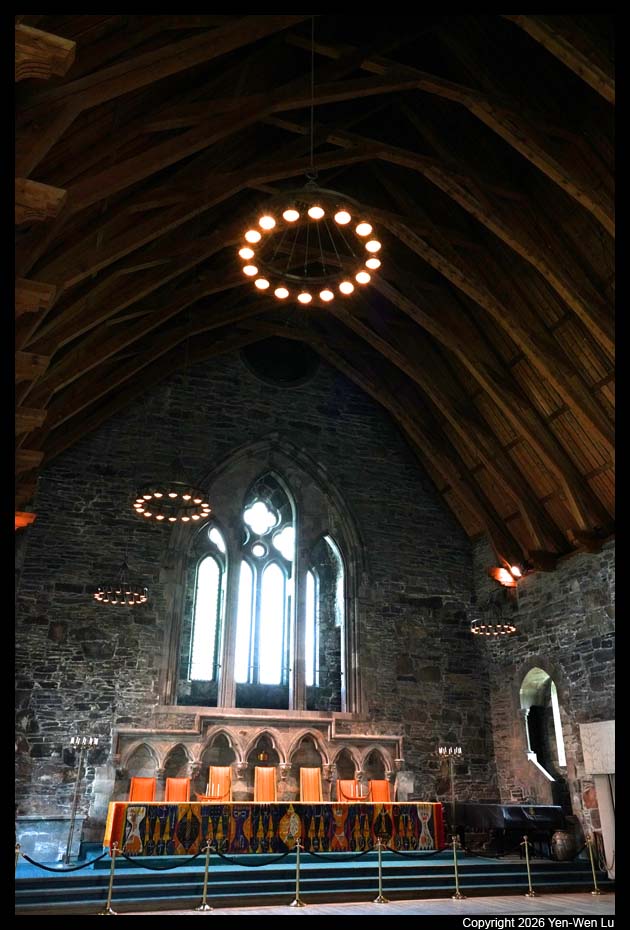
Bergenhus Fortress is one of the oldest and
best-preserved stone fortifications in Norway, located at the mouth of the
Vågen harbor in Bergen. Dating back to the mid-12th century, this historic
stronghold served as the royal palace and capital of Norway during the
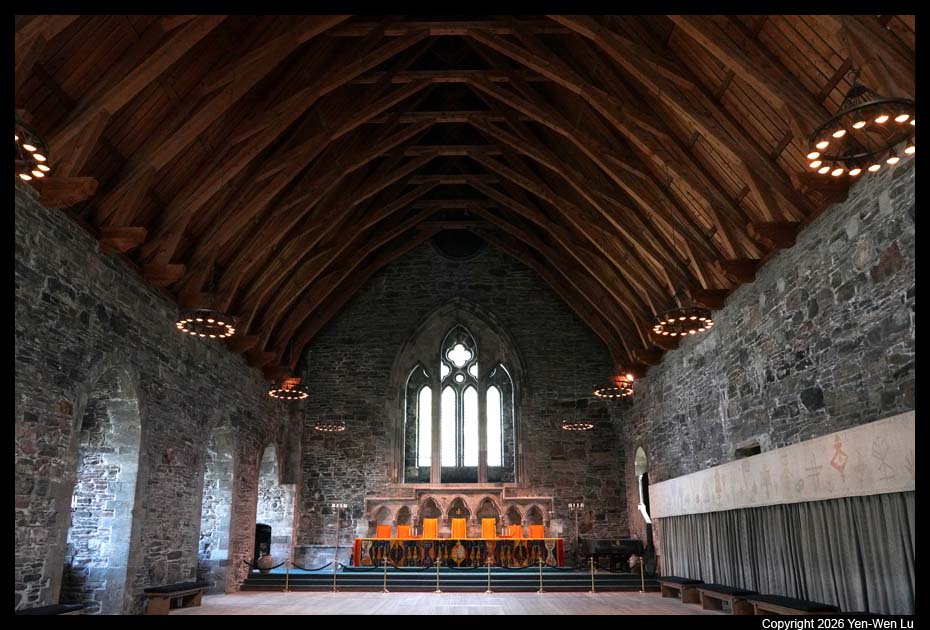
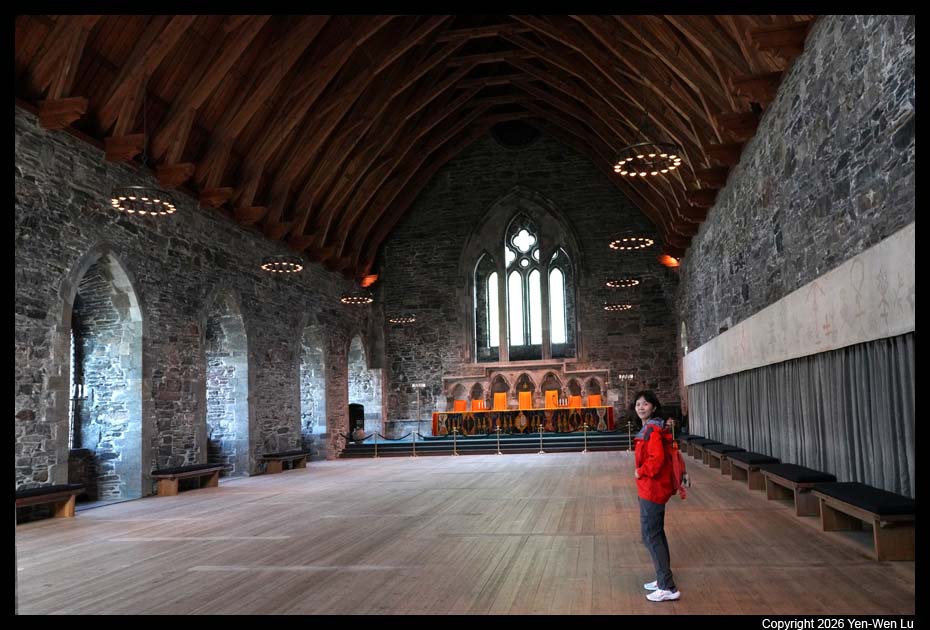
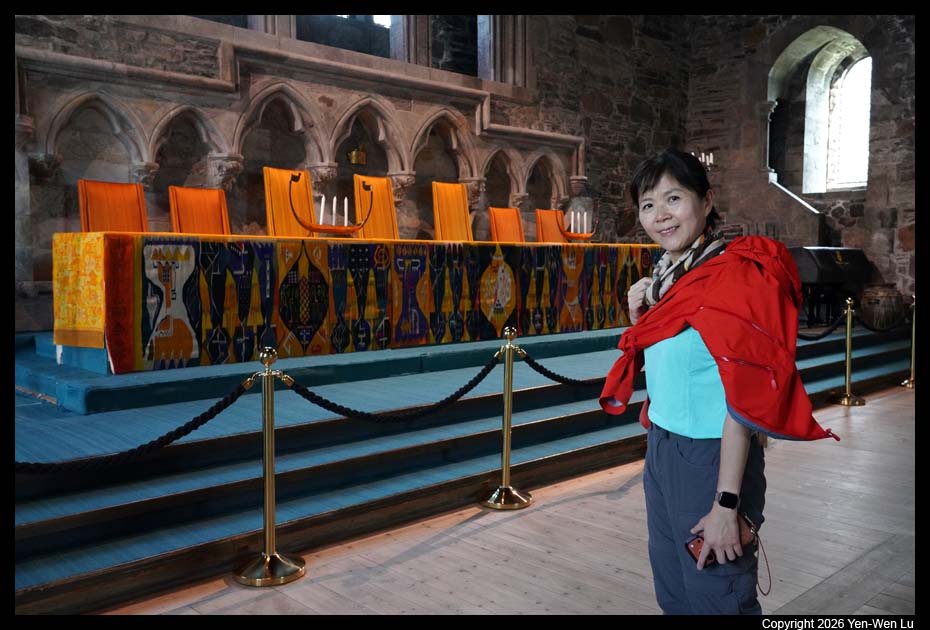
golden age of the Norwegian medieval kingdom. Of the medieval
buildings, a medieval hall and a defensive tower remain. The royal hall,
today known as Haakon's Hall (Håkonshallen), was built around 1260. The
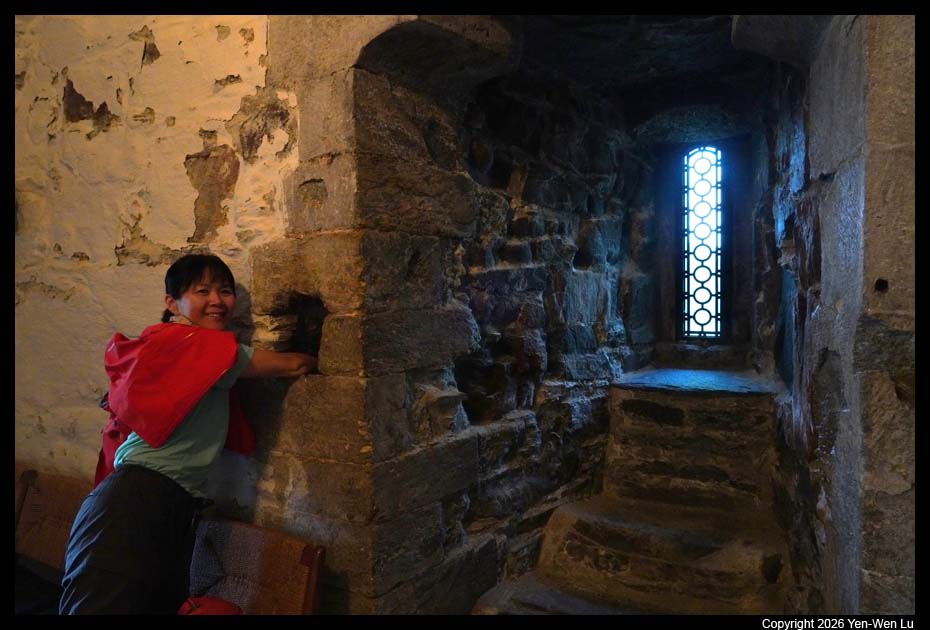
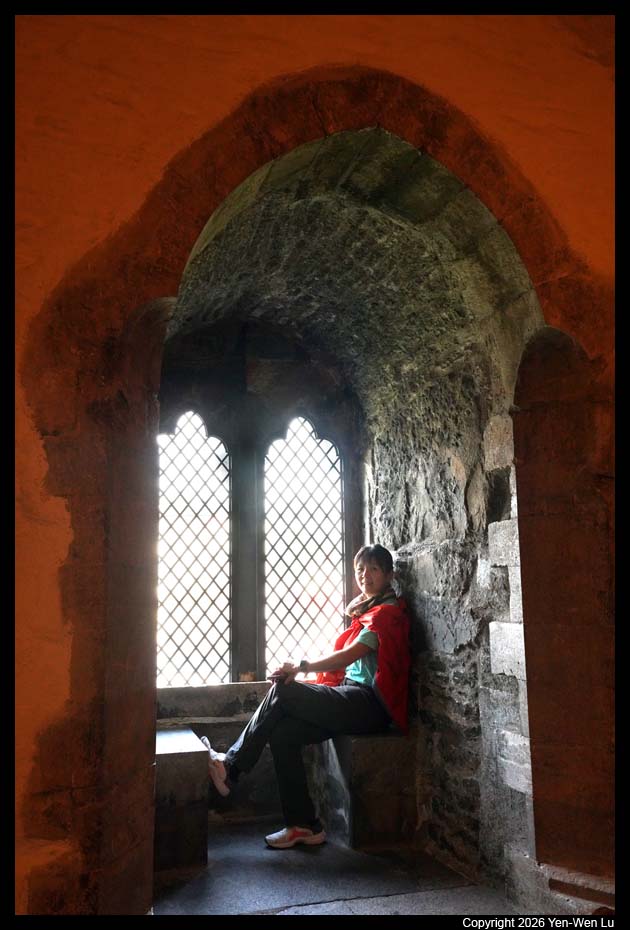
defensive tower, was built around 1270 and contained a royal apartment on
the top floor.
-
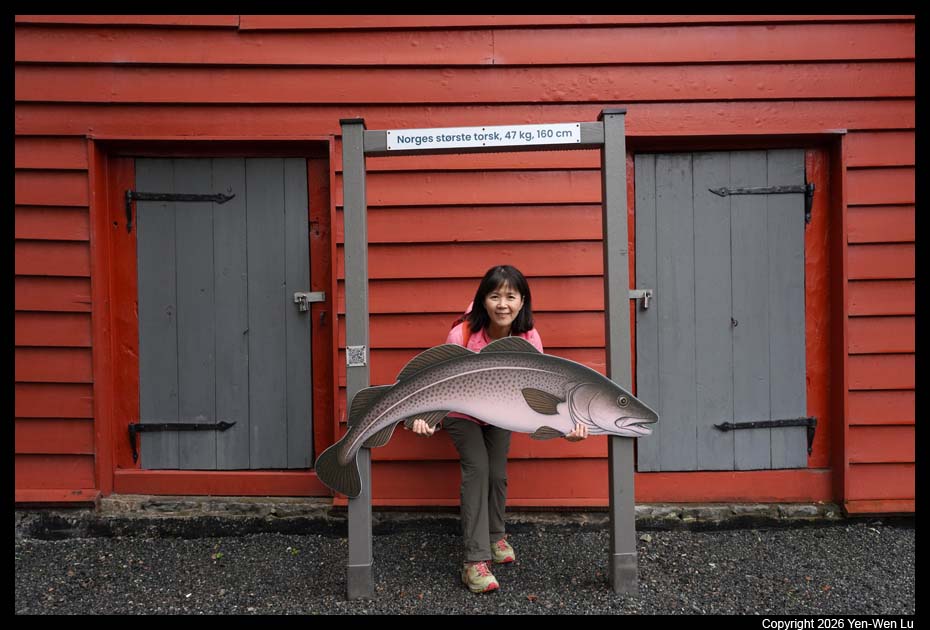
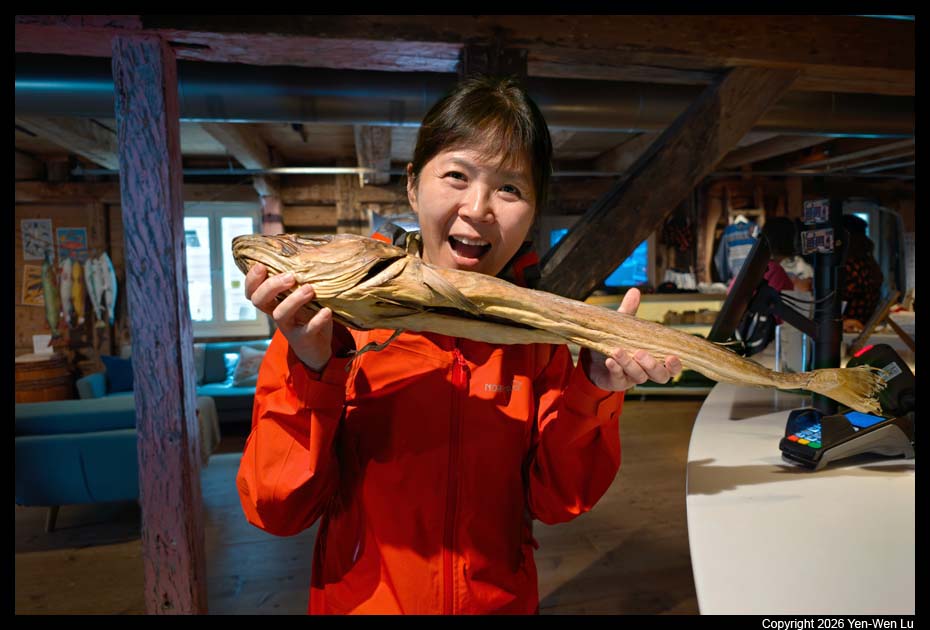
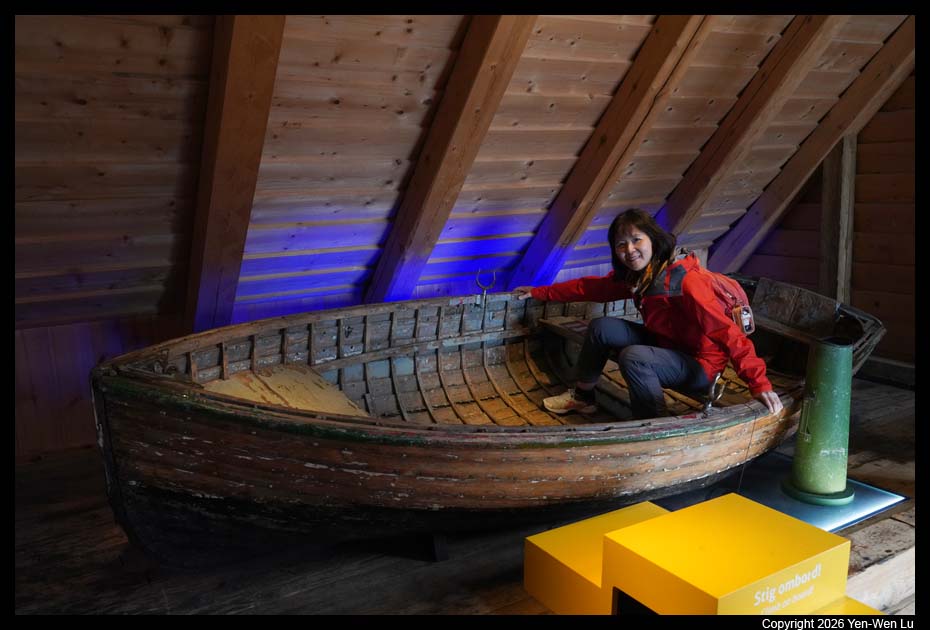
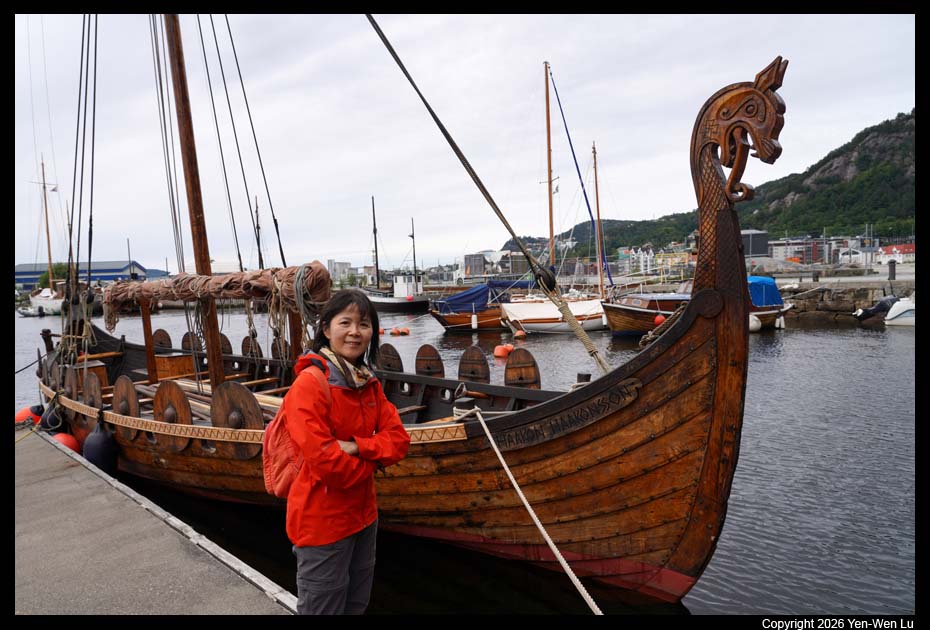
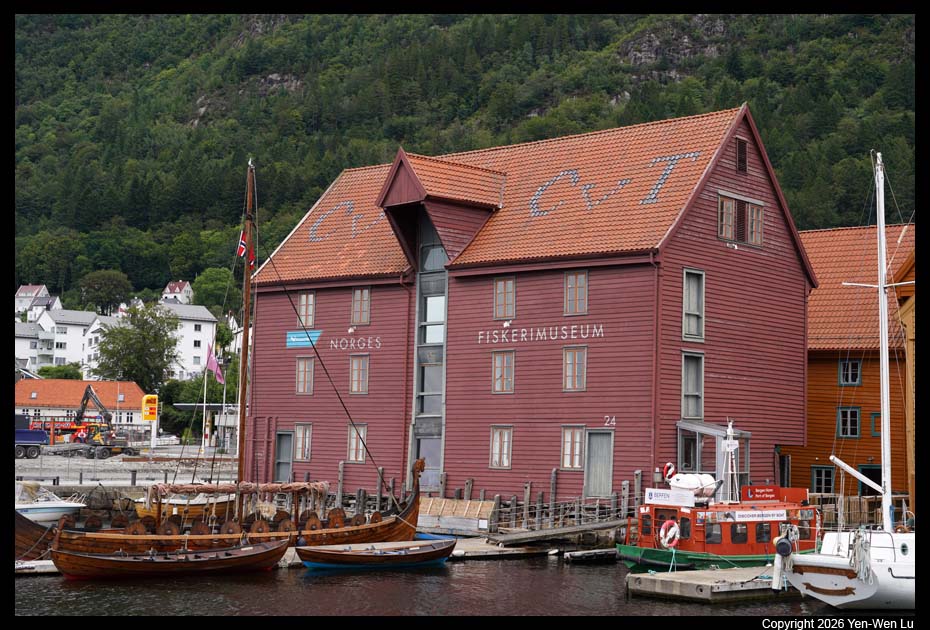
Norwegian Fisheries Museum (Norges Fiskerimuseum)
After lunch, we took a
bus to the Norwegian Fisheries Museum. The museum is housed inside
exceptionally well-preserved, 300-year-old wooden seaside warehouses built
on piles over the water, a scenic area often called the "Venice of the
North". The museum explores the deep history of Norway's fishing traditions,
coastal culture, whaling, and modern fish farming through highly hands-on
physical and digital exhibits.
- We had a tapa dinner at a restaurant ("Pincho Nation") downstairs
(one-minute walk from our apartment). It's free popcorn and
diversified menu were very good. However, it was extremely slow and it
was impossible to do a 2nd round order with its 2-hour seating limit.
So we went to Trekroneren to buy and share another hot dog after dinner :-)
[Oslo] [Stavanger--Bergen]
[Lofoten]
[Back to Photo Page]
[Gallery]