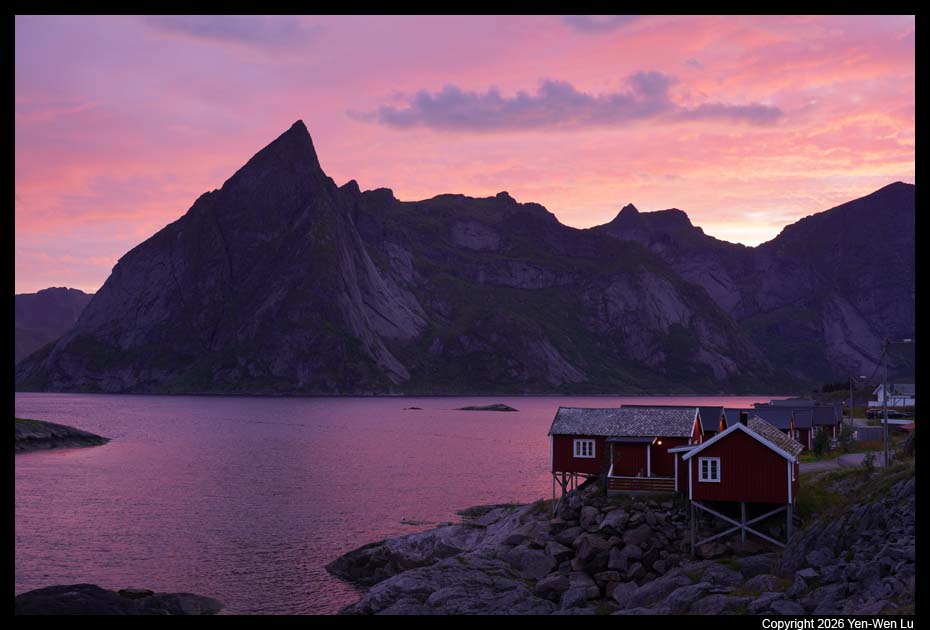
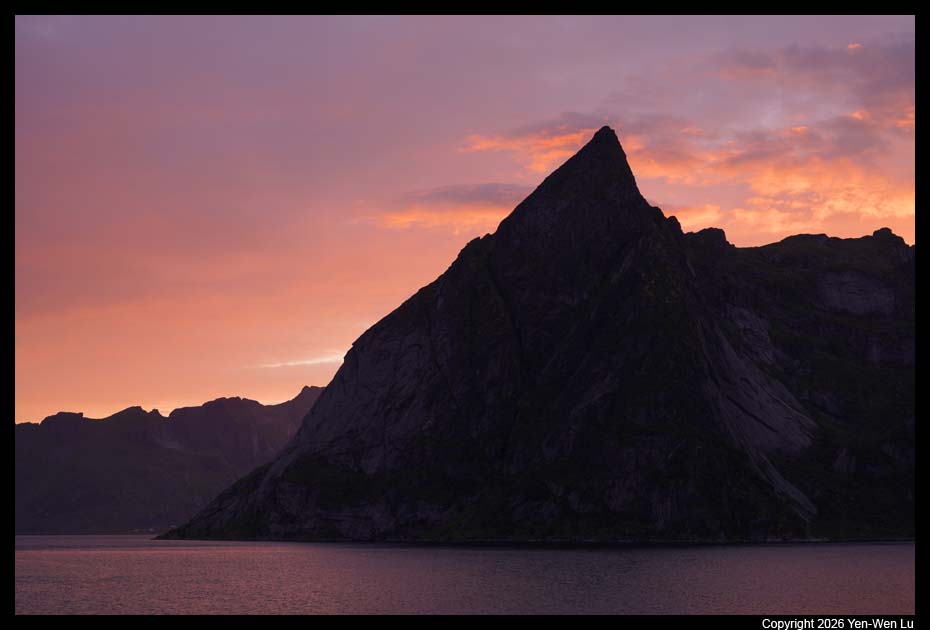
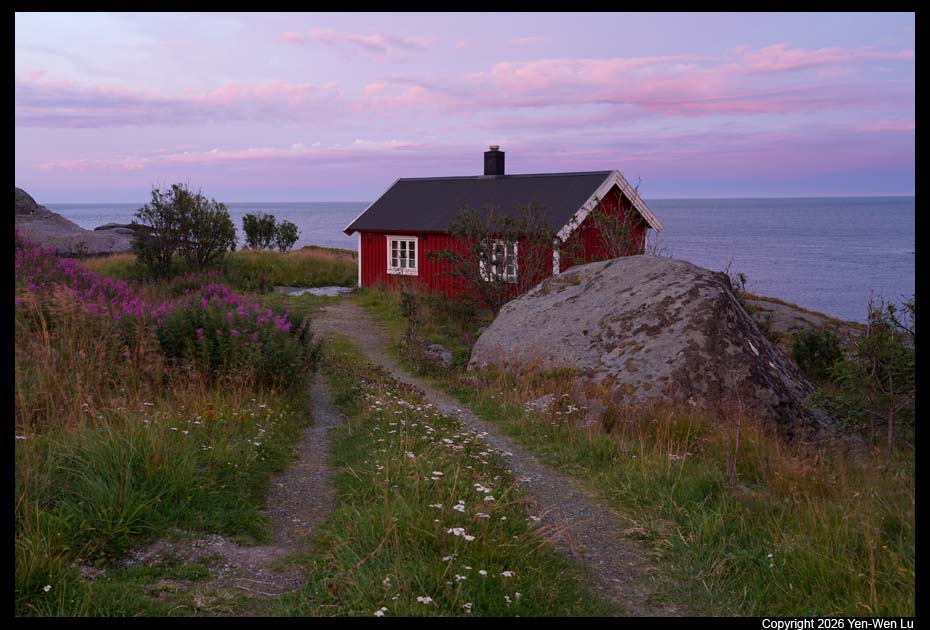
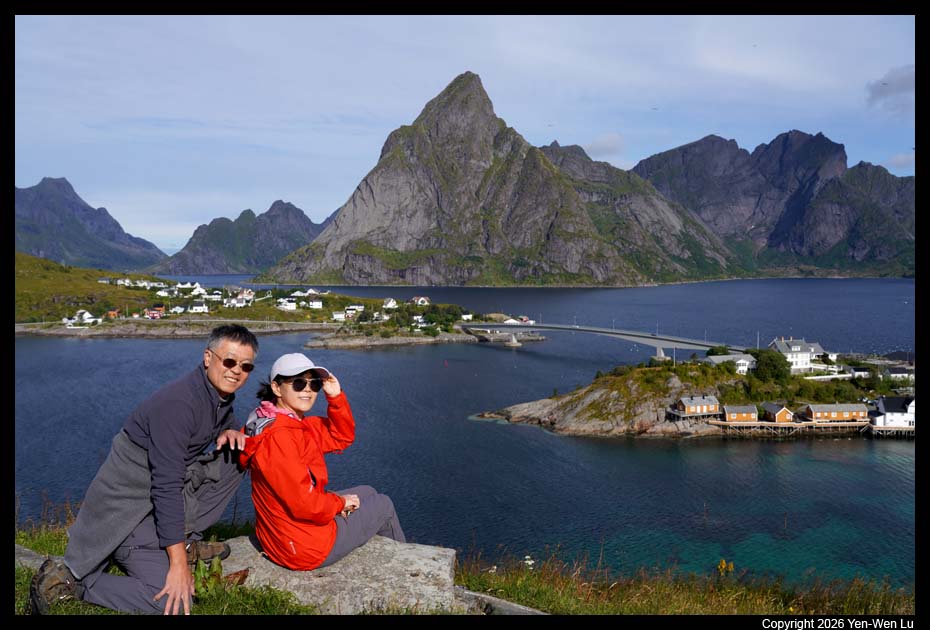
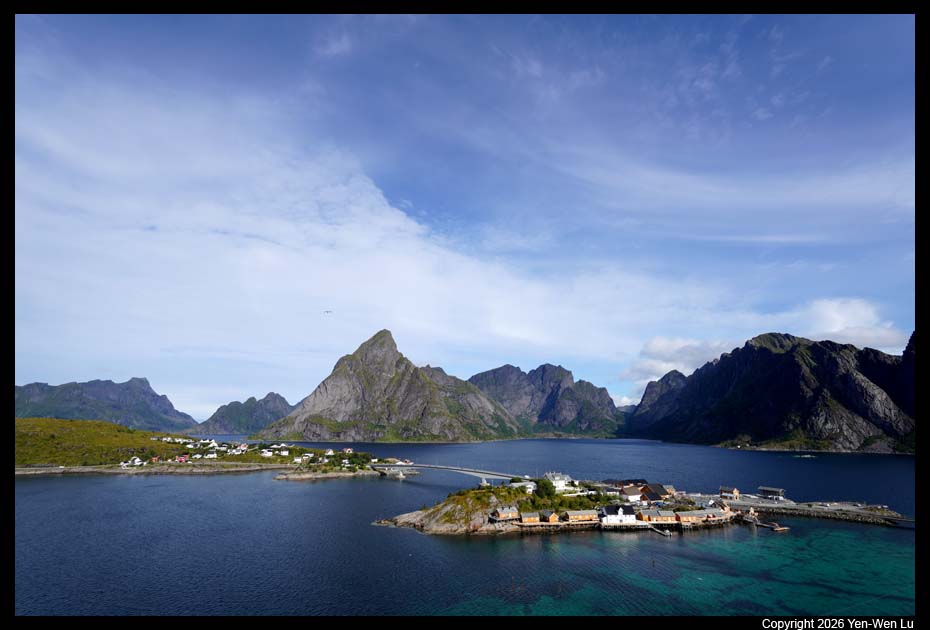
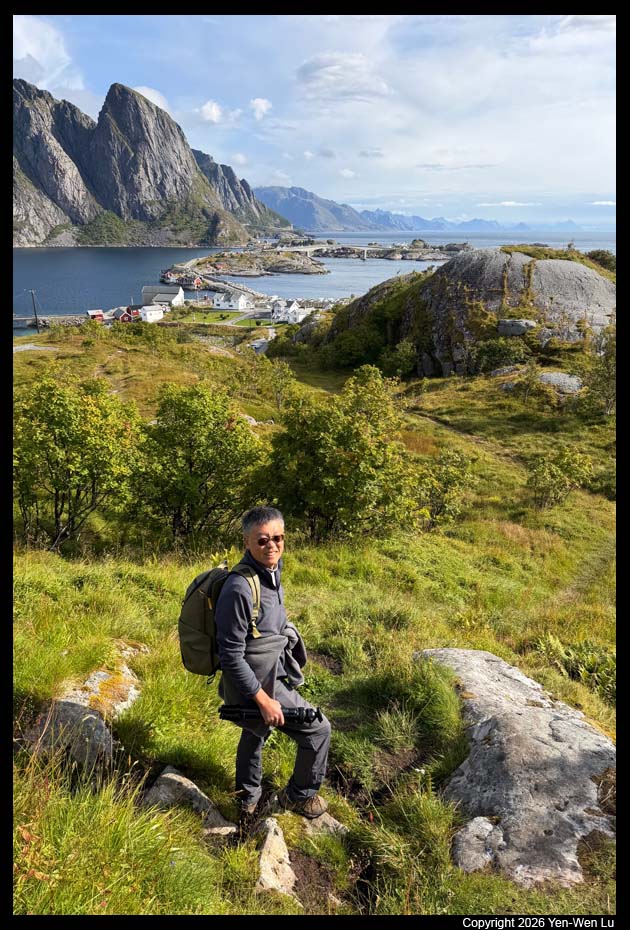
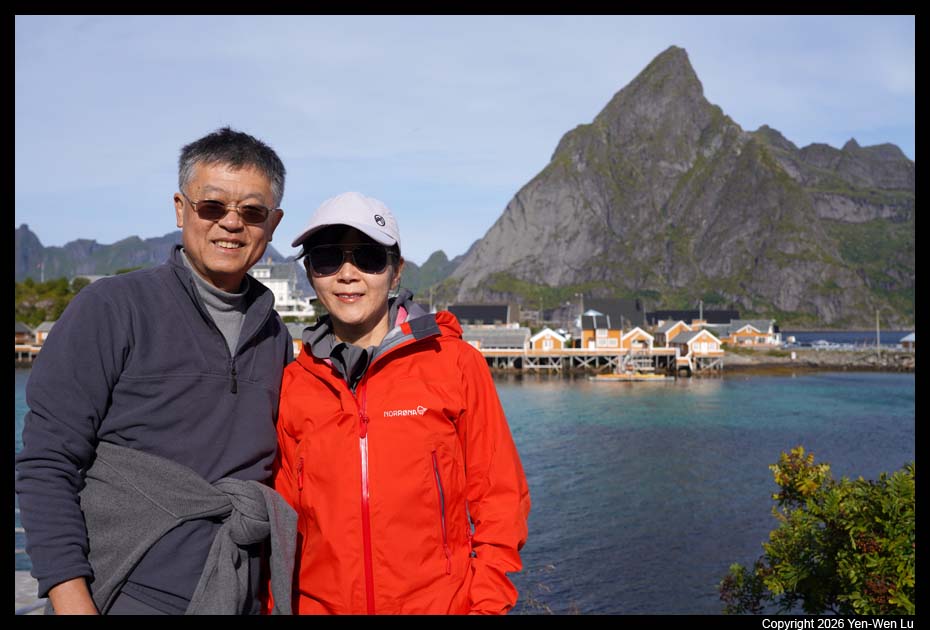
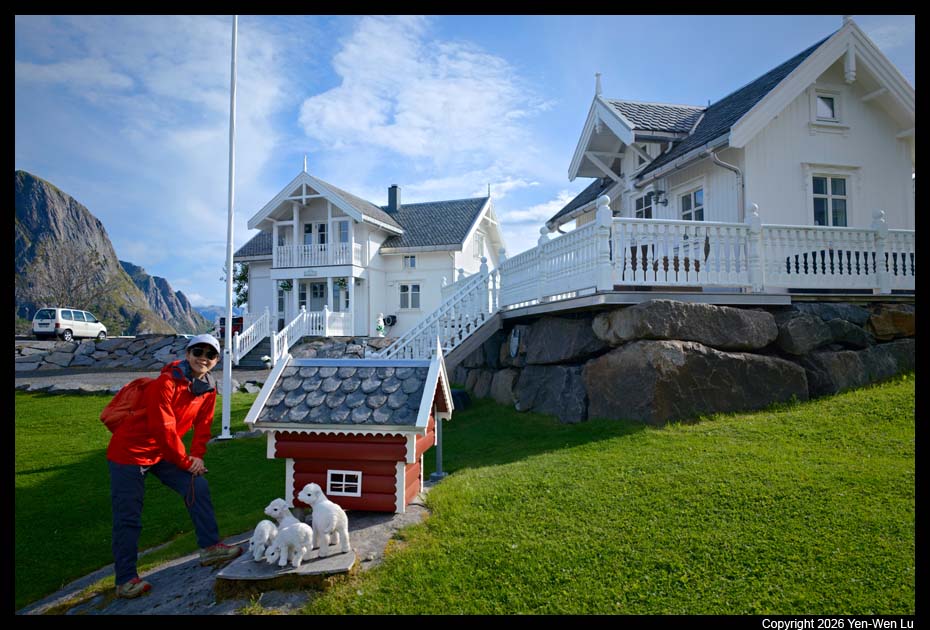
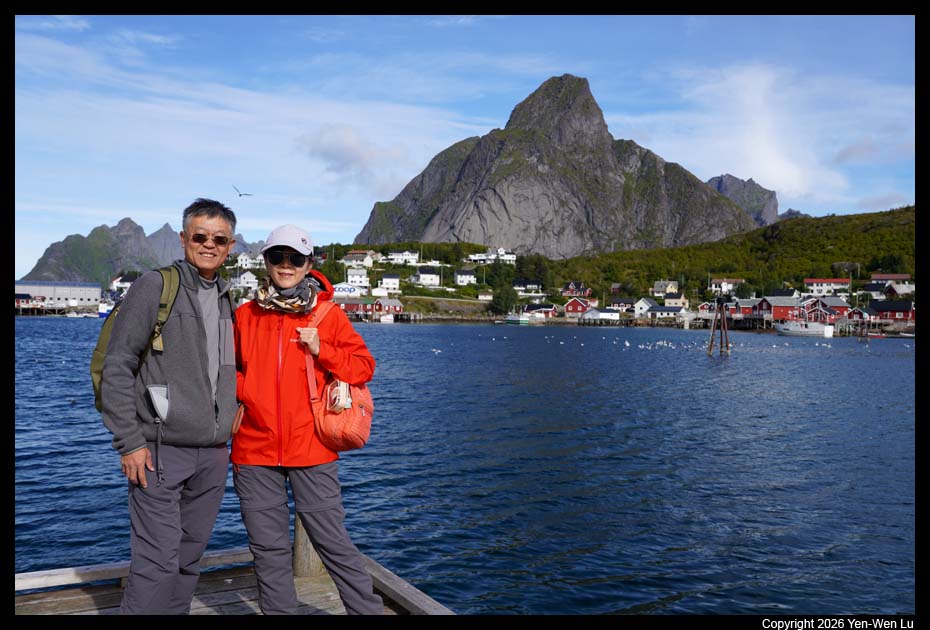
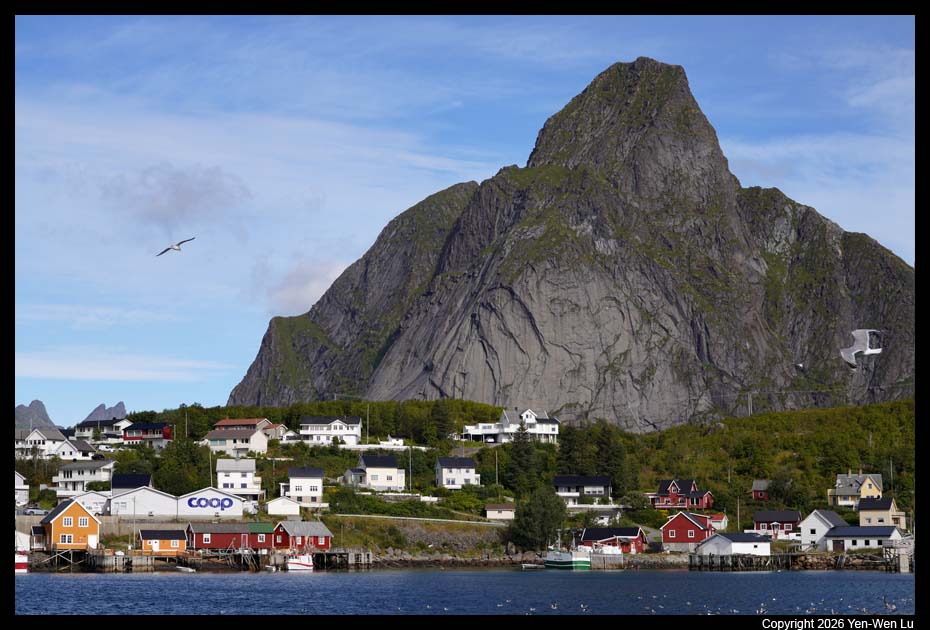
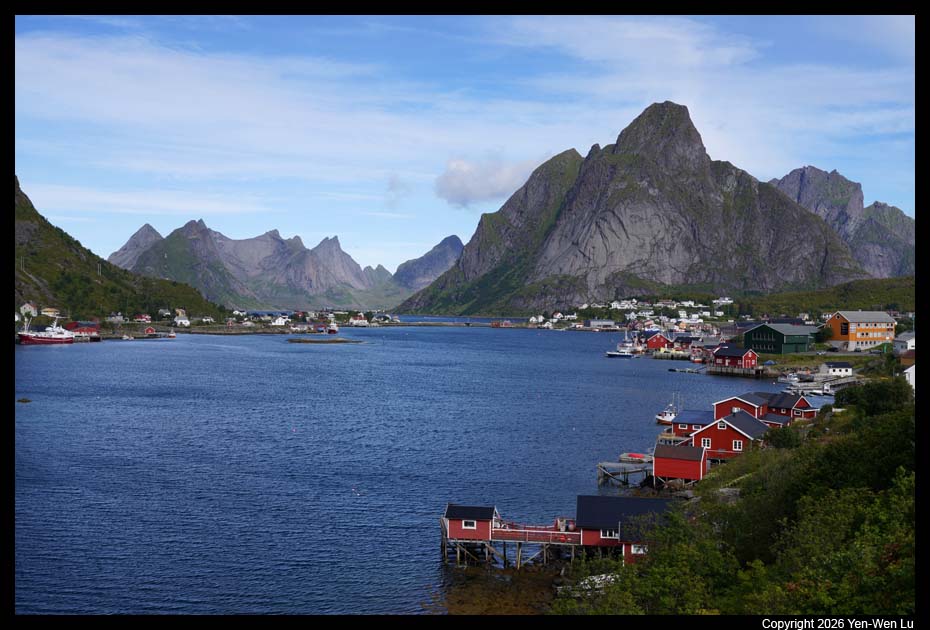
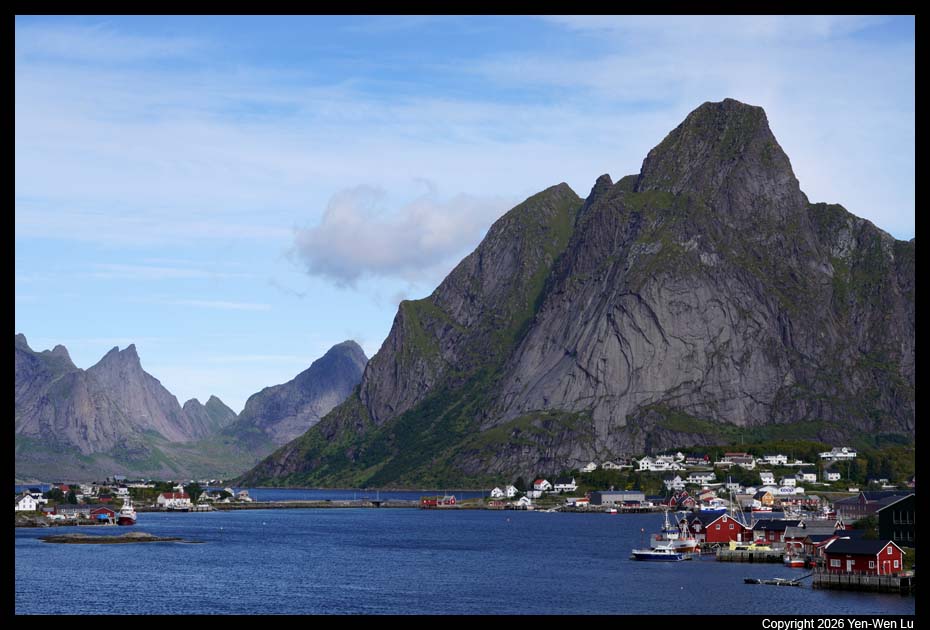
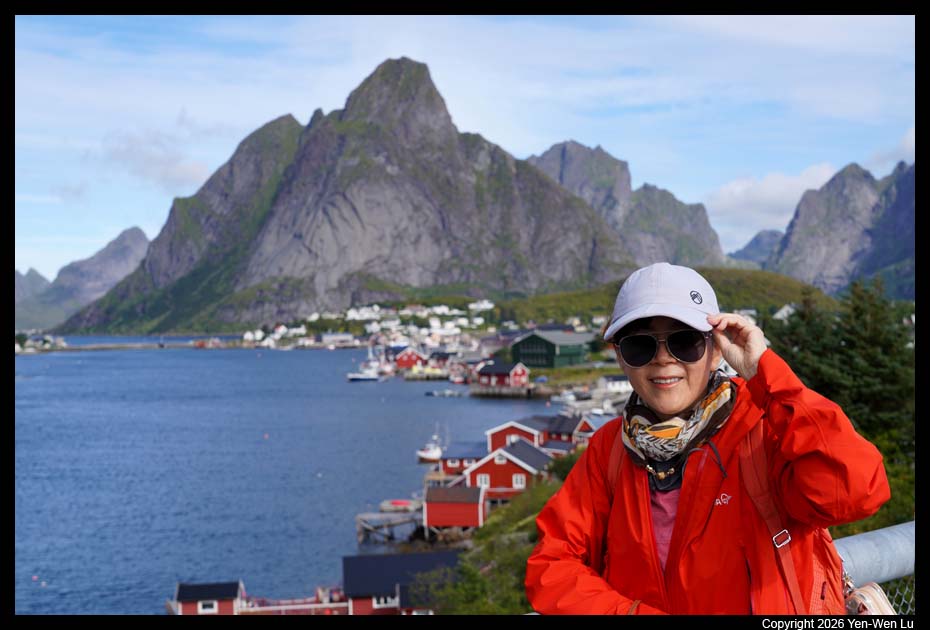
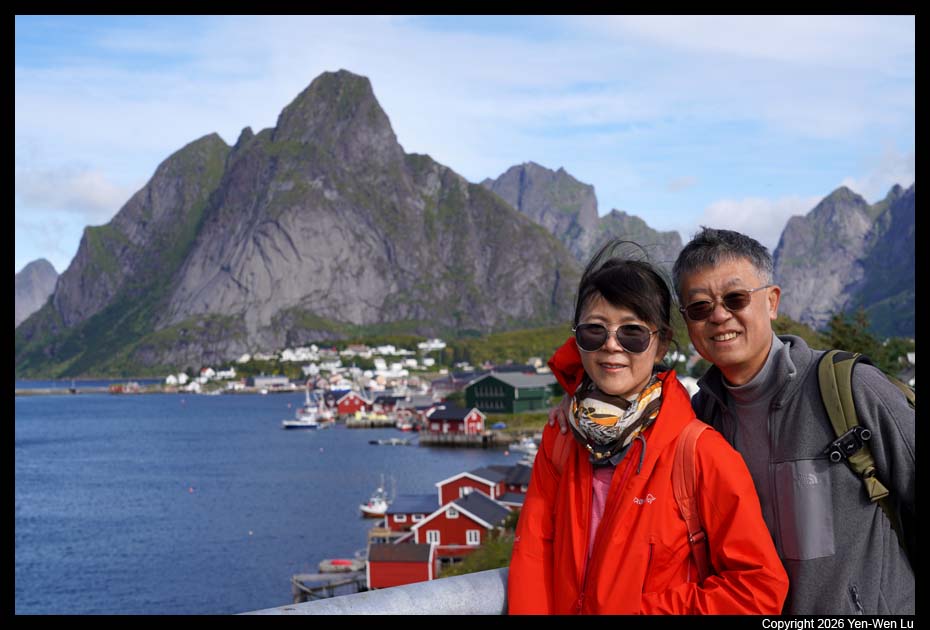
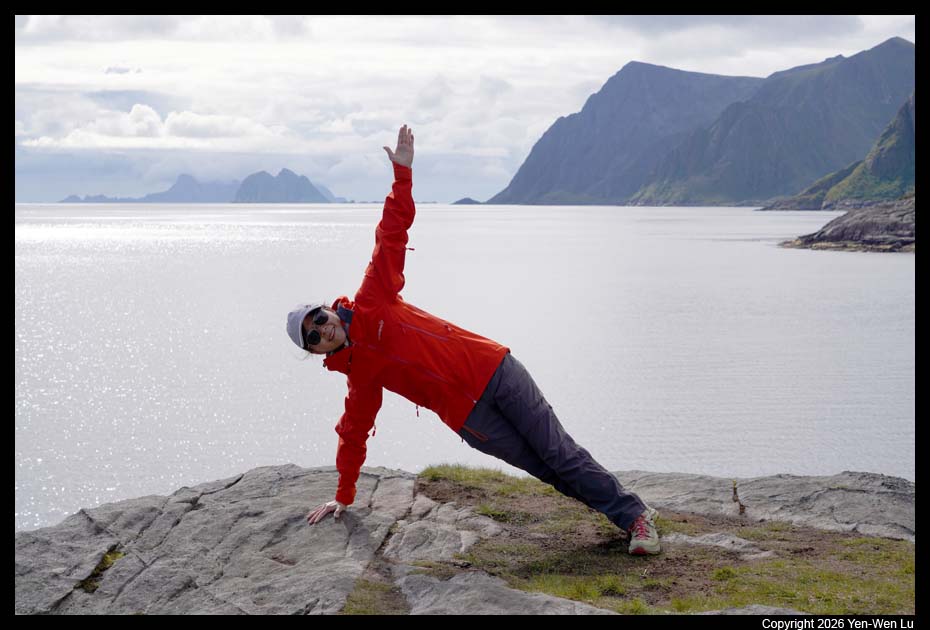
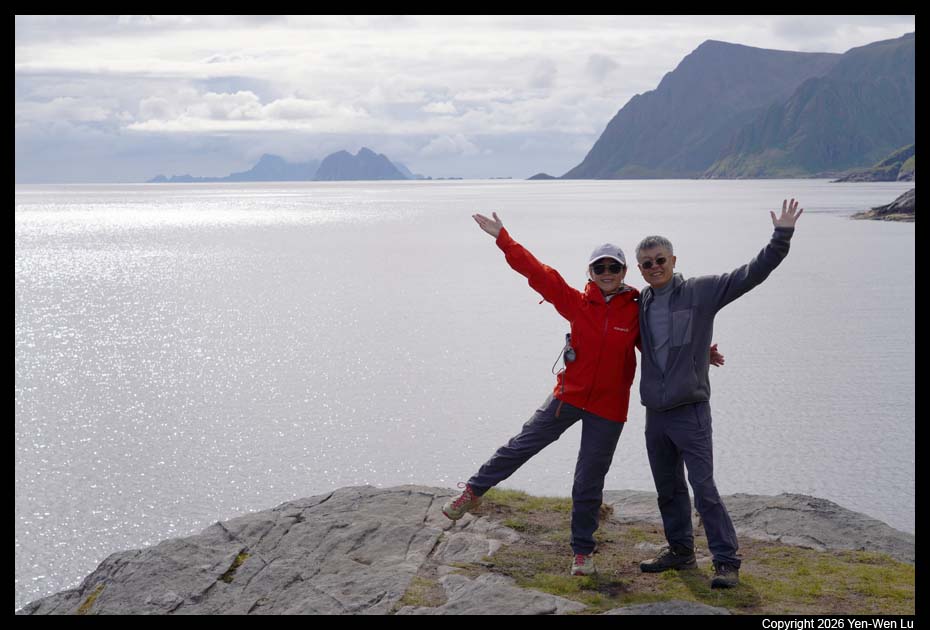
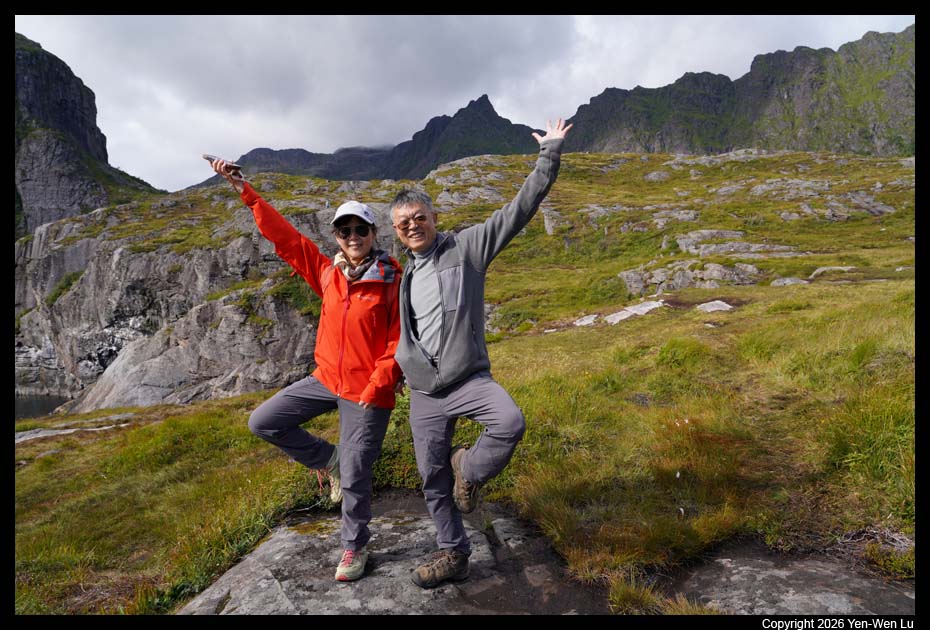
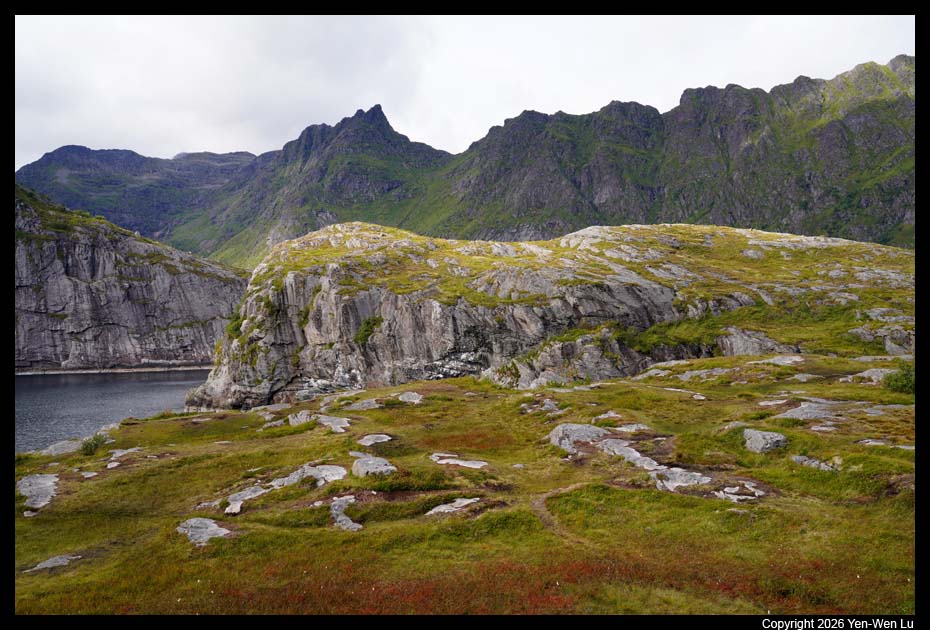
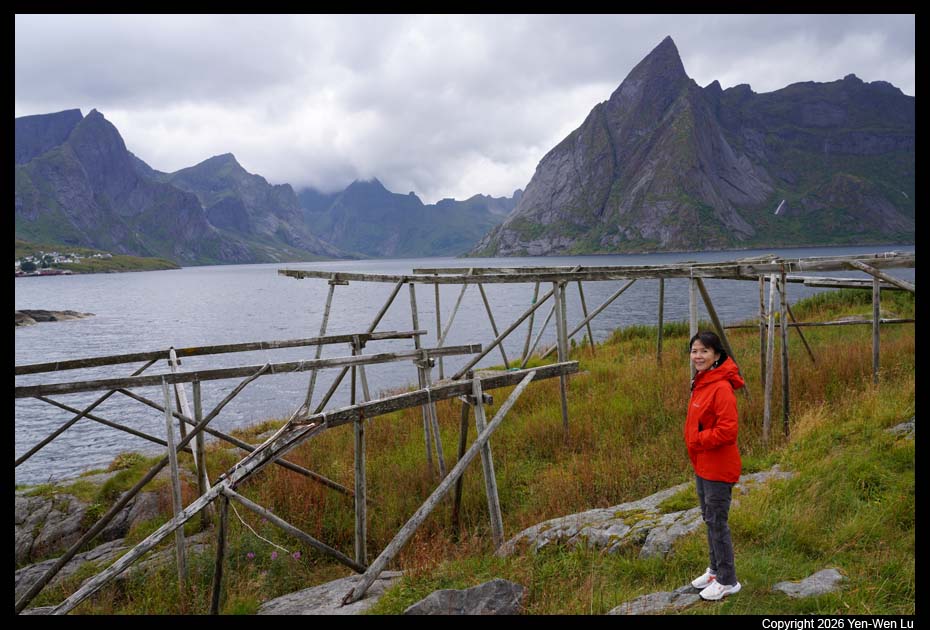
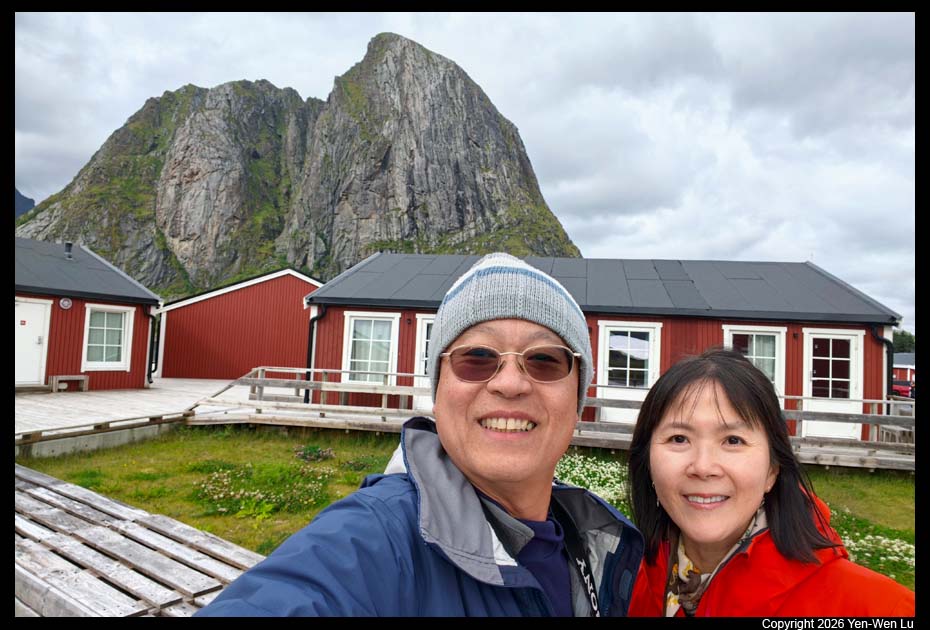
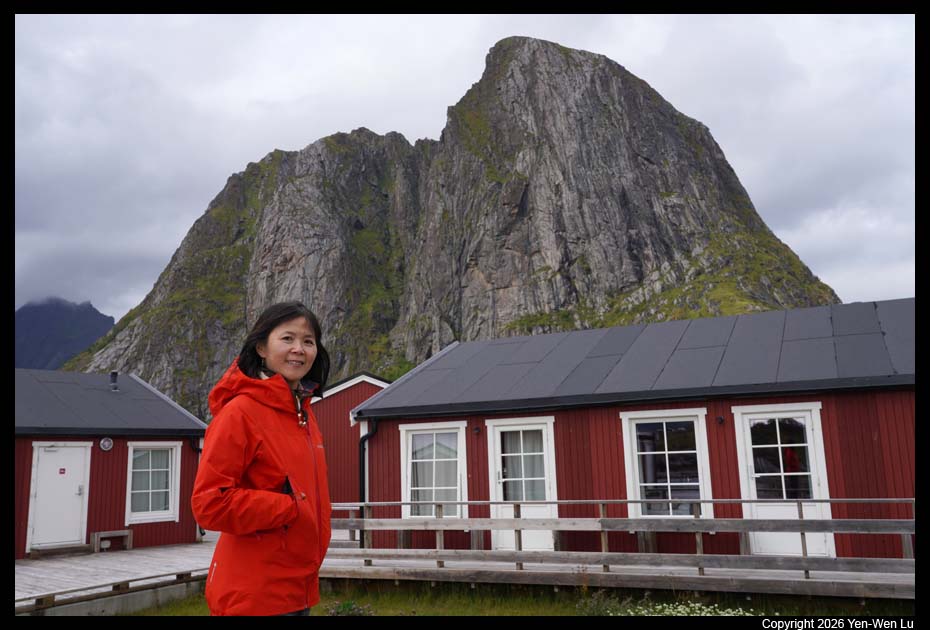
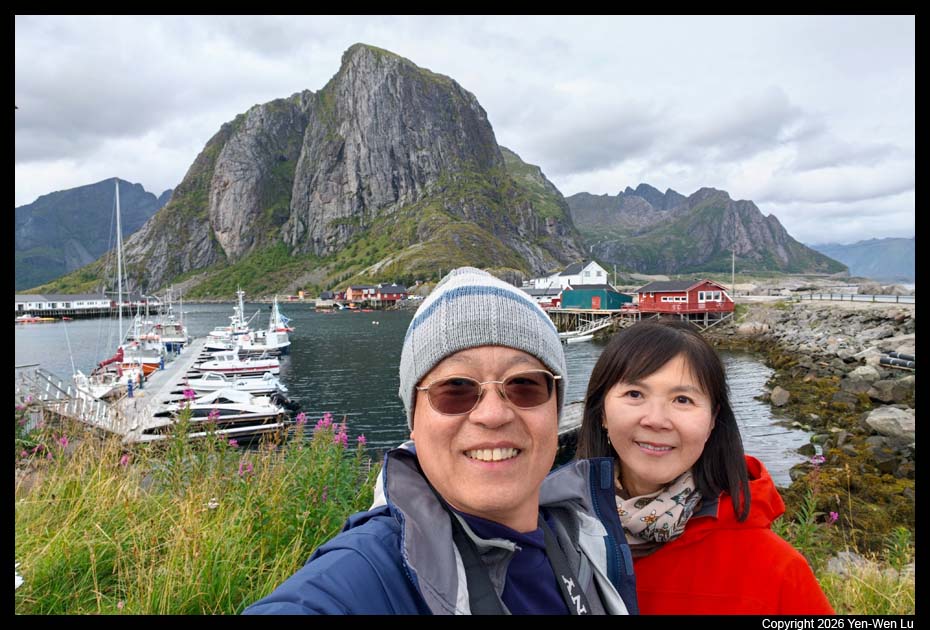
The Lofoten Islands are a stunning archipelago in Nordland, Norway, located
well above the Arctic Circle. Famous for dramatic sharp peaks rising straight
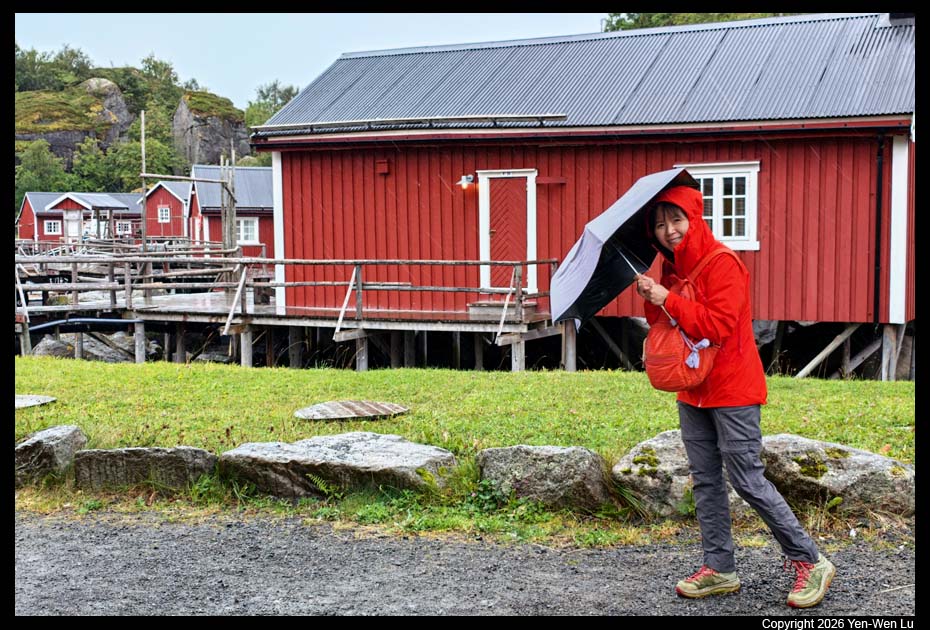
from the sea, picturesque fishing villages with red cabins (rorbu), and arctic
beaches, they offer the midnight sun in summer and the northern lights in
winter.
Getting there ...
We had an early morning flight from Bergen (BGO at 7:50AM) to Tromsø (TOS at
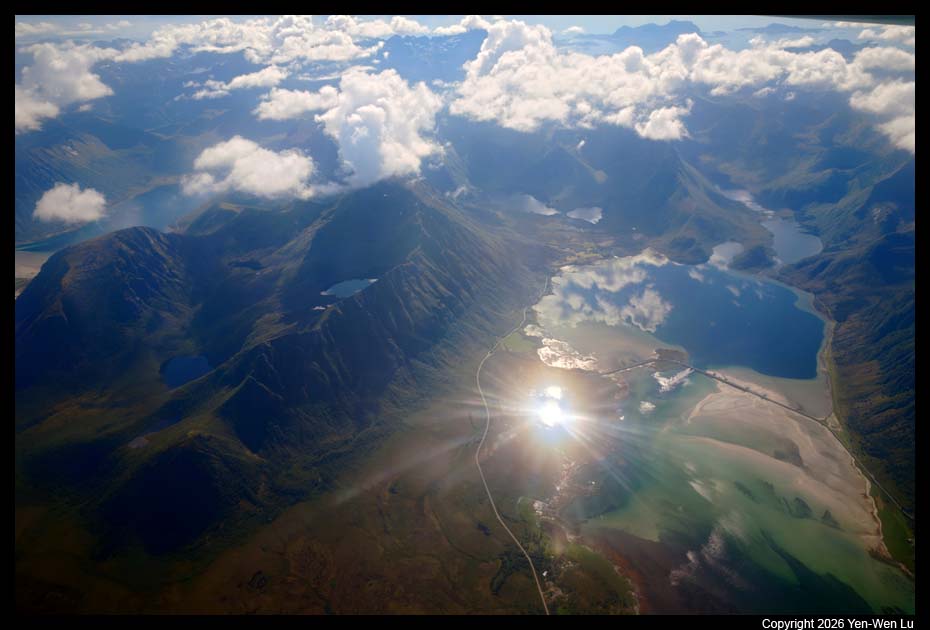
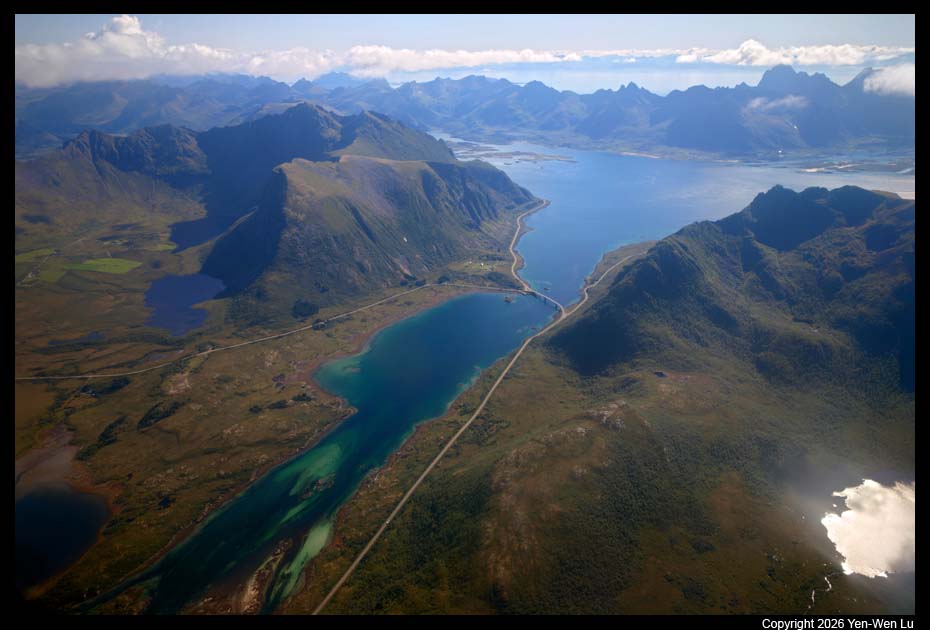
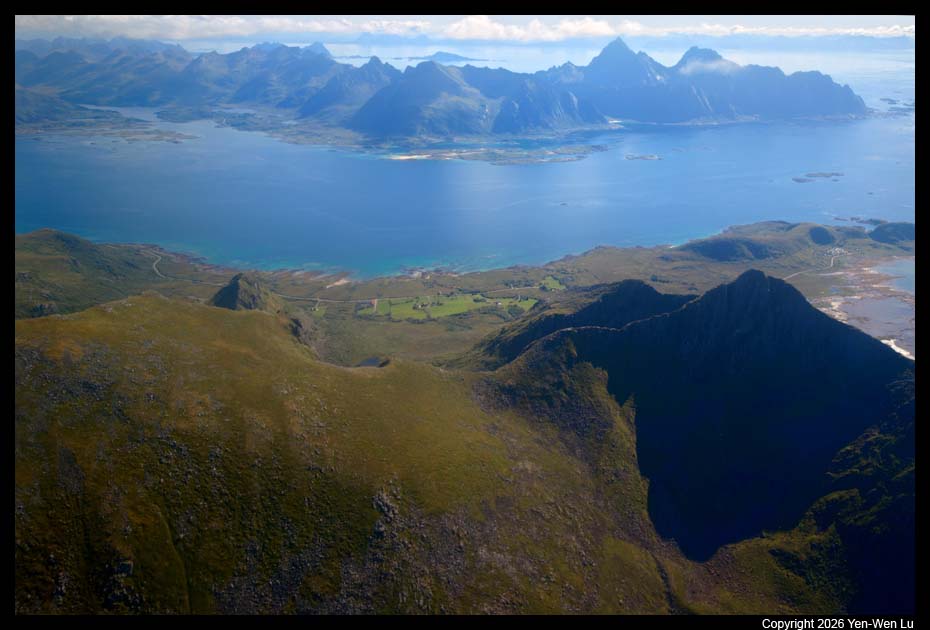
9:55AM), and then from TOS (11AM) to Leknes (LKN at 12PM). The aerial
views of Lofoten Islands were so amazing when we approached LKN before landing.
[Oslo] [Stavanger--Bergen] [Lofoten]
Day 12 (8/5) ...
- Festvågtind Trail (Festvågtinden)
After a nice lunch in Leknes, we
drove north to take our first hike in Lofoten, Festvågtind Trail.
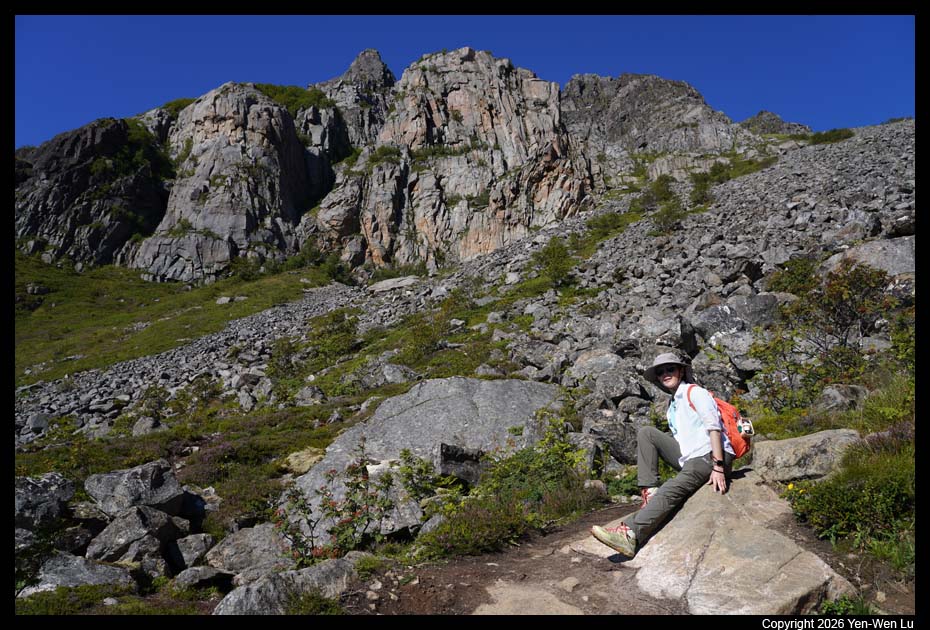
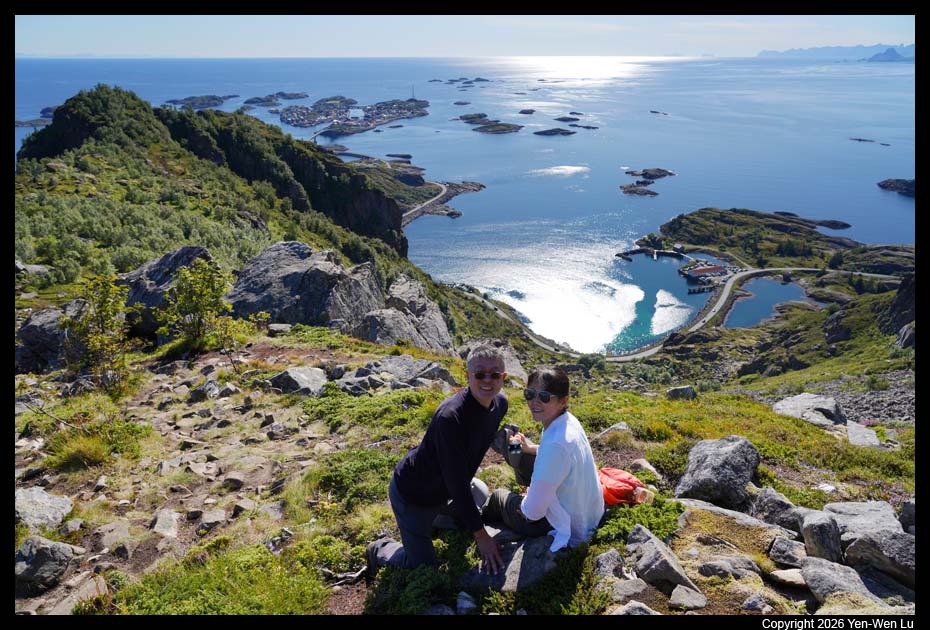
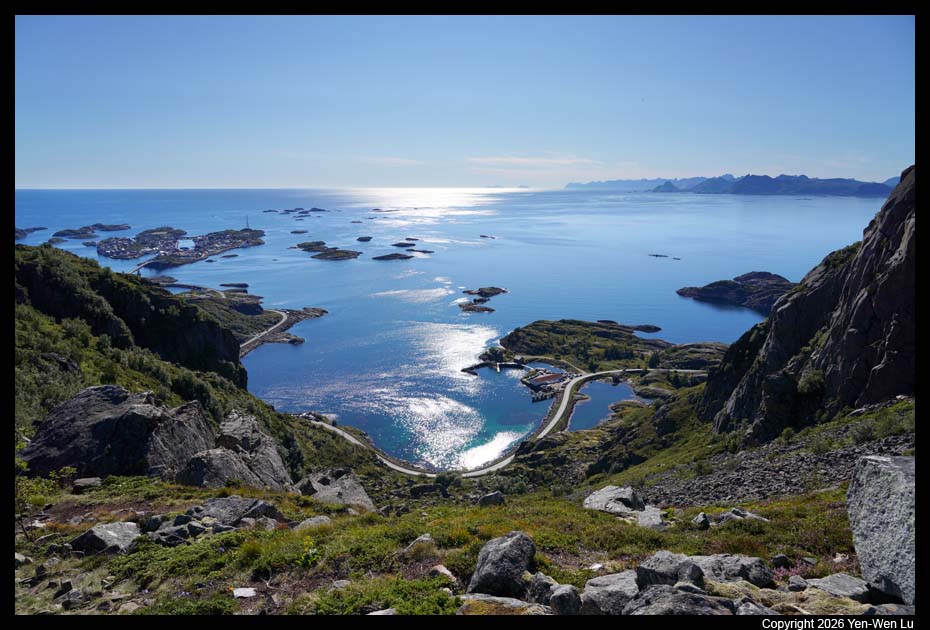
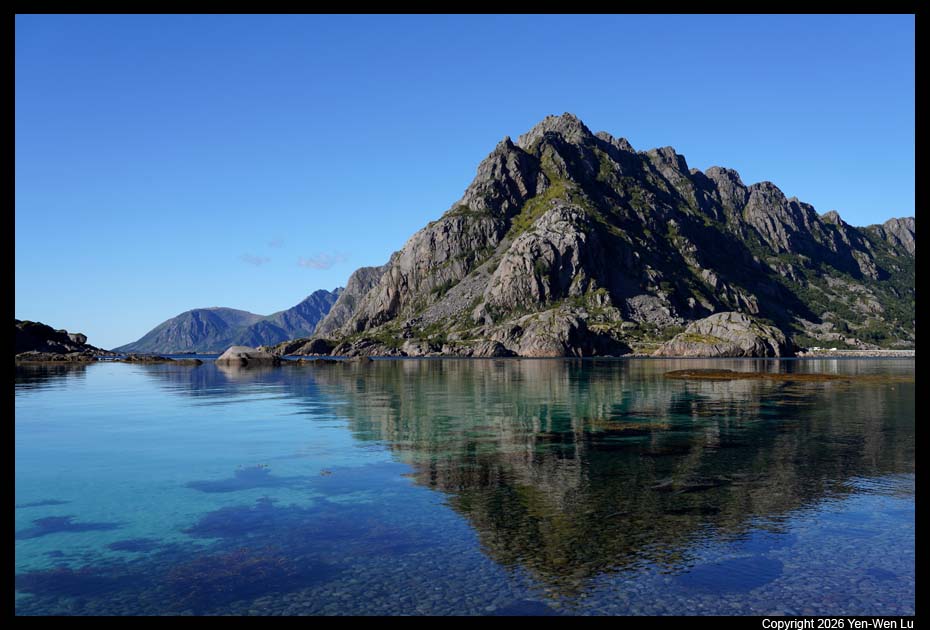
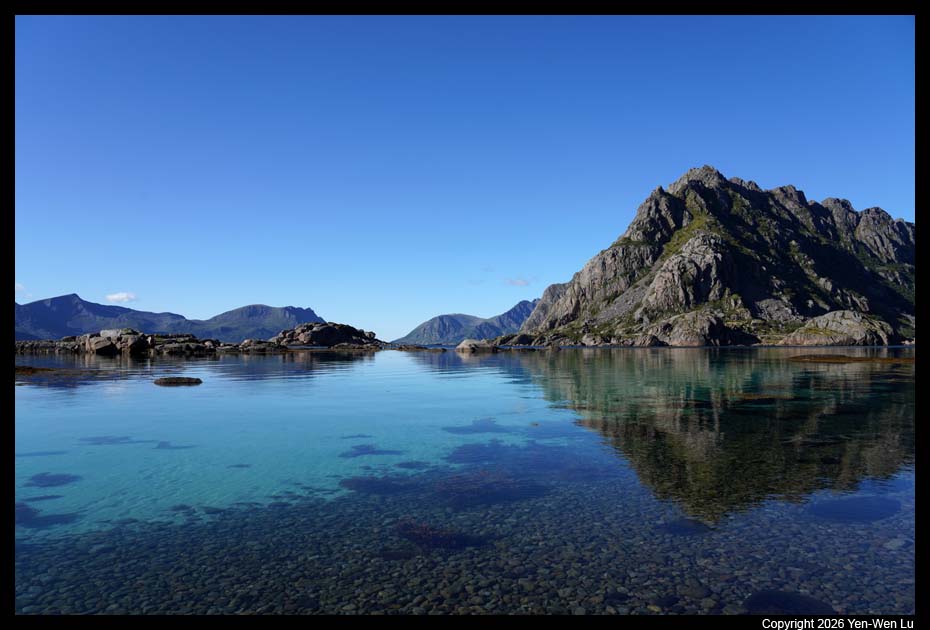
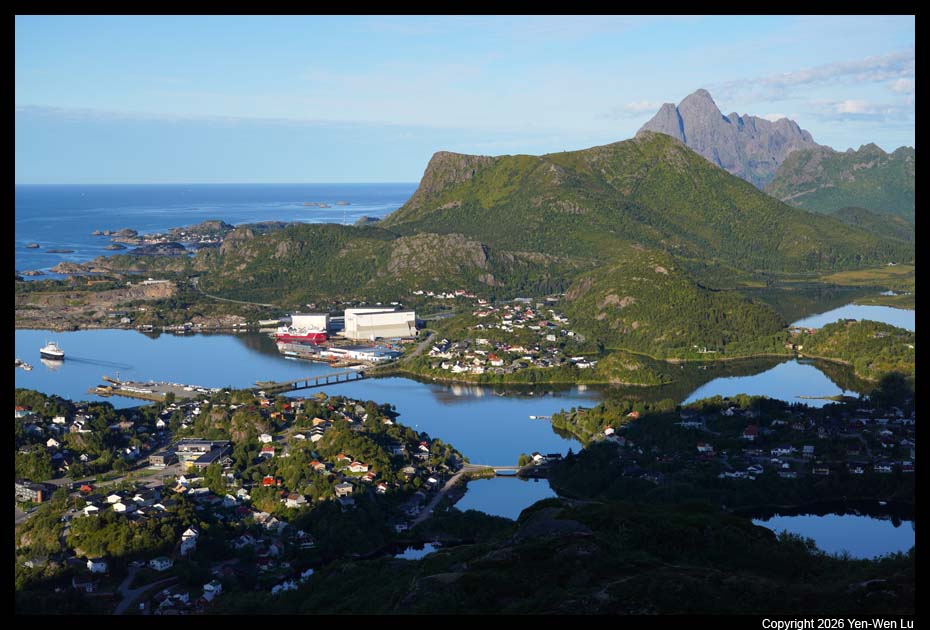
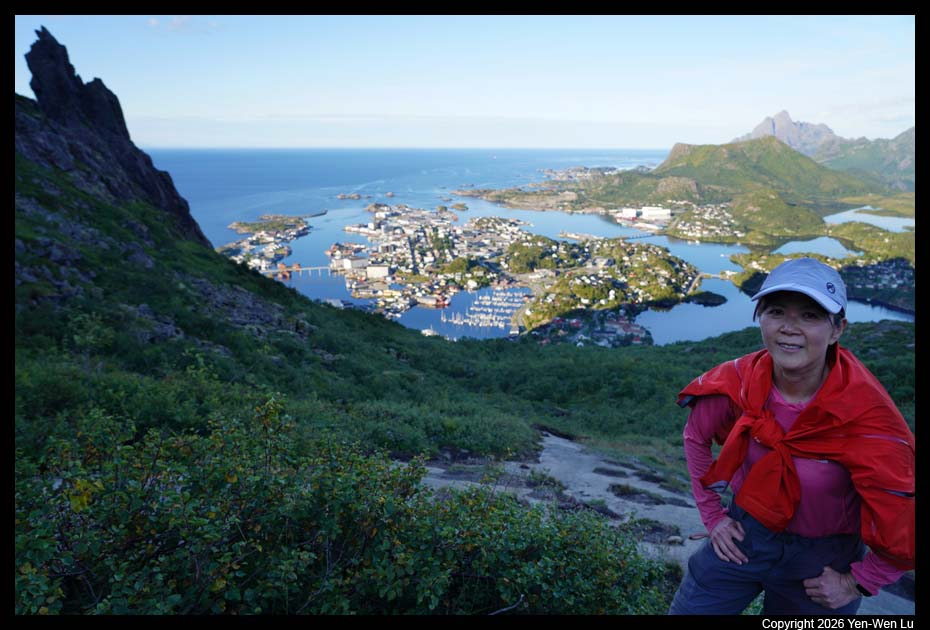
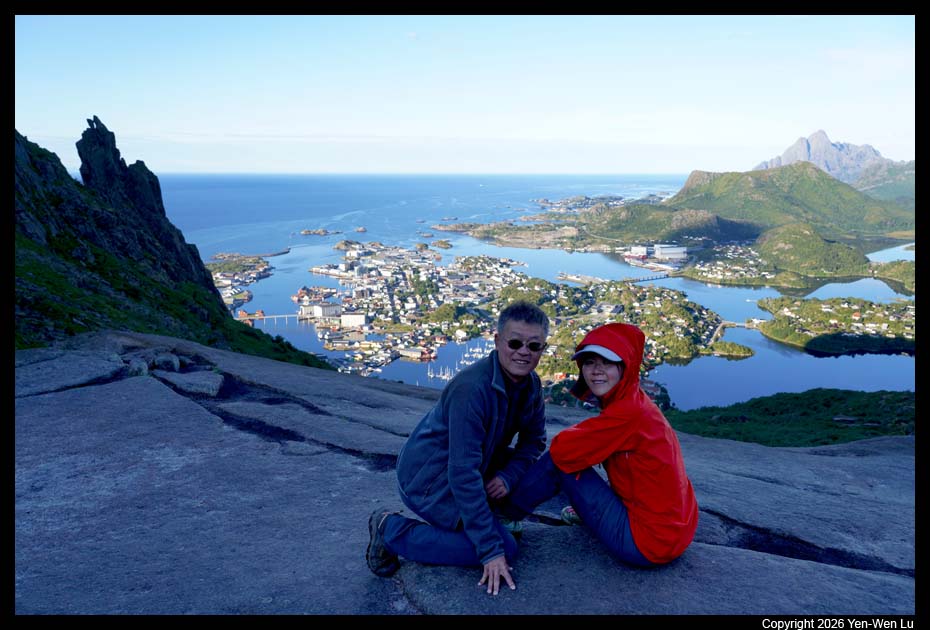
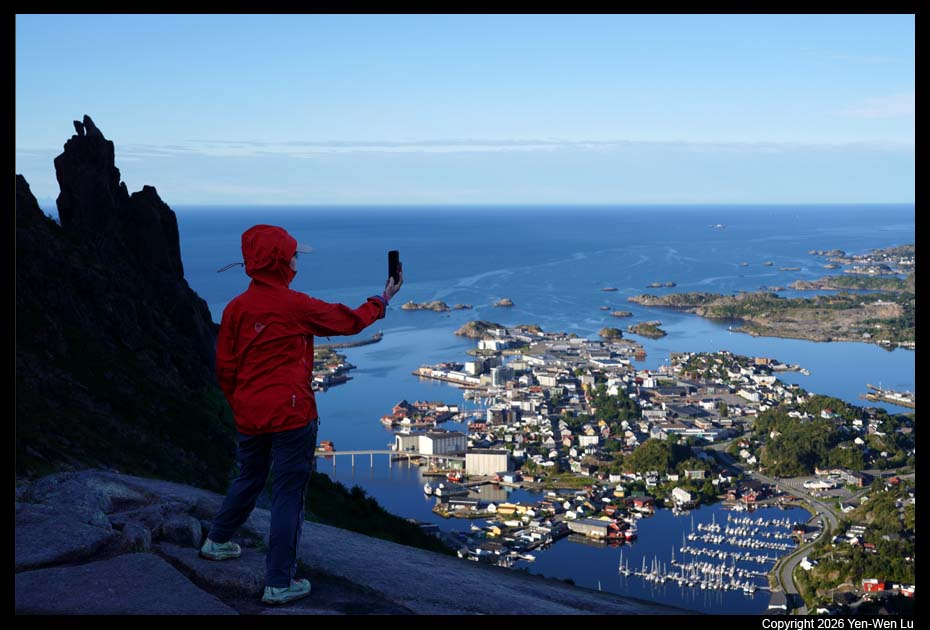
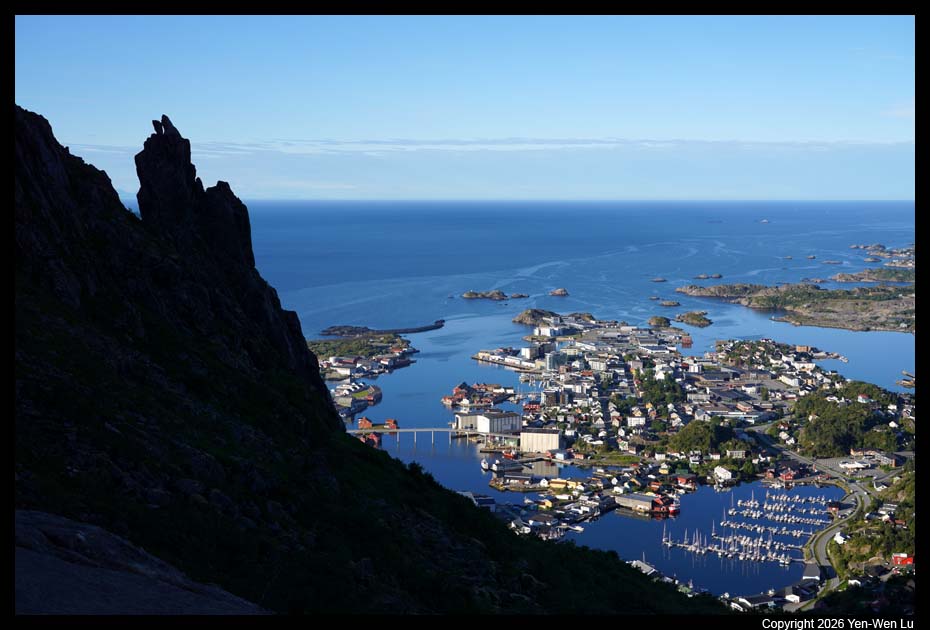
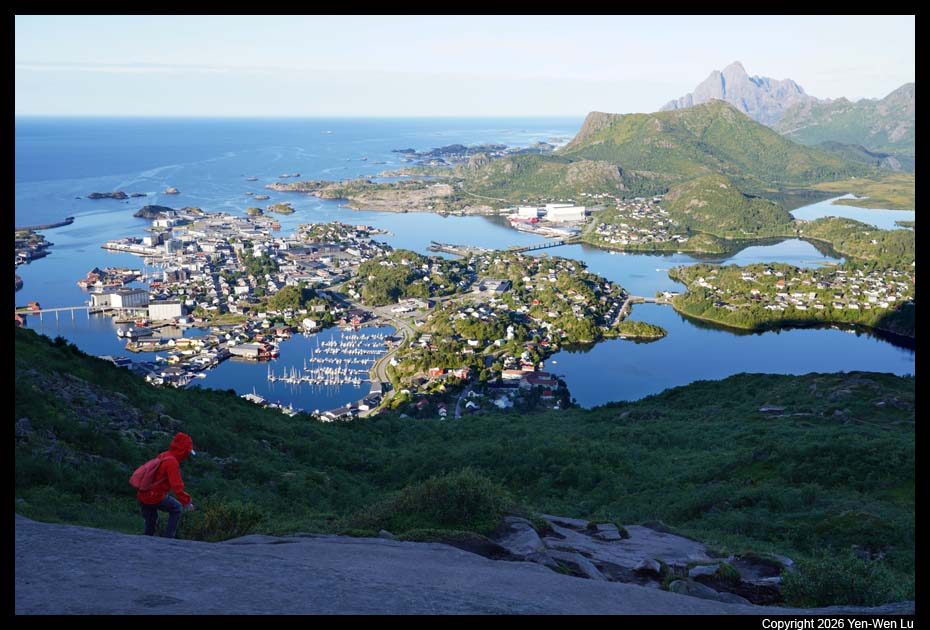
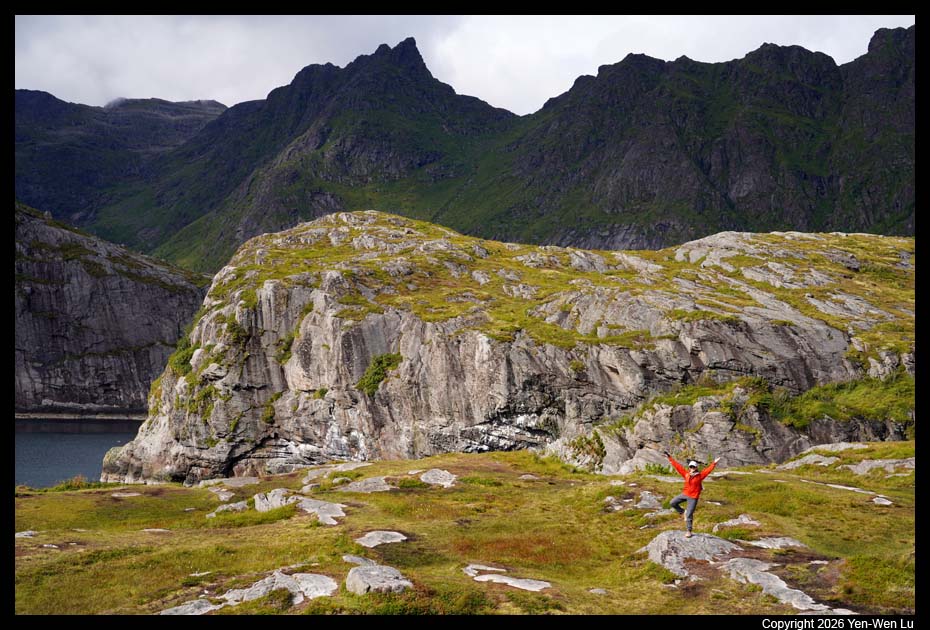
Festvågtinden is a steep and airy mountain hike in Lofoten, rising almost
directly from the sea above Henningsvær. It is a short but highly
demanding, un-stabilized mountain hike (1.7-mile round trip with 1640 ft
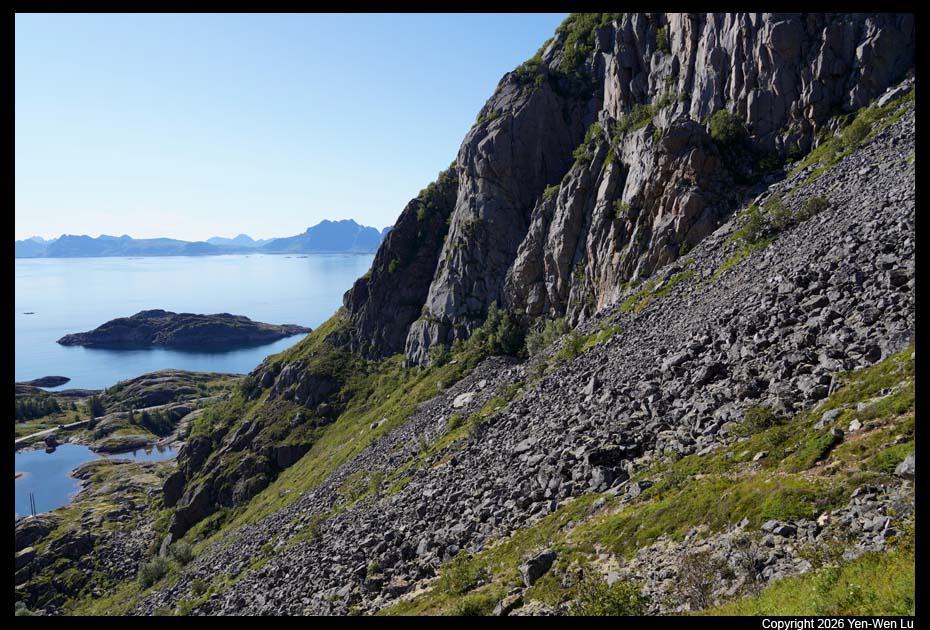
elevation gain). Festvågtind is on a raw, un-marked trail that
requires hikers to navigate steep dirt paths, large boulders, and loose
scree fields. We actually went too far left on the lower section of
the trail and could not find a safe passage crossing through the rocky
field, so we had to retrace our path back to find a better route to connect
to the "real" trail up. After scrambling and struggling for more than
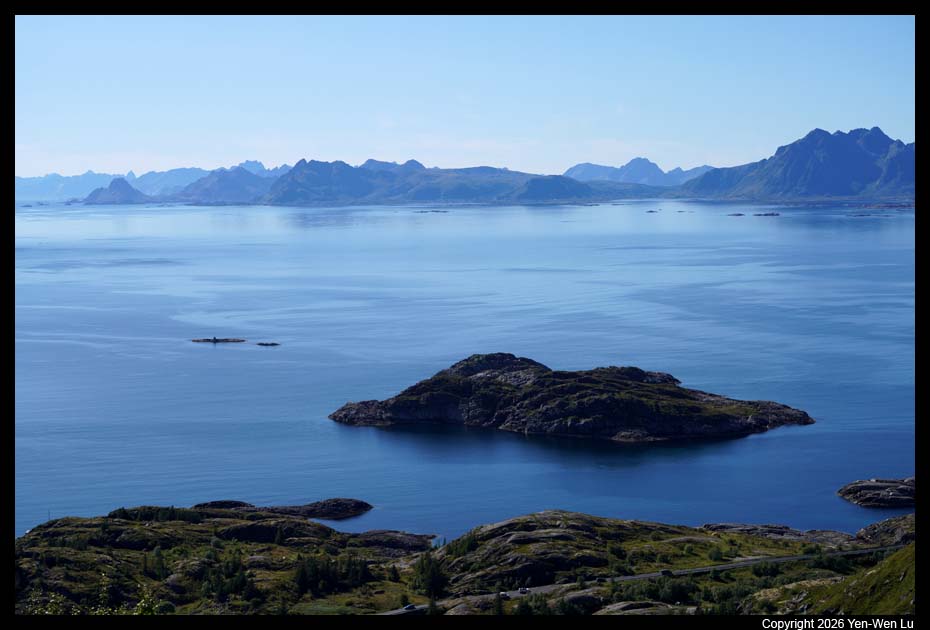
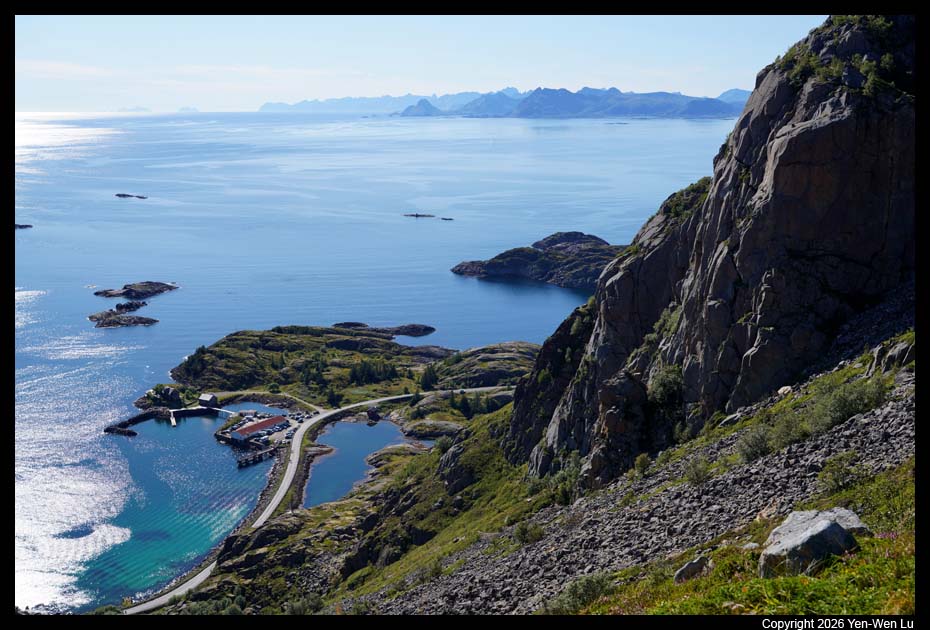
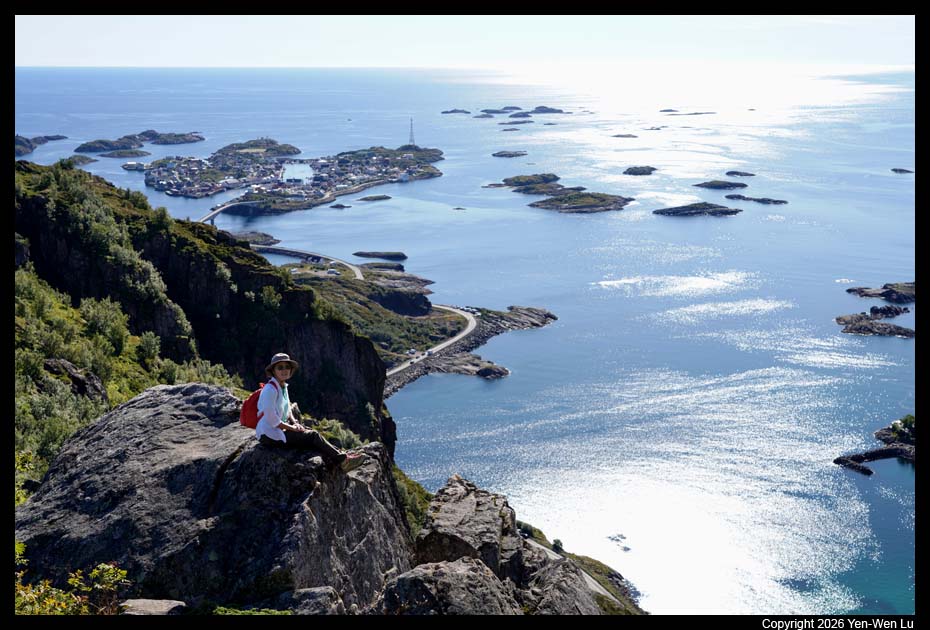
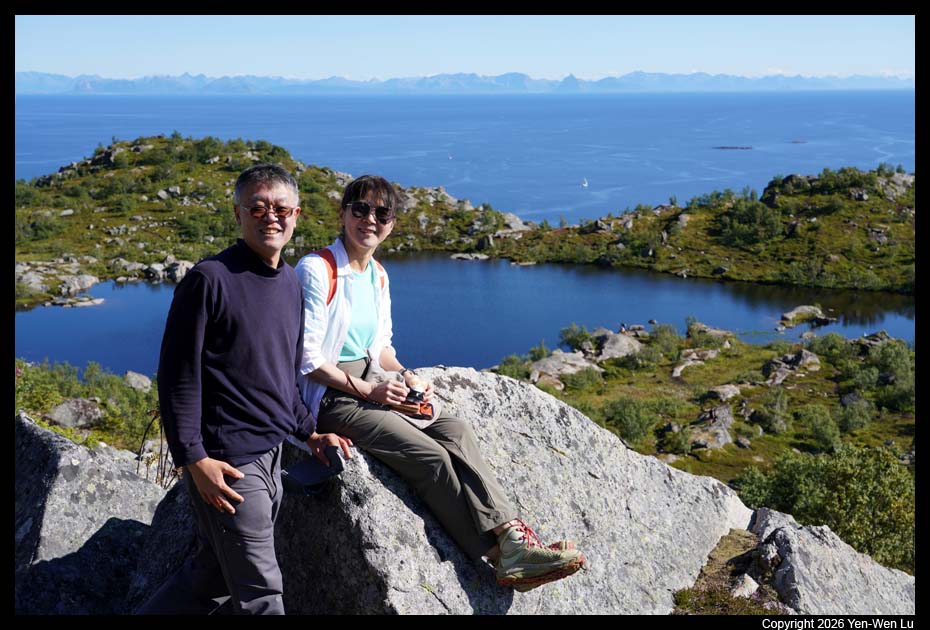
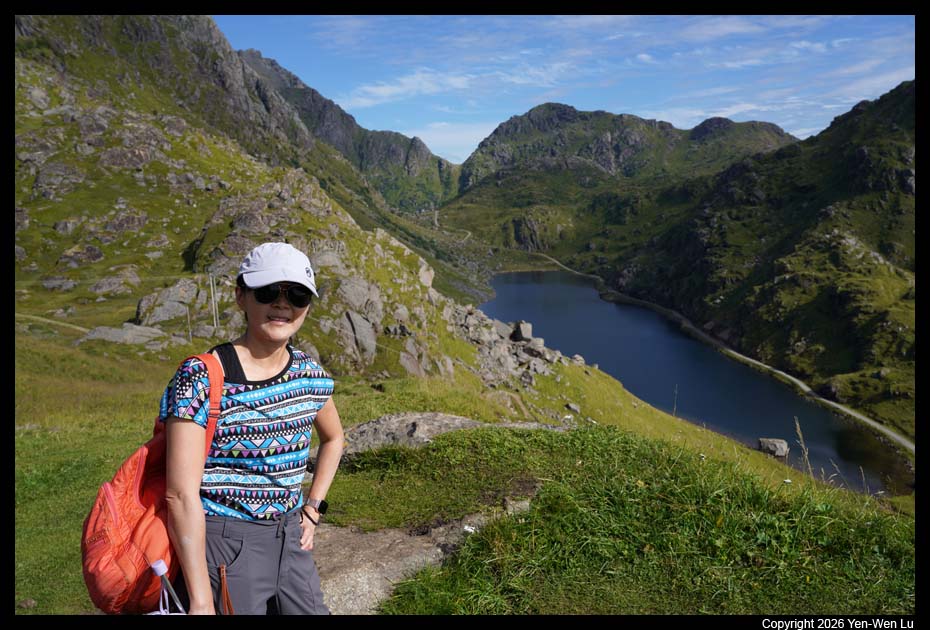
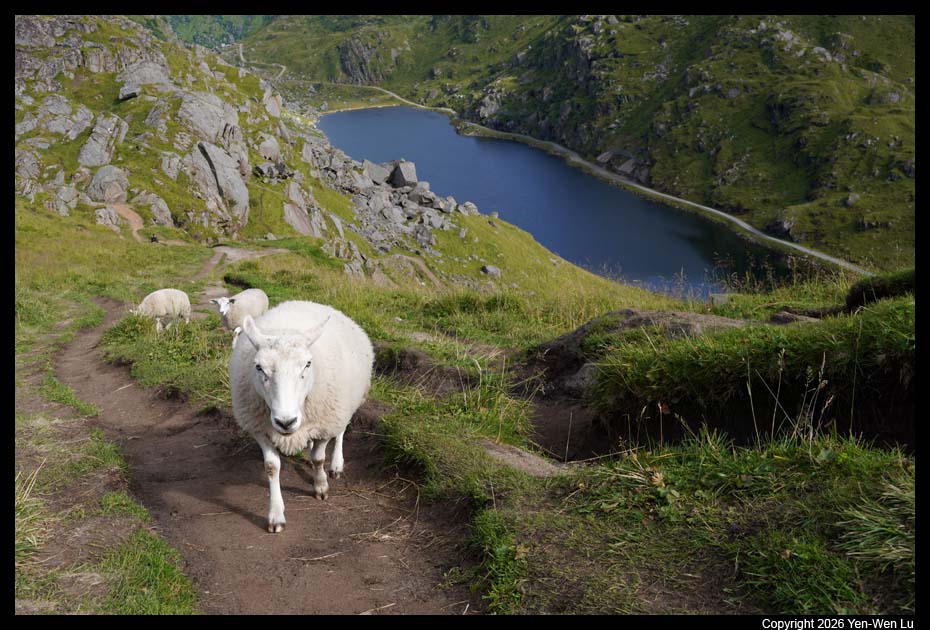
an hour, we finally pushed ourselves up to a flat area around the Heiavatnet
Lake (the halfway mark) to have panoramic views over the village and distant
island peaks. We decided not push forward to upper peak and summit
since we did not really feel comfortable to walk on these loose steep rock
fields and I think we had good enough views already :-)
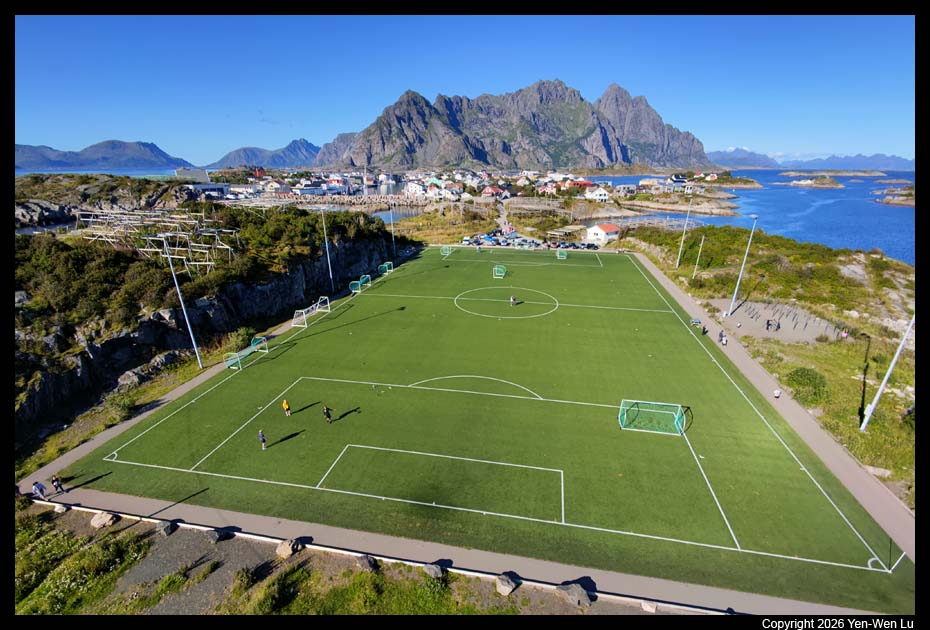
- Henningsvær
Henningsvær is a historic fishing village spread across
several tiny islands off the southern coast of Austvågøya in the Lofoten
archipelago. Connected to the mainland by the sweeping Henningsvær Bridges,
this vibrant village has earned the nickname "The Venice of Lofoten".
Henningsvær Stadium is one of the most famous and photographed soccer fields
on Earth.
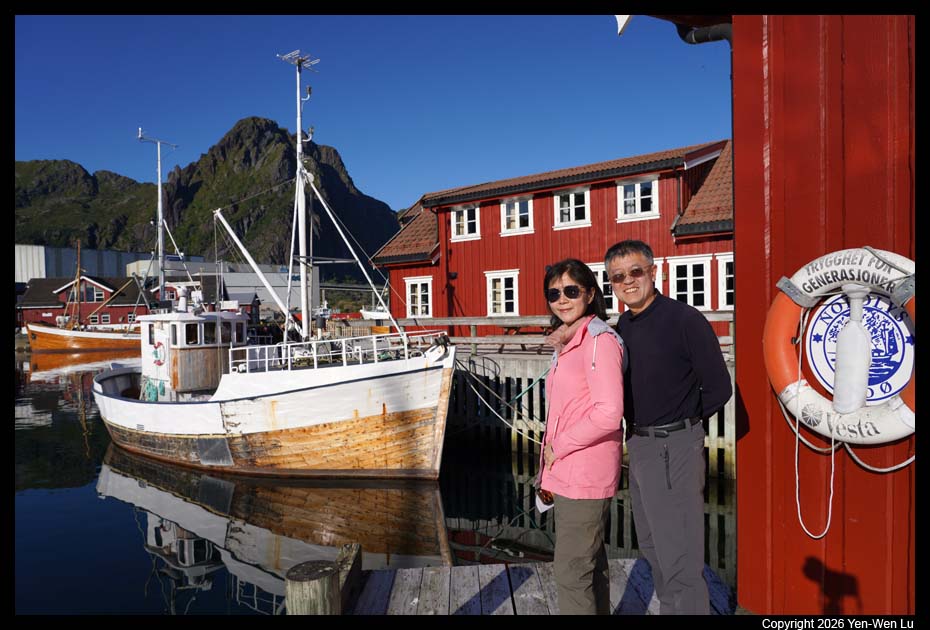
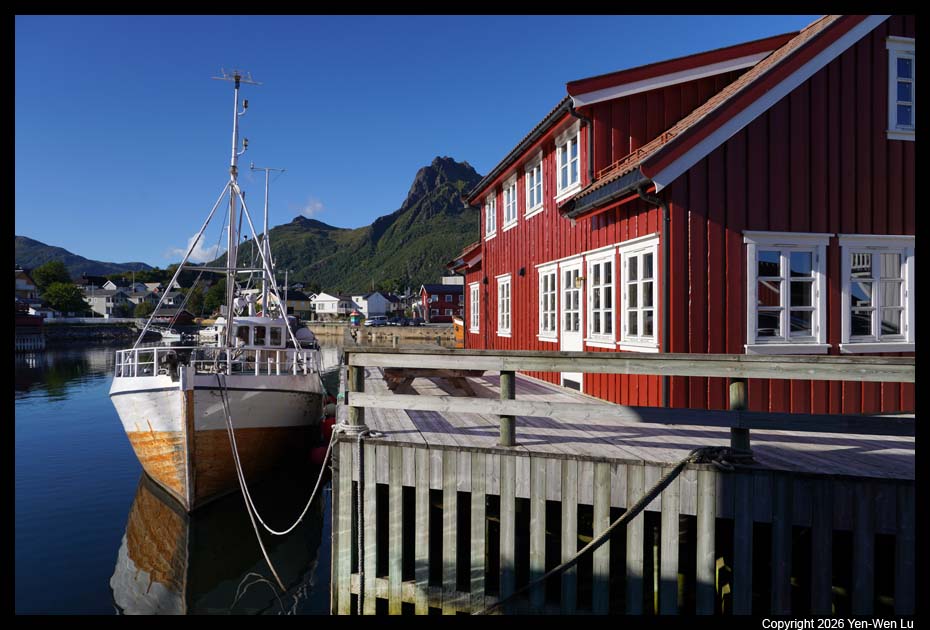
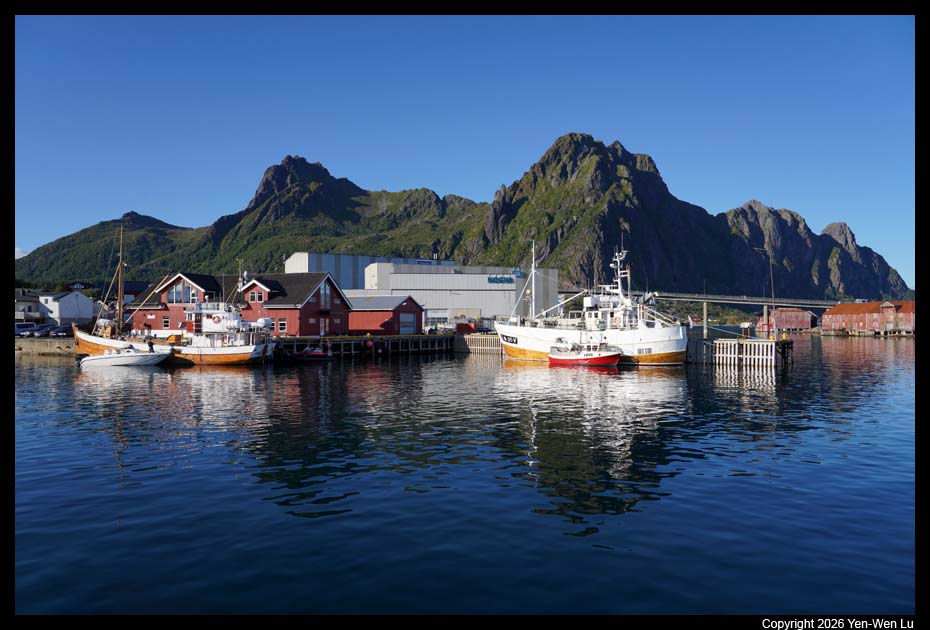
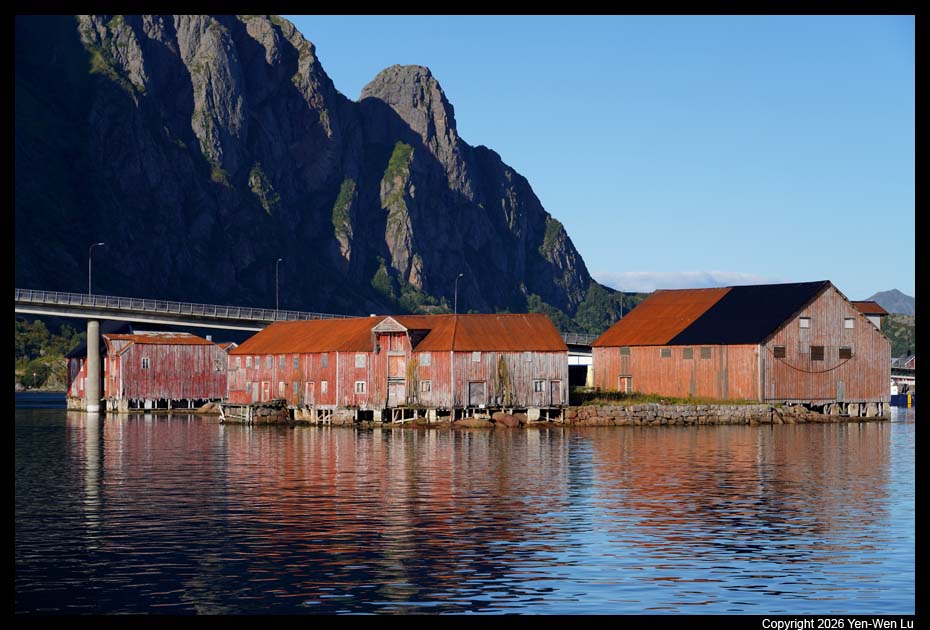
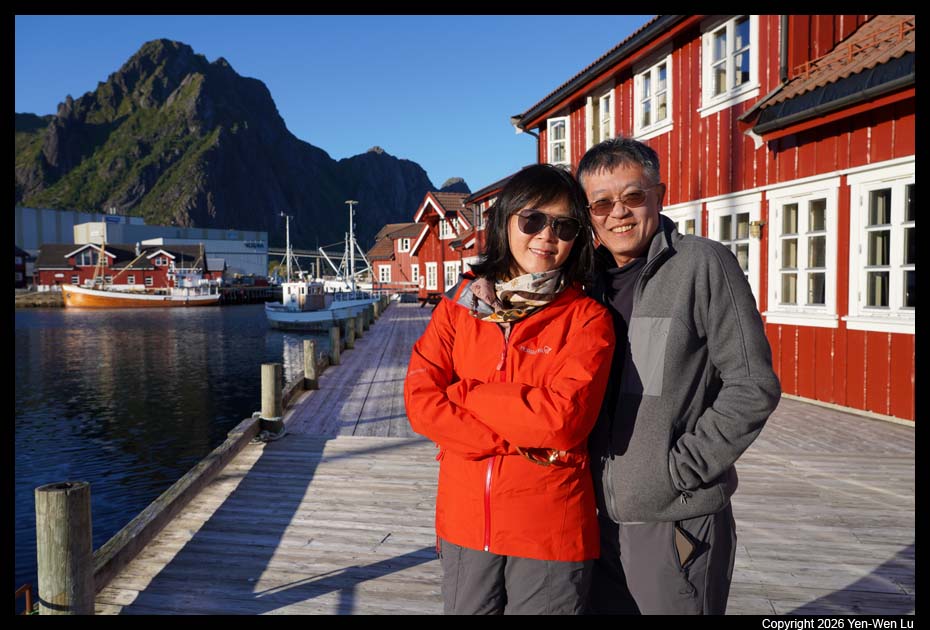
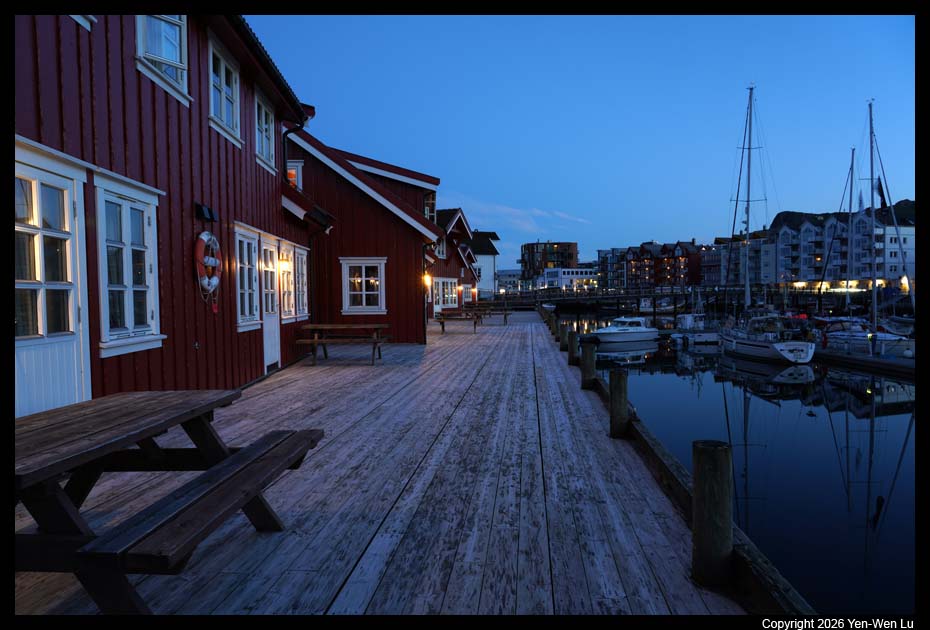
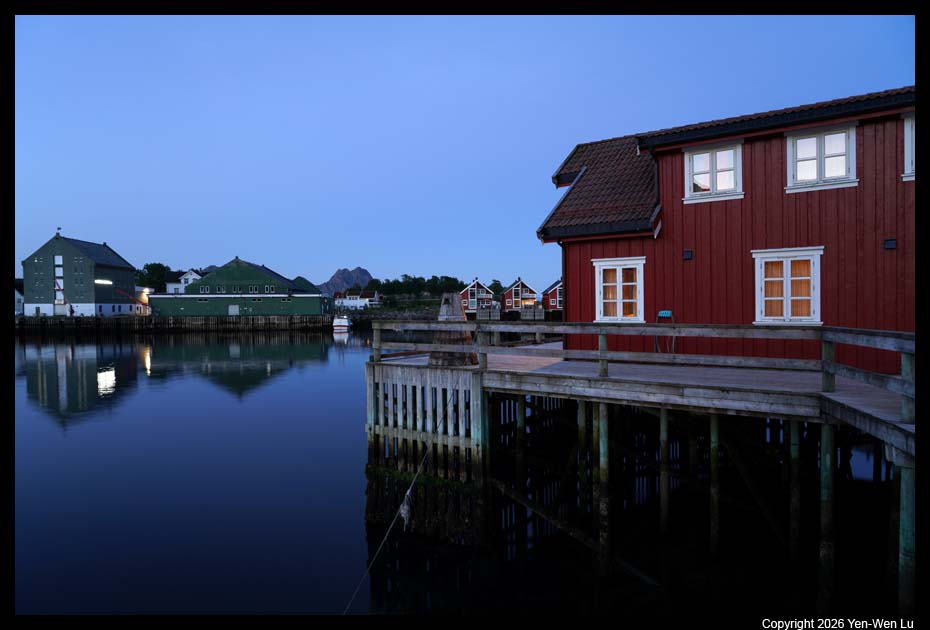
- Anker Brygge
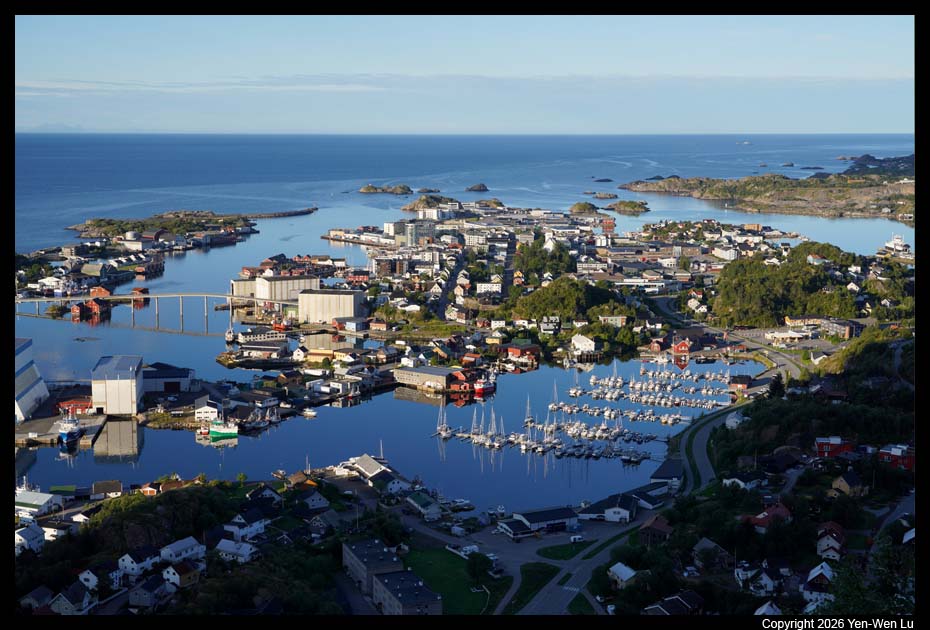
We drove to
Svolvær to check in to Anker Brygge for our first night in Lofoten.
Anker Brygge is an iconic hotel resort located on the small island in the
middle of the harbor of Svolvær. A former fish factory and wharf area
dating back to 1915, it has been beautifully transformed into high-end,
traditional fisherman's cabins (rorbuer).
Day 13 (8/6) ...
- Djevelporten (Devil's Gate)
We got up really early to start the hike
to Djevelporten before 6AM. The trailhead is only 5-min drive from the
hotel, and its parking lot was all empty at this time of the day. The
trail to Djevelporten is ~ 1.9-mile round trip with 1300 ft elevation gain.
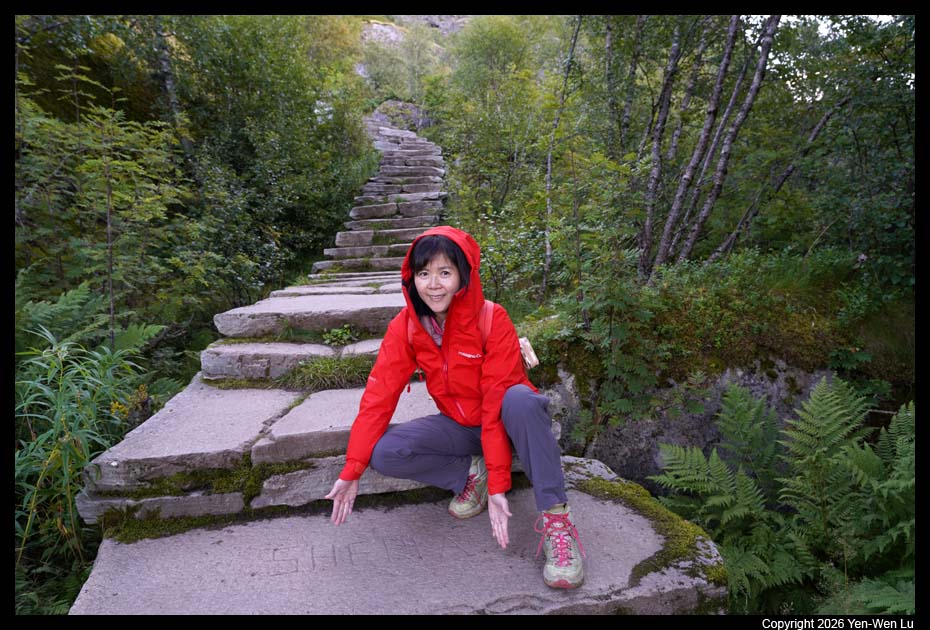
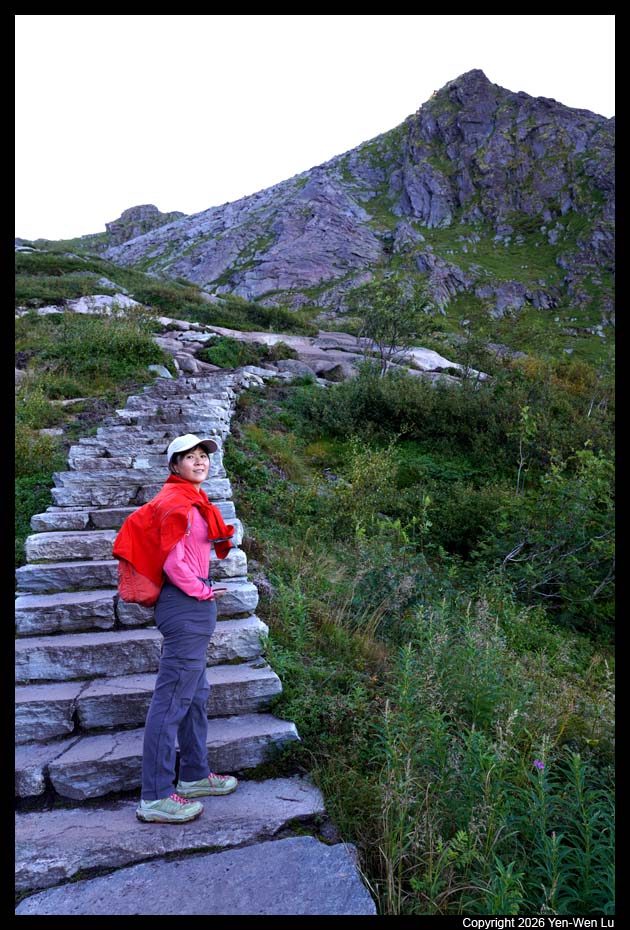
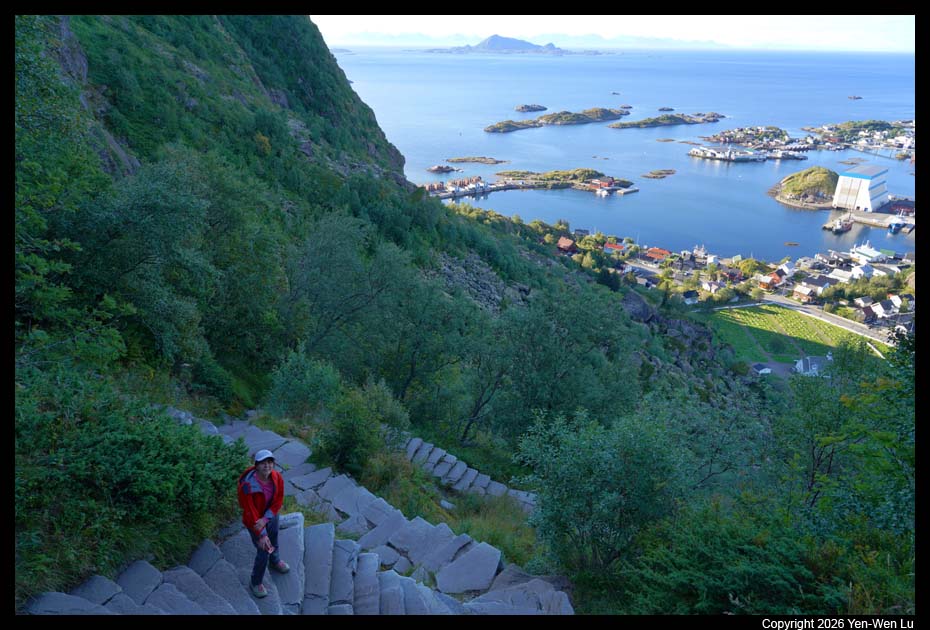
The hike starts immediately with a steep, well-maintained stone staircase
consisting of hundreds of steps built by Sherpas (Djeveltrappa (The Devil’s
Stairs)). This makes the intense initial vertical climb straightforward and
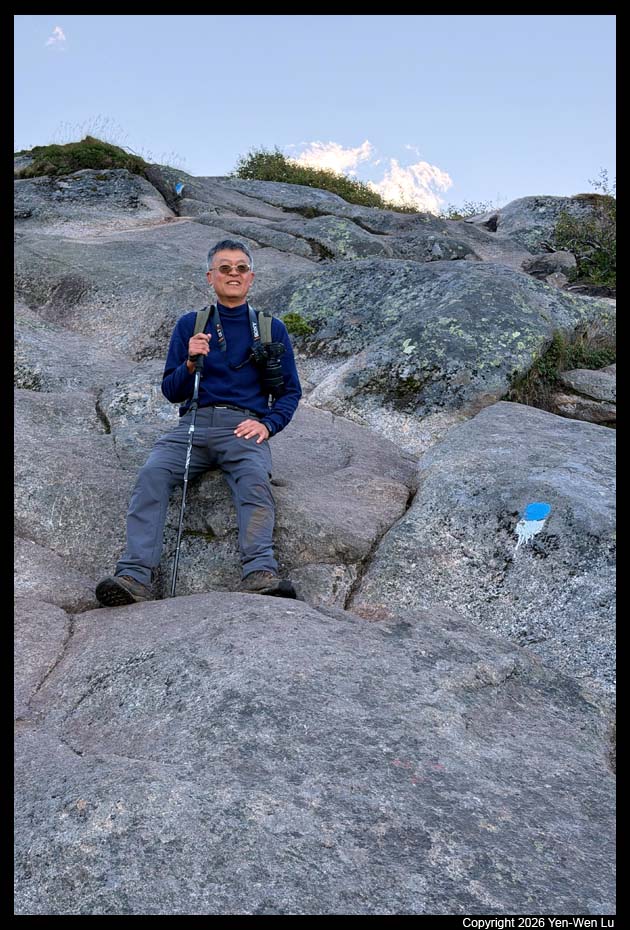
secure. Once the stairs end, the path turns into standard, raw alpine
terrain. You must navigate slick granite rock slabs, muddy channels, and
steep gullies. Compared to the Festvågtind Trail yesterday,
Djevelporten trail was much easier to follow (with some
trail markers
on the rocks) and handle. After taking some pictures at a large
flat boulder area, we decided to turn around to head back down because again
we had good enough views (so we did not really see the Devil's Gate...).
We retuned to the trailhead and went back to the hotel at
about 8AM. We had plenty of time to have breakfast and rest (and went back
to bed for more sleep) before checking out before noon.
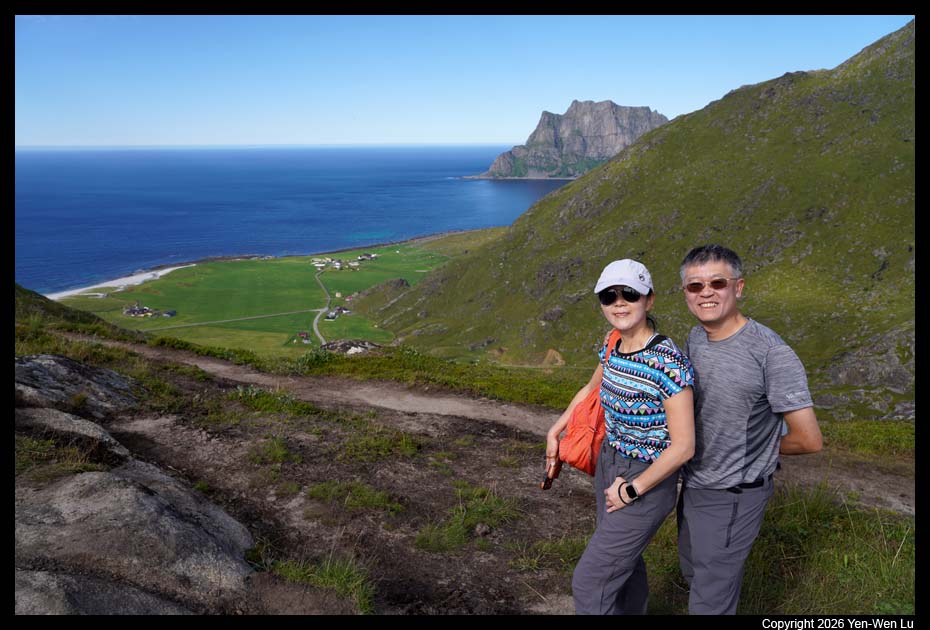
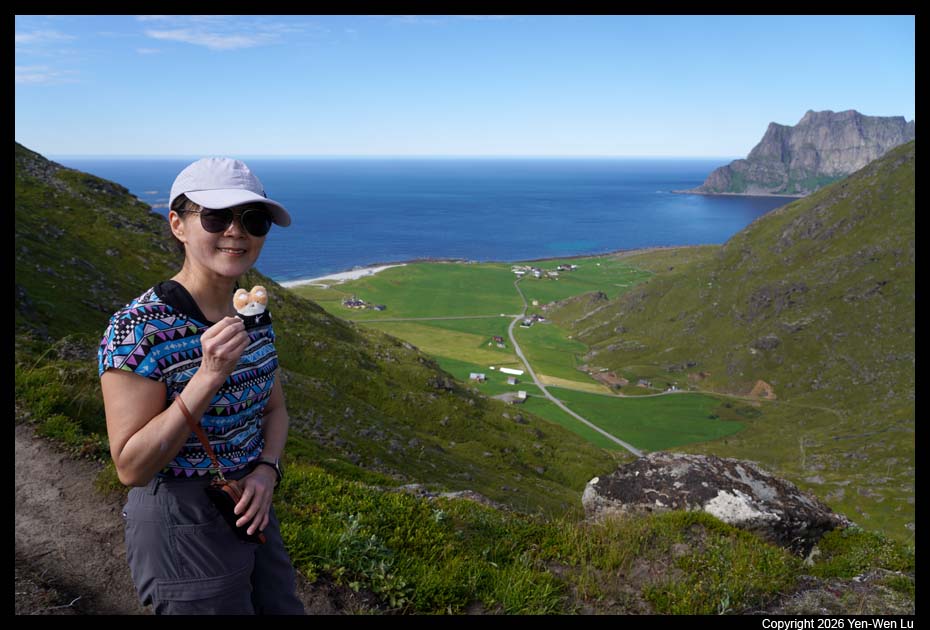
- Haukland Beach and Mannen
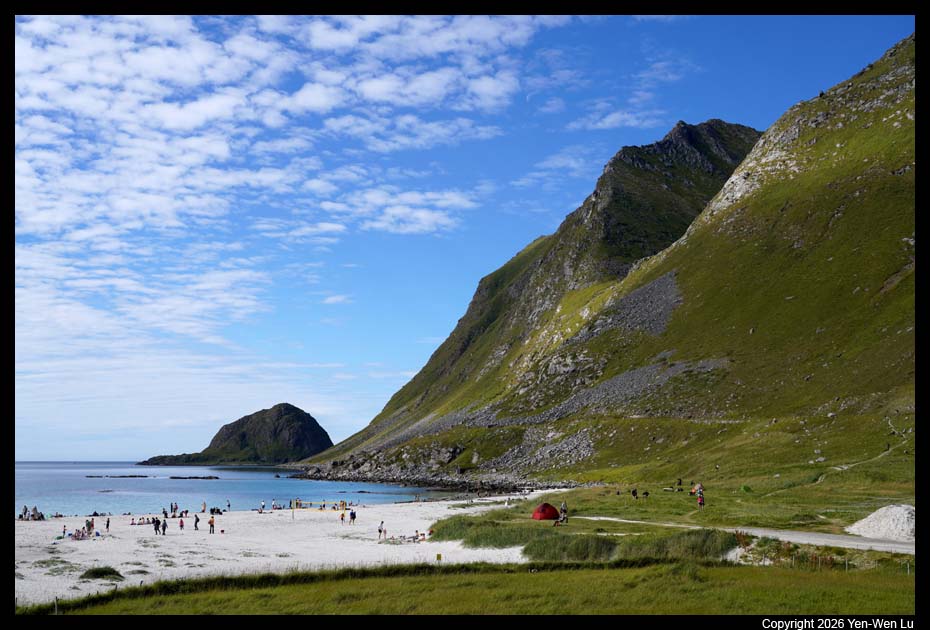
We drove to Haukland Beach and had our rice
bowls (Onishi Onigiri) for lunch at the beach cafe (we also ordered brownie
and coffee so we could use their table). After lunch, we took the
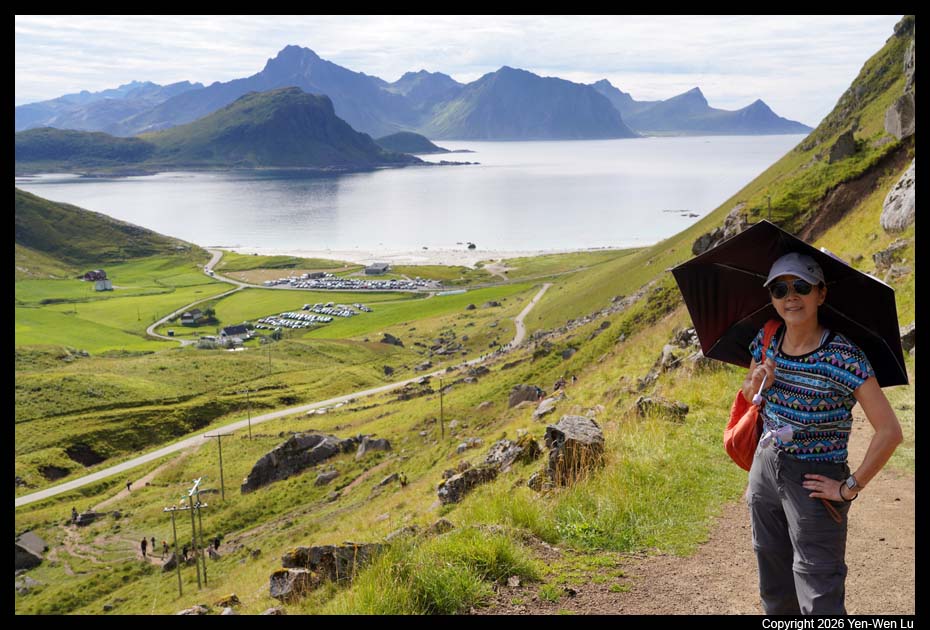
trail from Haukland Beach up to the ridge of Mount Mannen. The trail
is 2.7-mile round trip with 1190 ft elevation gain. The trail starts
at the main Haukland Beach parking lot and along the old gravel coastal
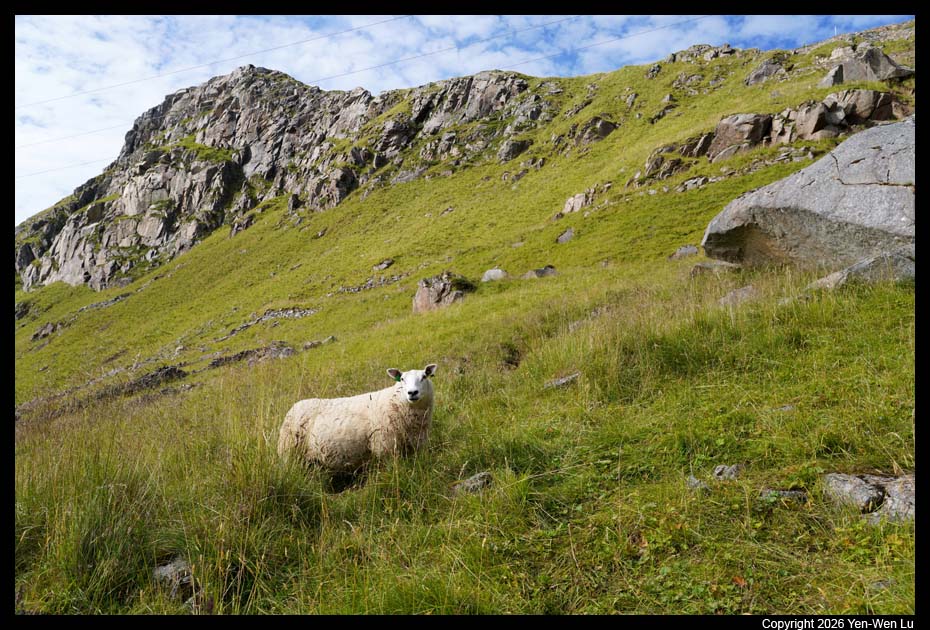
road. The trail then begins as a grassy, muddy switchback path through
a sheep pasture. It climbs steadily up the backside of the mountain ridge,
away from the ocean. After the main ridge saddle, the trail turns left and
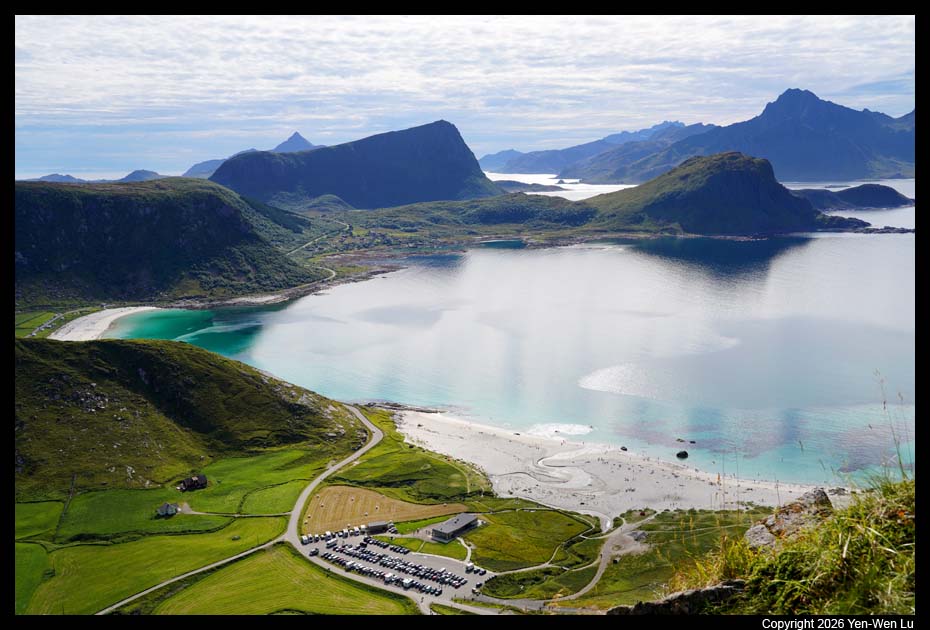
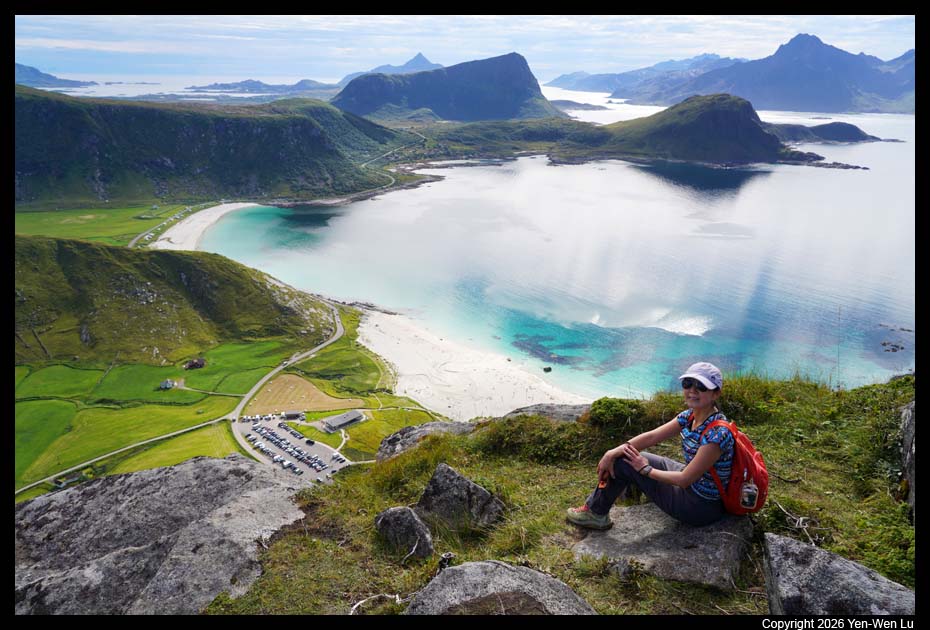
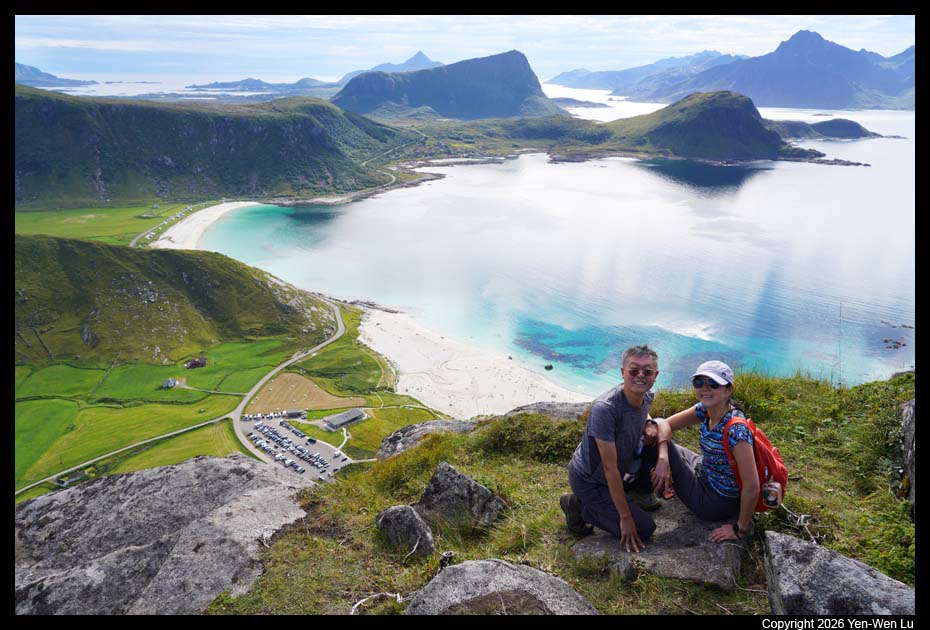
follows the spine of the mountain toward the peak. As we hiked along the
ridge, the views of Haukland Beach open up spectacularly to our left.
The final stretch to the summit becomes quite narrow and rocky. Again
we decided not to push forward but to retreat back down since we already
enjoyed the view so much :-)
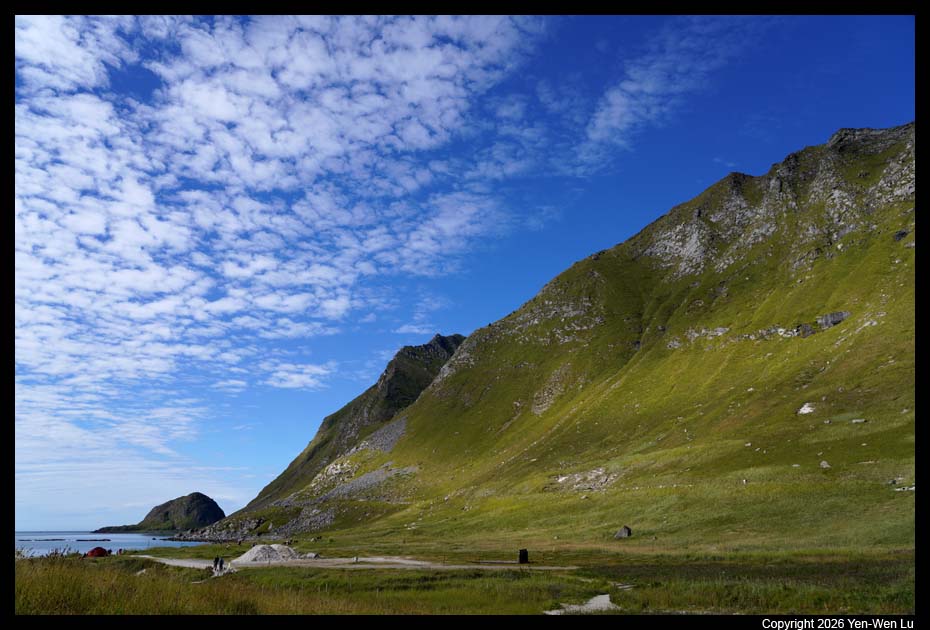
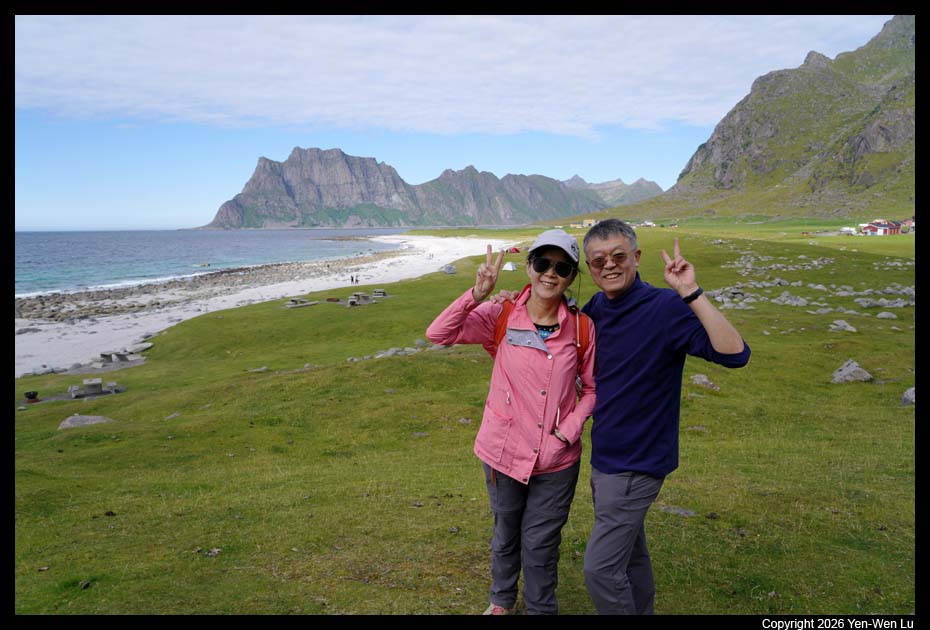
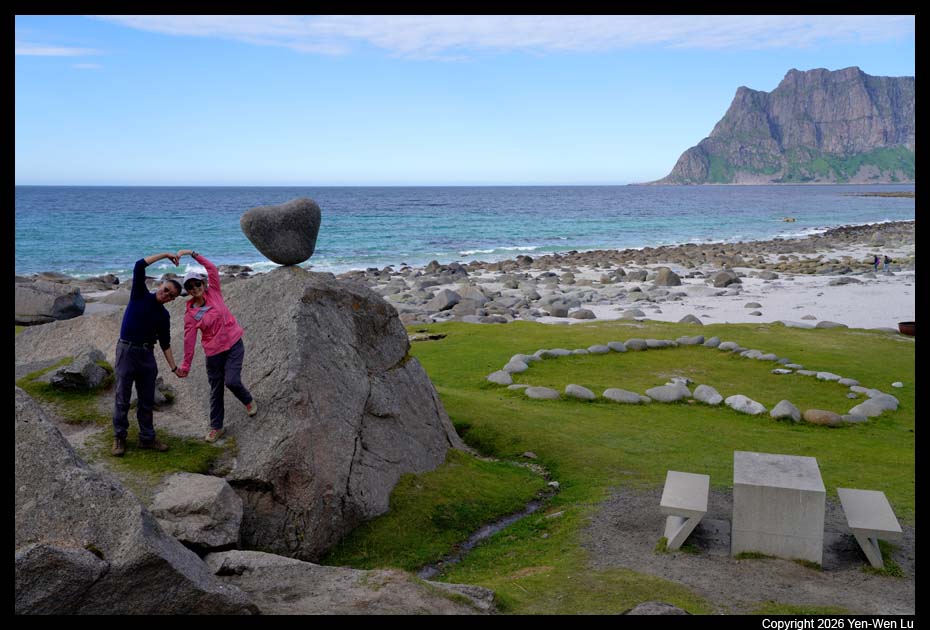
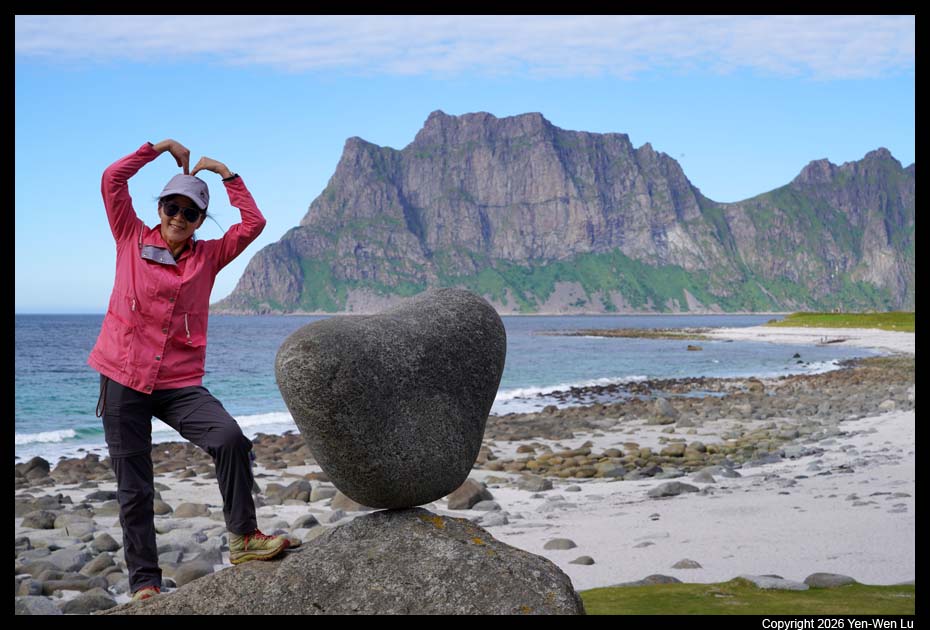
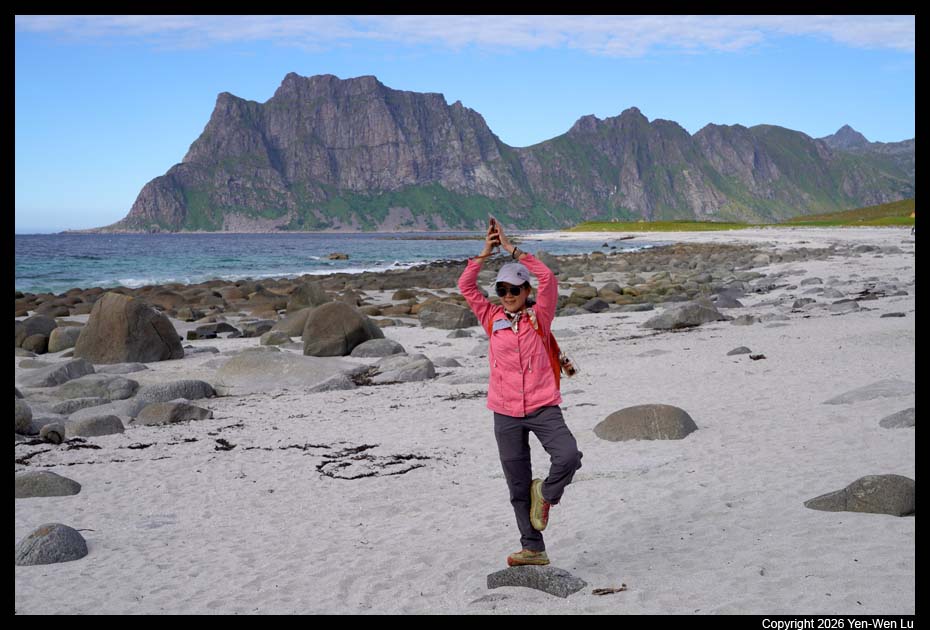
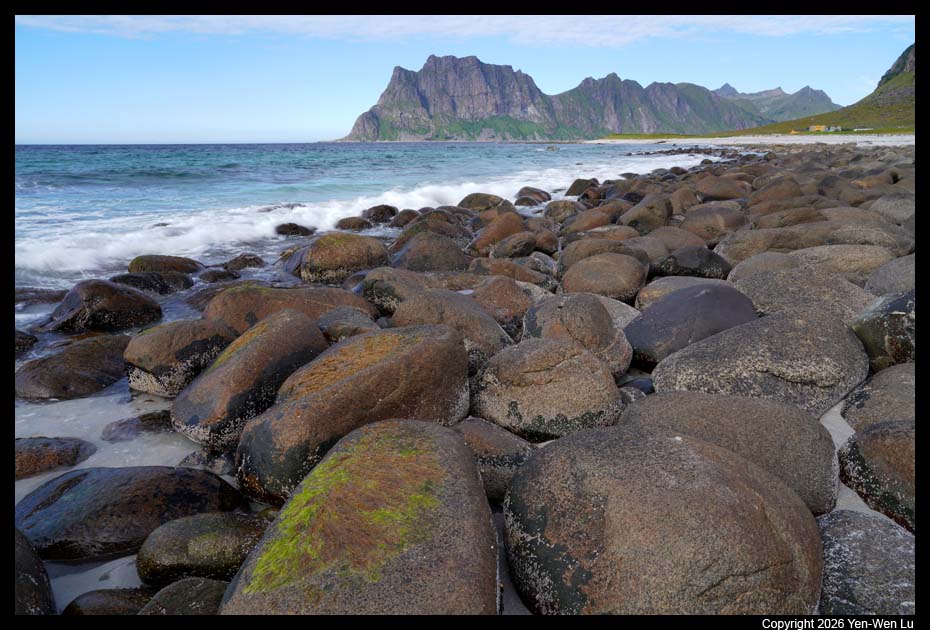
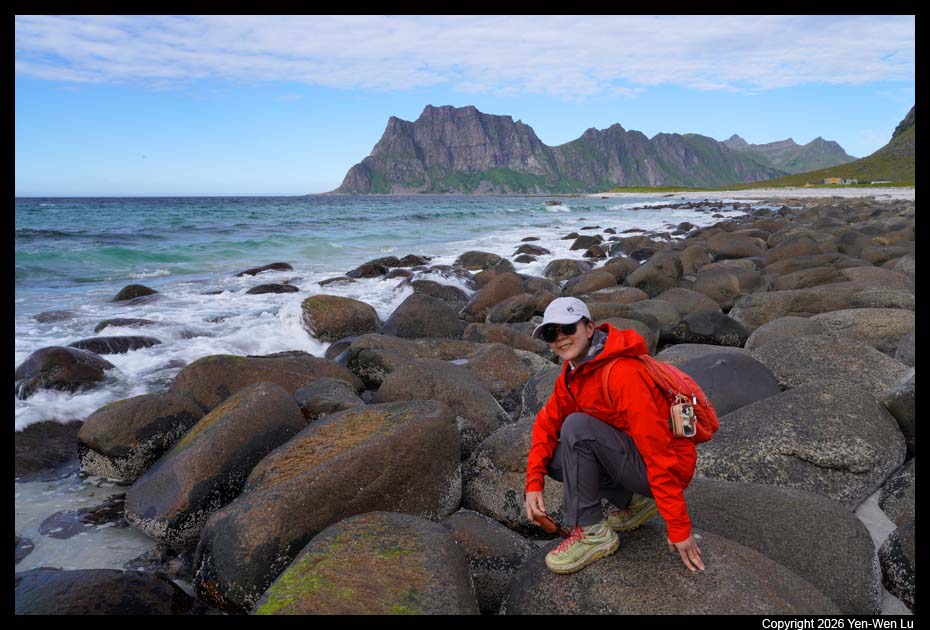
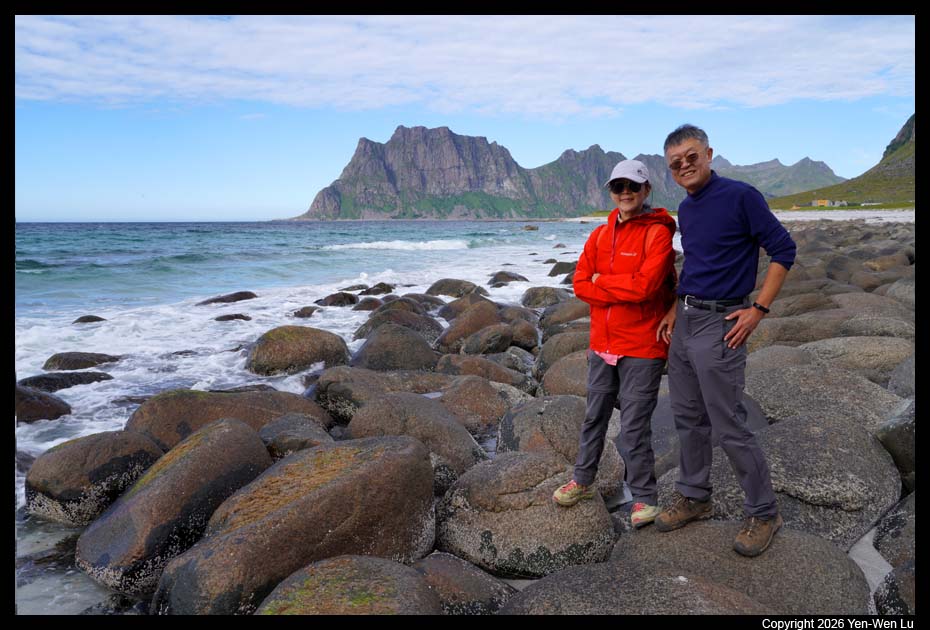
- Uttakleiv Beach
After returned to Haukland Beach, we drove a short
distance through the tunnel to the other side of the mountain to Uttakleiv
Beach. While Haukland is known for its pure white sand, Uttakleiv is
celebrated for its dramatic mix of fine sand, bright green shoreline grass,
and thousands of smooth, dark, bowling-ball-shaped boulders.
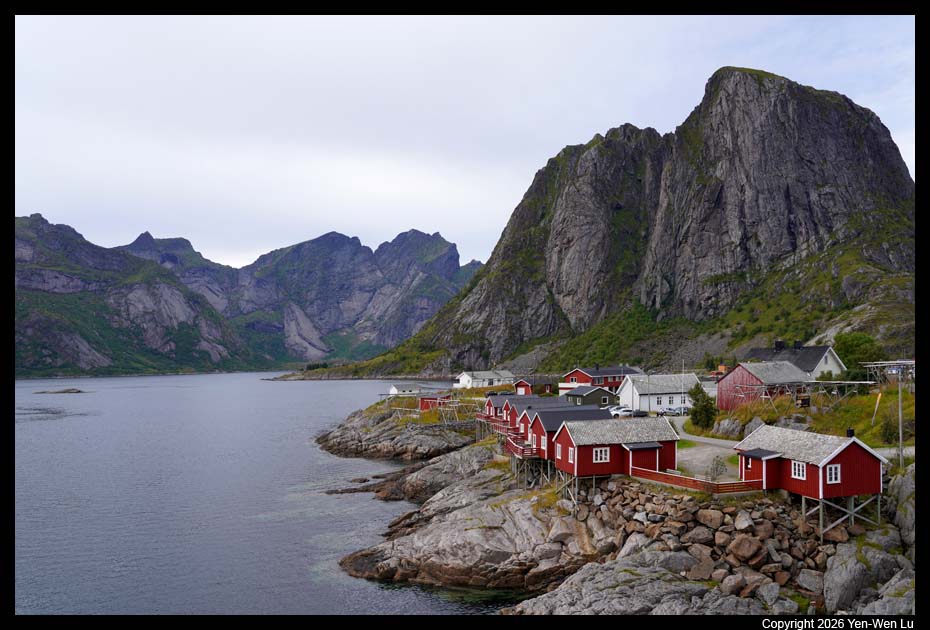
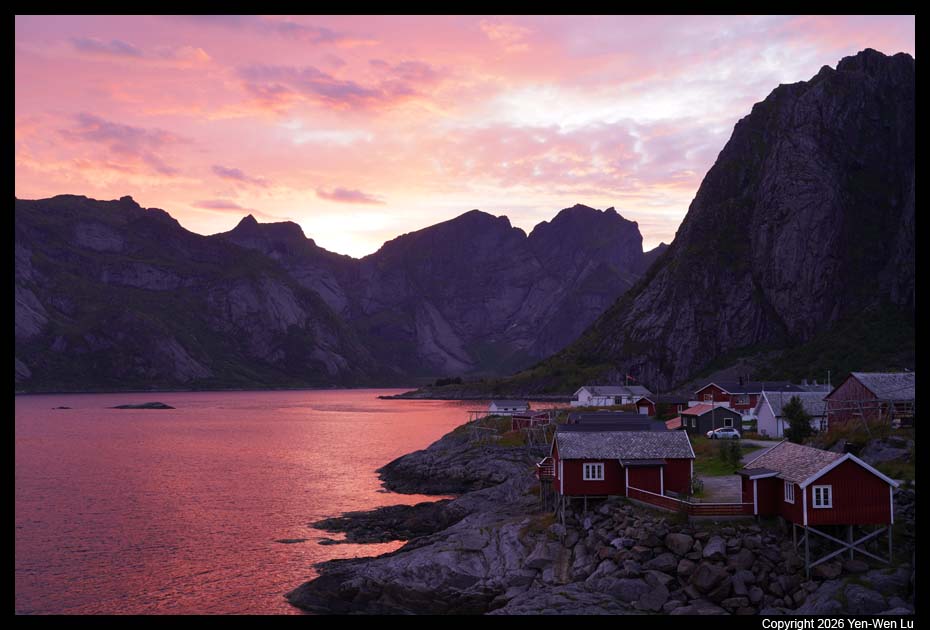
- Hamnøy
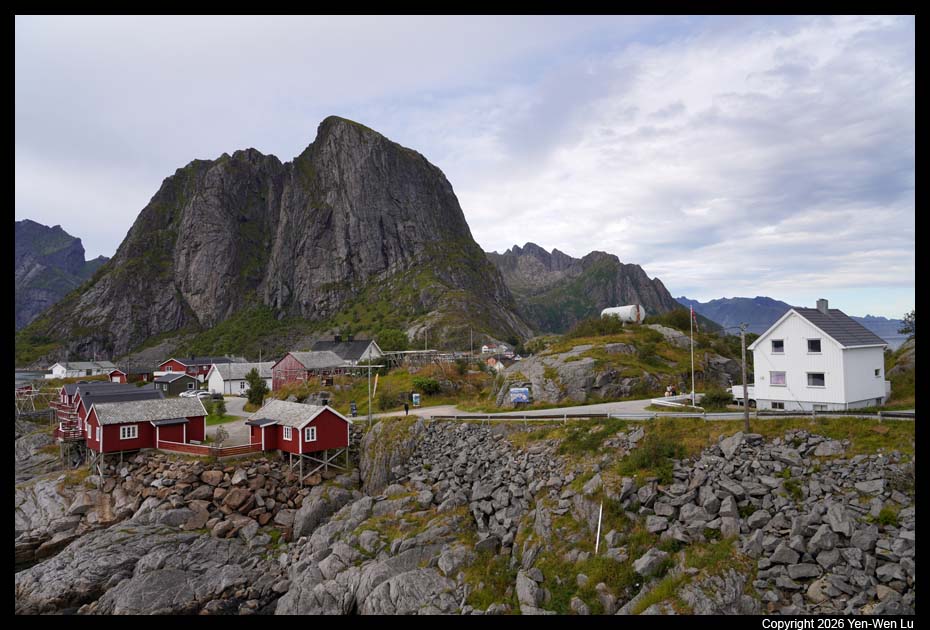
It's time to move to our home for the next 3 days, Hamnøy.
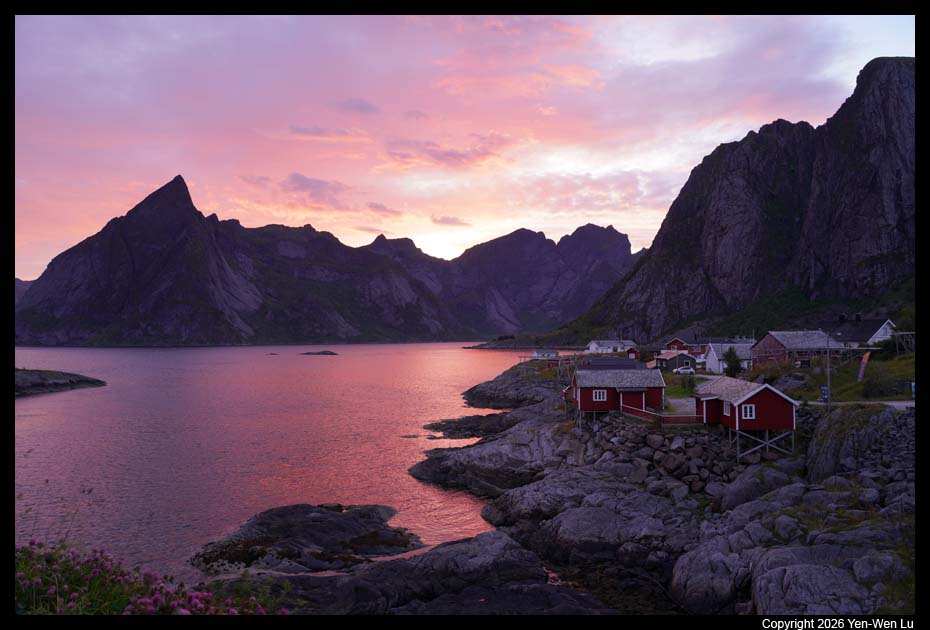
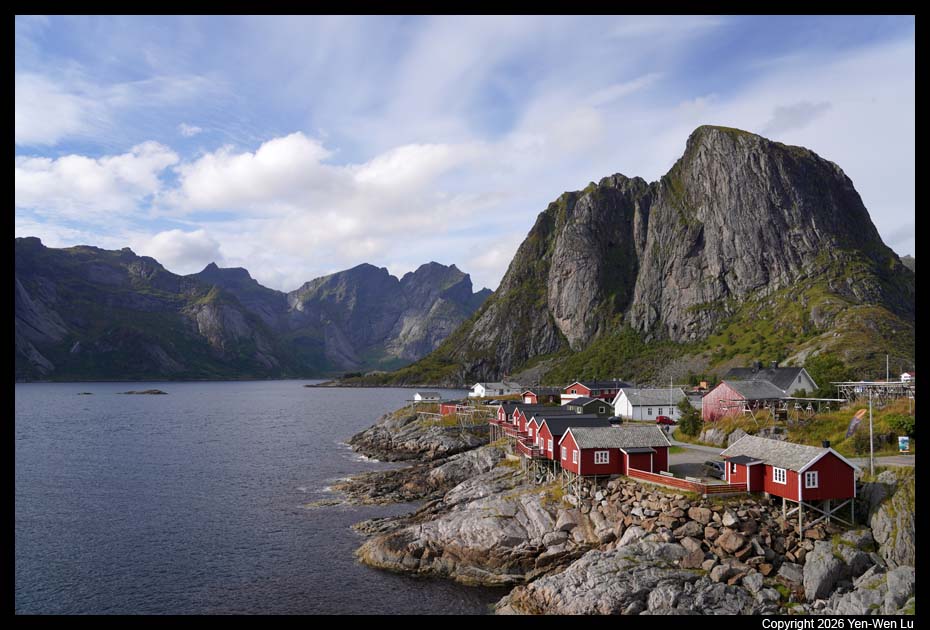
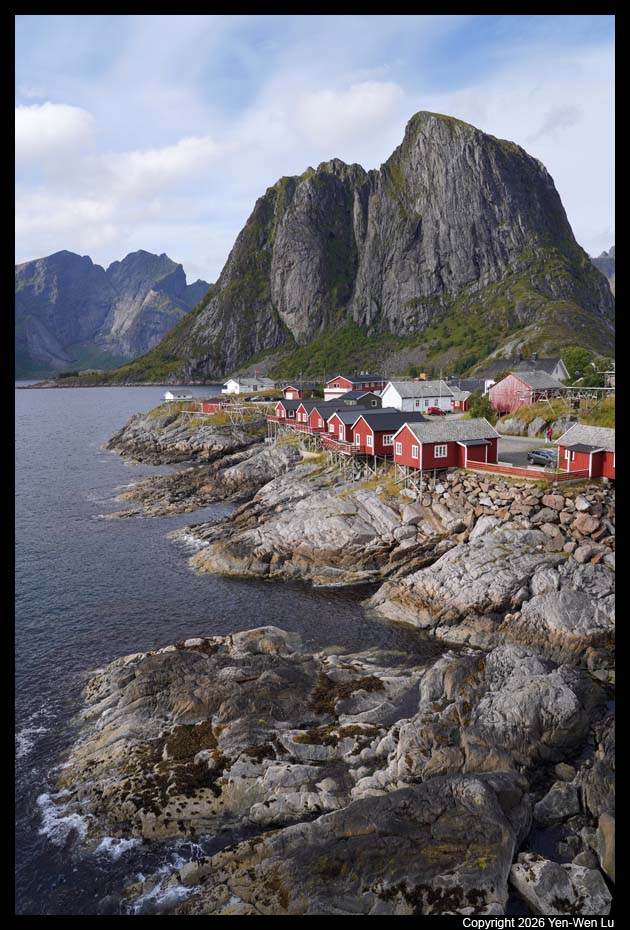
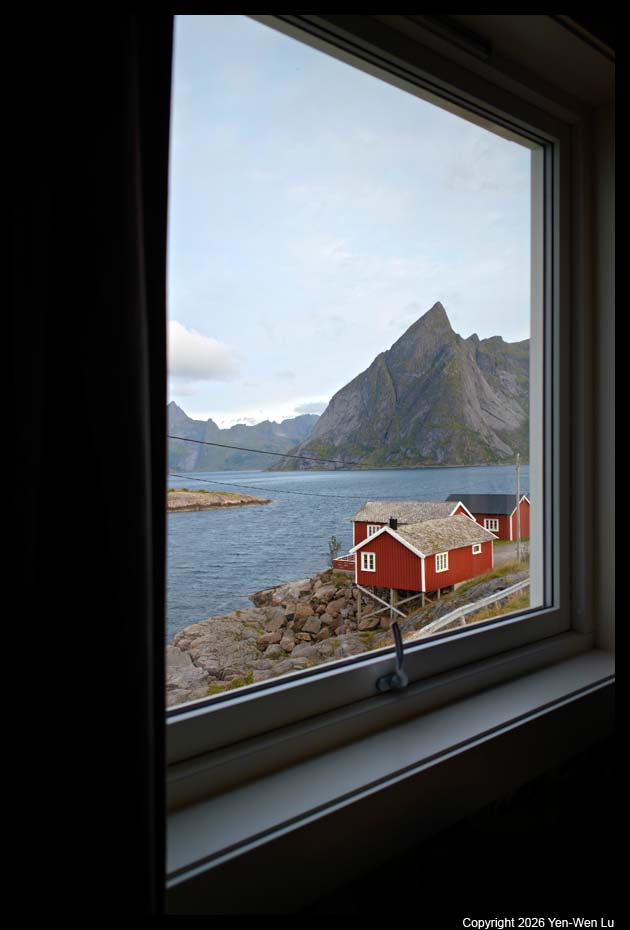
Hamnøy is the oldest and one of the most picturesque fishing villages in the
Lofoten. It is home to the most famous, iconic postcard view of
Lofoten: a cluster of bright red fisherman's cabins (rorbuer) sitting on
stilts over a rocky harbor, with the sheer, jagged wall of the
Festhelltinden mountain rising sharply into the sky directly behind them.
Our
apartment is right at the entrance of the village and only 1-minute walk
to the famous Hamnøy bridge. The
view from our living room was
fantastic.
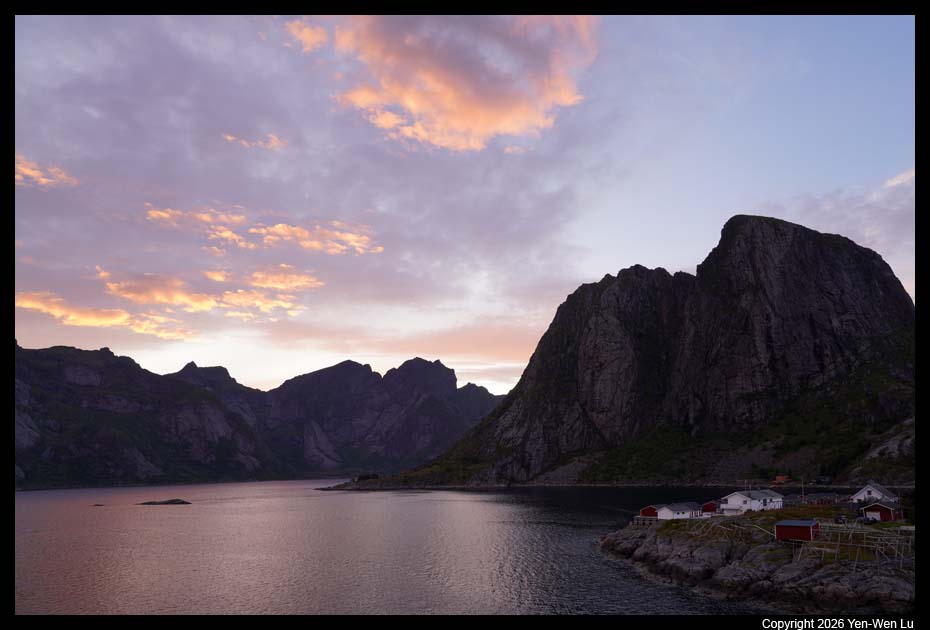
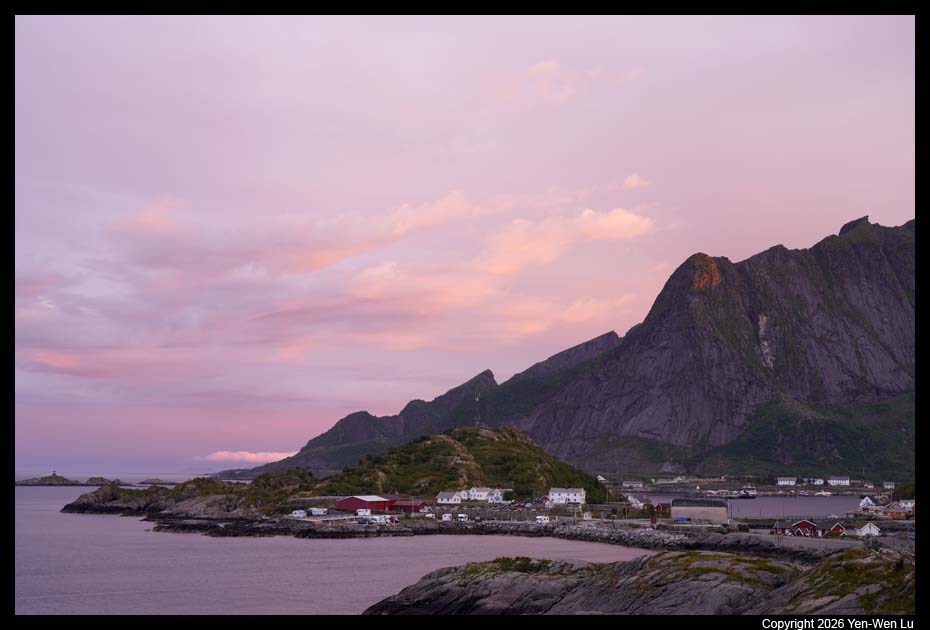
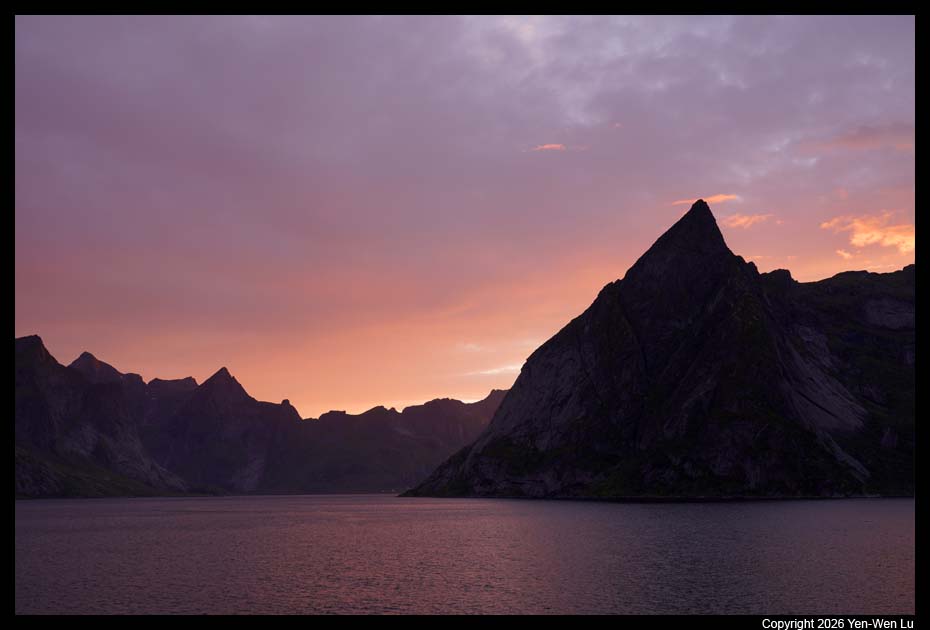
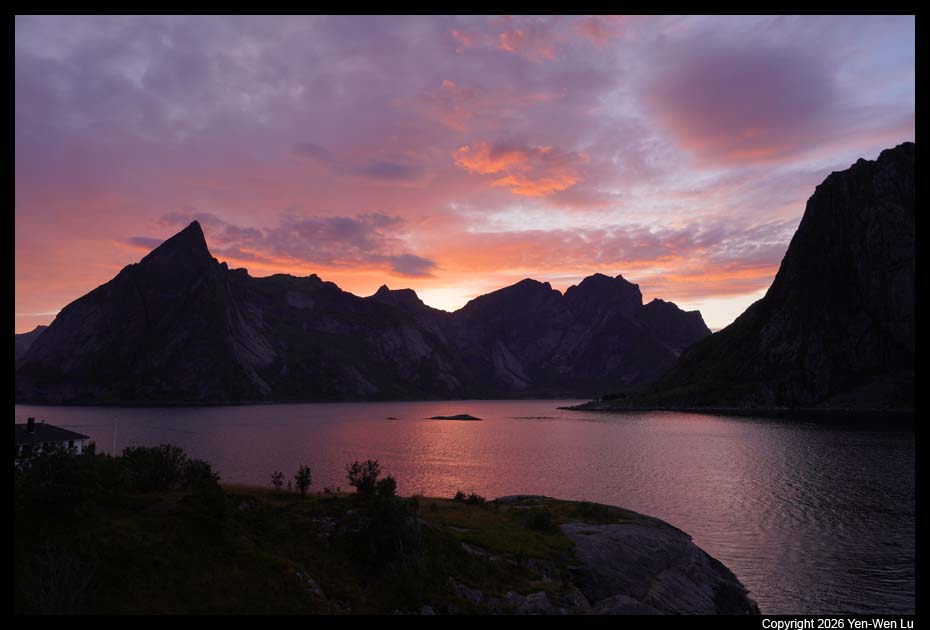
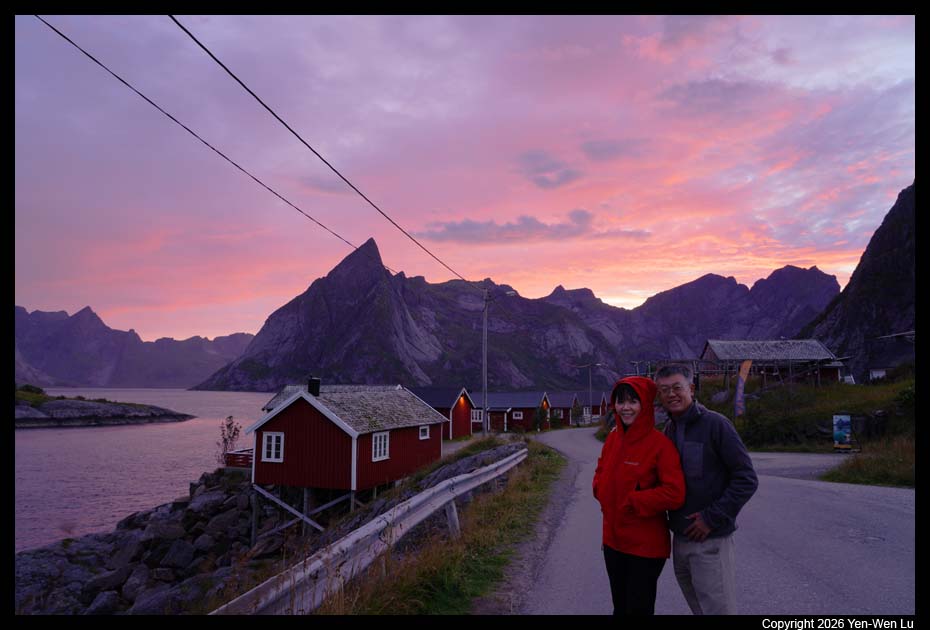
The weather had changed quickly and the sky was
full of cloud when we arrived at about 6PM (so I did not have any plan
for sunset). However, at about 10:15PM, the sky started to
change color. I put on my coat and got my camera quickly, and
rushed out of the door to the bridge next to the village. The
brilliant color last for more than 30 minutes and we could not believe
our luck to see such a beautiful sunset at such an iconic place.
Day 14 (8/7) ...
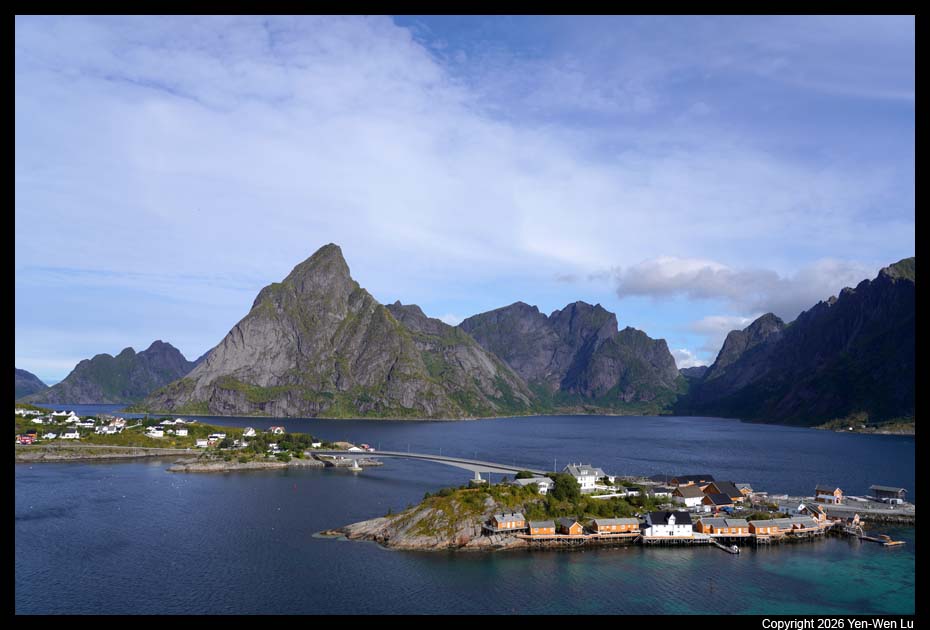
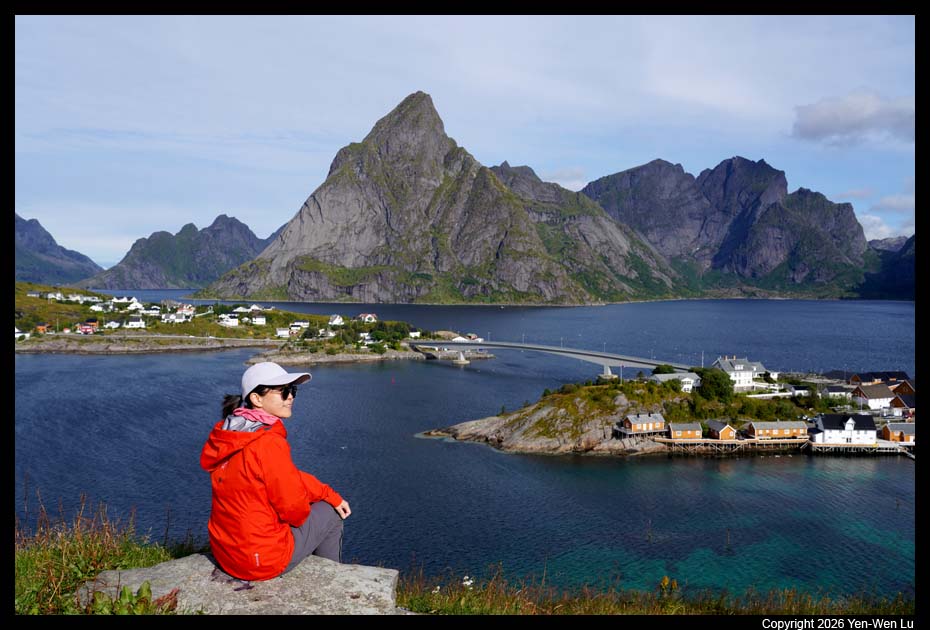
- Olenilsøya
Olenilsøya is a small island tucked seamlessly between the
ultra-famous fishing villages of Hamnøy, Sakrisøy and Reine, serving as a
vital bridge in the local landscape and is known as one of Lofoten’s most
peaceful and accessible photography hotspots. A very short,
15-to-20-minute walk up a gentle path brings you to the old WWII
fortification ruins Olenilsøya Coastal Fort (Olenilsøya kystfort). It offers
a stunning 360-degree panorama of the surrounding fjords and sharp mountain
peaks. We finally made to some summit in Lofoten :-)
- Reine
Reine is arguably the most famous and scenic fishing village in
Lofoten. This fishing village consists of a chain of islands, linked
by bridges and winding roads, with Vestfjord on one side, and Reinefjord
with its high mountains on the other. We walked around the village and
walked to the iconic viewpoint. We decided not to do the famous
Reinebringen Hike (1,978 steep stone steps built by Nepalese Sherpas) since
we had already enough views in this trip :-)
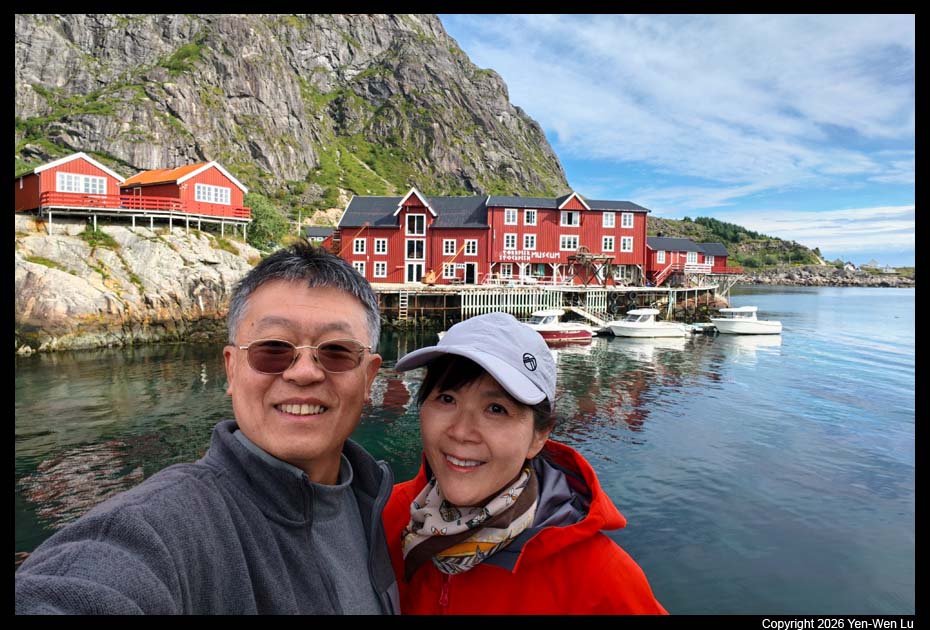
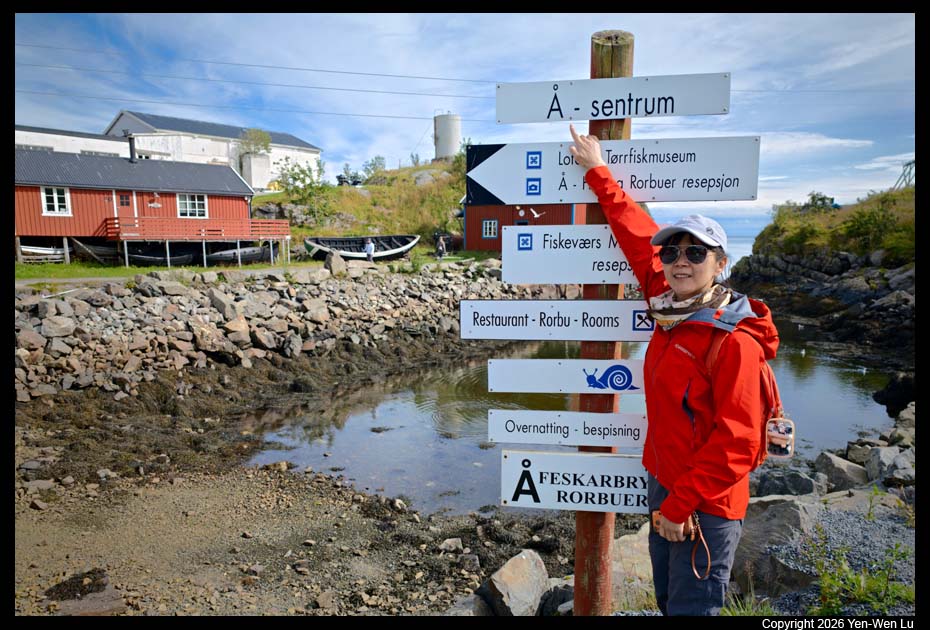
- Å
Å (pronounced simply as "Aw") is a historic, completely preserved
fishing village located at the absolute southernmost tip of the E10 highway
in the Lofoten archipelago. Often called Å i Lofoten, it functions as
a living museum where bright red fisherman's cabins (rorbuer), historic
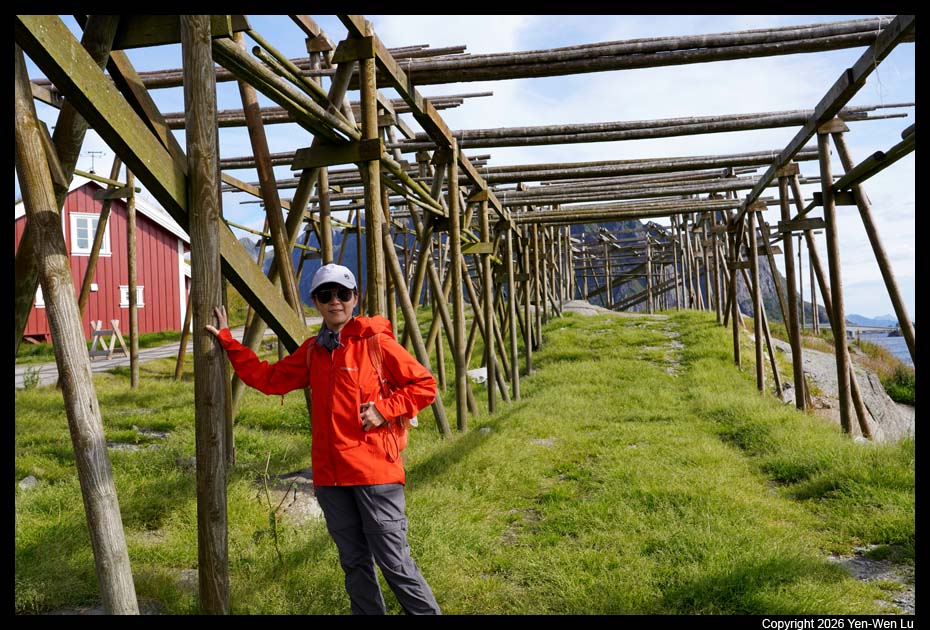
wooden piers, and traditional fish-drying racks are frozen in time against a
backdrop of jagged Arctic peaks.
-
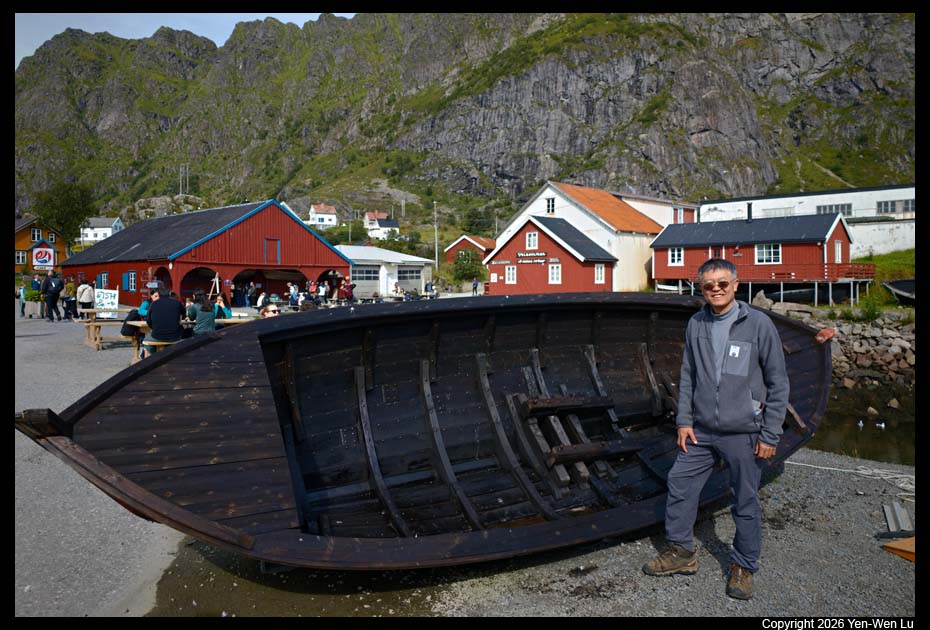
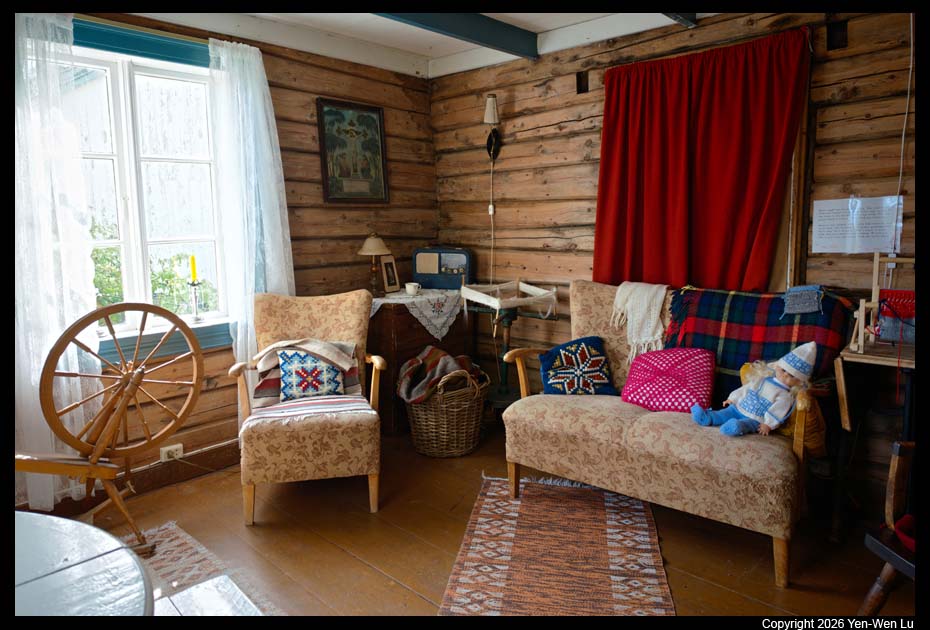
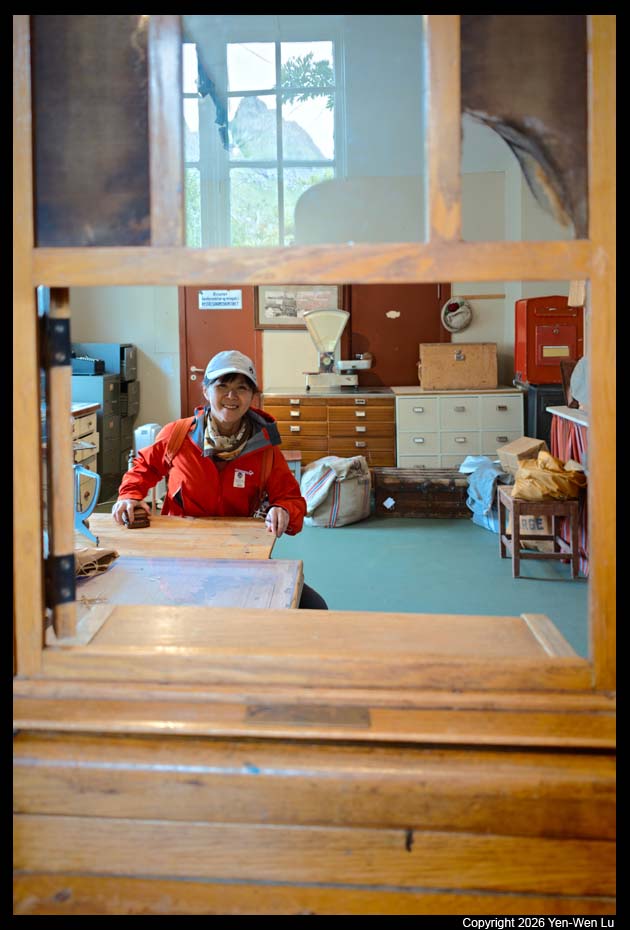
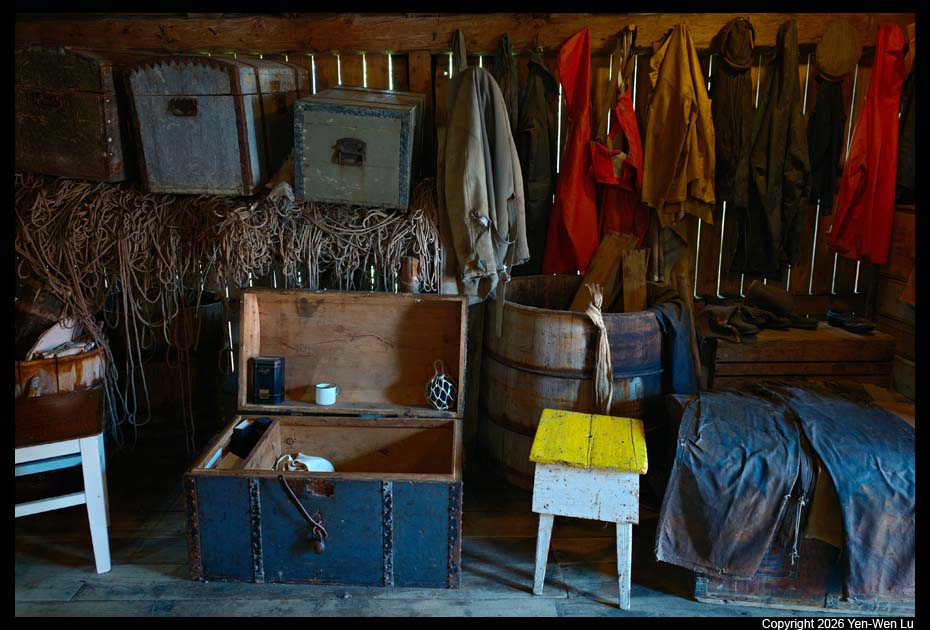
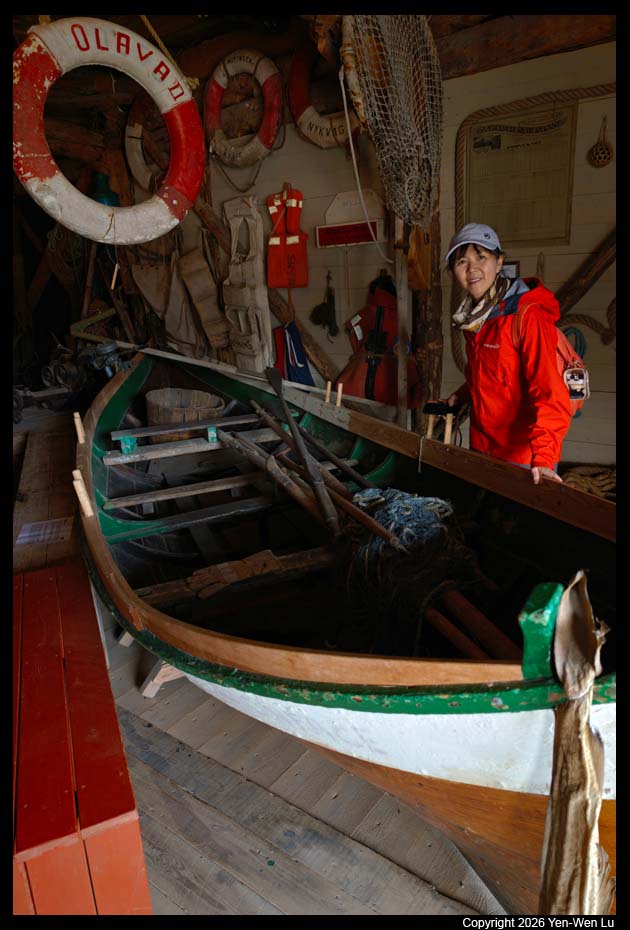
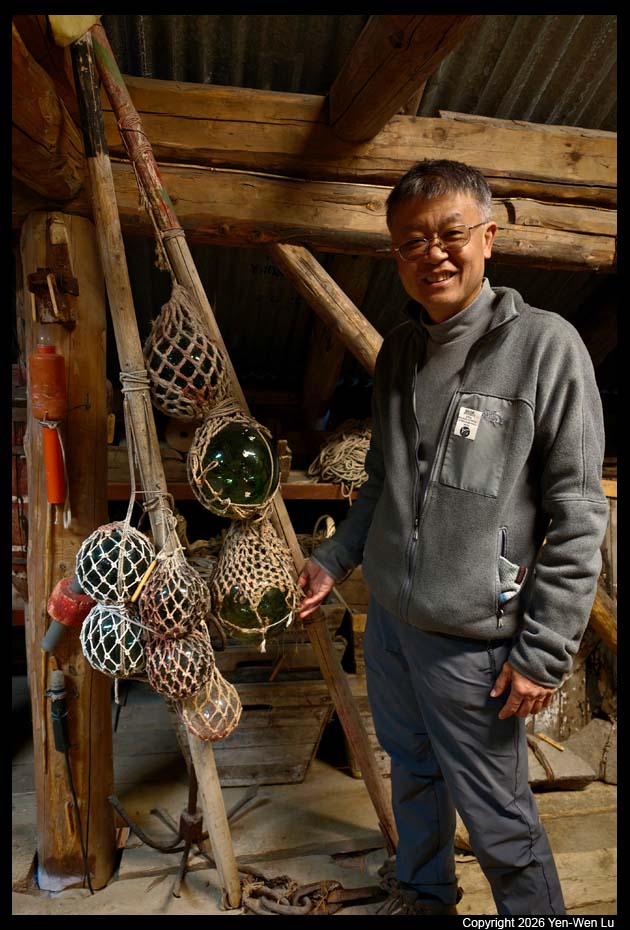
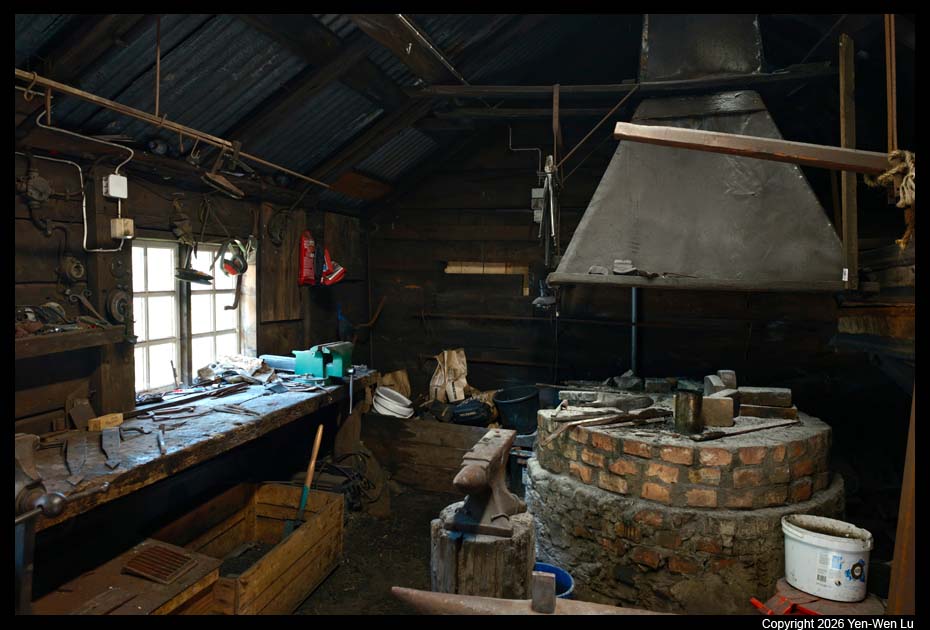
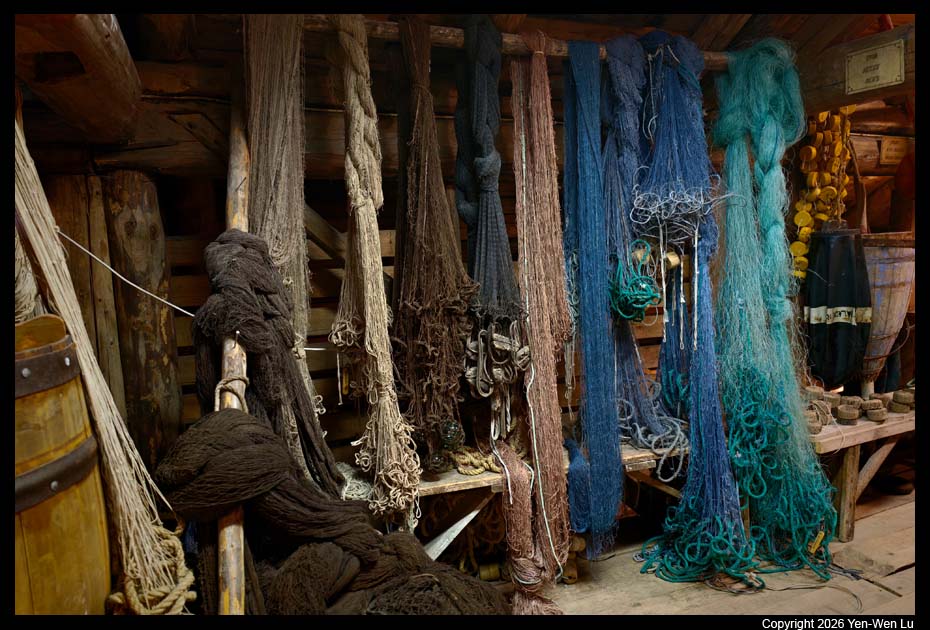
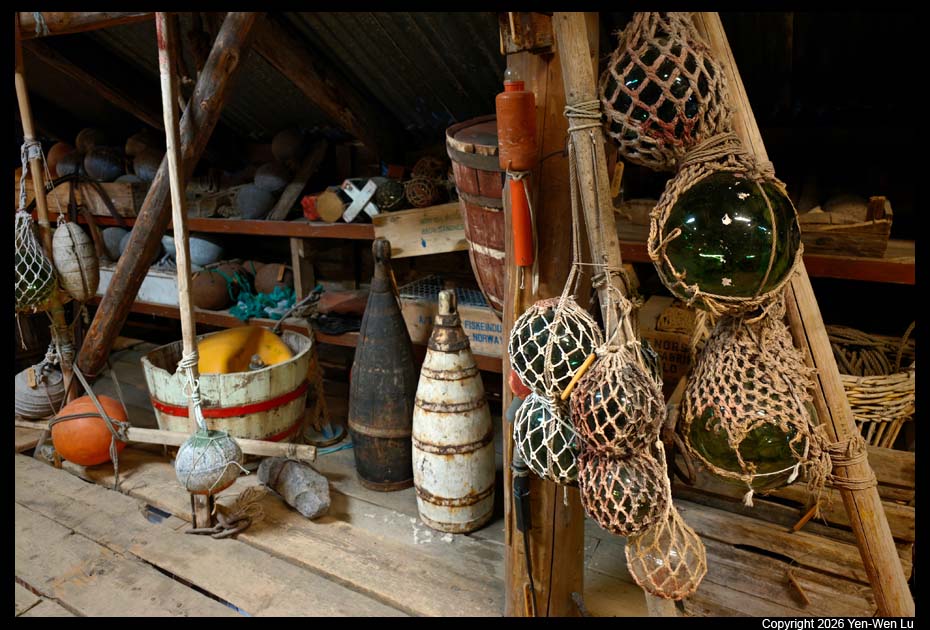
Norwegian Fishing Village Museum (Norsk Fiskeværsmuseum)
This
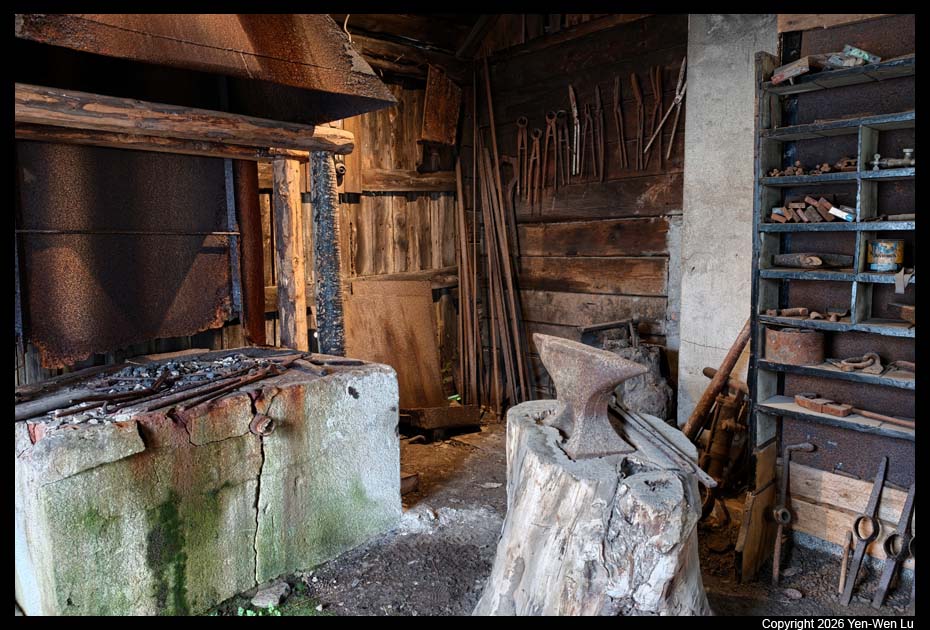
open-air museum occupies the entire core of the village. You can tour the
boathouse, transhipment factory, homestead, forge, post office, fisherman's
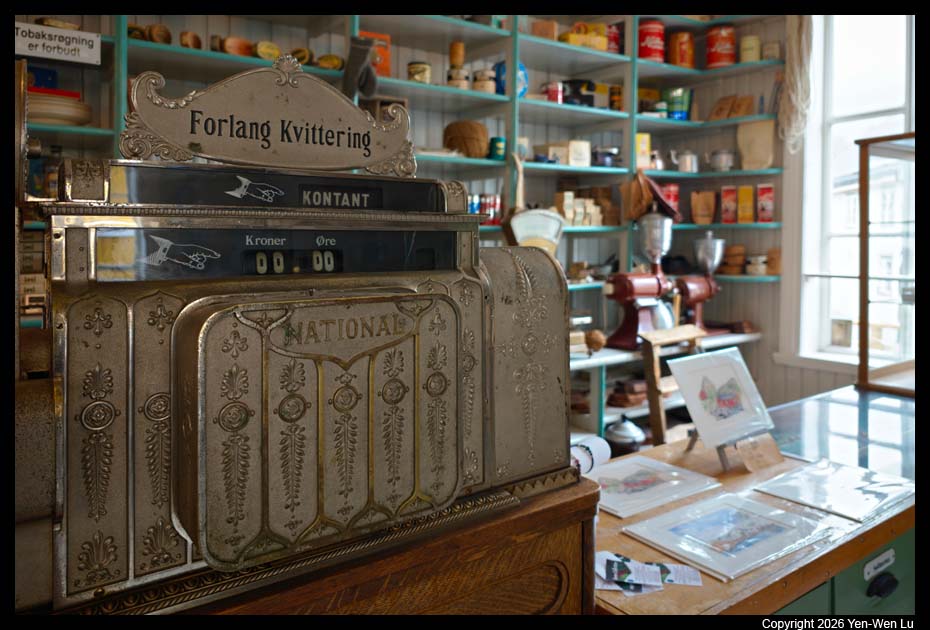
hut and bakery from the 19th century. We joined the guided tour to
learn more about the everyday lives of the itinerant fisherman, the local
families and the owner of the village, who ran the fishing village from
around 1840 to 1960.
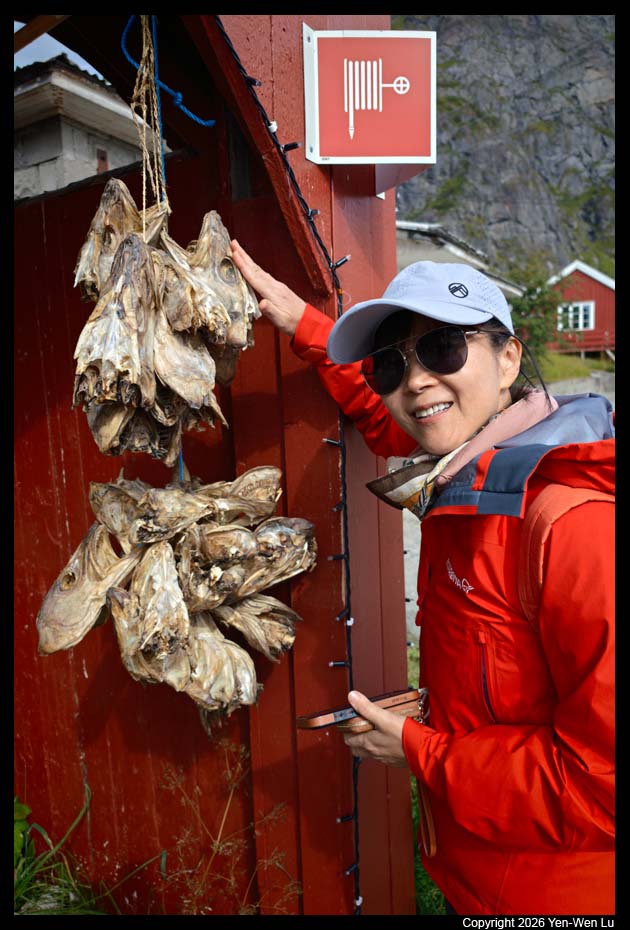
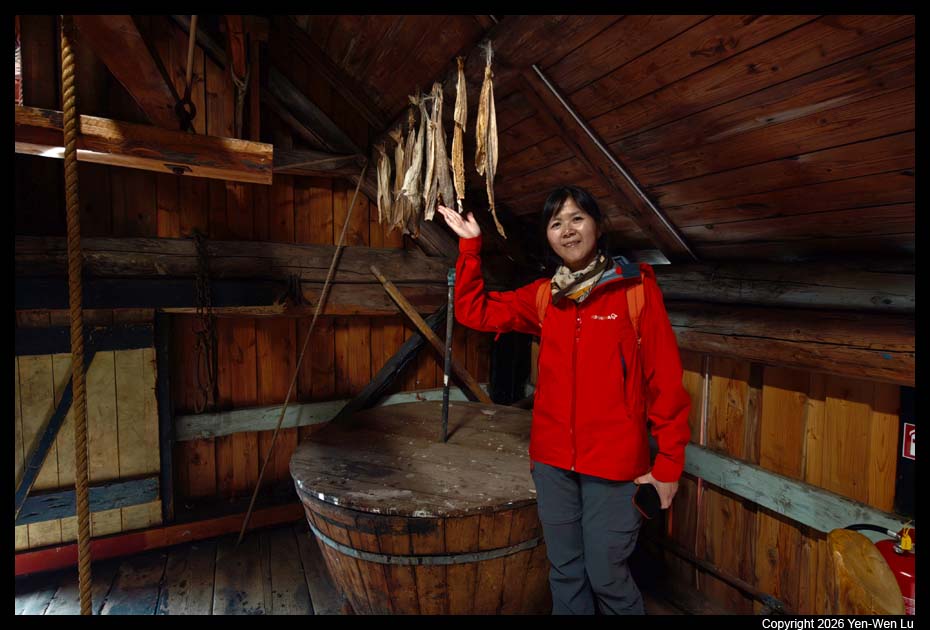
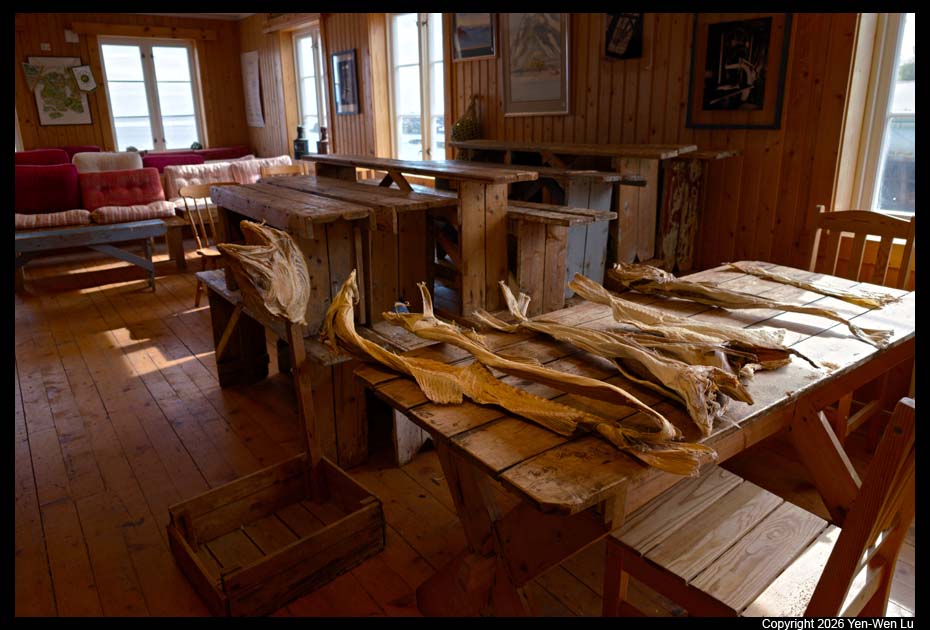
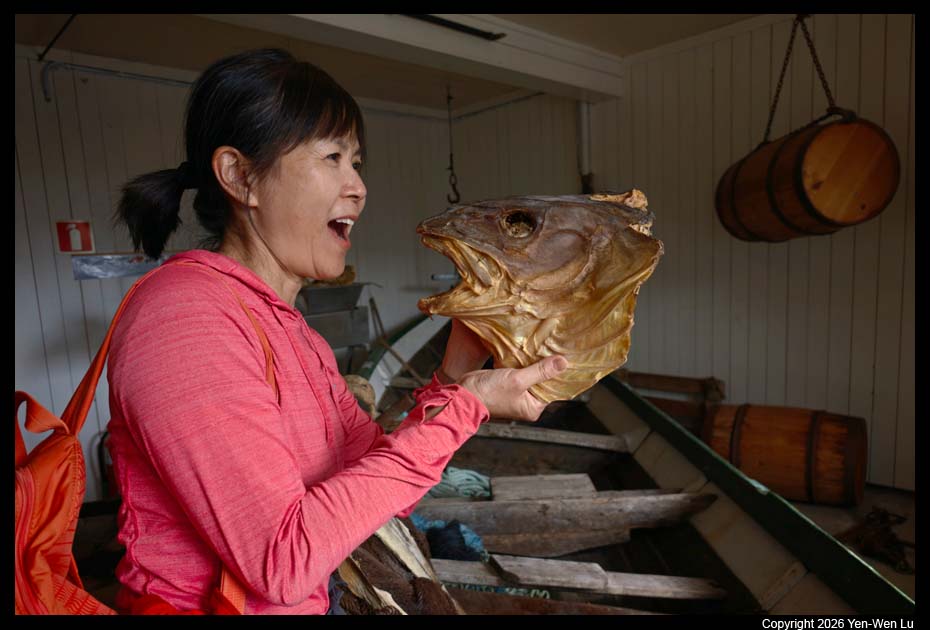
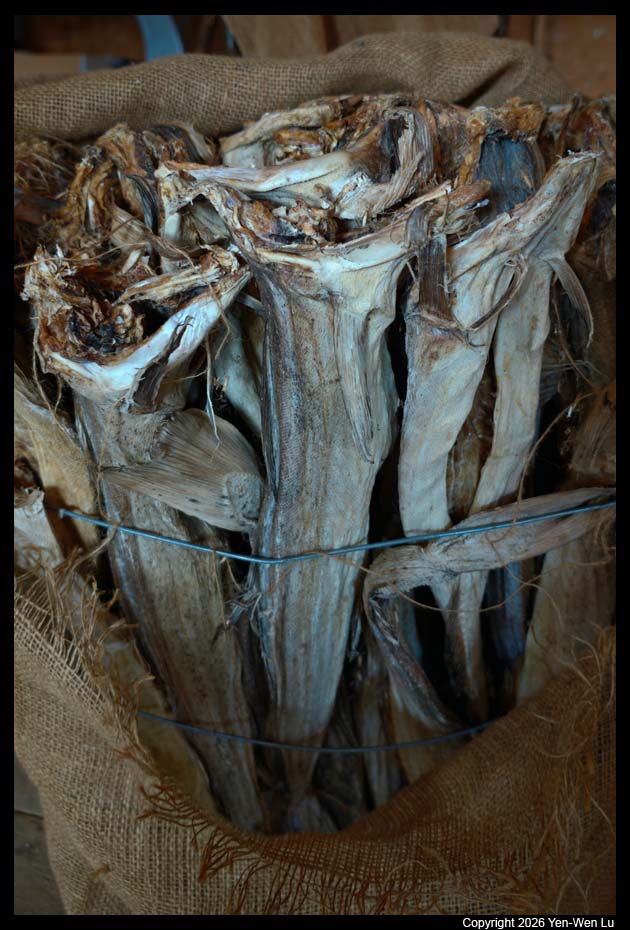
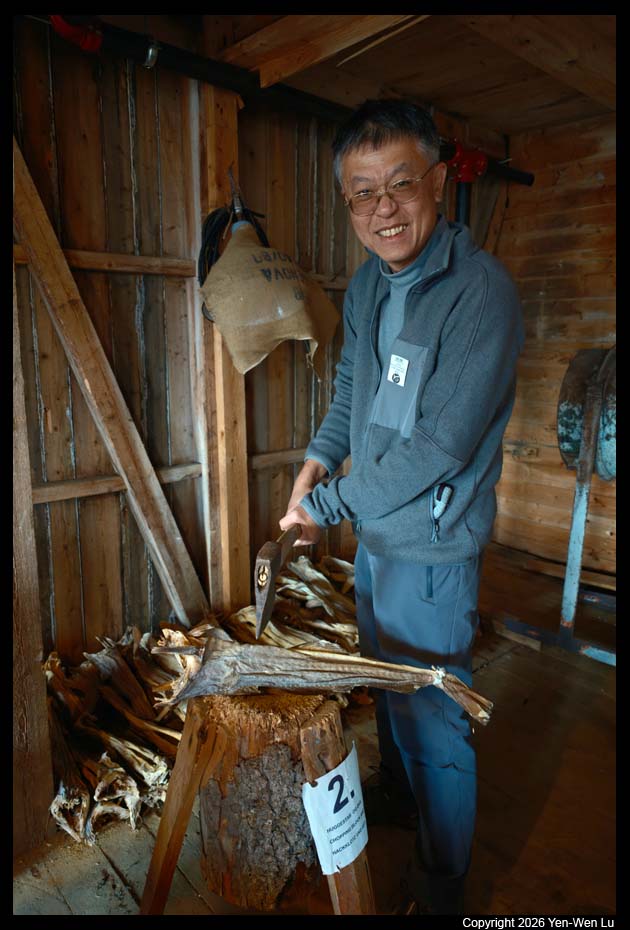
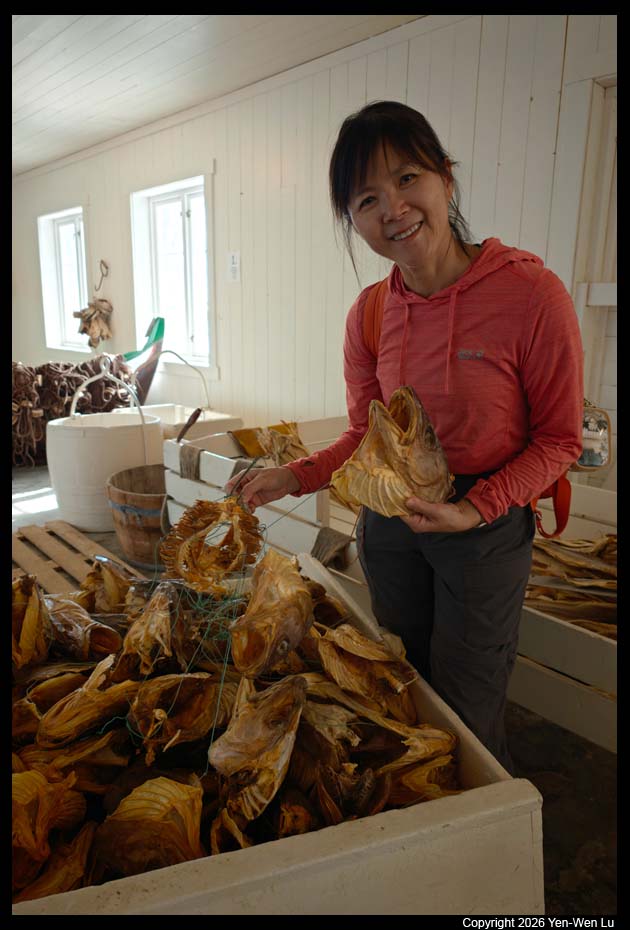
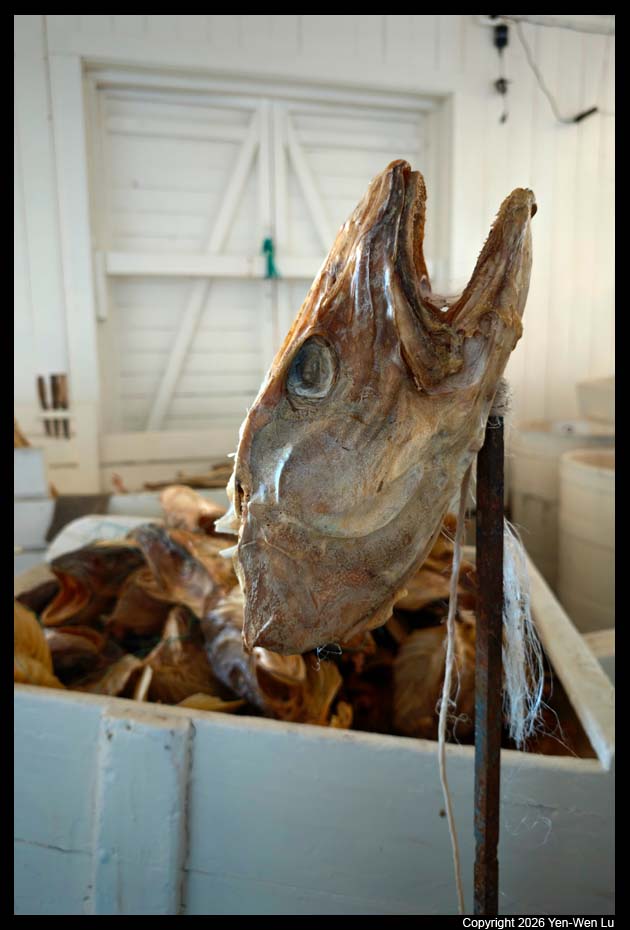
- Lofoten Stockfish Museum (Lofoten Tørrfiskmuseum)
It is a specialized
museum dedicated entirely to Norway's oldest export—dried Atlantic cod. The
exhibits walk you through the process from the moment the fish is caught to
its grading and shipping across mainland Europe.
-
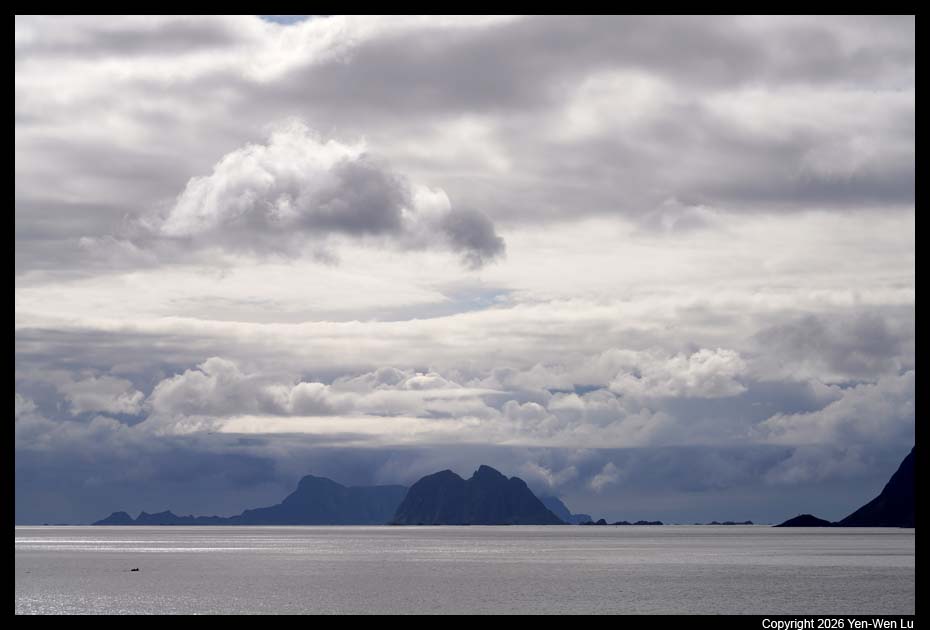
Å Viewpoint
At the absolute end of the E10 highway (a large public
parking lot), there is a short, rocky coastal trail. It leads out to a
dramatic headland offering panoramic views over the wild waters and the
isolated islands of Værøy and Røst in the far distance.
Day 15 (8/8) ...
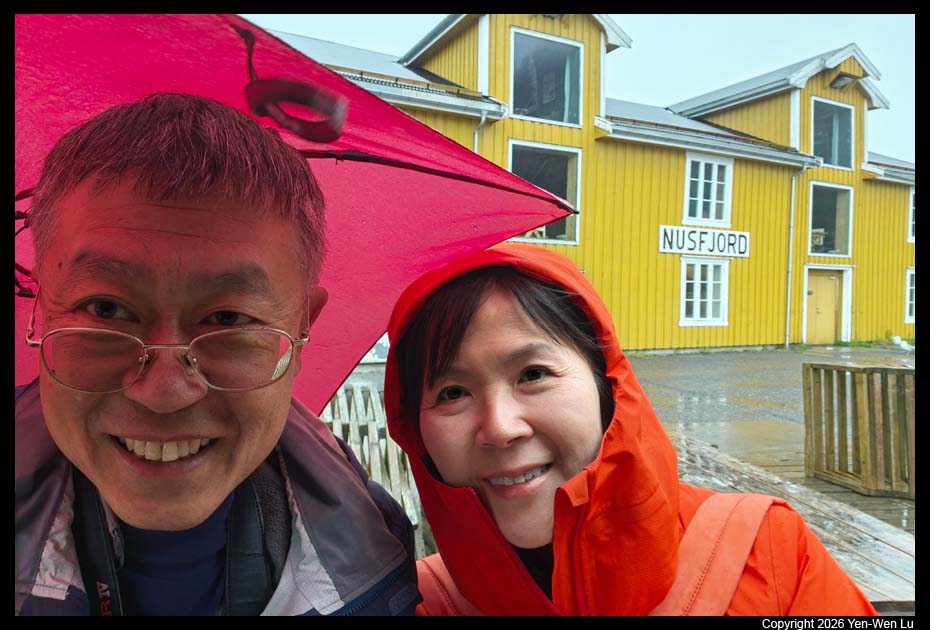
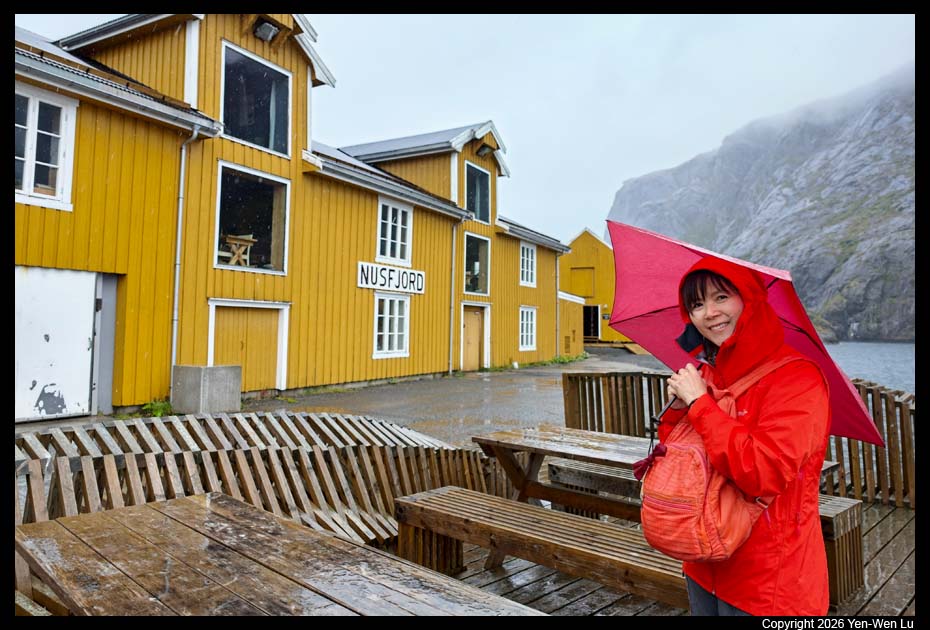
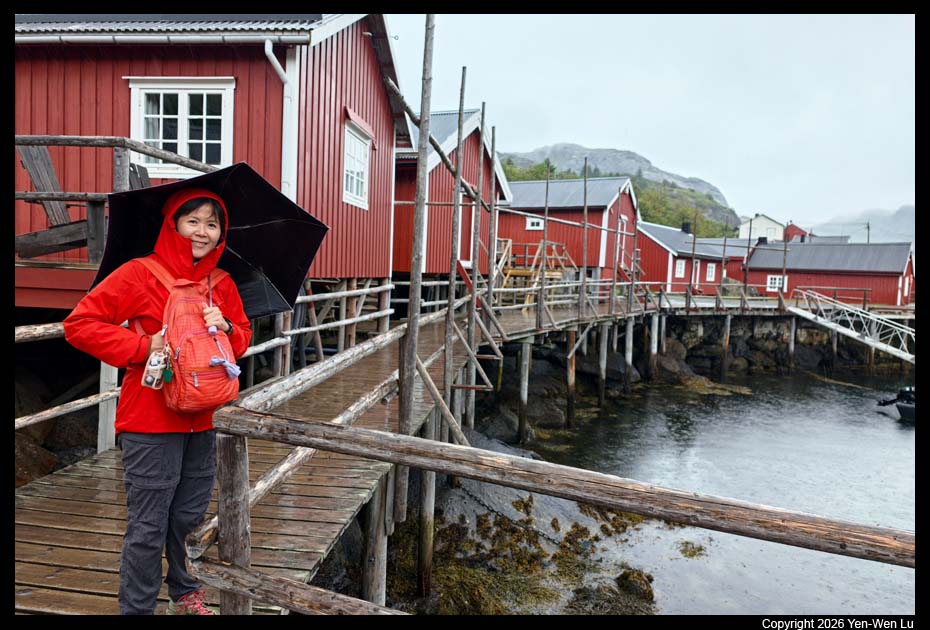
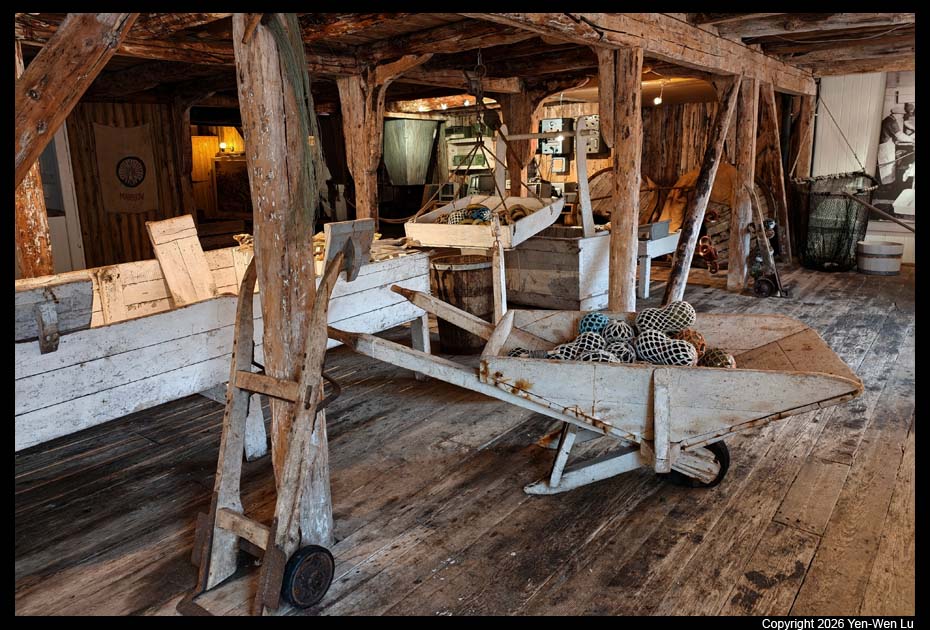
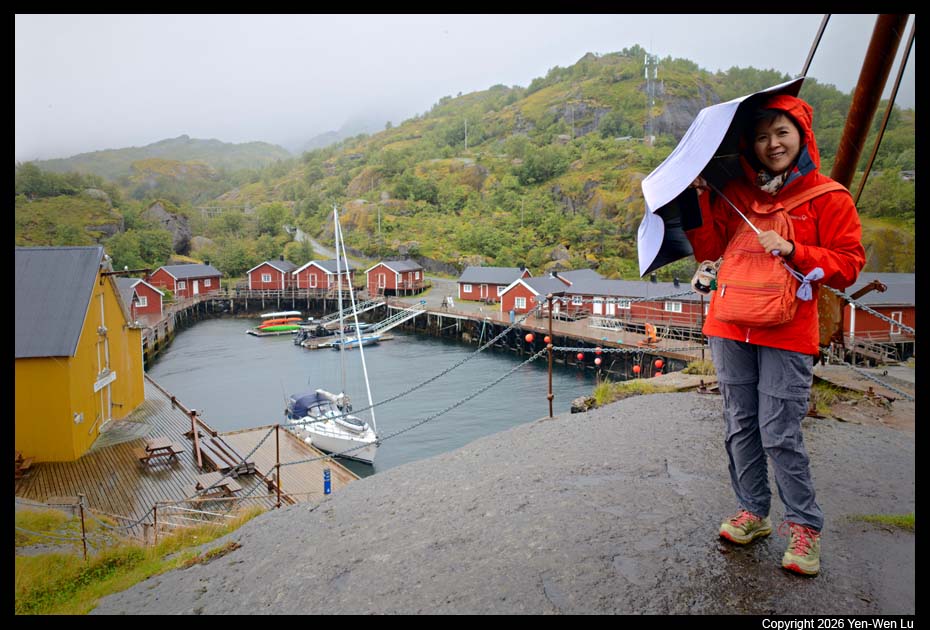
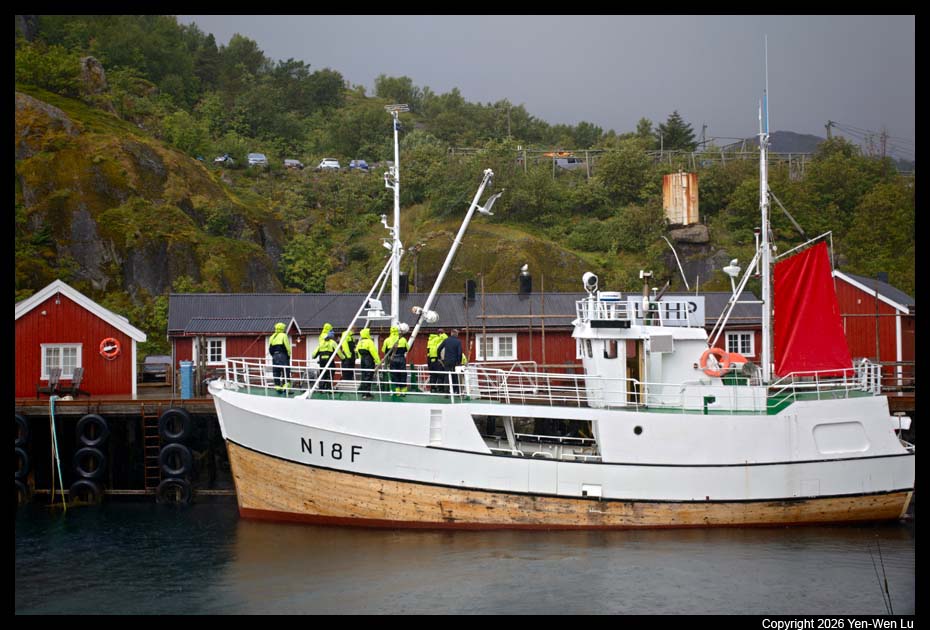
- Nusfjord
The weather forecast was not very promising today so we did
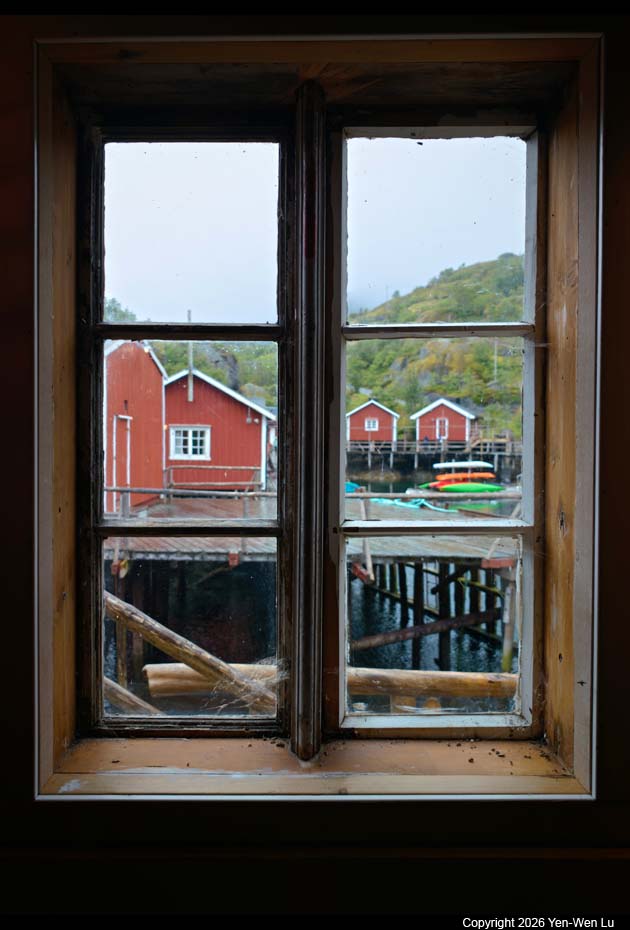
not have any big outdoor plan. We chose to visit Nusfjord, one of the
oldest, best-preserved, and most picturesque traditional fishing villages in
Lofoten. Tucked away on the southern coast of Flakstadøya
island, it is nestled inside a narrow, dramatic fjord surrounded by steep,
vertical mountain walls. The entire village functions as an open-air museum
and historic resort, showcasing authentic yellow and red fisherman's cabins
(rorbuer) that date back to the 19th and early 20th centuries.
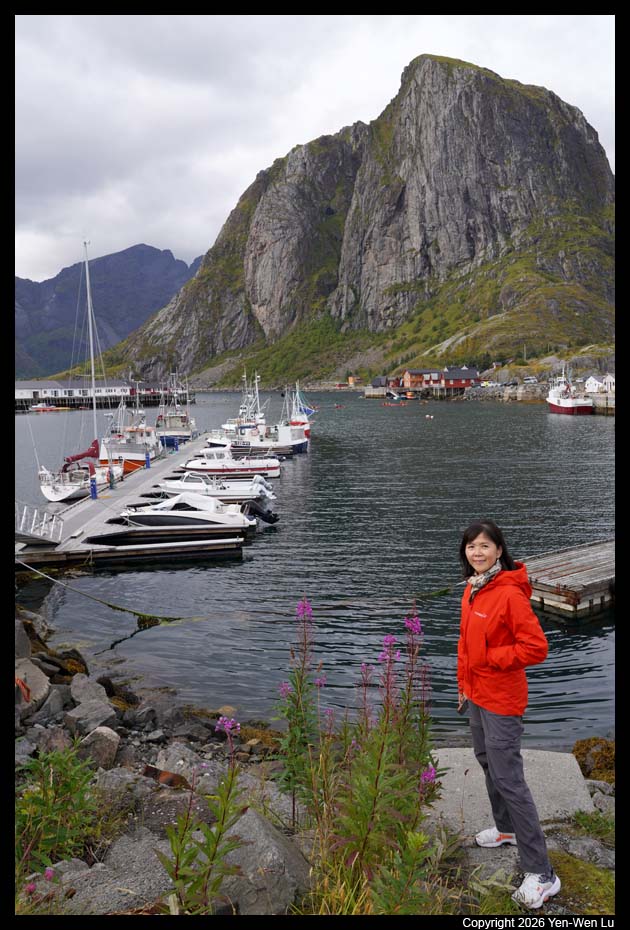
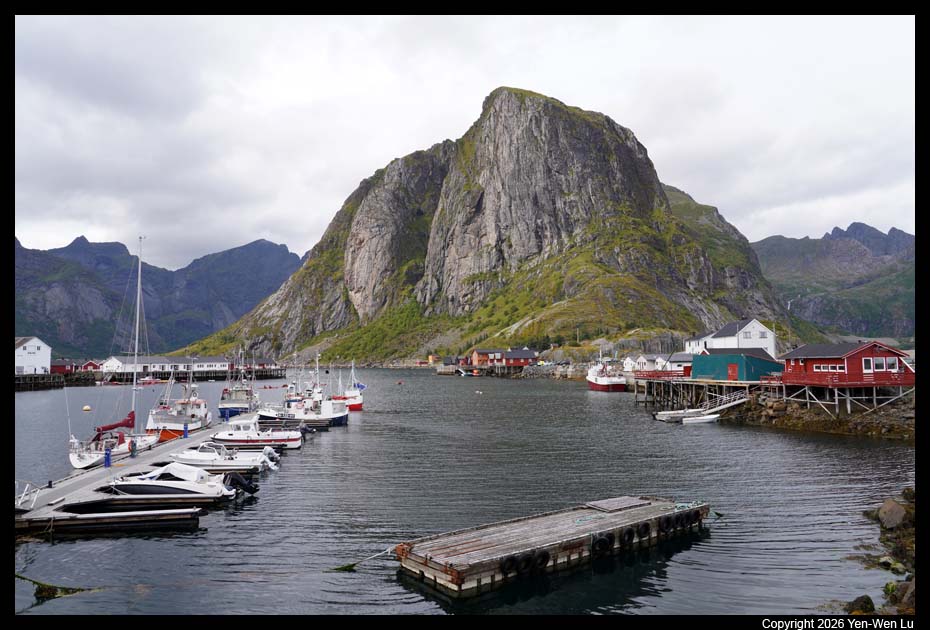
- Hamnøy
We were back to Hamnøy in the early afternoon to stay out of
the bad weather. In the late afternoon when the weather looked more
stable, we went out to walk around the Hamnøy village and harbor.
And finally the sky cleared up a little, and I could get the iconic Hamnøy
red cabins and fjord view with some blue sky.
Day 16 (8/9) ...
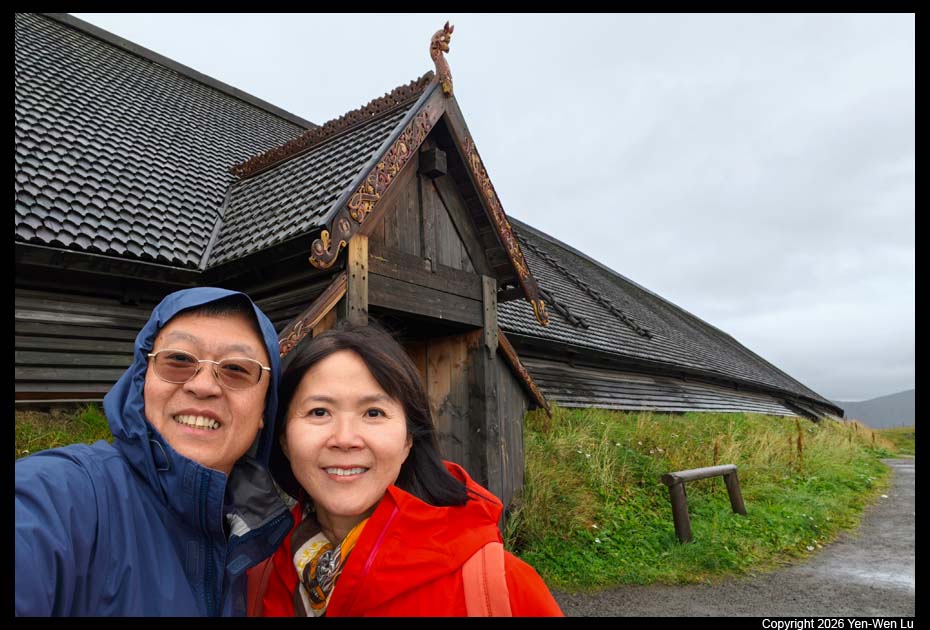
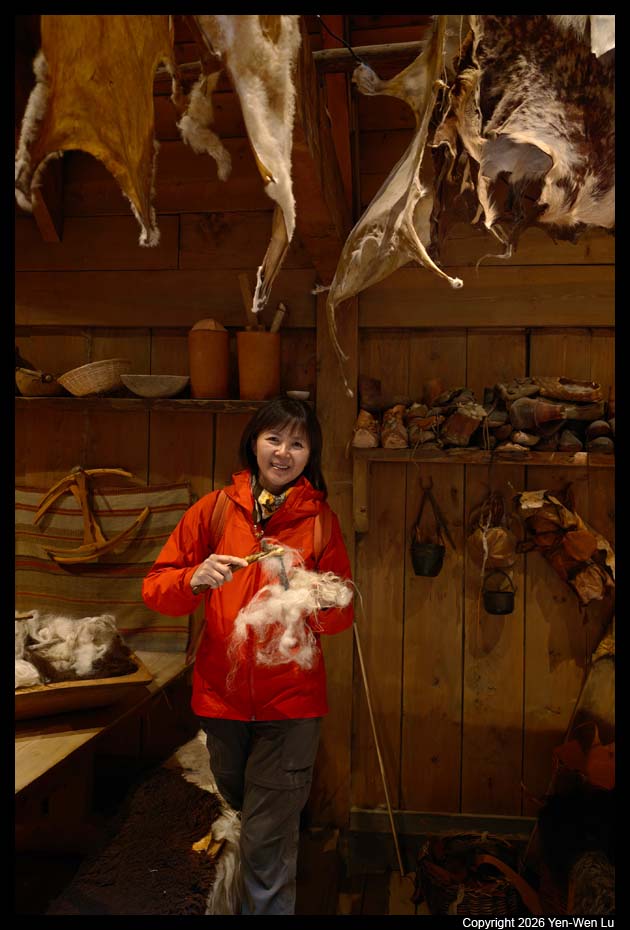
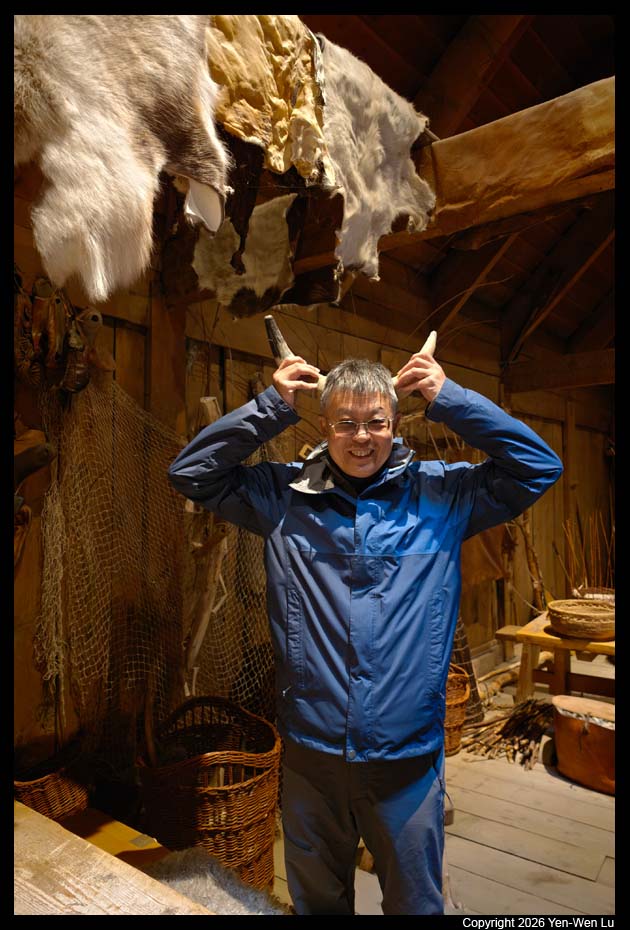
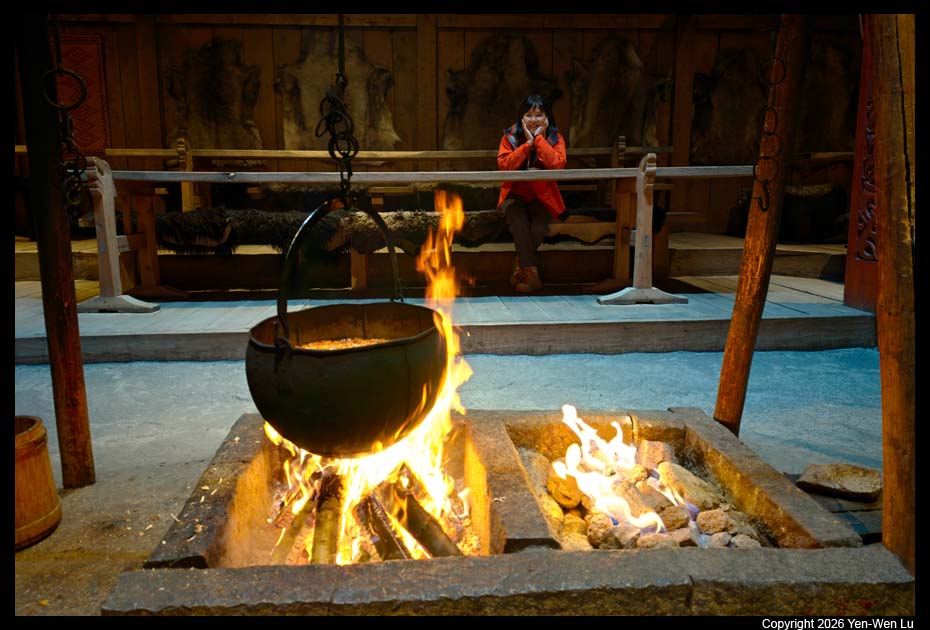
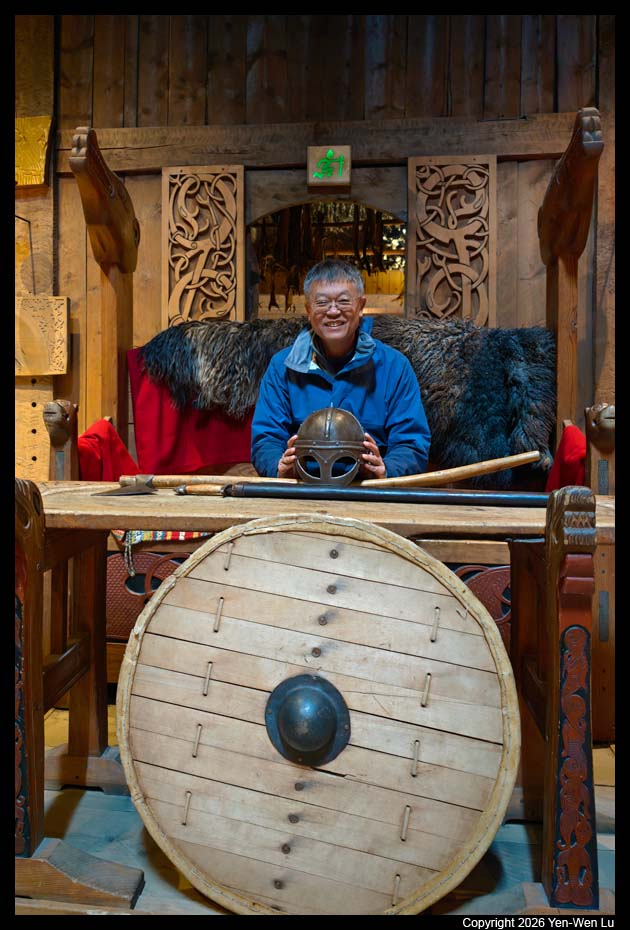
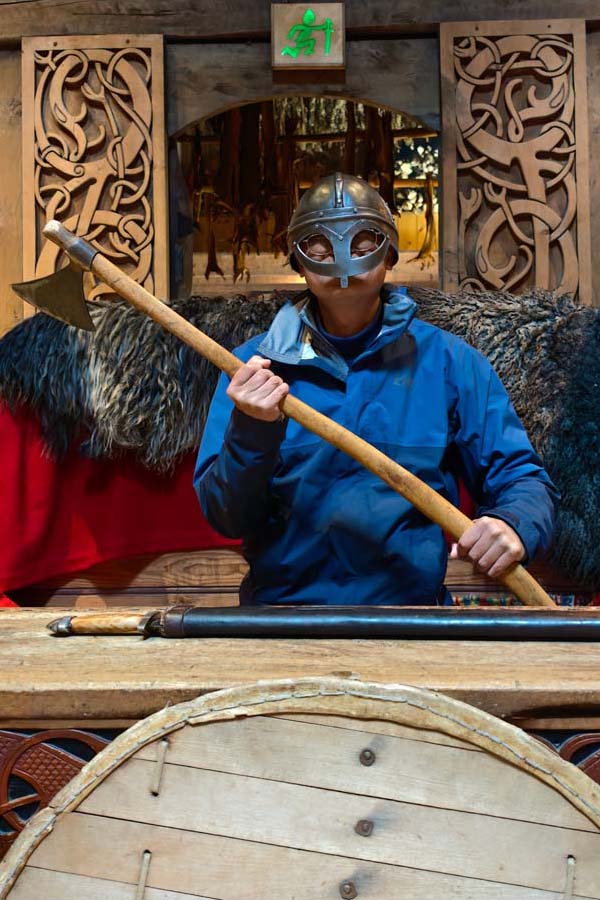
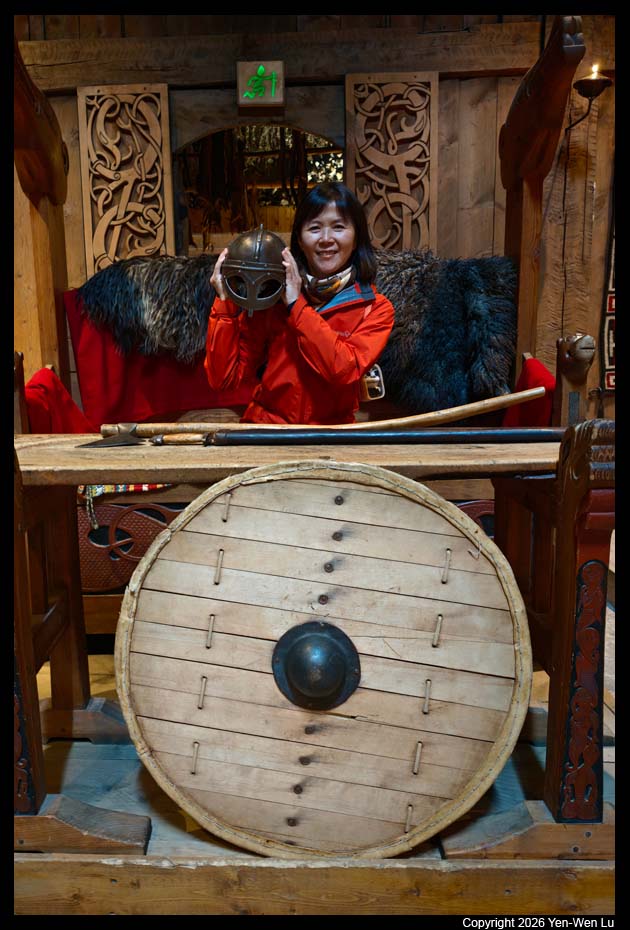
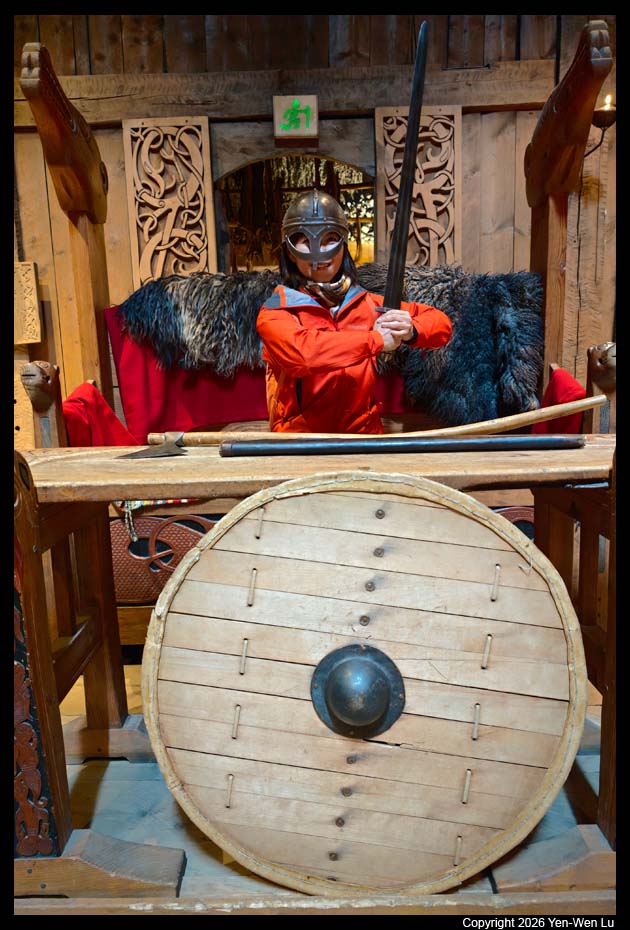
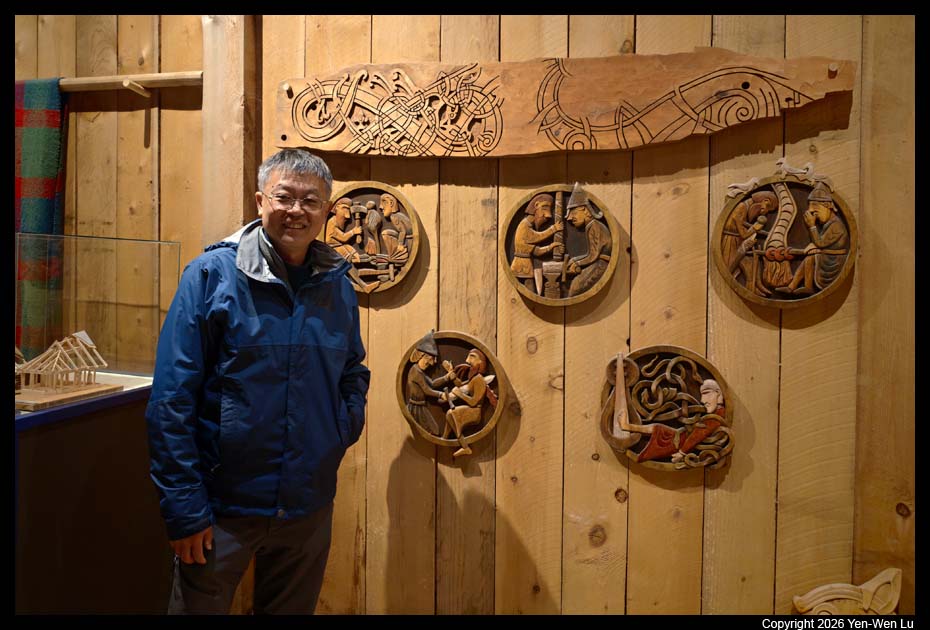
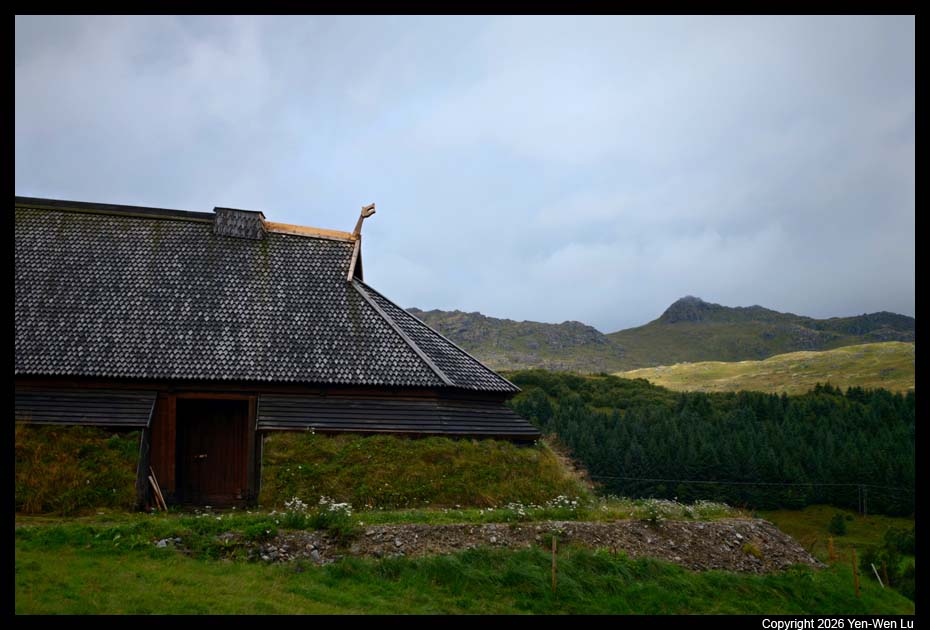
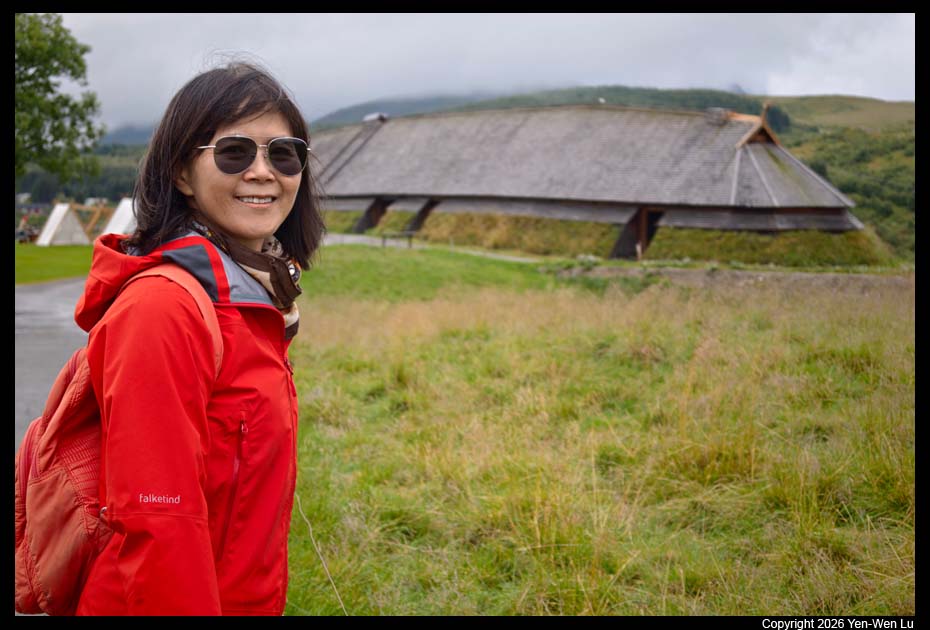
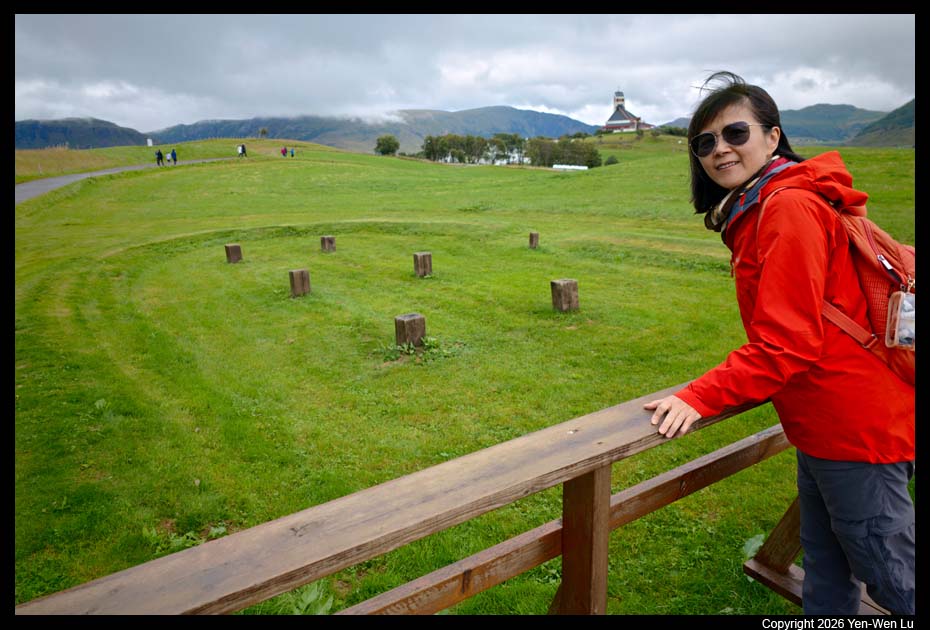
- Lofotr Viking Museum
Lofotr Viking Museum (Lofotr Vikingmuseum) is an
interactive historical museum located in Bøstad, in the central part of the
Lofoten Islands. It is built on the exact archaeological site where
researchers discovered the largest Viking Age building ever found in Europe.
The centerpiece of the museum is a massive, fully reconstructed
83-meter-long chieftain’s longhouse that transports visitors back to the
year 950 AD.
[Oslo] [Stavanger--Bergen] [Lofoten]
Next ...
We returned our rental car back to LKN airport before 2PM and had a
long wait at the airport for our flight to Oslo (at 4:50PM) to
conclude our 2-week long Norwegian trip. Norway is indeed an
amazing country: unparalleled nature beauty of deep fjords and sheer
cliffs, striking mountain peaks and roaring waterfalls, massive scales
and pristine wilderness, and rich culture heritage from Viking legacy
and local fisheries; all of these are so intriguing to us. The
weather in summer in northern Europe is so comfortable (~15C) and it
was a drastic contrast to many other parts of Europe (like Spain...).
We will continue to explore the Scandinavian region in the future, no
matter it is summer or winter! Now our journey continued
to bring us to the hot summer in
Mallorca, Spain.
[Back to Photo Page]
[Gallery]